The Most Snake Infested Rivers In New Mexico
In a state where much of the land is desert, a river is more than water. It is a lifeline, and snakes know it better than anyone. New Mexico is home to more than 40 snake species. The thin green ribbons of cottonwood and willow along its rivers pack in shade, moisture, and plenty of prey. Some snakes, like the state's garter snakes, rarely stray from the water at all, while rattlesnakes patrol the brushy banks for animals that come to drink. The Gila, the Rio Grande, and the Pecos are where these snakes are most at home.
Gila River

The Gila River is New Mexico's wildest snake habitat, and its rarest. Its headwaters tumble out of the Gila Wilderness, the world's first designated wilderness area, where the river's three forks run through canyons largely untouched by development. That makes the Gila one of the last strongholds for the narrow-headed gartersnake, the most aquatic garter snake in the region. Growing up to about 34 inches (86 cm) long, it hunts fish underwater, diving among the river rocks like a slender, striped torpedo.

The narrow-headed gartersnake and its cousin, the northern Mexican gartersnake, were both listed as federally threatened in 2014. Their biggest enemies are damaged streams and invasive predators like bullfrogs and crayfish, which eat young snakes and compete for food. Protected critical habitat now includes about 46 miles (74 km) of the Gila and 71 miles (114 km) of its tributary, the San Francisco River. The northern Mexican gartersnake is a comeback story of its own. After almost 20 years without a confirmed sighting, biologists from the Albuquerque BioPark found three along the Gila in 2013. If you spot a garter snake here, admire it from a distance, because these species are protected.
Rio Grande

The Rio Grande runs the length of New Mexico, and the cottonwood forest along its banks is one of the state's richest wildlife corridors. Locals call it simply the bosque, Spanish for "woods." In the Middle Rio Grande Valley alone, biologists have documented snakes ranging from the blackneck, checkered, and western terrestrial garter snakes to the western hognose snake, a harmless actor that plays dead when threatened. Garter snakes hunt the side channels and irrigation ditches for fish and frogs, while gopher snakes and kingsnakes patrol the drier edges for rodents.

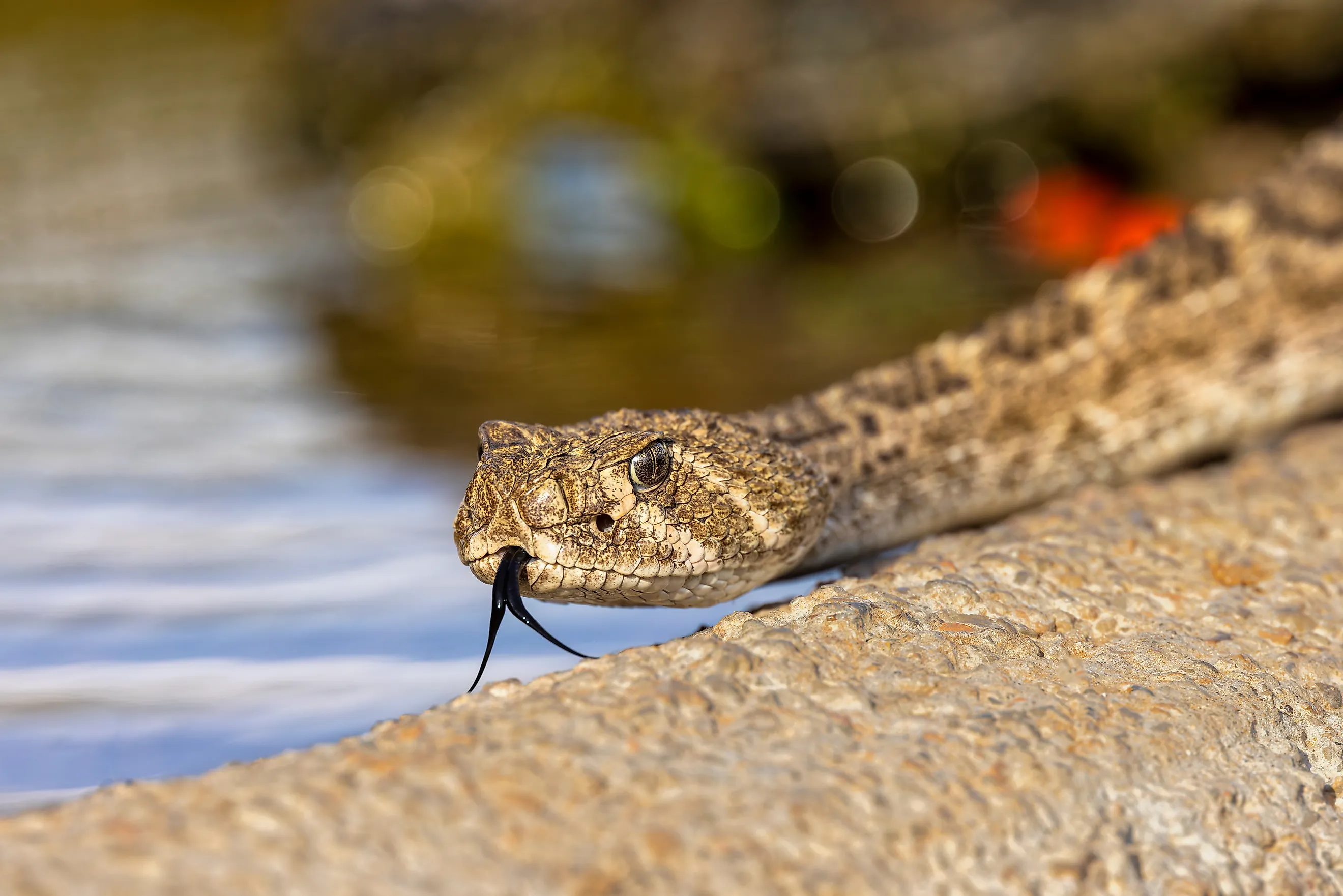
The river's venomous residents are the western diamondback and the prairie rattlesnake. At Bosque del Apache National Wildlife Refuge, famous for its winter crowds of sandhill cranes, both species use the brushy margins and levee roads during the warmer months. Far to the north, rattlesnakes also bask on the sun-baked ledges and rim trails of the Rio Grande Gorge near Taos. A rattle is a warning, not a threat. Back away slowly, and the snake will almost always do the same.
Pecos River

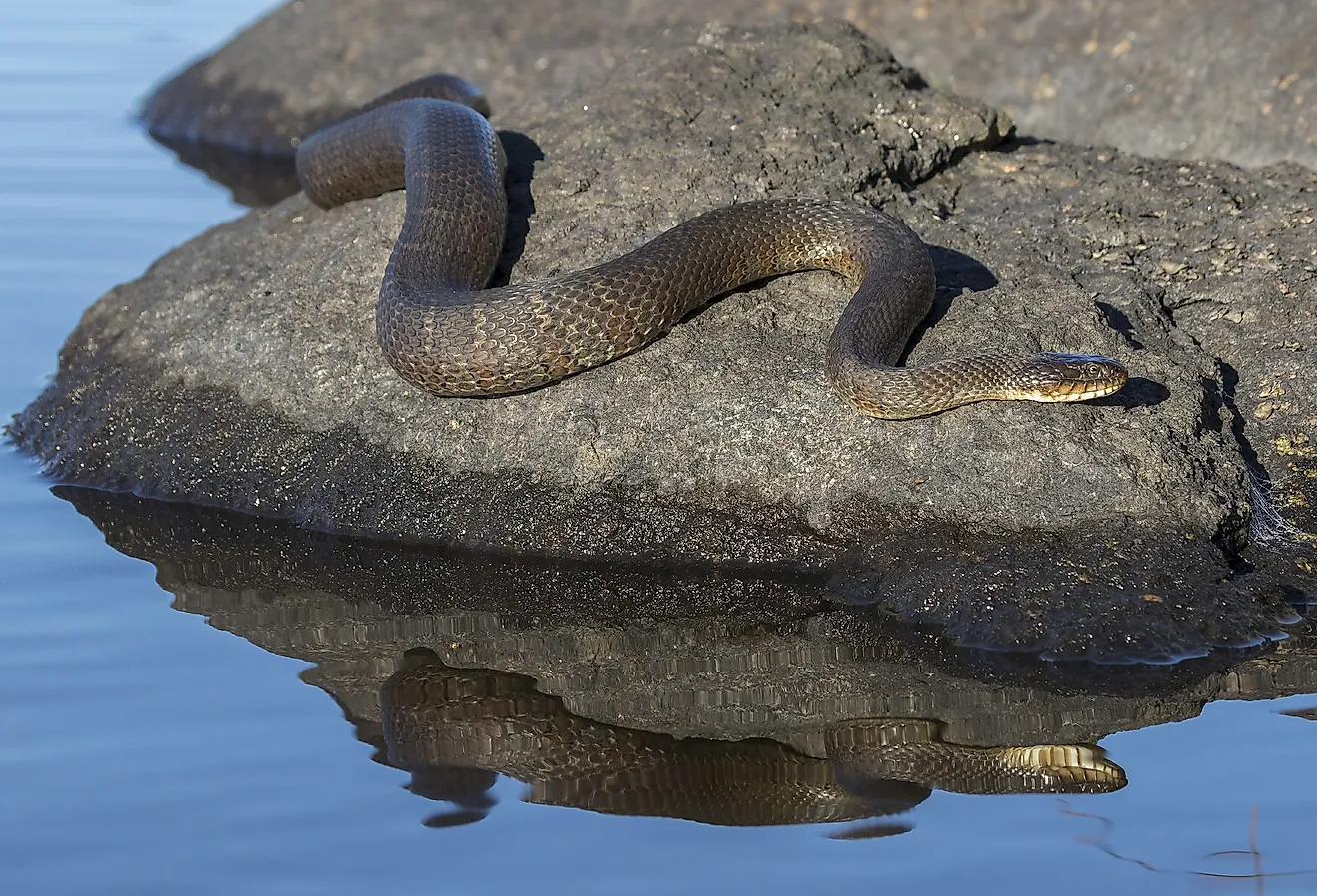
The Pecos River starts as a cold trout stream in the Sangre de Cristo Mountains and leaves the state as a warm, slow desert river bound for Texas, and its snakes change right along with it. In the forested upper canyon, prairie rattlesnakes sun themselves on rocky slopes above the water. Downstream, the lower Pecos in Eddy County is home to the blotched watersnake, a form of the plain-bellied watersnake that is found in New Mexico only in this river system. Unlike garter snakes, watersnakes are true river specialists, rarely venturing far from the bank and slipping into the current at the first sign of danger.

The lower Pecos also supports the western ribbon snake, a slim, striped species often mistaken for a garter snake. Both the blotched watersnake and the ribbon snake are tracked by state wildlife biologists because they depend on steady, healthy water, which is increasingly scarce in this stretch of desert. Their presence is a good sign. A river with snakes is a river that still has fish, frogs, and plants to feed them.
Sharing The Riverbank With Snakes
Most snakes along New Mexico's rivers are harmless, and even the venomous ones would rather hide than fight. They are most active in the warmer months of spring, summer, and fall, so watch where you step and put your hands, keep to clear trails near brushy banks, and never try to handle or move a snake. If a bite does happen, stay calm, call 911, and contact Poison Help at 1-800-222-1222. Give these river dwellers some space, and they will keep doing what they do best, keeping rodents in check and showing that New Mexico's rivers are still very much alive.