The Last Ferries Still Crossing The Mississippi River
At Cassville, Wisconsin, drivers can press a button at the landing to summon a ferry across the Mississippi. Farther south, the Dorena-Hickman Ferry carries vehicles between Missouri and Kentucky, where no bridge directly connects the two states. The Mississippi's surviving ferries still fill gaps that a highway map makes easy to overlook. Some carry commuters before sunrise; others connect the two sides of the Great River Road during the warmer months. In New Orleans, passengers can cross downtown without bringing a car at all. At Lansing, Iowa, a temporary ferry is carrying vehicles during bridge construction, shortening a posted road detour of roughly an hour.
Lansing Car Ferry, Iowa And Wisconsin

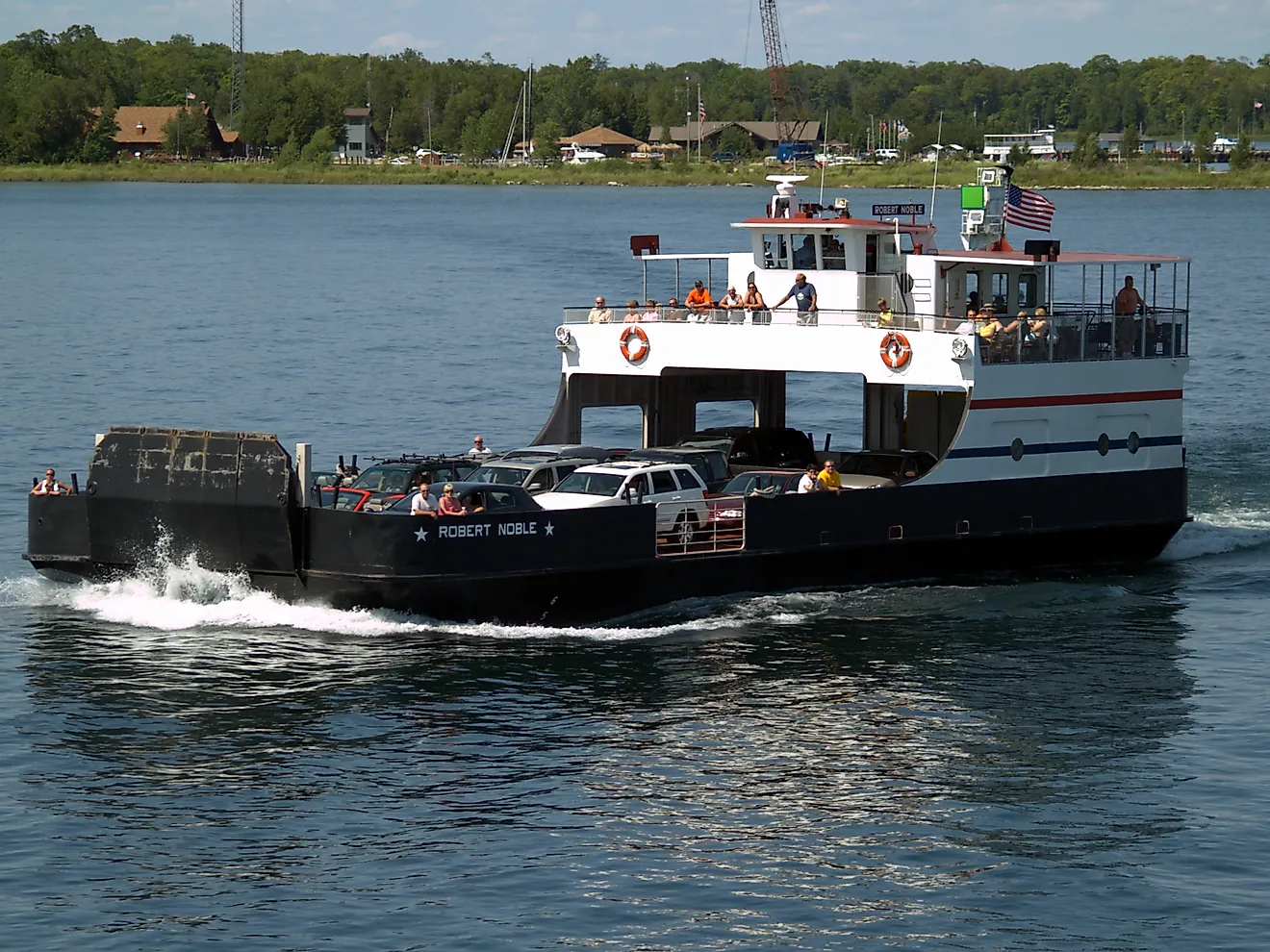
At Lansing, a missing bridge has brought ferry transportation back into daily use. Iowa and Wisconsin provide a free car ferry while the replacement Iowa 9/Wisconsin 82 bridge is under construction. The boat links Lansing Marina with the western end of Wisconsin 82, near the bridge work. A typical trip takes about 15 minutes, including loading and unloading, compared with a posted road detour of roughly 60 to 70 minutes.
The landing itself helps explain the restrictions. Drivers exiting the landing in Lansing face a tight uphill turn, so trailers are prohibited. About 12 vehicles fit aboard, depending on their size. The service is temporary, with November 6, 2026, listed as its final day. Drivers can view traffic queues on the state's ferry cameras.
Cassville Car Ferry, Wisconsin And Iowa

A little farther downstream, the Pride of Cassville connects two stretches of the Great River Road. Its Wisconsin landing is in Cassville; the Iowa landing lies near the mouth of the Turkey River. The crossing runs slightly upstream toward Iowa, taking about 15 to 20 minutes. With no bridge in Cassville, the ferry lets travelers switch riverbanks without driving to a crossing farther north or south.
During operating hours, a button at either landing signals that someone needs a crossing. Cars and cyclists use the same service, with a standard vehicle currently costing $20 one way and a bicycle or walk-on passenger $5.
Summer brings daily service between Memorial Day and Labor Day. May, September, and October generally have Friday-through-Sunday operations, subject to river conditions.
Channel Cat Water Taxi, Iowa And Illinois

The Quad Cities use their ferry differently. MetroLINK's Channel Cat links four riverfront landings, giving passengers a way to move between Iowa and Illinois without returning to a parked car. Moline has stops at Riverbend Commons and John Deere Commons. Across the water, the route serves Bettendorf and the Village of East Davenport. Bicycles are welcome, and the Riverbend Commons landing adjoins the Great River Trail. The service began in 1995, then became part of public transit as bridge repairs complicated travel between the states. An $8 adult ticket now allows unlimited rides on the day it is activated. Riders can get off near the John Deere Pavilion or spend time around East Davenport before boarding again. This is a seasonal crossing: the published 2026 schedule wound down to weekends only and ran into mid-October.
Golden Eagle Ferry, Missouri And Illinois

Calhoun County occupies a narrow peninsula between the Mississippi and Illinois rivers. Reaching it by ferry means choosing the correct river: Golden Eagle crosses the Mississippi, while the Brussels and Kampsville ferries cross the Illinois. Golden Eagle connects St. Charles County, Missouri, with the southern part of the peninsula. Beyond the Illinois landing, the county's roads lead through farming country known for summer peaches and fall apples. Eberlin's Orchard in Golden Eagle has grown peaches since 1988, with sales during July and August. Calhoun Ferry Company runs the crossing year-round, carrying people traveling to work as well as visitors heading into the orchard country. Walking passengers and cyclists can board alongside vehicles. The posted fare for a passenger car or small truck is $10 one way; the company's nearby Winfield Ferry is currently listed as closed.
Grafton Ferry, Missouri And Illinois

Grafton sits where the Illinois River meets the Mississippi, and its ferry crosses that confluence area to St. Charles County, Missouri. The five-to-ten-minute ride brings vehicles directly to the Illinois riverfront town. A trip that would otherwise involve driving around to a bridge can be more than half an hour shorter, depending on the starting point.
In April 2026, Grafton expanded the ferry to seven-day, year-round service, weather permitting. The city purchased the ferry with help from an Illinois transportation grant, while Calhoun Ferry Company continues to operate it. Previously, the schedule had been limited to Fridays through Sundays during the warmer part of the year. The expanded weekday service includes a 5 a.m. start Monday through Saturday, opening the crossing to people traveling between Grafton and jobs on the Missouri side.
Ste. Genevieve-Modoc Ferry, Missouri And Illinois

Known as the French Connection, the Ste. Genevieve-Modoc Ferry crosses between two areas closely connected by French colonial settlement. On the Missouri bank, Ste. Genevieve preserves French colonial houses, including buildings constructed with upright logs. Across the Mississippi, roads lead toward Fort de Chartres near Prairie du Rocher, Illinois. The partially reconstructed stone fort recalls the 1750s, when France controlled this part of the river valley.
Boarding takes place at Little Rock Landing outside Ste. Genevieve and at the Modoc landing in Illinois. The trip takes about 10 to 15 minutes. Cars share the crossing with bicycles and pedestrians; the operator also accepts horses. Its current standard-vehicle fare is $20 one way, with a discounted same-day return. Travelers need to account for the ferry's limited operating days, which become fewer in winter. The last boarding requires arrival at the landing 30 minutes before closing.
Dorena-Hickman Ferry, Missouri And Kentucky

Missouri and Kentucky share a river boundary without a bridge directly joining them. The Dorena-Hickman Ferry carries vehicles across that gap, connecting Kentucky 1354 near Hickman with roads leading to Missouri Routes A and 77. A driver can cross straight into the neighboring state instead of going through a third state to reach a bridge.
The setting changes south of the Ohio River's mouth, where the Mississippi carries the combined flow of both rivers. At Dorena-Hickman, access depends partly on what happens around the landings. Low water has repeatedly interrupted service, with silt building up at the landings and closures that have lasted weeks until the river rose enough for vehicles to load again.
The ferry takes cash, and its last departures move earlier in the winter schedule. The operator posts closures when low water or repairs prevent the boat from running.
Plaquemine-Sunshine Ferry, Louisiana

South of Baton Rouge, the Plaquemine-Sunshine Ferry carries workers and other travelers between opposite sides of the Mississippi. The road alternative listed by Louisiana's transportation department is a 29-mile detour using the Interstate 10 bridge.
The working schedule starts at 4:30 a.m. on weekdays, with an additional ferry scheduled during the morning and afternoon commuting periods. Each vessel can carry about 35 standard cars. Louisiana DOTD charges $1 per car heading west toward Plaquemine; eastbound travel is free. Weekend service begins later, at 9:30 a.m., so an early Saturday drive across the river still requires planning around the bridge.
Canal Street-Algiers Point Ferry, Louisiana

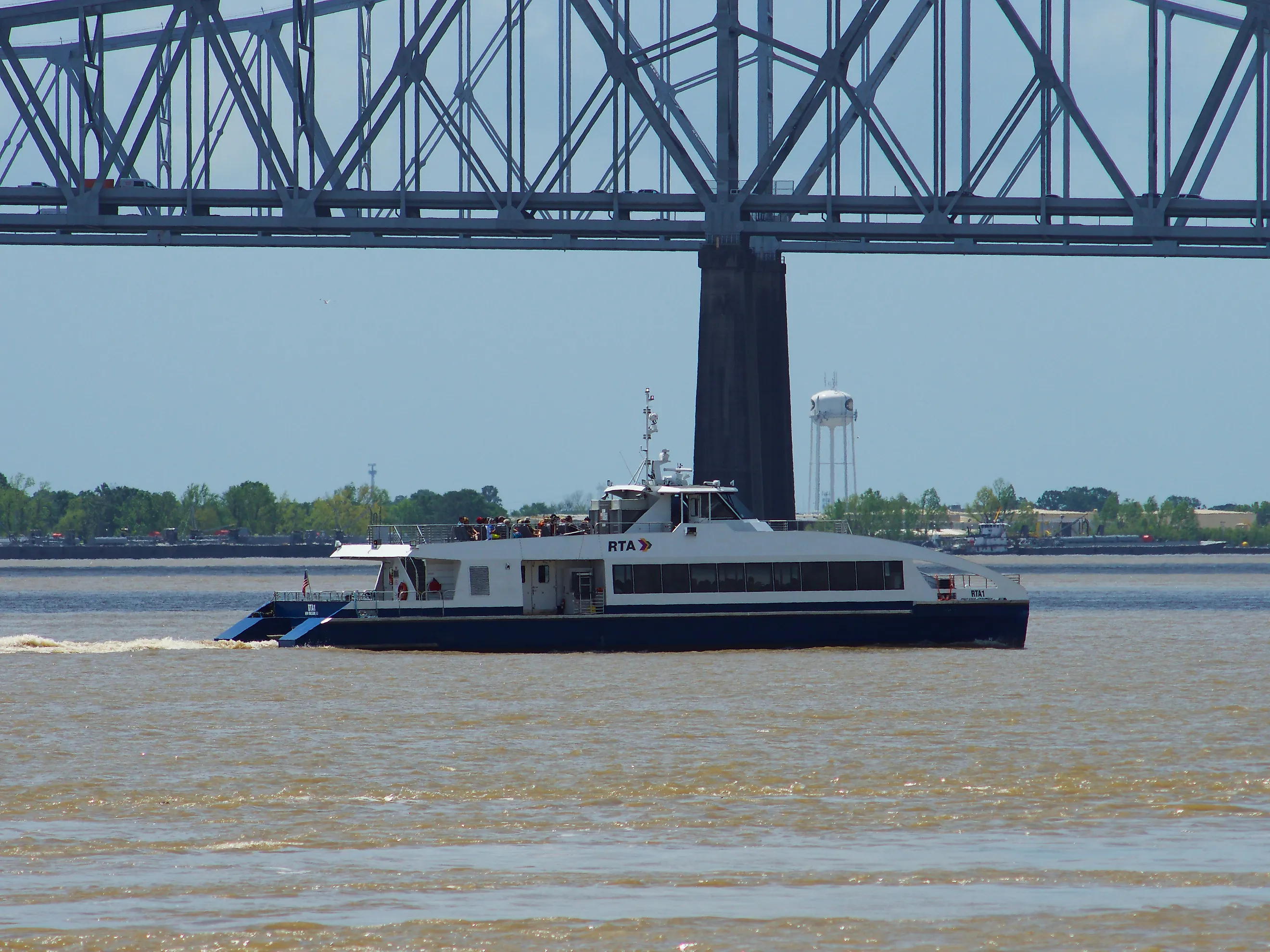
At the foot of Canal Street, the Mississippi becomes part of New Orleans' public transit network. The ferry carries pedestrians and bicycles across to Algiers Point, where the levee provides a view back toward downtown and the French Quarter. Algiers' residential streets extend inland behind the west-bank landing.
Ferry service between Algiers and New Orleans dates to 1827. Today's passenger route lets residents commute across the river and visitors reach the neighborhood without driving over the Crescent City Connection. The standard single-ride fare is $2. Departures generally run every half hour, with later service on Friday and Saturday nights. Drivers who need to take a vehicle across the river cannot board at Canal Street. The vehicle ferry operates farther downstream between Chalmette and Lower Algiers.
Chalmette-Lower Algiers Ferry, Louisiana

Driving between Chalmette and Lower Algiers by bridge means an 18-mile detour, according to Louisiana DOTD. The vehicle ferry crosses the Mississippi directly between those communities, carrying cars as well as people traveling on foot or by bicycle. It serves a different part of the metropolitan riverfront than the Canal Street passenger route, connecting St. Bernard Parish with Lower Algiers.
Its dependence on the landing became especially clear in 2026. An inspection identified problems with the Chalmette ferry bridge, the structure used to reach the boat. Service stopped while repairs were made, then resumed May 23. The crossing remains part of the Regional Transit Authority's daily ferry network. The nearby Chalmette Battlefield preserves the site of the January 8, 1815, Battle of New Orleans, downriver from the French Quarter.
Belle Chasse And Pointe A La Hache Ferries, Louisiana

Below New Orleans, Plaquemines Parish stretches along both banks of the Mississippi. Two vehicle ferry routes connect communities on opposite sides. The northern crossing joins Belle Chasse with Scarsdale, near Braithwaite. Farther downstream, the Pointe a la Hache crossing links the east-bank community with the west bank in the Port Sulphur area.
The routes have different limits for drivers towing boats or trailers. Belle Chasse allows a combined vehicle-and-tow length of up to 60 feet; Pointe a la Hache allows 50 feet. Their schedules differ, too. Belle Chasse's published service extends past 10 p.m., while Pointe a la Hache's final departure is at 5:45 p.m. The port operates both crossings for vehicles and pedestrians, giving residents a way to travel between the parish's riverbanks without first heading back toward New Orleans.
How The Crossings Are Changing
Grafton's expanded schedule makes a ferry available on weekdays when the old seasonal timetable offered no crossing. Lansing's temporary service has handled a different need, carrying about 555 vehicles a day during summer 2026 while the highway bridge was unavailable. Building its replacement also required room on the river. In June, the new center span traveled into position on barges before crews lifted it above the navigation channel. Ferry service paused for the installation. Iowa and Wisconsin now plan to open the bridge on November 6, ending the temporary ferry the same day. The landing areas will then be restored as part of the remaining construction work.