What Lies At The Bottom Of Lake Tahoe
Lake Tahoe's depths have inspired stories of mobster victims, lost ships, and a mysterious creature known as Tahoe Tessie. While tales of bodies preserved on the lakebed remain unsubstantiated, researchers have documented shipwrecks, underwater landslides, and ancient geological formations. In September 2025, a remotely operated vehicle called Deep Emerald livestreamed footage from the bottom of Lake Tahoe, offering the public a rare glimpse of its deepest environment. The expedition built on decades of scientific research and underwater exploration, revealing more about what lies beneath the lake's surface.
The Mysteries Beneath Lake Tahoe

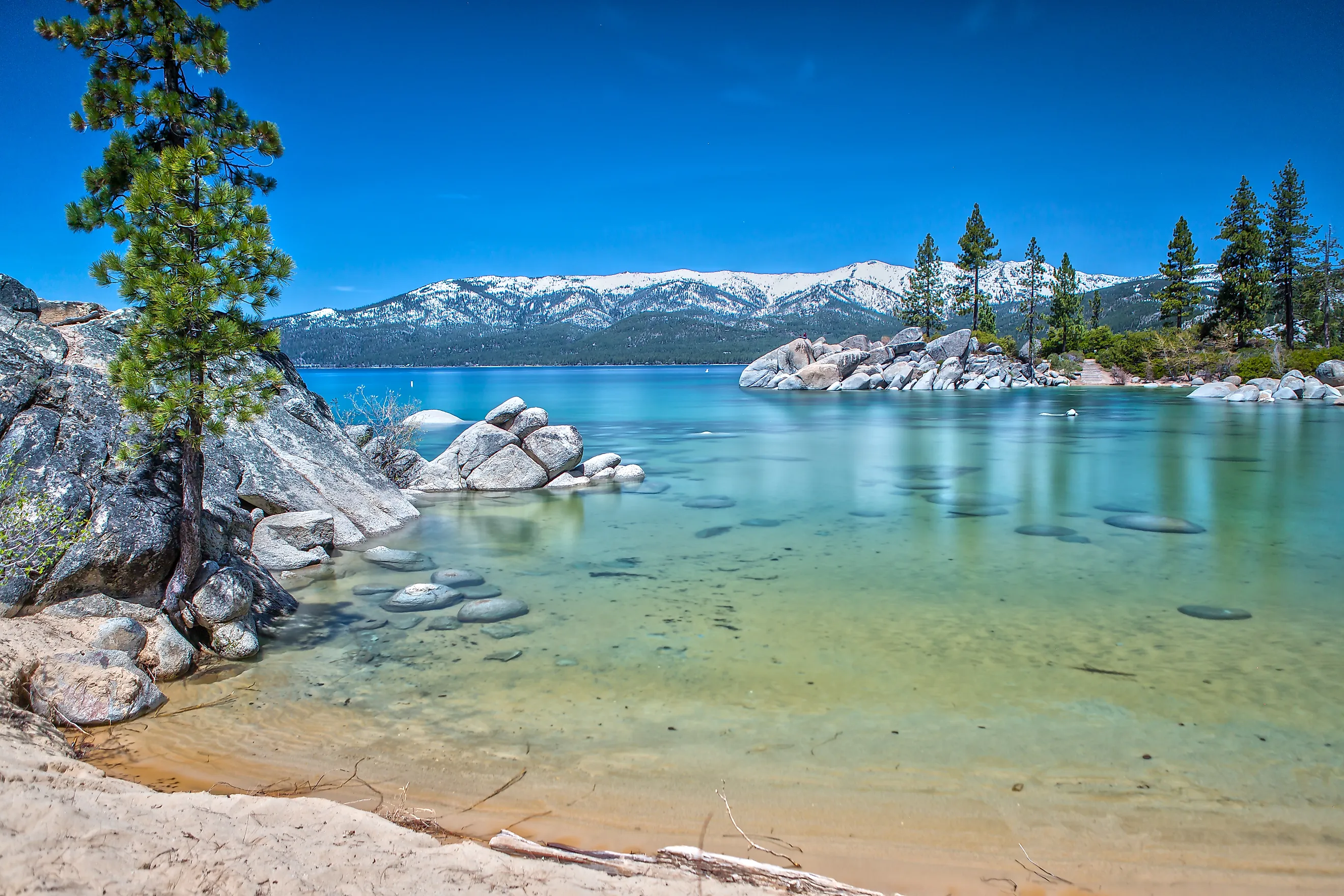
Lake Tahoe, on the border of California and Nevada, is North America's largest alpine lake by surface area. With a maximum depth of approximately 1,645 feet (501 meters), it is also the second-deepest lake in the United States, behind Oregon's Crater Lake. Its enormous volume and exceptional water clarity have made it a subject of scientific research for decades. The lake has also inspired numerous legends. One longstanding story claims that organized crime figures operating around Nevada's casinos disposed of bodies in the lake during the 20th century. Some versions suggest that hundreds of victims remain preserved in its cold waters. However, there is no credible evidence to support these claims, and underwater expeditions have not uncovered the rumored mass burial sites.
Another familiar legend concerns Tahoe Tessie, a mysterious aquatic creature allegedly inhabiting the lake. Although no scientific evidence supports its existence, Tessie has become a recognizable figure in local folklore, appearing in artwork, merchandise, and children's books. Beyond these stories, Lake Tahoe contains documented geological features and remnants of human activity that offer a more reliable account of its underwater history.
The Rocky Bottom and Ancient Geological Formations

Lake Tahoe's geological history began millions of years ago, when faulting and movement of the Earth's crust created a deep basin between rising mountain ranges. The basin predates the modern lake by millions of years. Subsequent volcanic activity helped establish its boundaries, while glaciers carved surrounding valleys and influenced the landscape during successive ice ages. Scientific sonar surveys have identified massive underwater landslide deposits, steep slopes, and sediment-covered areas across the lakebed. These features reveal a geological history that includes major slope failures and the gradual accumulation of material from surrounding mountains.
During the September 2025 Deep Emerald expedition, researchers livestreamed footage from the lake's deepest environment. The remotely operated vehicle examined bottom sediments and rocky features. An expert involved in the expedition estimated that some sediment contained approximately 6% to 7% organic material, with the remainder consisting largely of inorganic particles derived from the surrounding landscape.
The vehicle also revealed how different conditions are at great depths. Water temperatures near the bottom remain around 40 degrees Fahrenheit (4 degrees Celsius), and sunlight cannot reach the lakebed. No fish were observed in the limited area shown during the livestream, although that observation does not mean the deepest waters are completely devoid of aquatic life. The footage provided a valuable view of an environment that remains difficult to study directly.
Fish and Other Aquatic Life

Lake Tahoe supports a variety of native fish, introduced species, and small aquatic organisms. Most visible plant growth and photosynthetic activity occur in the upper waters, where sufficient sunlight penetrates. As depth increases, light weakens and eventually disappears, limiting the organisms that can survive by photosynthesis. However, aquatic animals can inhabit deeper waters. Earlier underwater explorations have documented fish hundreds of feet below the surface, while scientific studies have identified invertebrates adapted to cold, dark environments. The Lake Tahoe benthic stonefly, for example, has historically been recorded at depths approaching 900 feet (274 meters).
Among the lake's native fish is the mountain whitefish, its only remaining native game fish. Other native species include the Tahoe sucker, tui chub, Lahontan redside shiner, speckled dace, and Paiute sculpin. Mountain whitefish typically feed near the bottom of cold lakes and streams, while Tahoe suckers consume invertebrates, algae, and other organic material.
One particularly important introduced species is the Mysis shrimp. These small, shrimp-like crustaceans were introduced into Lake Tahoe in the 1960s to provide food for game fish. Instead, they competed with native zooplankton and contributed to changes in the lake's food web. Their effects on populations of algae-eating zooplankton have also influenced water clarity. Mysis shrimp migrate vertically through the water column, generally retreating to deeper, darker water during daylight and moving upward at night to feed. They are among the organisms demonstrating that aquatic activity continues below the lake's sunlit surface.
Shipwrecks and Sunken Objects

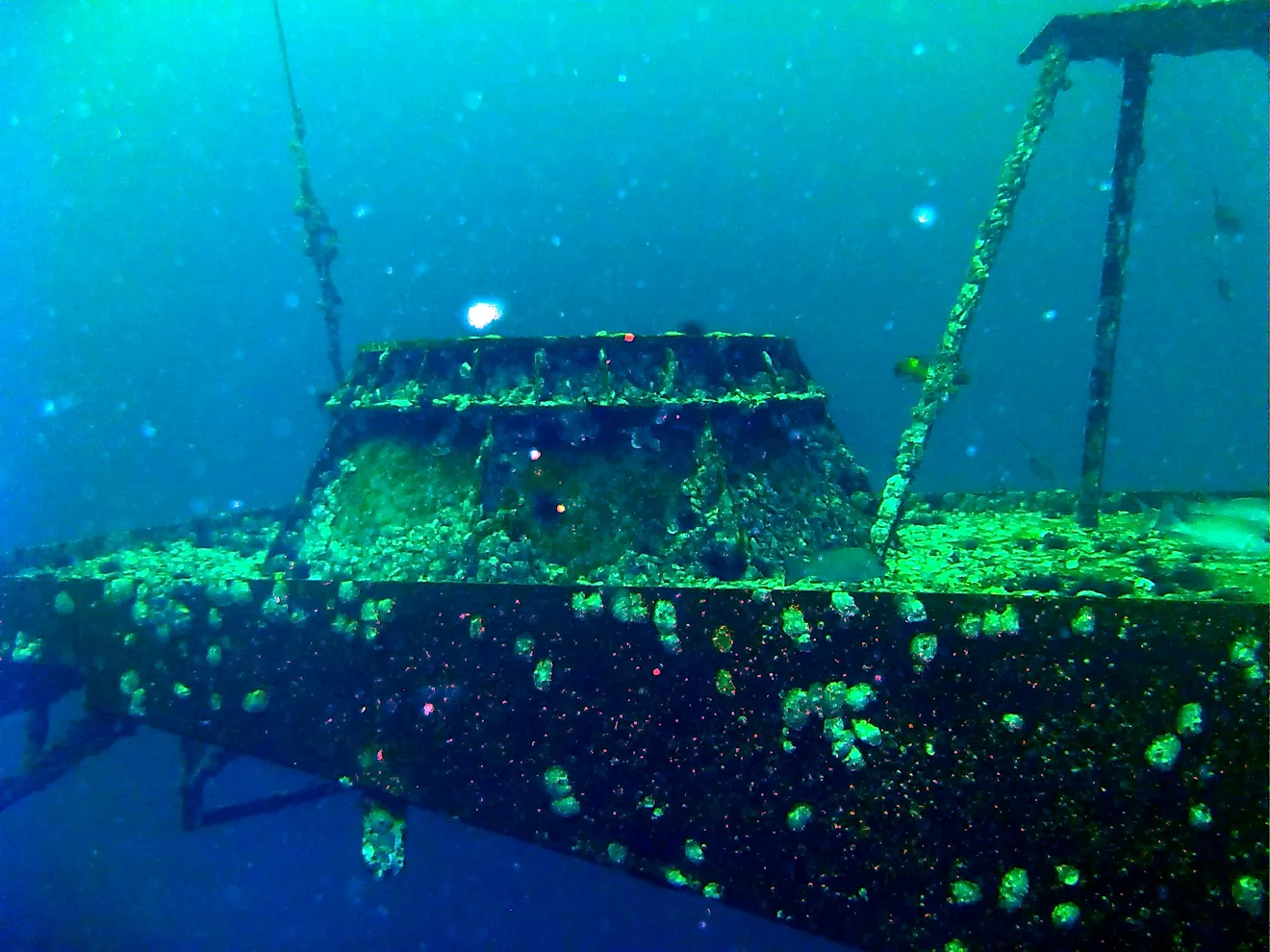
Lake Tahoe's underwater history also includes steamships, wooden boats, barges, and other objects associated with more than a century of transportation and recreation. Some vessels sank accidentally, while others were deliberately scuttled after they were no longer needed. One of the best-documented wrecks is the SS Tahoe, a large passenger steamship that operated on the lake for decades before being deliberately sunk in 1940.
The vessel was intended to settle at a relatively accessible depth, but it slid farther down the steep underwater slope. According to National Park Service archaeological documentation, its bow rests approximately 385 feet (117 meters) below the surface, while its stern lies around 460 feet (140 meters) deep. Researchers have also documented historic wooden vessels preserved beneath the lake. In 2008, an underwater exploration located a wooden boat believed to date from the late 19th century. The lake's cold water and relatively stable conditions at depth can help preserve submerged materials, although deterioration and corrosion still occur.

Emerald Bay is especially notable for its underwater cultural heritage. Once a destination for resorts and recreational boating, the bay contains historic barges, small boats, and discarded objects. California State Parks protects several submerged vessels within the Emerald Bay Maritime Heritage Trail, which features four underwater dive sites. These wrecks offer visitors a glimpse of the boats once used for transportation, construction, and recreation around the lake.
The SS Meteor, Lake Tahoe's first iron-hulled ship, also sits somewhere at the bottom of the lake. Originally used for transportation and freight, it later served passengers and carried mail. After decades of operation, the vessel was deliberately sunk, although its precise resting place has never been conclusively established. Cold temperatures and reduced wave disturbance at greater depths can slow some processes that damage submerged wooden structures. However, preservation varies depending on water chemistry, oxygen availability, and the materials involved. These conditions have helped make Lake Tahoe an important location for studying historic vessels.
What Lies Beneath the Surface?
Lake Tahoe's depths contain evidence of millions of years of geological activity alongside historic vessels and small aquatic organisms. The September 2025 Deep Emerald livestream offered a new public view of this environment, building on earlier sonar surveys and underwater investigations. Although stories of mobster victims and Tahoe Tessie remain part of the region's folklore, the lake's documented discoveries are remarkable in their own right. Continued research may uncover additional geological features, biological communities, and traces of Tahoe's maritime past.