The State Parks With The Most Cottonmouths
Venomous cottonmouths thrive where shallow water, plenty of prey, and dense foliage meet, conditions protected across many Southern state parks. Lakeside trails and campgrounds bring lots of curious visitors close to these habitats, too, even when they know snakes remain hidden among roots or shoreline plants. From Florida's coastal wetlands to the flooded forests of Tennessee, each park we will discuss here supports a different mix of feeding grounds and shelter for the cold-blooded predators. Knowing where cottonmouths live helps you explore more carefully without necessarily treating every watersnake as a threat, letting you safely take a closer look at these lively environments.
Gulf State Park, Alabama

Cottonmouths turn up beyond the sun-soaked beaches at Gulf State Park, where countless visitors and park workers alike have documented them crossing roads, resting on trails, and turning up in the local campground. This stretch of Alabama's coast between Gulf Shores and Orange Beach contains the freshwater marshes, wooded wetlands, and lakes that provide suitable hunting grounds for these venomous, semiaquatic snakes. Fish and frogs supply the bulk of their food, while shoreline vegetation offers cover when not eating.
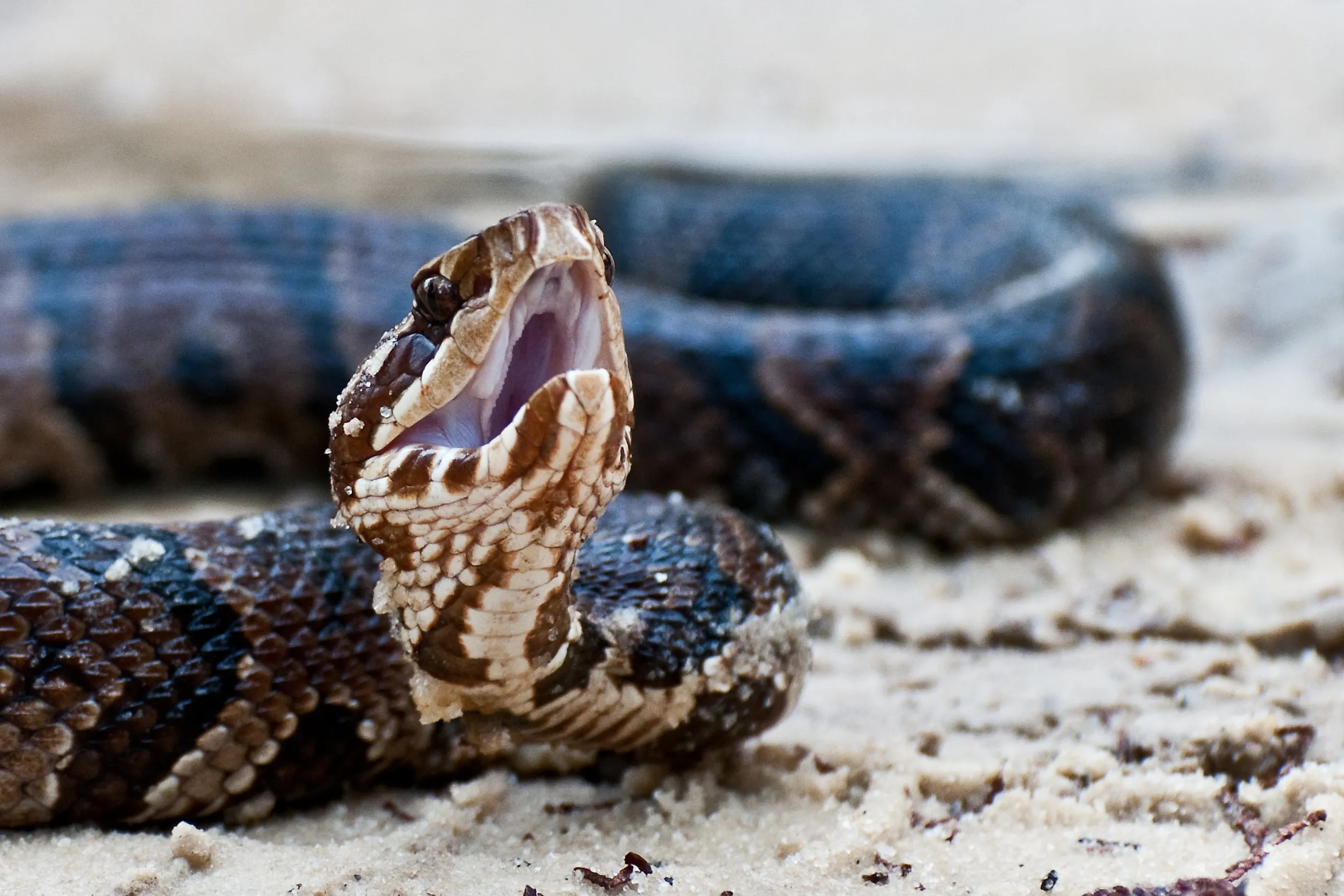
Visually, cottonmouths have heavy bodies and pale mouth linings, which they may expose defensively when threatened. This is a good thing to know, particularly around Middle Lake, a campsite that places overnight visitors beside snake habitat. The Hugh S. Branyon Backcountry Trail also takes walkers and cyclists through wetland environments where sightings are regular.

Stay on established paths, watch where you step near banks, and give any snake species room to move away. Furthermore, never approach or provoke a cottonmouth to see its unique defensive display, as this stresses the snake and puts you in harm's way.
Brazos Bend State Park, Texas

Just outside of Houston, heavy rains regularly expand cottonmouth habitat at Brazos Bend State Park, filling temporary ponds across coastal prairie already interspersed with lakes, marshes, and wooded swamps. This is one of many preserves near the Gulf Coast that house healthy populations of cottonmouths and dozens more snake species alongside other reptile communities, namely American alligators.
The water here extends well beyond the obvious lakeshores, creating feeding areas and shelter throughout its lowlands, too. The Spillway Trail connects Elm Lake and 40 Acre Lake through bottomland hardwood swamp, giving hikers a close look at this very wet environment. Nearby, the observation tower at 40 Acre Lake overlooks another array of marshes and hardwood wetlands, while the Elm Lake wildlife viewing platform provides a great vantage point.

These are useful places to appreciate the habitat without entering thick bankside growth, spaces where attacks from snakes and alligators alike are far more likely to happen. After rainfall, pay particular attention to shallow pools beside trails as well as permanent waterbodies, and allow any crossing wildlife to pass without interference.
Myakka River State Park, Florida

Florida's own cottonmouths are no stranger to Myakka River State Park, where the river links Upper Myakka Lake and Lower Myakka Lake through freshwater wetlands. East of Sarasota, this protected stretch also includes wooded floodplains and hammocks, offering resident snakes both aquatic habitat and cover on land. With that, their presence has long been recorded in the park's wildlife inventory.

Unlike the northern cottonmouths found across much of the Deep South, the "Florida cottonmouth" belongs to a distinct species native to none other than peninsular Florida and nearby areas. Young Florida cottonmouths have yellow tail tips that they wiggle to attract prey, a hunting technique that fades as they mature. That being said, adults are usually active around dusk and after dark, although daytime sightings occur. For campers, that makes a flashlight useful when walking after sunset. They also like to travel away from water at times, so a dry trail does not rule out an encounter.
Reelfoot Lake State Park, Tennessee

A series of earthquakes in 1811 and 1812 helped create the flooded forest that makes Reelfoot Lake State Park's distinctive, reptile-friendly habitat. Set in northwestern Tennessee, its shallow waters spread out among forests full of bald cypress trees, submerged stumps, and swampy shorelines. These sheltered margins suit cottonmouths, giving them places to hunt and retreat beneath woody debris.
Exploring the lake brings you close to this environment, whether fishing from the bank or paddling among the cypress stands. The aptly named Cypress Boardwalk behind the Visitor Center offers another way to examine the flooded woods without stepping into shoreline vegetation.

However, any snake beside the water is not necessarily a venomous one. Tennessee's wildlife officials describe southern watersnakes as common at Reelfoot Lake, where they are frequently mistaken for the venomous species. The overlapping habitats for the two often make identification from a distance difficult for inexperienced visitors, so just to be sure, leave all snakes undisturbed and avoid reaching into concealed spaces.
Chicot State Park, Louisiana

An 8-mile (13 km) canoe trail leads into the watery interior of Chicot State Park, where cypress and tupelo swamps provide ideal living space for numerous cottonmouths. Near Ville Platte, Louisiana, the park surrounds Lake Chicot with rolling, wooded hills. That combination puts wetland wildlife close to popular fishing spots, paddling routes, and sections of the backpacking trails encircling the lake.
Local cottonmouths tend to inhabit the water's margins and adjacent forests, so encounters are possible ashore as well as while boating. Definitely note that dense vegetation and fallen timber can conceal resting snakes very well, especially in places where hikers descend from higher ground into damp lowlands.

Primitive campsites along hiking routes make careful site checks sensible before settling in. And for paddlers, the practical precaution is to inspect landings before stepping out, keeping hands clear of roots and submerged branches when pulling a boat onto shore.
Keep an Eye Out for Snakes at these Wonderful Parklands
From the Texas coast to the Florida Keys, snakes are part of what makes America's state parks so biologically rich, cottonmouths no less. But their presence calls for awareness from hikers, anglers, campers, and anyone else exploring the great outdoors. In order to avoid a trip-ruining bite, keep your attention on the ground when approaching water, and leave room for whatever kind of snake you come across to retreat when startled.