Why Bald Cypress Can Live With Their Roots Underwater
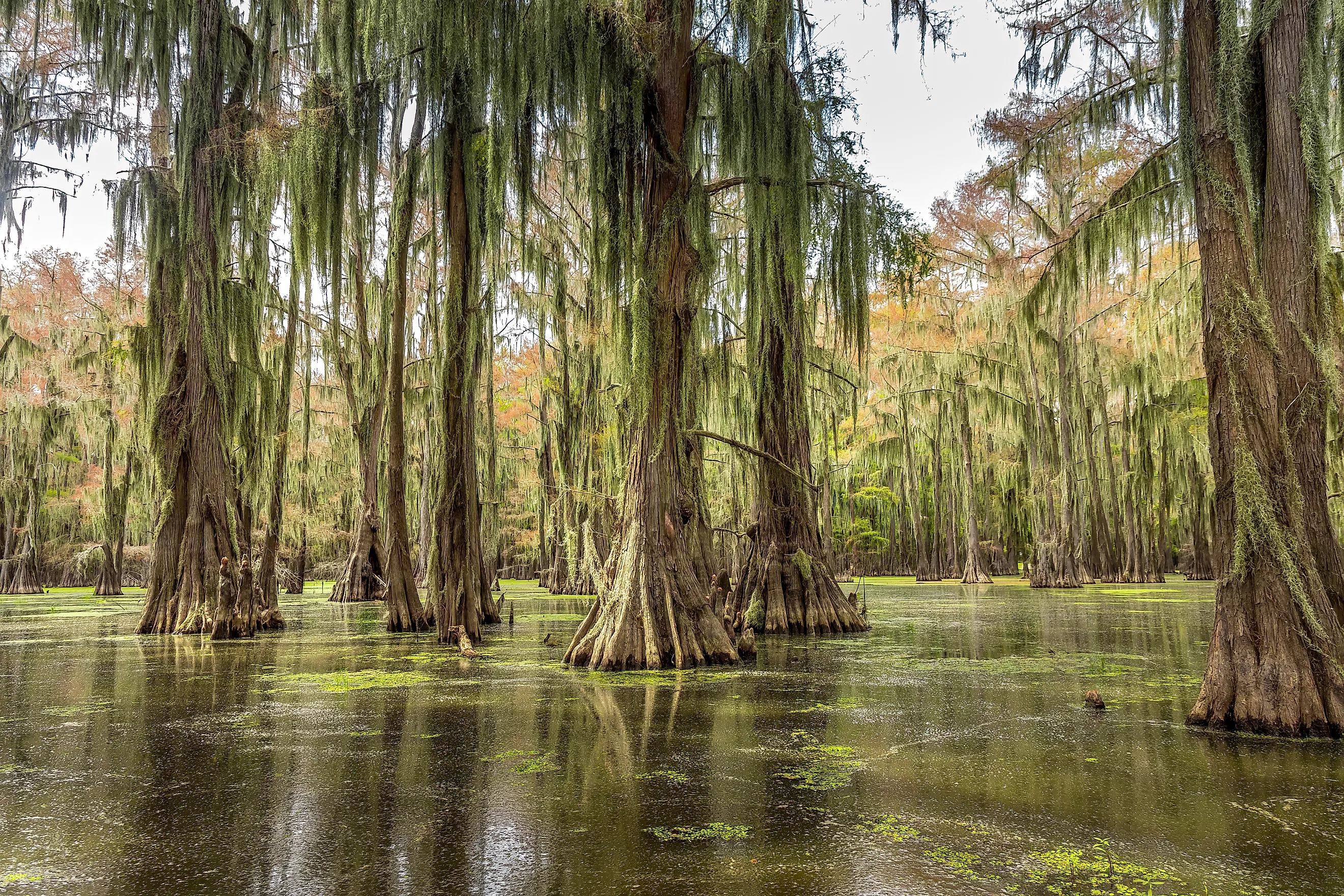
Standing in several feet of standing water for months at a time would kill most trees within a single growing season, yet bald cypress (Taxodium distichum) trees regularly spend at least half of the year with their root systems submerged. These unique trees survive this saturation through a combination of specialized root tissue, above-water conical structures, buttressed trunks, and a wood chemistry that resists the rot most waterlogged trees could not escape.
These four adaptations, working together, explain why cypress swamps dominate the flooded lowlands of the American South while the vast majority of other tree species are restricted to higher, drier ground.
Resisting Oxygen Starvation Underground

Waterlogged soil kills most trees through suffocation. When water completely fills soil pores, oxygen diffuses nearly 10,000 times slower than it does in open air. Soil bacteria and fungi rapidly consume any remaining oxygen, leaving root cells deprived of the gas required for respiration. Most tree roots cannot function under those anaerobic conditions for more than a few days to weeks before cell tissue begins to die.
Bald cypress roots contain aerenchyma, a spongy tissue riddled with air channels that carries oxygen down from the stem and canopy to root cells sitting several feet underwater. That internal plumbing system lets the tree maintain root respiration even when the surrounding soil holds no available oxygen at all. This trait is shared with many wetland-adapted plants, from tupelo and mangrove to rice and alde.
Cypress Knees That Break the Surface

Aerenchyma tissue solves oxygen transport within the submerged roots, but bald cypress also grows a visible structure that most visitors notice before anything else: their knees. These conical projections rise anywhere from a few inches to more than ten feet above the waterline. They emerge directly from the horizontal root system and cluster most densely around the base of older trees.
Botanists have debated the exact function of cypress knees for more than a century. The main two theories suggest these knees may provide both structural and respiration support. The knees may act as pneumatophores, or a breathing aerial root structure that aids in additional oxygen supply when water levels are high. They may also help anchor the tree in the soft, saturated muck where a conventional taproot would struggle to hold.
Knee density tends to track water depth closely, with trees standing in the deepest, most permanently flooded sections of a swamp typically producing the tallest and most numerous knees.
Wood That Resists Rot
Standing water alone would still doom a tree over the long term through decay, since fungi and bacteria that break down cellulose thrive in wet, low-oxygen environments. To solve this issue, bald cypress heartwood contains a preservative compound called cypressene, along with tannins concentrated at levels considerably higher than in most hardwoods.
That chemical combination resists fungal decay so effectively that cypress logs submerged in southern swamps for more than 100 years still mill into usable lumber. The same rot resistance historically made cypress the preferred building material for docks, boat hulls, and roof shingles across the Gulf Coast. It explains why standing dead cypress trunks, or snags, remain upright in swamp water for decades after the tree itself has died.
Younger sapwood lacks the same chemical protection, which is why the outer rings of a cypress log decay well before the dense, reddish heartwood at its core.
Trunks Built for Flooding

Seasonal flooding does more than test a cypress root system. It also shapes how the tree grows above the waterline. Bald cypress trunks flare dramatically at the base, a feature called buttressing. This widens the tree's footprint and lowers its center of gravity in soil too soft to anchor a narrow trunk against wind and current.
That flare can push a mature trunk's basal diameter past ten feet even when the tree measures a fraction of that width 20 feet up. The growth pattern responds directly to water depth, producing more pronounced buttressing in permanently flooded stands than in cypress growing along seasonally dry margins.
Growth rings recorded during flood years also tend to run narrower than those laid down during drier seasons, giving dendrochronologists, those who study the scientific method of dating tree growth rings, a usable record of historical flood pulses preserved directly in the wood.
Individual bald cypress trees have been aged past 2,000 years using this ring record, making the species among the oldest living trees in eastern North America.
Where to See Bald Cypress Stands

Wetland sites across the South preserve bald cypress stands large and old enough to show the full scale of these adaptations.
Black River Preserve in southeastern North Carolina protects a stand of bald cypress along a 66-mile blackwater river where individual trees are older than 2,600 years, aged using ring counts. Among them are the oldest documented trees of any species in eastern North America, including the stands of Larkin's Cove and Three Sisters.
The Okefenokee Swamp, straddling the Georgia and Florida border across about 438,000 acres, holds cypress stands rooted in peat deposits more than seven feet deep in places. Boat tours depart from the swamp's eastern entrance near Folkston and move directly through stands of knee-studded cypress rising from black, tannin-stained water.
The Atchafalaya Basin in south-central Louisiana, the largest river swamp in the United States, supports cypress-tupelo forests with individual cypress trees estimated at more than 500 years old. Guided tours and paddling trips route through miles of dense cypress stands inhabited by a diversity of wildlife, including alligators, wading birds, and turtles.
Caddo Lake, straddling the Texas and Louisiana border, fills a natural lake basin formed by a log jam on the Red River sometime before the 19th century. Its flooded cypress groves, reachable by canoe or flat-bottom boat, hold some of the highest concentrations of mature bald cypress anywhere in Texas.
A Species Defined by Water

Every adaptation driving bald cypress survival traces back to the same underlying pressure: staying alive in soil that offers almost no oxygen for most of the year. Aerenchyma tissue keeps root cells breathing underwater, buttressed trunks hold the tree upright in soft sediment, and rot-resistant heartwood lets individual trees persist for centuries.