6 Most Alligator Filled Rivers In The United States
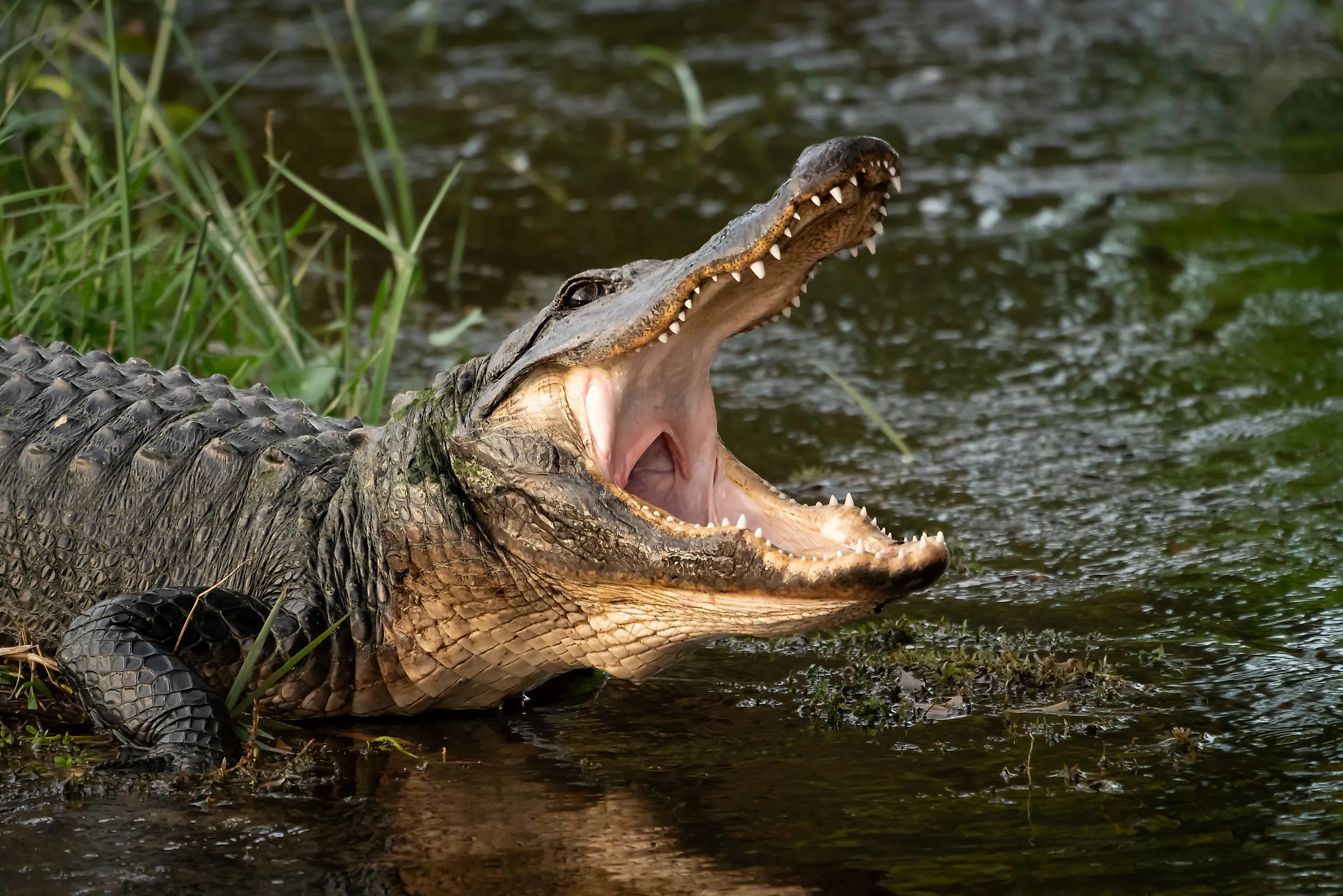
Although they were once hunted close to extinction for their hides, the American alligator (Alligator mississippiensis) has made a significant recovery, now with close to 5 million individuals spread across the southeastern United States. Alligators thrive in practically every body of water, but some river systems in particular support healthy alligator populations. The tidewater islands of the Altamaha River provide adequate nesting areas, while unprecedented population growth has occurred along the St. Johns River.
Shark River, Florida

The Shark River flows 9.5 miles (15.3 kilometers) through the southwestern portion of Everglades National Park before emptying into Ponce de Leon Bay in the Gulf of Mexico. The Shark River Slough is the main freshwater slough of the Everglades and carries freshwater into the estuaries along the Gulf of Mexico. The Everglades are home to over 200,000 alligators, but they are particularly abundant within the Shark River slough. A 13-year study on American alligator nesting and reproductive success in Everglades National Park conducted between 1985 and 1998 documented 849 alligator nests, 733 of which were recorded within the Shark Slough basin. Alligators are also regularly sighted near the Shark Valley Visitor Center. The Shark Valley is at the head of the Shark River Slough. A 15-mile (24-kilometer) loop trail is one of the most popular and accessible areas of Everglades National Park. The paved trail is known for having alligators bask alongside or even on the path, just steps from visitors.
St. Johns River, Florida

The St. Johns River is the longest river in Florida. It rises in the swamps of Brevard County in east-central Florida and flows north towards Jacksonville, where it turns to empty into the Atlantic Ocean. The river forms several large lakes, including Lake George, the second-largest lake in Florida on the east side of Ocala National Forest. The Florida Fish and Wildlife Conservation Commission (FWC) conducted surveys on alligator populations on the Lower Saint Johns River between 1989 and 2016. They estimated that populations of adult alligators increased in Lake George by 91% and in Welaka by 191%. Alligators were most abundant around naturally vegetated shorelines as opposed to manmade structures, like docks, houses, bridges, or hardened shorelines.
Altamaha River, Georgia

The Altamaha River is the largest free-flowing river on the East Coast of the United States. It flows 137 miles (220 kilometers) from its formation at the confluence of the Ocmulgee and Oconee Rivers to the Atlantic Ocean. The Georgia Department of Natural Resources conducted nest surveys along the Altamaha River between 1982 and 2019. Nests ranged from a low of 11 in 1982 to a high of 66 in 2002, with an average of 28 nests per year. The survey focused primarily on coastal marsh habitats in Georgia, particularly Rhett's Island, a tidewater island in the Altamaha River delta. The surveys are still conducted annually by the Georgia Department of Natural Resources. In 2025, 23 different nests were recorded across Rockdedundy, Broughton, Rhett's, and Rabbit Islands on the Altamaha River.
Savannah River, Georgia-South Carolina

The Savannah River is formed by the confluence of the Tugaloo and Seneca Rivers near Hartwell Dam. It flows for 314 miles (505 kilometers), forming the boundary between Georgia and South Carolina as it flows into the Atlantic Ocean. American alligators are restricted to the warmer Coastal Plain of the river system, including swamps, lakes, ponds, and the Central Savannah River of Georgia and South Carolina. In South Carolina specifically, individual alligators have been documented at over 13 feet (3.9 meters) in length. The Savannah River Ecology Laboratory (SREL) has monitored alligator populations in the Savannah River ecosystem for over 35 years. Their presence is abundant in the Savannah River and its greater watershed, including its swamps, tributaries, and reservoirs, like L-Lake and Par Pond.
Pearl River, Mississippi

The Pearl River is the longest entirely within Mississippi, flowing 411 miles (661 kilometers) from east-central Mississippi to Mississippi Sound on the Gulf of Mexico. The Mississippi Department of Wildlife, Fisheries, and Parks estimate that there are approximately 2,400 alligators in Rankin County, or about 7.4% of the state's alligator population. Most of these alligators inhabit a stretch of the Pearl River between Ross Barnett Reservoir and Ratliff Ferry. Alligators in Mississippi are reportedly much larger in comparison to Florida or Louisiana. In Pelahatchie Bay on Ross Barnett Reservoir, approximately 4.9% of recorded alligators exceeded 10 feet (3 meters).
Neches River, Texas

The Neches River flows for 416 miles (669 kilometers) through East Texas from Steinhagen Lake to its mouth on Sabine Lake on the Gulf of Mexico. It is often referred to as "The Last Wild River in East Texas" because of its largely intact, natural ecosystem. The Neches River flows through the Big Thicket National Preserve, which is composed of several tracts of land. A 2017 survey conducted by Lamar University observed that the highest concentration of alligators was found at the northern edge of the preserve, near Steinhagen Lake in the north and among brackish marshlands to the south. Further research in 2018 identified 44 possible nesting locations within the preserve, most of which were oxbow lakes along the Neches River, although some of them were around other ponds and lakes within the preserve.
The Rivers with the Most Alligators
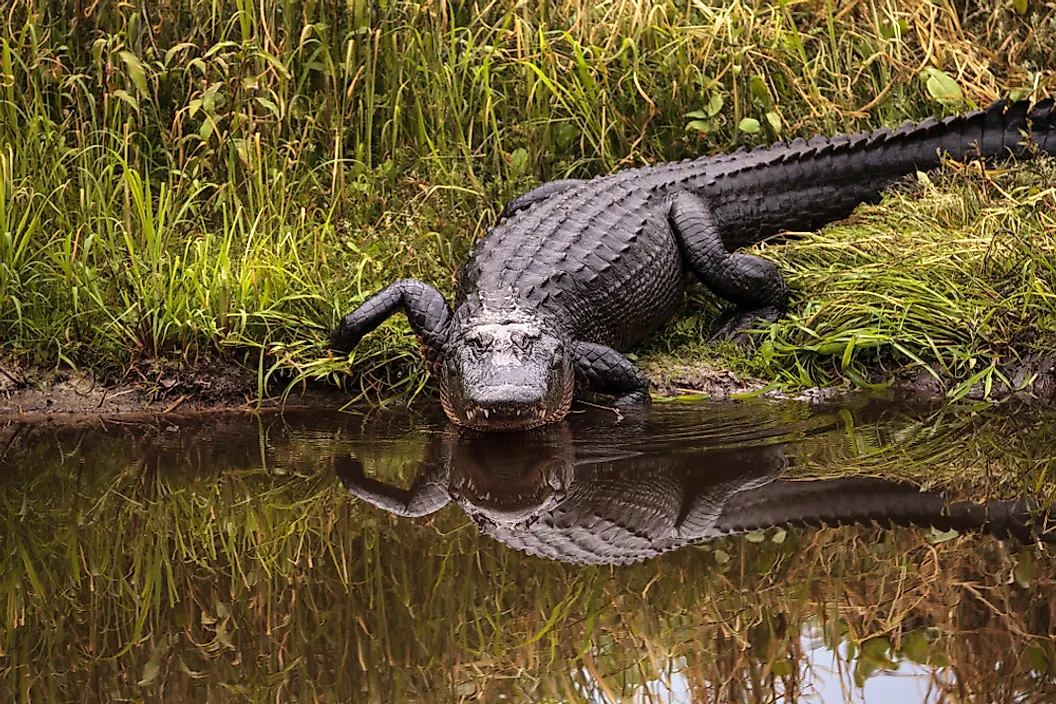
Across their native range, rivers of the southeastern United States have supported alligator populations, providing appropriate habitat and nesting grounds for their population to recover. Whether basking along vegetated riverbanks or moving through slow-moving coastal marshes, alligators remain an important species in America's waterways.