The Ocean Animals That Can Dive Deeper Than A Submarine
A nuclear submarine can travel about 984 feet beneath the ocean's surface, but some marine animals can venture much farther into its depths, such as the leatherback sea turtle. These dives take them into environments where sunlight fades, pressure increases, and survival requires remarkable adaptations. And for many species, reaching these depths is essential for finding prey. While humans depend on advanced technology to explore the ocean's hidden areas, certain animals, like the Cuvier's beaked whale, can dive thousands of meters below the rolling waves. These seven ocean animals can dive to mind-blowing depths, pushing far beyond the limits of an ordinary underwater journey.
Cuvier's Beaked Whale
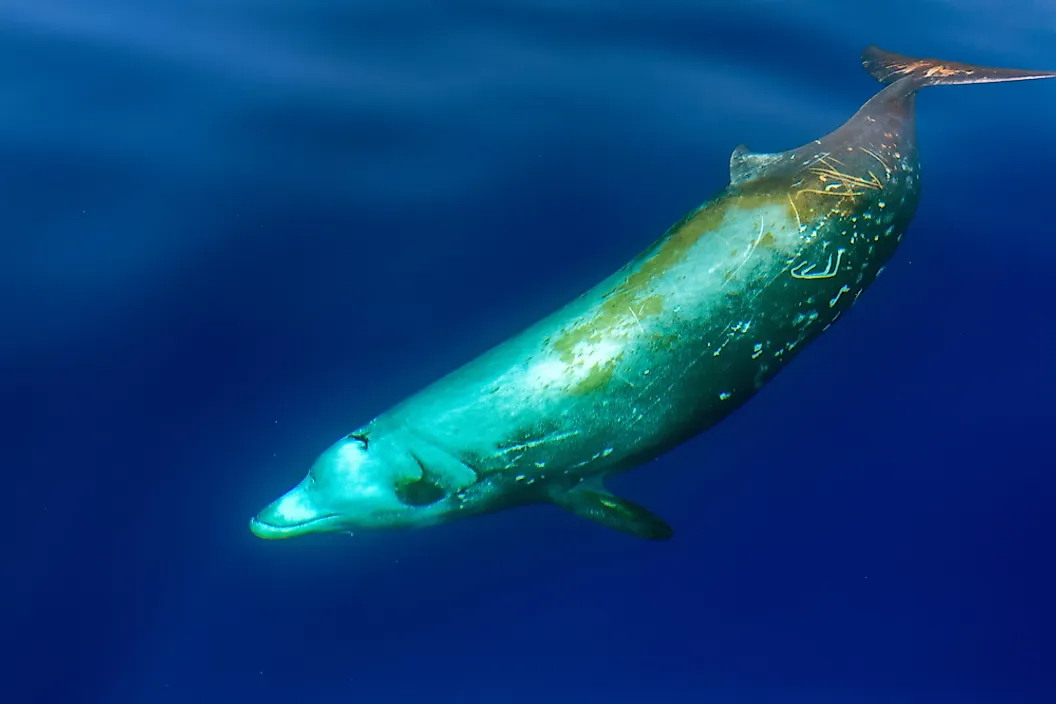
The Cuvier's beaked whale is a very deep diver, capable of descending to depths that few mammals can reach. Growing up to 23 feet and almost 7,000 pounds, they often dive about 3,800 feet down, with an individual record of about 9,816 feet. These whales can also remain underwater for long periods of time, with a recorded dive lasting 222 minutes. Cuvier's beaked whales often favor deep offshore waters, particularly along continental slopes and near steep underwater formations such as seamounts and underwater canyons.
Far below the surface, they search for prey, including squid, using suction to pull food into their mouths rather than chasing and biting it like many other predators. Their ability to disappear into the deep for hours makes them challenging to study, leaving scientists to piece together details of their lives through tracking technology and underwater recordings.
Sperm Whale
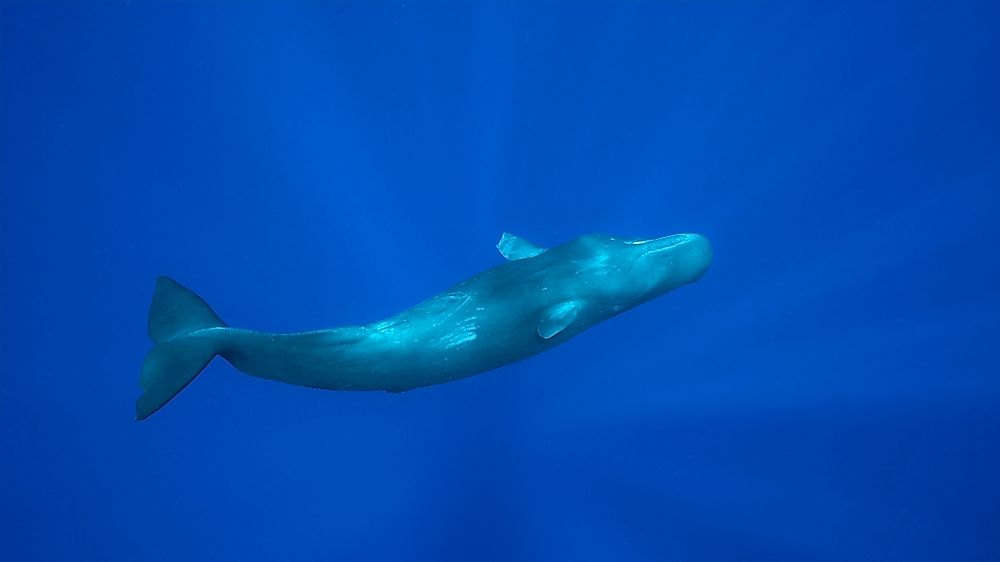
The sperm whale is one of the ocean's most impressive deep-water hunters, routinely diving about 2,000 feet in search of food. But they can reach much greater distances if needed, with some recorded whales reaching almost 10,000 feet. Average dives can last about 45 minutes, but they can hold their breath for about two hours if needed or when diving farther. Sperm whales inhabit deep oceans around the world, where their diving abilities help them exploit food sources unavailable to many other marine predators.
Adult male sperm whales can grow to 52 feet long and weigh up to 45 tons, while females reach around 40 feet and about 15 tons. The animal's enormous head accounts for roughly a third of its body length, making it an easy animal to spot. They rely heavily on sound, producing clicks that help them navigate and locate prey (consisting of fish, sharks, skates, and squid) in the darkness. Their large heads contain a wax-like substance called spermaceti, which plays a role in focusing on sound. This is where they get their name from.
Whale Shark

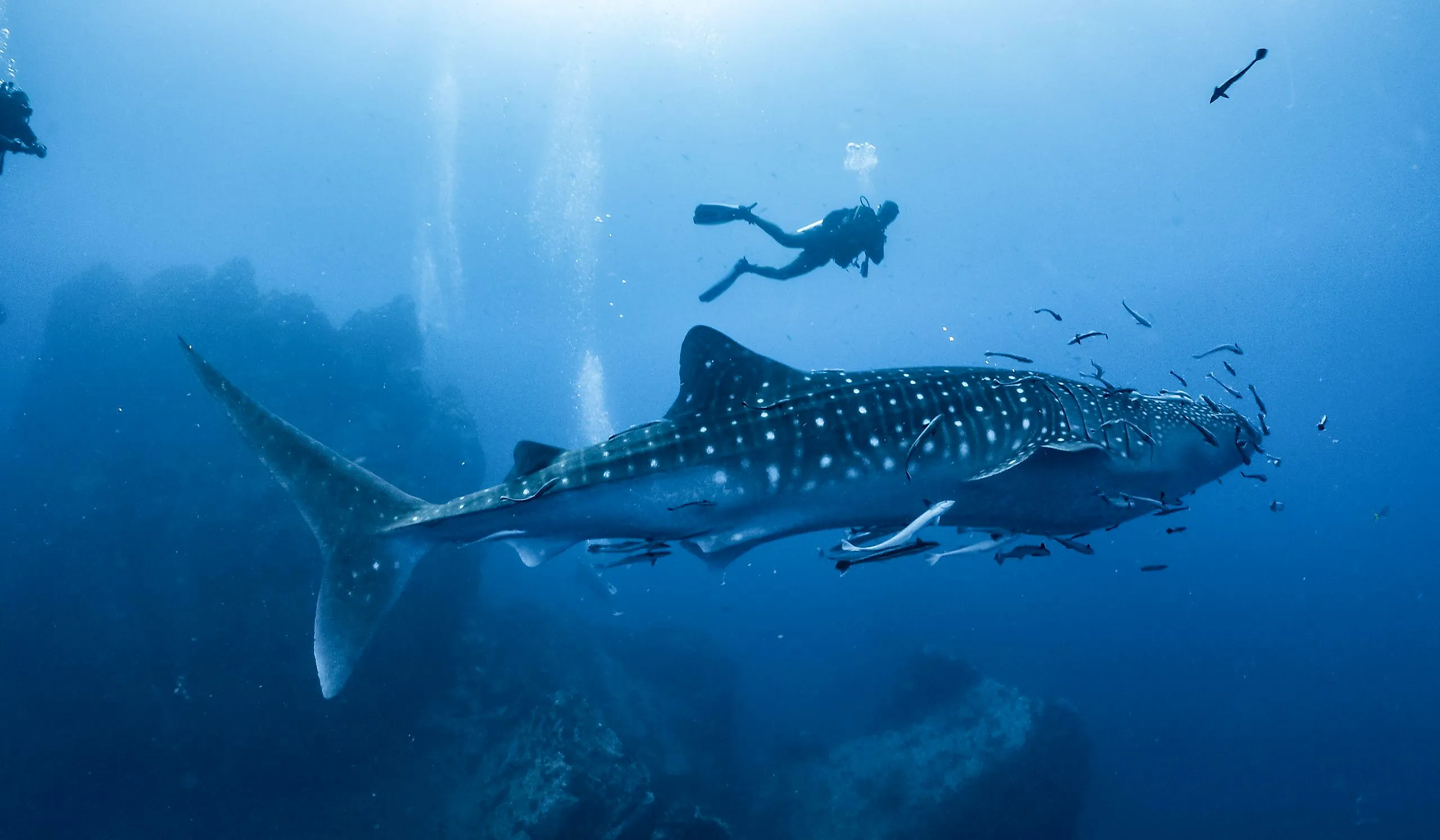
Despite being the largest fish in the world, the endangered whale shark is a filter feeder that survives on some of the ocean's smallest animals. It can descend to depths of thousands of feet, with the Biopixel Oceans Foundation recording a dive of at least 6,490 feet in 2026. However, the depth may have been greater than this, as the tag registered a range rather than an exact measurement. Scientists are still investigating why whale sharks make such deep dives, though searching for food in deeper waters may be one explanation.
The whale shark's size makes these underwater journeys even more impressive, with lengths reaching about 62 feet. Its broad mouth and specialized filter pads allow it to strain plankton, fish eggs, fish, small crustaceans, and squid from the water. Whale sharks usually feed near the surface where food is often abundant, but tracking data shows they can venture into much colder water below. Their thick six-inch skin provides protection against predators, while their lack of a swim bladder or lungs allows them to withstand the deep ocean cold and pressure.
Northern Elephant Seal

Northern elephant seals can dive more than 5,000 feet below the ocean's surface with a typical dive distance of 1,000 to 2,500 feet, descending far beyond the 984-foot submarine benchmark. They can also hold their breath far longer than many ocean animals, at about two hours, allowing them to spend extended periods searching for food underwater. Northern elephant seals spend about nine months at sea every year, where much of their time is spent beneath the surface. Their dives take them into deep waters where they hunt prey that includes fish, squid, and the occasional ray or shark.
The northern elephant seal's size makes these deep-diving abilities even more impressive, with adult males growing more than 13 feet long and weighing up to 4,400 pounds. Females usually reach about 10 feet long and weigh less at around 1,300 pounds. You can often spot the difference between males and females due to sheer size and the fact that males have distinctively enlarged noses, which give the species its name. Despite their bulky appearance, elephant seals are skilled underwater foragers, spending much of their time moving through the water with brief breathing breaks above the surface. However, they do return to land to breed and shed their fur during their annual molt.
Leatherback Sea Turtle

The leatherback sea turtle can dive to depths of about 4,000 feet, venturing far below the ocean's surface in search of food. Unlike other sea turtles, it lacks a hard, scaly shell. Instead, its body is covered in tough, rubber-like skin over a layer of connective tissue and small bones. This unusual structure, along with its large front flippers, helps streamline its body for swimming through open water. Leatherbacks can also remain underwater for up to about 85 minutes, giving them plenty of time to forage.
As the largest sea turtle in the world, the leatherback can reach five to six feet long and weigh up to 1,000 pounds. Despite its size, its diet consists primarily of small, soft ocean animals like salps and jellyfish. The backward-facing spines in its mouth and throat help keep the slippery prey from escaping once swallowed. Leatherbacks migrate long distances between feeding grounds and nesting beaches, and some travel more than 10,000 miles in a year.
Narwhal

Often called the unicorn of the sea, the narwhal is an Arctic whale capable of diving about 3,937 feet into the ocean. These dives take the animals into deep, cold waters where they search for food and can stay submerged for up to 25 minutes. Their ability to make these journeys is especially impressive in the Arctic, where sea ice shapes their movements and access to open water changes with seasons.
Narwhals typically grow 13 to 18 feet long and can weigh up to 3,530 pounds. Their most distinctive feature is the long, spiraled tusk that usually grows from a male's upper jaw, which is actually an elongated tooth that can reach nearly 10 feet long. This tooth alone can weigh more than 20 pounds and research suggests that the animal may use it to detect temperature, pressure, and particles. Despite its striking appearance, the narwhal relies on more than its tusk to survive, using suction to draw squid, shrimp, and Arctic fish into its mouth. Narwhals migrate seasonally through Arctic waters, moving between areas of pack ice and coastal waters as conditions change.
Emperor Penguin

Emperor penguins may look awkward as they waddle across the Antarctic ice, but underwater they are powerful swimmers capable of diving more than 1,640 feet below the surface. These dives can last longer than 20 minutes, allowing the birds to pursue prey beneath the ice-covered Southern Ocean. Their bodies are specially adapted to manage oxygen while submerged, storing it in their lungs, blood, and muscles. Researchers studying emperor penguins have found that changes in muscle oxygen levels play an important role in how long they can continue swimming underwater.
Standing at around 3.5 to four feet and weighing up to about 90 pounds, emperor penguins are the largest penguin species in the world. They feed on fish, squid, and krill, sometimes searching for prey along the underside of sea ice. Although their usual foraging dives are much shallower than their record-breaking descents, their ability to reach extreme depths allows them to find food even when it is scarce. This is especially important when the penguins have chicks to feed, making their diving depths essential to the survival of the species.
Deep-diving abilities are not limited to one particular kind of ocean animal. Birds, reptiles, and marine animals have all developed different strategies for traveling beneath the water's surface, shaped by their anatomy, habitats, and feeding needs. A penguin hunting beneath Antarctic ice faces different challenges than a whale searching for squid in the open ocean. Some animals rely on powerful swimming to reach these great depths, while others can conserve oxygen for extended periods in their pursuit of prey. Regardless of their survival method, these ocean animals can dive deeper than the depths of many submarines, proving that extraordinary underwater capabilities are not exclusive to human technology.