8 Most Alligator Filled Rivers In Texas
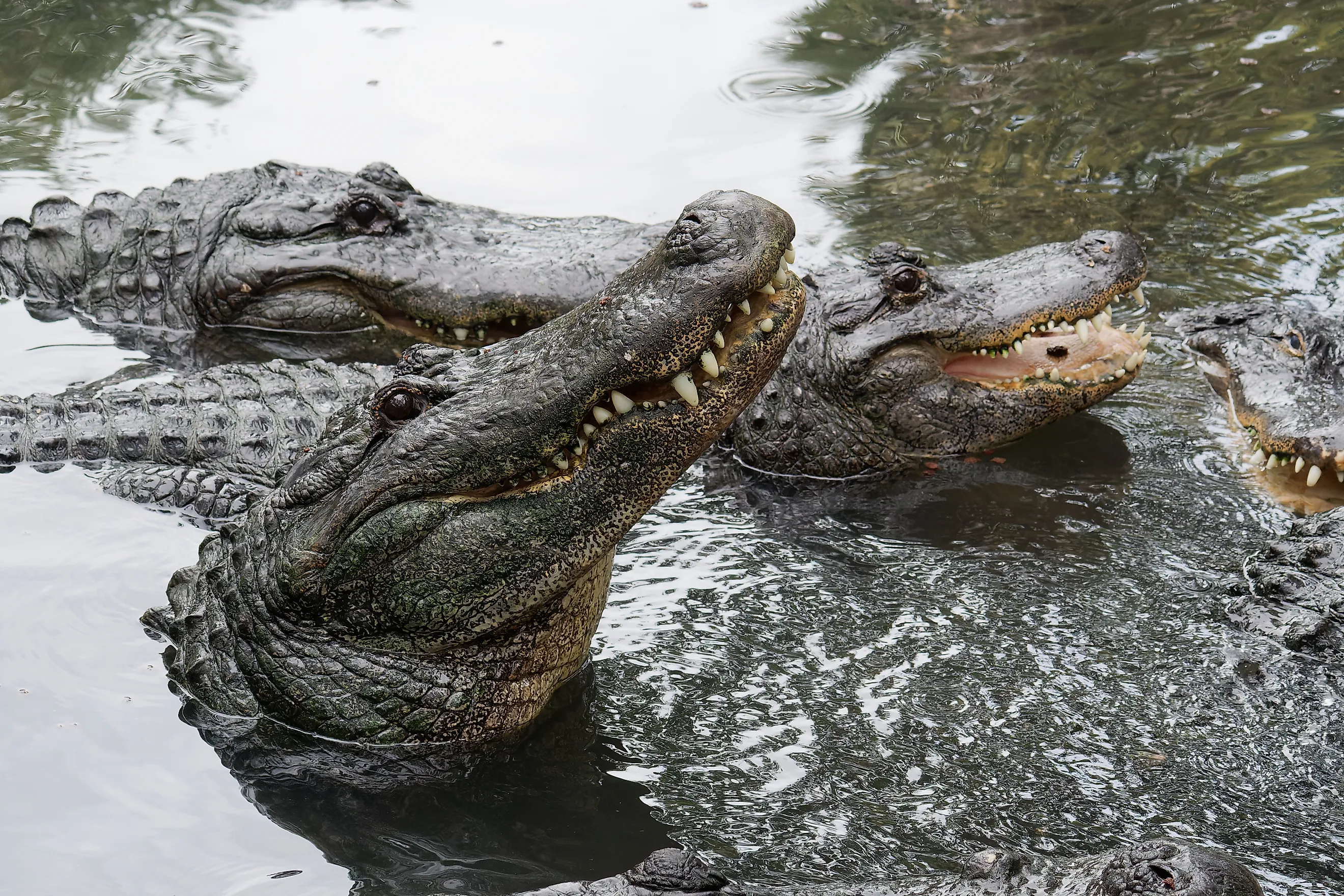
Although Texas lies at the western edge of the American alligator’s (Alligator mississippiensis) range, the state is home to an estimated 400,000 to 500,000 individuals. The American alligator ranges from the Sabine River in East Texas, across the coastal marshes of the Gulf of Mexico, to the Rio Grande. Alligators are present in 120 counties, with the highest concentration occurring along the Gulf Coast Plains.
Sabine River

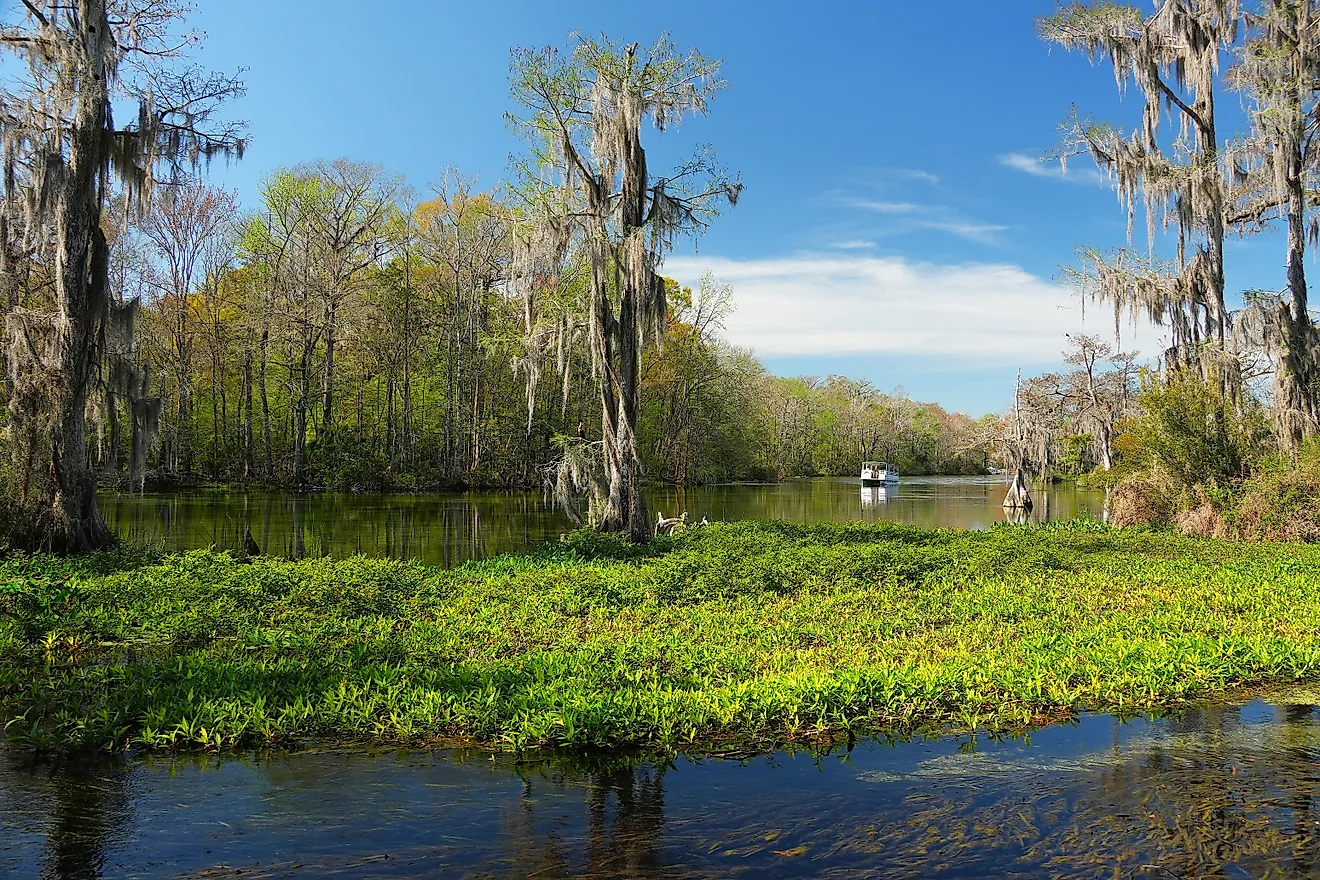
The Sabine River marks the eastern edge of the American alligator’s range in Texas, forming part of the border with Louisiana. According to the Texas Parks and Wildlife Department, alligator populations along the Sabine River are expanding. Blue Elbow Swamp, located at a cypress-lined bend of the Sabine River, is one of the largest remaining blocks of swamp on the Texas coast. This section of the river runs 60 feet deep, and more than 80% of the swamp consists of cypress-tupelo forest, creating areas for alligators to hide and bask.
Neches River

West of the Sabine River, the Neches River also supports a population of alligators. The Neches River is often regarded as the last wild river in East Texas because of its diverse ecosystems, such as the longleaf pine forests, cypress-lined bayous, and other wetlands of the Big Thicket National Preserve. The Neches River flows through and along several units of the preserve. Despite their size, the alligators within the preserve tend to be secretive, so encounters with humans are uncommon. In 2011, a hunter illegally shot and killed a 13-foot, 800-pound alligator while traveling down the Neches River by canoe.
Trinity River

The Neches River is not the only stream in East Texas that is home to massive alligators. American alligators inhabit the lower Trinity River, downstream of Lake Livingston. This section of the river flows through the Trinity River National Wildlife Refuge, which protects segments of bottomland hardwood forest along the river. Seasonal flooding and persistent standing water create interconnected sloughs and bayous throughout the refuge. Alligators live in the refuge year-round, frequenting areas with murky water where they can hide. In 2016, the largest alligator ever captured alive in Texas was removed from Champion Lake in the refuge. Named Big Tex, he measured 13 feet 8 inches long and weighed about 900 pounds at the time of capture. He now lives at Gator Country Adventure Park and Sanctuary near Beaumont and is widely reported to be one of the largest alligators in captivity in the United States.
San Jacinto River
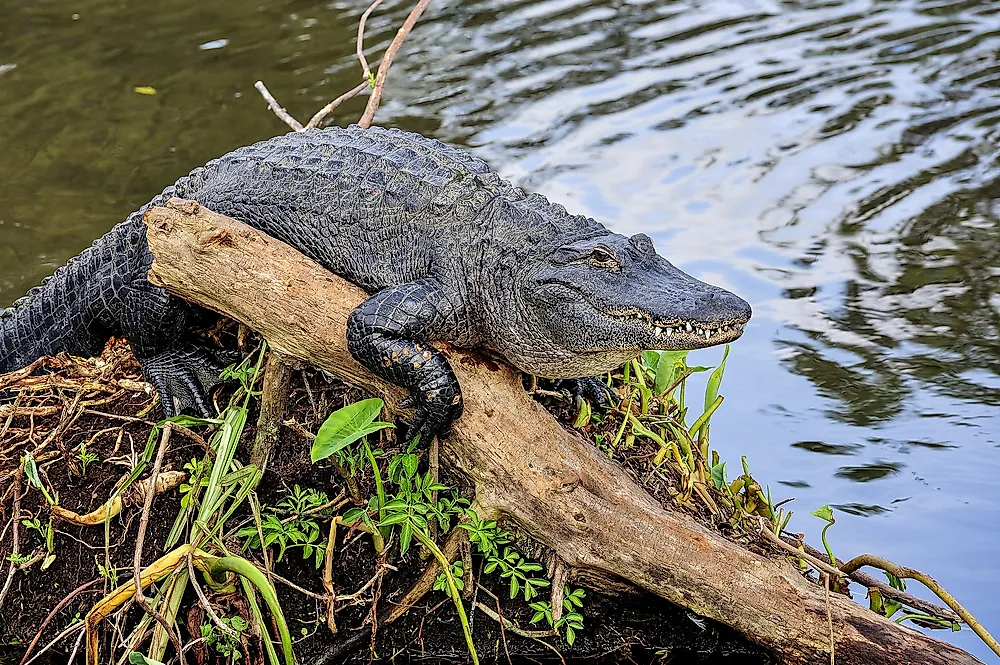
The Trinity River and San Jacinto River both flow into Galveston Bay. Upstream from the bay, approximately 1,000 alligators live along the San Jacinto River, Lake Houston (a reservoir on the river), and the waterways connected to them. As the San Jacinto River flows through metropolitan Houston, the largest city in Texas, alligators and humans regularly encounter each other. This is particularly common in the warmer months, when people are recreating on the water. Visitors are advised not to swim in the bayous off the main channel and to check for alligators when getting out of kayaks or canoes along the banks, as alligators tend to stay along the shallow edges of the water.
Brazos River

The Brazos River flows past the southwestern side of Houston. It is the longest river entirely within Texas, flowing diagonally across the state for 1,280 miles (2,060 kilometers) until it reaches the Gulf of Mexico. The lower Brazos River basin is especially rich in alligators. The river fronts the eastern boundary of Brazos Bend State Park, where an estimated 250 to 350 adult alligators over six feet long live. Although they are found throughout the park depending on the season and water levels, they are most common around Elm Lake and 40 Acre Lake, both situated on the Brazos River floodplain. The best chances of seeing alligators are between March and May, and between September and November, when temperatures are milder.
San Bernard River

The San Bernard River empties into the Gulf of Mexico just ten miles southwest of the mouth of the Brazos River. Along its lower reaches near the coast, the river’s banks are lined with bottomland hardwood forest and cypress swamps. Alligators are often observed basking on the banks of the river, especially in the San Bernard National Wildlife Refuge. They are common around Moccasin Pond and Rail Pond, as well as in the upper salt marshes and woodlands. The refuge's freshwater wetlands provide alligators with sheltered areas for feeding, nesting, and raising their young.
Colorado River

The Colorado River of Texas flows roughly 860 miles from West Texas to Matagorda Bay on the Gulf of Mexico. Alligators are uncommon along most of the river but appear from time to time, mainly along its lower course near the bay. They are occasionally seen on the Riverside Rally Loop Paddling Trail, a slow, seven-mile loop on the river near Bay City. In 2024, three alligators were spotted at Lake Marble Falls, a reservoir on the Colorado River near the town of Marble Falls. Alligators are rare this far inland, and these individuals likely ventured upstream into Central Texas.
Guadalupe River

Like the Colorado River, the Guadalupe River is not known for alligators. Sightings are rare along the upper and central Guadalupe River, where the water is cooler and the riparian habitat is less suitable. As with the Colorado River, however, the lower Guadalupe River is warmer near the coast, where it empties into San Antonio Bay. Alligators are most common at the Aransas National Wildlife Refuge, which directly borders the bay. Although the beaches and open waters of the Gulf of Mexico are too salty for alligators, the refuge’s swamps, marshes, and brackish bayous offer suitable habitat.
Rio Grande

The Rio Grande forms the southern border of Texas and much of the US border with Mexico. It also marks the western extent of the American alligator’s range in Texas and the United States. As with other rivers, alligators prefer the lower stretch of the river, in the Lower Rio Grande Valley. Even though this is the edge of their range, the population is by no means small. An estimated 25,000 alligators live in the Rio Grande Valley, with a high concentration at Laguna Atascosa National Wildlife Refuge. The refuge’s ponds and marshes include Kidney Pond, which is known for holding many young alligators.
Texas’ alligator population is limited to roughly the eastern half of the state and the Gulf Coast, but it is thriving. Of the ten states where alligators live, Texas has the third-largest alligator population. Between the Sabine River and the Rio Grande, the waterways of Texas support not only a large population of alligators but also some of the largest alligators in the nation.