10 Best Attractions To Visit In Chesapeake Bay
Chesapeake Bay, the largest estuary in the United States, stretches through Maryland and Virginia, and its drainage basin covers six states. Along its shoreline and watershed area are beaches, maritime museums, historic sites, and working waterfronts. Sandy Point State Park has a mile-long sandy beach on the Bay for recreation, while the Blackwater National Wildlife Refuge is a haven for birdwatchers. Annapolis's US Naval Academy Museum and the Chesapeake Bay Maritime Museum in St. Michaels explore different sides of the region's naval and maritime history. Seafood is another defining part of life around the Chesapeake Bay, particularly in communities with long connections to the water. Here are then of the best attractions to explore around the Chesapeake Bay.
Smith Island

Located about 12 miles offshore in the middle of the Chesapeake Bay, Smith Island is accessible only by boat and offers a glimpse into Maryland's unique island culture. The island is increasingly threatened by rising sea levels and erosion from tidal currents, making it an especially interesting destination for visitors who want to experience this disappearing landscape.
One of Smith Island's most famous traditions is its signature dessert, Smith Island cake. Designated Maryland's official state dessert on April 24, 2008, the cake features anywhere from eight to 15 thin layers of cake separated by layers of buttercream frosting. Creating the cake is a labor of love, as each layer must be carefully baked, stacked, and frosted to create its distinctive appearance. Visitors can sample this Maryland specialty while exploring the island's quiet communities and waterways.
U.S. Naval Academy Museum

The U.S. Naval Academy Museum in Annapolis, Maryland, welcomes more than 100,000 visitors each year, offering an opportunity to explore the history of American naval power without requiring access to the entire Naval Academy grounds. The museum's two floors of exhibits combine historic artifacts with videos, audio, and interactive displays that bring centuries of naval history to life.
One of its most impressive collections is the United States Navy Trophy Flag Collection. The collection began following an Act of Congress in 1814 and was placed in the care of the Naval Academy in 1849. Today, it contains more than 600 historic American and captured foreign flags. Among the most notable is the "Don't Give Up the Ship" battle flag, which was flown during the Battle of Lake Erie in the War of 1812.
Historic Jamestowne

History enthusiasts can step directly into the past at Historic Jamestowne, the archaeological site of North America's first permanent English settlement in Virginia. Established in 1607, the site allows visitors to walk across the same landscape occupied by the early colonists and explore the remains of the original settlement.
Inside the Archaearium, thousands of genuine 17th-century artifacts recovered through archaeological excavations reveal what life was like in the early colony. Most visitors spend two to three hours exploring the site, much of which is outdoors on uneven terrain, so comfortable walking shoes are recommended. The Memorial Church is another highlight, featuring a reconstructed floor and wooden framing that reflect the footprint and structure of the original 1617 church.
Captain John Smith Chesapeake National Historic Trail

The Captain John Smith Chesapeake National Historic Trail offers a different way to experience the Chesapeake Bay by following the waterways explored by Captain John Smith during his 1608 voyages. Stretching roughly 3,000 miles throughout the Chesapeake region, the trail also recognizes the Indigenous communities and cultures that existed throughout the area long before Smith's arrival.
The trail is particularly appealing to visitors who enjoy kayaking, canoeing, boating, hiking, and wildlife watching. Along the route, visitors can paddle through marshes and waterways while looking for bald eagles, ospreys, and other wildlife. With numerous access points and partner sites, the trail makes it easy to combine outdoor recreation with Chesapeake history and Indigenous heritage.
Thomas Point Shoal Lighthouse

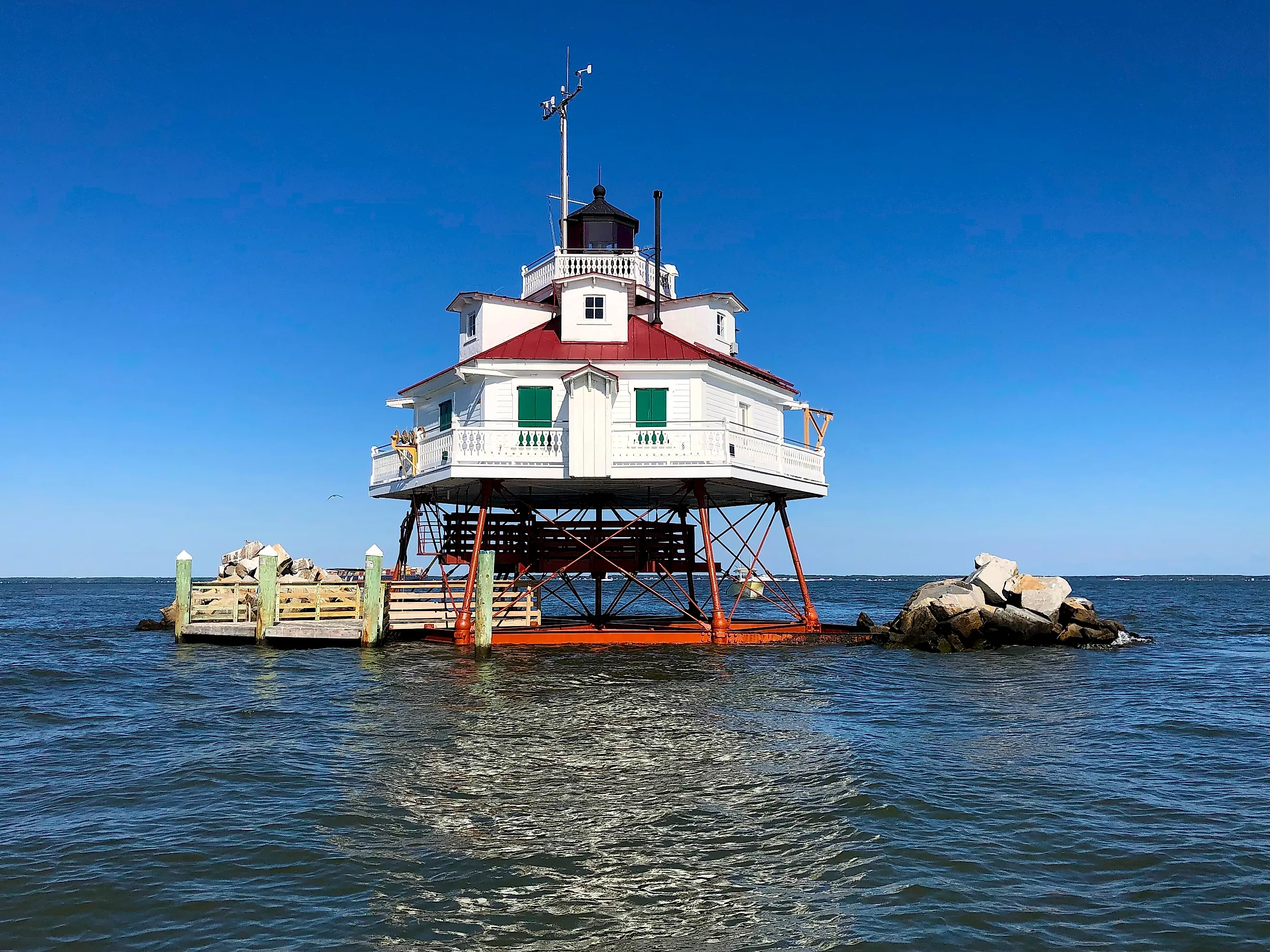
The Thomas Point Shoal Lighthouse in Maryaland is one of the Chesapeake Bay's most recognizable landmarks. Its distinctive white walls, red roof, and black lantern stand out against the surrounding water. Built as a hexagonal wooden cottage, the lighthouse features both a navigational light and a foghorn.
It is the most recognizable lighthouse in Maryland and the only screw-pile lighthouse in the Chesapeake Bay that remains in its original location. Tours are offered for only a few months each year, and tickets can sell out quickly. Visitors who secure a spot can step inside the lighthouse keeper's former living quarters and learn what daily life was like for lighthouse keepers during the early days of the structure's operation.
Sandy Point State Park

Sandy Point State Park in Maryland encompasses 786 acres along the northwestern shore of the Chesapeake Bay and has been a popular recreation destination since opening on June 25, 1952. The park offers plenty of opportunities to spend a day outdoors, whether you're looking to swim, picnic, boat, or simply enjoy the scenery.
The park's one-mile beach provides plenty of room for a day on the sand, with designated swimming areas for visitors. The East Beach area features picnic areas and large rental pavilions, while boaters have access to 22 launching ramps and six finger piers available for temporary daytime use on a first-come, first-served basis.
Chesapeake Bay Maritime Museum

Located on Navy Point in St. Michaels, Maryland, the Chesapeake Bay Maritime Museum preserves and shares the history of the Chesapeake Bay and the communities that have depended on its waters. Opened in 1965, the museum occupies a former working complex of docks, workboats, and packing houses along St. Michaels Harbor.
Visitors can explore exhibits highlighting the people, boats, industries, and traditions that shaped life along the Bay. For a closer look at its maritime heritage, take a river cruise aboard the PATRIOT, a 65-foot, U.S. Coast Guard-inspected vessel with room for 149 passengers and a design inspired by a Chesapeake Bay steamboat. Seasonal cruises, including the 45-minute Historic Workboat Experience, offer another way to experience the region's working-waterfront traditions.
Hoopers Island

For travelers craving fresh seafood and a slower pace, Hoopers Island offers a taste of Maryland's working waterfront. The chain of islands in Dorchester County remains an important center for blue crab harvesting, crab picking, and oyster aquaculture.
The area was settled in 1669 by the Hooper family and was once home to a tobacco plantation before evolving into the maritime community it is today. Its quiet atmosphere and seafood traditions make it an appealing stop for visitors looking to experience a less-touristy side of the Chesapeake Bay. For a taste of the local seafood, head to Old Salty's Restaurant in Fishing Creek, a local favorite known for its fresh crab cakes.
Blackwater National Wildlife Refuge

Located near Cambridge on Maryland's Eastern Shore, Blackwater National Wildlife Refuge is a spectacular destination for birdwatchers and wildlife enthusiasts. Established in 1933 as a sanctuary for migratory birds, the refuge protects more than 20,000 acres of tidal marshes, forests, wetlands, and other habitats.
The refuge is particularly well known for its bald eagles and large populations of migratory waterfowl along the Atlantic Flyway. Visitors can explore the area by hiking its trails, paddling through its waterways, or taking the scenic Wildlife Drive. The drive features pull-offs and observation areas where visitors may spot eagles, herons, waterfowl, and other wildlife. The visitor center also offers exhibits, an observation area, and views of the surrounding marshland.
Calvert Cliffs State Park

Calvert Cliffs State Park in Lusby, Maryland, combines dramatic scenery, hiking, and prehistoric history along the Chesapeake Bay. The massive cliffs were formed from sediments deposited millions of years ago when a shallow sea covered the region. Today, the cliffs contain fossils from more than 600 species, including prehistoric sharks, whales, rays, and seabirds.
A 1.8-mile trail leads from the parking area to a sandy beach where visitors can search for fossils such as shark teeth and ancient shells. Beyond the beach, the park offers roughly 13 miles of marked trails, along with wetlands, a fishing pond, and opportunities for wildlife viewing.
Visitors should stay away from the base of the cliffs, as walking beneath or climbing them is prohibited because of the risk of falling debris and landslides. The combination of fossil hunting, hiking, and Chesapeake scenery makes Calvert Cliffs one of Maryland's most distinctive outdoor attractions.
Enjoy Chesapeake Bay
The Chesapeake Bay is more than a beautiful stretch of water; it is a region filled with history, wildlife, maritime traditions, and unforgettable landscapes. From the unique culture and famous cake of Smith Island to the fossil-rich shores of Calvert Cliffs, these attractions showcase the many sides of the Bay. Whether you want to explore historic sites, spend time outdoors, spot wildlife, or sample fresh Maryland seafood, the Chesapeake Bay offers plenty of ways to experience the region and create lasting memories.