The Most Dangerous Rip Currents On US Beaches
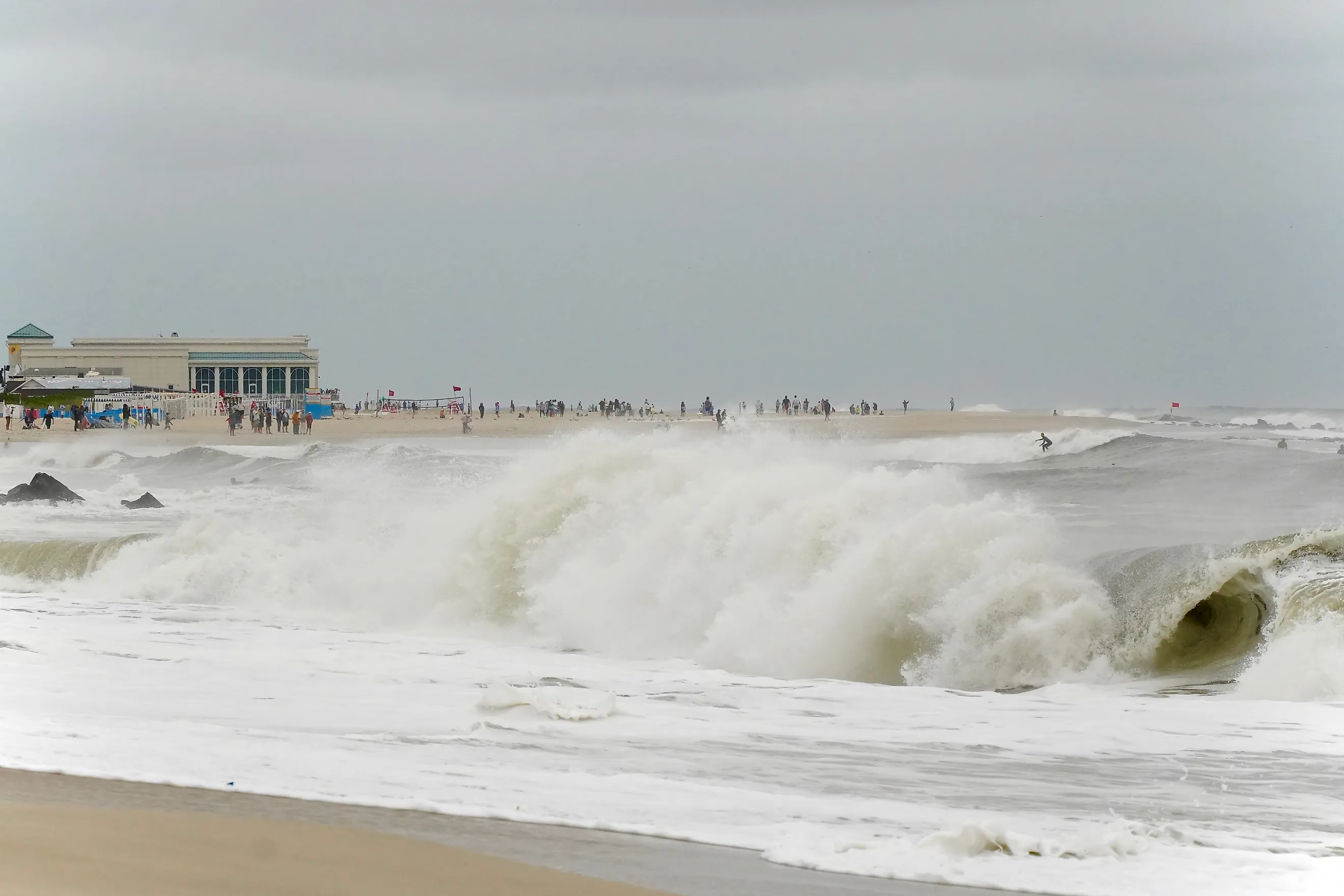
Rip currents are narrow channels of water that flow away from shore. The National Weather Service says they can reach speeds of 8 feet per second, which is faster than an Olympic swimmer. NOAA says typical speeds are closer to 1 to 2 feet per second. They often form where waves break unevenly, such as gaps in sandbars or the edges of jetties, inlets, and piers. They can form on clear, sunny days and with surf as low as 1 to 2 feet, while swells from a distant hurricane can increase the danger. A rip current does not pull a person under the surface. It carries them out, and the drowning usually comes from exhaustion while they fight to swim back.
The United States Lifesaving Association (USLA) estimates that rip currents kill more than 100 people on US beaches each year. They also account for more than 80% of surf beach lifeguard rescues. The NWS preliminary table listed 99 surf-zone deaths from all tracked hazards in 2025, but it is an incomplete incident log and is not directly comparable with the USLA's modeled estimate of annual rip-current deaths. By September 22, 2026, the 2026 list stood at 56, and more than 30 of those were labeled rip currents. These are among the nation's most dangerous beaches for rip currents.
Panama City Beach, Florida

Bay County has recorded several unusually deadly clusters of rip-current incidents. Local reporting counted nine Bay County beach drownings in 2023, with six inside Panama City Beach and three on unincorporated beaches, while the NWS table separately labeled eight 2023 rip-current deaths "Panama City Beach."
NWS listed seven Panama City Beach rip-current deaths from June 15 through June 24, while later local reporting said seven of Bay County's nine 2023 drownings occurred under double-red flags. After that weekend, the sheriff's office shared aerial photos of deep trenches cut into the seafloor by the currents. The next summer brought another cluster. Local reporting counted six rip-current drownings across Bay County from June 20 through June 23, 2024, while contemporaneous statewide reports counted at least eight Florida deaths and did not all use the same geographic boundaries. The NWS list shows one rip current death at this beach in 2026 so far, on May 7.
Northern Gulf Coast Beaches, Alabama, and Florida

The problem reaches well beyond one city. The NWS offices in Tallahassee and Mobile count 227 rip current deaths from 2002 to 2025 along the Alabama and Florida Panhandle beaches. That is more than flooding, tornadoes, lightning, and tropical deaths combined for the same region. The 2025 NWS list shows three deaths at Destin, one at Cape San Blas, and one at Gulf Shores, Alabama. In 2026, a 40-year-old man died at Fort Morgan on June 17. Fort Morgan and Dauphin Island have signs that flash when the NWS issues a high rip current risk.
Daytona Beach, Florida

Volusia County consistently records some of east-central Florida's highest rip-current rescue totals. The NWS office in Melbourne says Volusia County averages more rip current rescues than any other county on Florida's east central coast. In 2025, Volusia County Beach Safety reported 2,166 ocean rescues and seven drownings. A deputy chief told the Daytona Beach News-Journal that about 80% of the rescues involve rip currents.
The 2026 NWS list shows three rip current deaths at Daytona Beach. One came on May 1, and two came on July 3. It also lists an Ormond Beach death on March 14. In October 2025, a 65-year-old man died at Daytona Beach Shores in an unguarded section while red flags flew. His 16-year-old son survived. On December 26, 2025, a 42-year-old man from Quebec died after being found roughly 150 to 200 yards offshore at Ormond Beach.
The Carolinas Beaches

The coastal NWS offices serving North and South Carolina recorded 196 confirmed rip-current drownings from 2000 through 2025, about eight per year. Of those victims, 86% were male. The office calls rip currents the deadliest and most common hazard at the Carolina beaches. Recent entries span both states. The 2025 list includes Holden Beach, Hunting Island, Pawleys Island, and North Topsail Beach. The 2026 list includes Indian Beach, North Carolina, on July 31. It also lists the Isle of Palms on July 21 and Myrtle Beach on August 7.
Lake Michigan Beaches

Michigan Sea Grant calls the Lake Michigan shore an epicenter of drownings in the Great Lakes region. The lake has a mix of piers, harbor walls, and sandbars, and many people swim there. Strong currents along piers are a common cause. The 2026 NWS list reflects this. Two men aged 24 and 26 died at Port Sheldon, Michigan, on June 13 in what the NWS labeled a structural current. A 13-year-old boy died at Michigan City, Indiana, on June 22 in the same kind of current. Another teen died there on August 17 in a rip current. Great Lakes Surf Rescue Project figures cited by Bridge Michigan show 94 Great Lakes drownings in 2024. More than half were in Lake Michigan. Those totals cover all drownings, not only current-related deaths.
Who Is at Risk

The NWS says the typical surf zone victim is a male between 10 and 29. Most deaths happen in June and July and in the NWS Southern Region. Many victims are visitors who do not know the local beach. An NWS Miami bulletin says the vast majority of rip current drownings happen at unguarded beaches. The NWS also cites a USLA estimate that the chance of drowning at a beach with USLA-affiliated lifeguards is about 1 in 18 million.
What To Do If You Are Caught in a Rip Current
Rip currents are usually only 10 to 30 yards wide, according to the NWS. The NWS advice for a person caught in one is simple. Stay calm and do not swim straight toward shore against the current. If you are a strong swimmer, swim parallel to the beach until you are out of the pull. If you cannot escape, float or tread water. Wave and yell for help. If you see someone in trouble, do not go in after them. Alert a lifeguard or call 911. If you can, throw them something that floats. Lifeguards themselves use flotation devices for these rescues.