The National Parks Where You Can See Fossils
Fossils are like real-life time machines, every crevice and layer teaches us about ancient life that existed on Earth prior to our era of civilization. There are over 250,000 species that have been documented by scientists up to this point, and hundreds can be found scattered throughout various national parks within the United States. In these places the quiet power of nature cannot only be seen in the breathtaking views and iconic vistas, but beneath the soil in the bones and the land that tells a story of what the world may have looked like before it became what it is today.
Badlands National Park

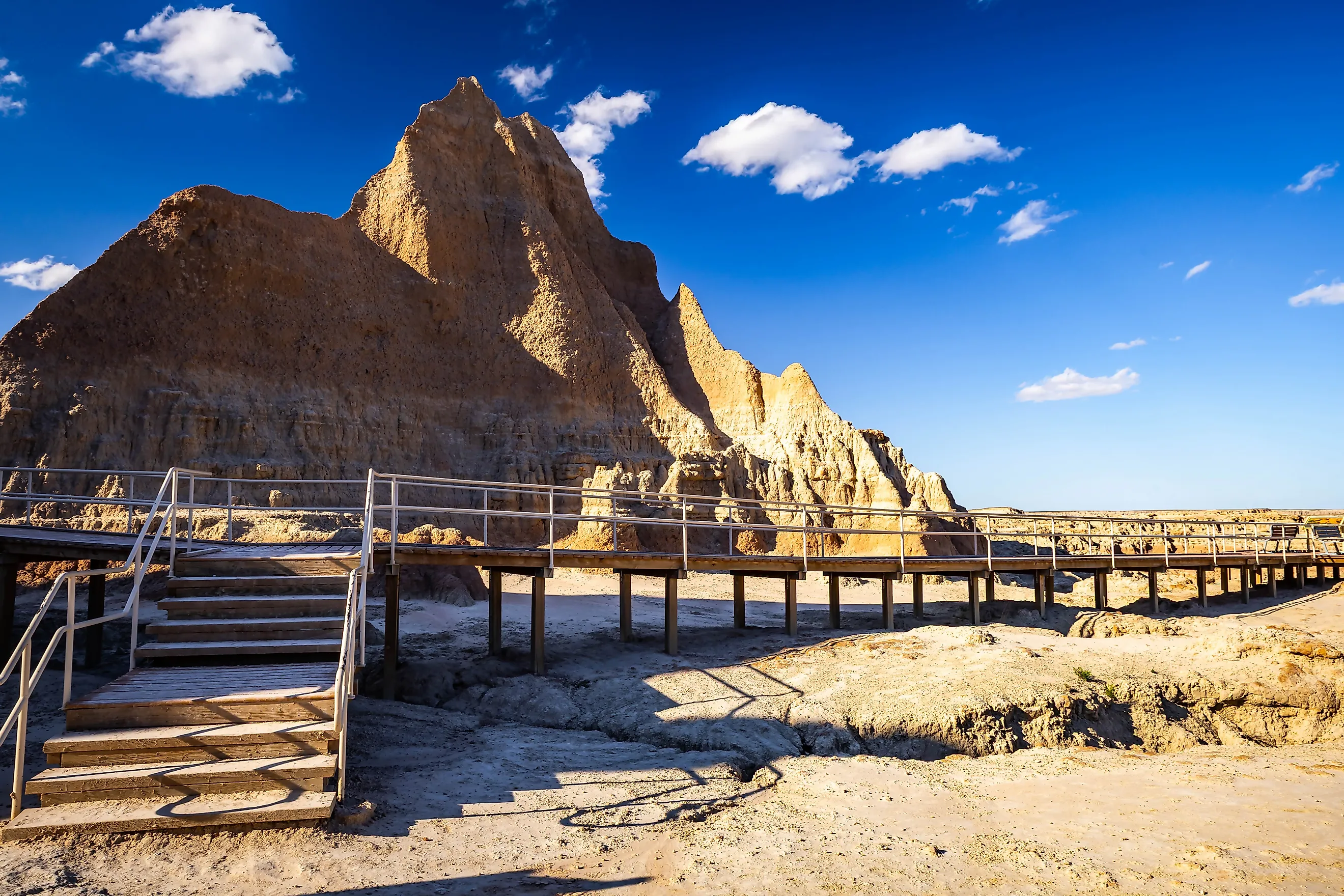
Badlands National Park was born from an ancient subtropical ecosystem that at one point spanned across the Great Plains. According to the National Park Service (NPS), the fossils that have been discovered here range from approximately 28 to 75 million years old. Many visitors particularly interested in the reserve’s paleontological history insist on walking the Fossil Exhibit National Recreation Trail located around 5 miles west of the main visitor center at the entrance of the park.
Beyond its exhibit trail, Badlands National Park maintains a working Fossil Preparation Lab where you can watch and interact with park paleontologists as they catalog recently excavated fossils. Tactile exhibits feature replicas of extinct animals, allowing the fossil shapes to be felt. Real fossils found elsewhere in the park must not be disturbed or removed under the Paleontological Resources Preservation Act.
The park was officially designated as a National Monument first in 1939 before eventually transitioning to National Park status in 1978. As of 2025, it drew nearly 1.1 million visitors, showcasing fossil visibility and wildlife that most have never seen in person. The main fossils that have been studied within this specific area include the three-toed horse, the saber-toothed cat, hornless rhinos, early camels, and more. Changing weather conditions constantly expose new fossils to be identified, making this park an active fossil terrain. Paleontological excavation occurs throughout the park to this day.
The Grand Canyon

Encompassing 1.2 million acres of northwest Arizona, is one of the most popular national parks, the Grand Canyon. Uniquely, what makes this canyon attractive for certain paleontologists are the marine fossils that have been uncovered across the rock beds.
The main hub for fossil-oriented education within the park is the Yavapai Geology Museum, known for its topographic exhibits and well annotated displays. Alongside it is the equally impressive Grand Canyon Museum Collection & Research Facility which houses the park's massive repository, containing official biological, paleontological, and historical archives. The fossils housed in these facilities are said to range from prehistoric algal mats to ice age cave specimens. Yavapai Geology Museum even has an interactive exhibit showcasing the erosion of the canyon's rock layers, a process which is imperative to the creation and preservation of the fossils we see today.
The Grand Canyon Visitor Center is also known to exhibit artifacts both man-made and natural, but those focused on paleontological interests might be better suited at the aforementioned sites. Unlike other parks with active and open excavation sites, this park tends to isolate its paleontological infrastructure to research facilities that are often cloaked from public view.

Several of the fossils observed within this landmass are attributed to some of the earliest life forms on earth. One of the best examples of this are the Precambrian Stromatolites, a single-celled life form that marked the gradual evolution of complex life forms on our planet, which are 740 million to 1.2 billion years old. Markings of giant insects such as an 8-inch dragonfly wing, terrestrial plants, and ice-age cave fossils have all been documented by paleontologists in some of the older layers of rock.
For the calendar year of 2025, the park cited approximately 4.4 million recreational visits and is currently ranked as the 4th most visited national park in the country. It is known not only for the natural beauty of the ancient landscape, but the many wildlife species ranging from bighorn sheep and elk to mountain lions and the endemic pink rattlesnakes that still navigate the area.
Petrified Forest National Park

Another fossil-attraction located within the state of Arizona is Petrified Forest National Park, officially designated as such in 1962. According to national park data, nearly half a million visitors explored the expanse in 2025. It is also smaller than the other park within its state, spanning roughly 221,000 acres in northeast Arizona.
The Rainbow Forest Museum and Visitor Center is the indoor paleontological exhibition space located right by the south entrance of the park. It features reconstructions of fossilized skeletons made to represent the prehistoric animals that reigned in Arizona during the Late Triassic Era, a time period known for the rise of the first dinosaurs and the appearance of early mammals and often aptly referred to as "The Dawn of the Dinosaurs". This national park also maintains a lively, public-facing museum demonstration lab where visitors can watch through large viewing windows as specially-trained park paleontologists prepare fossils more than 200 million years old. Species that have been preserved throughout the landmass include but are not limited to giant semi-aquatic phytosaurs, the armored aetosaur, and massive flat-headed amphibians that could grow to be up to 10 feet long.

Despite the obvious intrigue of literal dinosaur bones, the most popular attraction in this park is the territory’s fossil wood, or "petrified" wood. It consists of ancient timber that turned into stone through a process of mineralization. This is when organic plant tissue replaces itself with minerals such as quartz and jasper, while simultaneously maintaining the tree’s original bark and ring structure down to a cellular level. It is said to have occurred by way of giant fallen trees washing into rivers and being buried under layers of mud and silica-rich volcanic ash. It cut off oxygen and stopped the wood from decaying, while the inside of the trees restructured themselves. There is a massive amount of these natural wonders scattered densely along the edges of certain trails. Although this is not the sole place on earth where this striking phenomenon occurred, it is considered a prime location to witness it.
Big Bend National Park

While many other national parks are known more for their scenery and geology, this site has preserved some of the most historically significant fossil records in North America, with rocks that document the period before the mass extinction event that ultimately ended the Dinosaur Era entirely.
An open-air pavilion located a couple miles north of the entrance houses the Fossil Discovery Exhibit, a central showcase for park's 130 million year old paleontological history. Multiple exhibits are available for browsing highly detailed replicas and life-sized models of fossils and prehistoric beasts that have been discovered within the park. The site also includes a brief but impactful interpretive fossil trail and numerous wheel-chair paths along with fossil-themed climbing structures for children, making it an exceedingly accessible option for tourists.

Big Bend National Park currently ranks 38th of the most visited national parks in the United States, recording 570,000 visits in the year of 2025. It preserves an almost continuous record spanning 130 million years, beginning in the Early Cretaceous, with rock layers documenting the dramatic shift of the environment from an inland sea to a tropical coastal swamp and eventually to floodplains. Giant flying reptiles and ancient apex predators like the famous Tyrannosaurus Rex and the Bravoceratops have all been observed here, alongside ancient alligators that grew to 30 to 35 feet long and fossilized ammonites and oyster reefs. This area has allowed paleontologists to study how the environment and the ecosystems responded to the transition from the era of dinosaurs to the rise of mammals.
White Sands National Park

Located across 146,000 acres of southern New Mexico, White Sands National Park protects 41% of the world's largest gypsum dunefield, a rare desert terrain made of white calcium sulfate crystals rather than the regular quartz associated with typical sand. Due to its topography, the landscape is renowned for having preserved some of North America’s highest density of fossilized animal tracks and even ancient human footprints as old as 23,000 years old, spanning back to the Ice Age. In fact, it is more widely regarded in the world of paleontology for its tracks and footprints than its rocks and bones. Thousands of human tracks have been recorded in the dunes showing the migration of children, adults, and even infants being carried through the ancient mud. The tracks even hold records of direct interaction between humans hunting giant ground sloths and mammoths. As of now, it is said to harbor the largest concentration of ice age megafauna and human footprints in the entirety of North America.

The park offers ranger-led tracking programs where officials host specialized presentations and guided walking tours that focus on the paleontology of the dunes, but since the land itself is highly fragile and sits in a secured military zone, this tends to be a more seasonal excursion. On National Fossil Day in October, the park coordinates with the National Park Service (NPS) Paleontology Program to throw multiple specially focused events with the occasional guest lecturer from archeologists who actually uncovered prehistoric tracks within the park's landscape. The visitor center is also updated with several exhibits dedicated to the megafauna and the trackway walked by humans during the Ice Age, even including a life-sized fiberglass replica of a prehistoric woman who was recorded to have walked a mile while carrying a toddler on the land the park now encapsulates.
Outside of just its unique landscape and natural preservation, the ecosystem-specific wildlife of the bleached earless lizard, kangaroo rats, and roadrunners, and the scenic vista of dunes, there is so much more than history to be found here.
A Landscape Written in Stone
The preservation of National Parks is of paramount importance, not just for the recreation, nor for the habitats of the many animals residing within them. The past preserved through the rocks and fossils of these landscapes give us an imperative glimpse of pre-historic life and the evolution that has taken place since. These parks show us that some of what makes this continent so remarkable isn’t just the scenery above ground, but the ancient history preserved beneath the soil.