The Rivers Where Trout Grow Largest
Calvin Johnston showed up for his first Arkansas trout trip with frozen waders and no landing net, which turned out to be a problem. His first brown nearly emptied his reel, and by the time another angler ran up with a net, people from nearby cabins had come out to watch. The fish weighed 38 pounds. Michigan's record brown topped that at 41 pounds after feeding in a river with a direct line to Lake Michigan. Alaska steelhead get big a different way, fattening up in the Pacific before heading back upriver. Every river below has certified records or solid fisheries data behind it, so each fish story here comes with a weigh slip.
Manistee River, Michigan

A Rapala Shad Rap hooked Michigan's record brown trout in the Manistee in 2009. The Michigan Department of Natural Resources lists it at 41.45 pounds and 43.75 inches. The fish was caught in flowing water connected directly to Lake Michigan, giving large browns access to river habitat and a vast lake. Resident browns also live within the Manistee throughout the year.

Below Tippy Dam, 26 miles belong to the National Wild and Scenic Rivers System. Gravel spawning areas sit beside deep pools, while submerged wood creates cover throughout the forested corridor. High Bridge and Rainbow Bend provide developed access along the lower river. Spring and fall draw the heaviest fishing activity below the dam. A summer paddle between access points passes gravel shallows, deep pools, and timber-lined banks used by trout.
Little Red River, Arkansas

Four-pound-test line connected Rip Collins to a 40-pound, 4-ounce brown trout on the Little Red in 1992. The Arkansas Game and Fish Commission still recognizes the catch as the world record for its line class. Collins was fishing the Greers Ferry tailwater, where cold dam releases support about 30 miles of trout water through central Arkansas.

Rainbow stocking began in 1966, two years after commercial power generation started. Brown trout arrived in 1977 and established a self-sustaining wild population. Natural reproduction now adds fish that hatch directly in the river, making this far more than a put-and-take fishery. Many of those browns complete their entire life cycle below the dam. That wild population eventually produced one of the continent's heaviest verified river catches.
North Fork Of The White River, Arkansas

August 1988 was an astonishing month on the Norfork tailwater. Three browns above 30 pounds were caught, including a 38-pound, 9-ounce fish recognized as a world record at the time.

The fishery began much more quietly. Norfork Dam was completed in 1944, and fisheries staff tested its cold discharge with only 600 rainbow fingerlings in 1948. Brown trout followed the next year. By the early 1950s, anglers across the region knew about the new trout water.
Only about 4.8 miles separate the dam and the White River confluence. Riffles and deeper pools fit inside that compact reach, with access near Norfork National Fish Hatchery. The hatchery grounds sit beside the same tailwater where that small stocking experiment developed into a famous big-brown fishery.
White River, Arkansas

Calvin Johnston was fishing from shore, his waders frozen and no landing net at hand, when his first brown trout nearly emptied his reel near Cotter. He called for help, and another angler ran for a net after seeing the fish roll. People soon came out of nearby cabins to watch. A handheld scale suggested 40 pounds, so Johnston contacted fisheries staff for an official measurement.
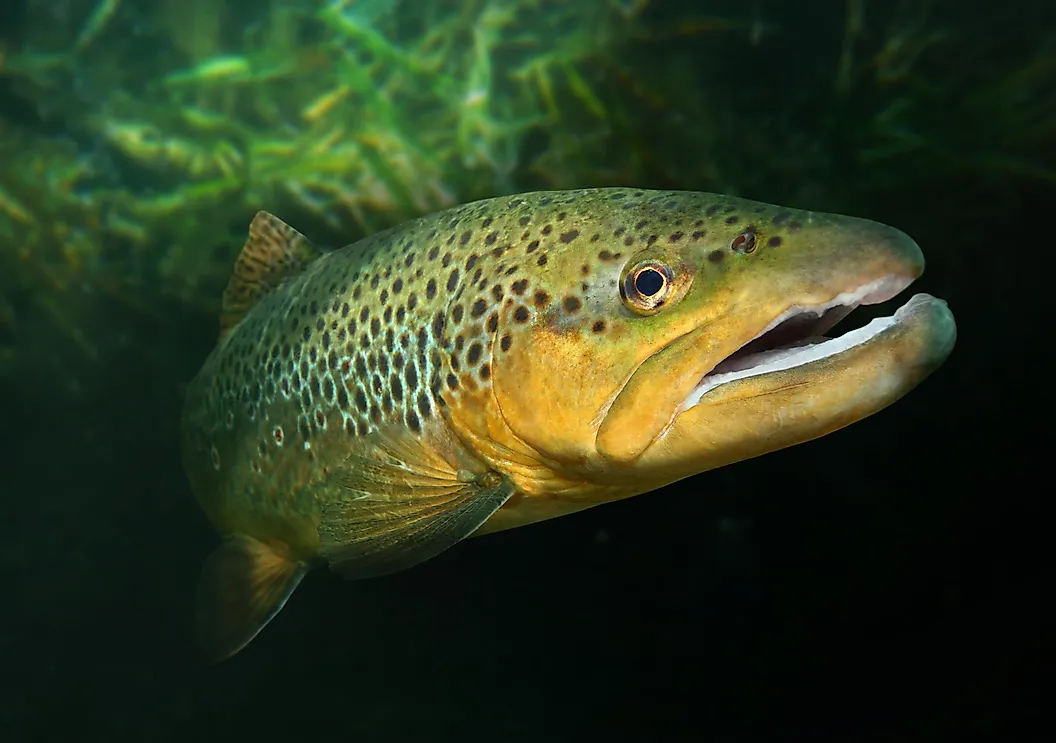
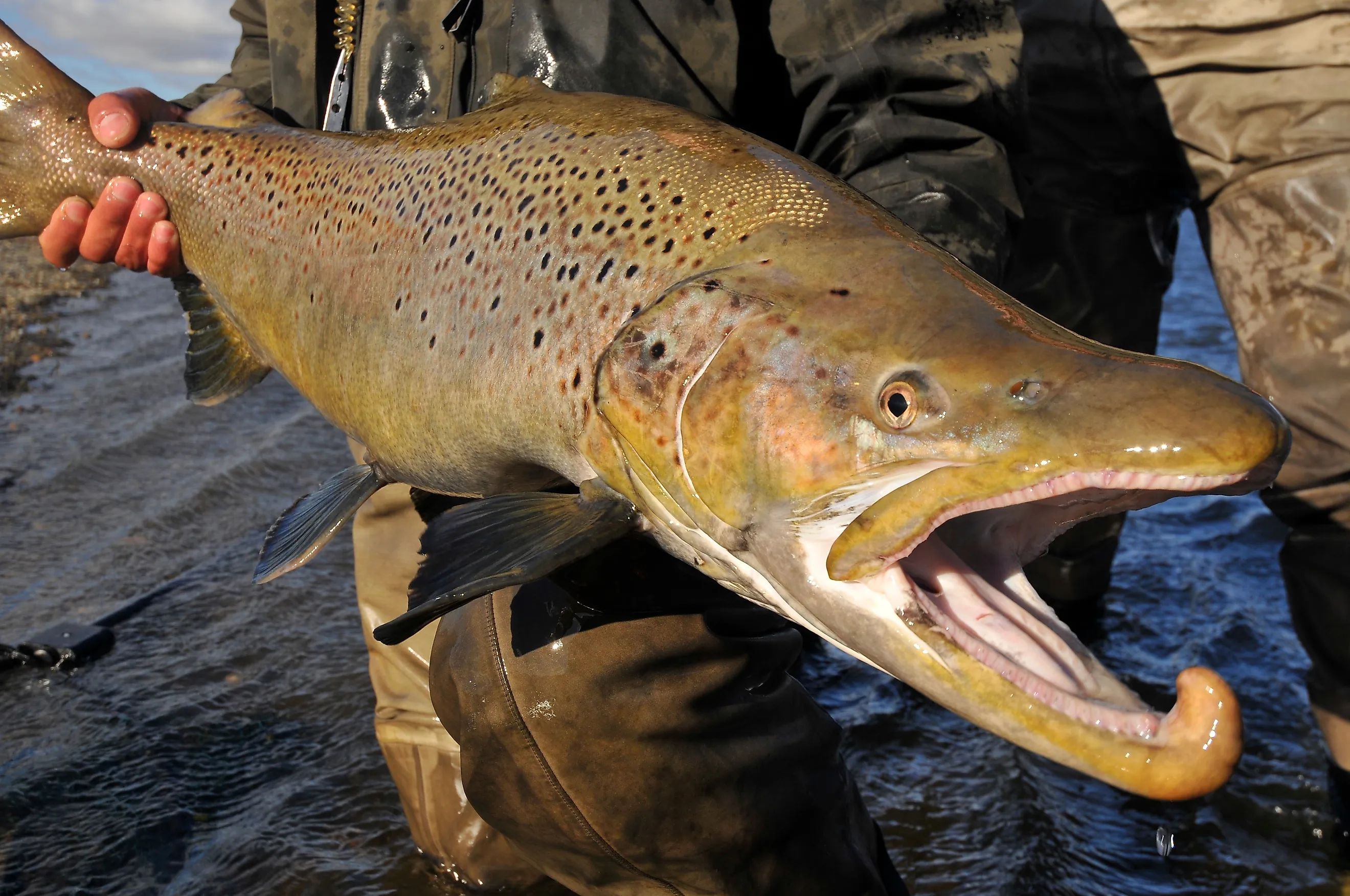
Certified scales settled the number at 38 pounds, 7 ounces, with a length of 36.6 inches. Johnston caught the fish on February 27, 2015, during his first Arkansas trout trip. The White's coldwater fishery developed after Bull Shoals Dam was completed in 1952. Experimental stockings showed exceptional survival and growth, and regular rainbow and brown stocking began in 1955. The managed reach continues downstream to the Highway 58 bridge at Guion, giving anglers a long stretch of clear Ozark tailwater around Cotter.
Kootenai River, Montana

Montana's record rainbow trout came from the Kootenai near David Thompson Bridge on August 11, 1997. Jack G. Housel Jr. landed a 33.1-pound fish measuring 38.62 inches. At more than three feet long, it remains the state's largest documented rainbow. Lake Koocanusa and Libby Dam sit upstream, so the catch came from a connected river-and-reservoir system.

Below the dam, bald eagles and ospreys hunt along the water near David Thompson Bridge. Farther downstream, Kootenai Falls drops 90 feet in less than a mile. A swinging bridge overlooks the main 30-foot fall and the rocky gorge. A drive from Libby can take in the record area and the falls. The route pairs a remarkable trout story with a rocky gorge and one of Montana's most dramatic waterfalls.
Marias River, Montana

Robbie Dockter and his daughter Sierra were nearly finished with their regular Wednesday fishing trip when his four-pound line stopped moving. The fish stayed deep, then rolled in their headlamps near shore. After about 15 minutes, Dockter guided it downstream and finally reached shallow water with the net.

The brown weighed 32.42 pounds on a certified scale and measured 37 inches, breaking a Montana record that had stood for 55 years. Dockter had hoped to catch a ten-pound brown someday, and his March 2021 fish tripled that goal. The Marias crosses open prairie in northern Montana, a striking change from the wooded streams commonly associated with trout. Tiber Dam forms Lake Elwell upstream, while long free-flowing reaches continue toward the Missouri. A state fisheries manager described the record as an outlier, since the stretch holds quality trout but rarely anything comparable.
Kispiox River, British Columbia

Measurements collected between 1972 and 1996 reveal why the Kispiox became famous. Adult male steelhead averaged 16.2 pounds and 33.9 inches to the tail fork. Females averaged 12.4 pounds and 31.1 inches.
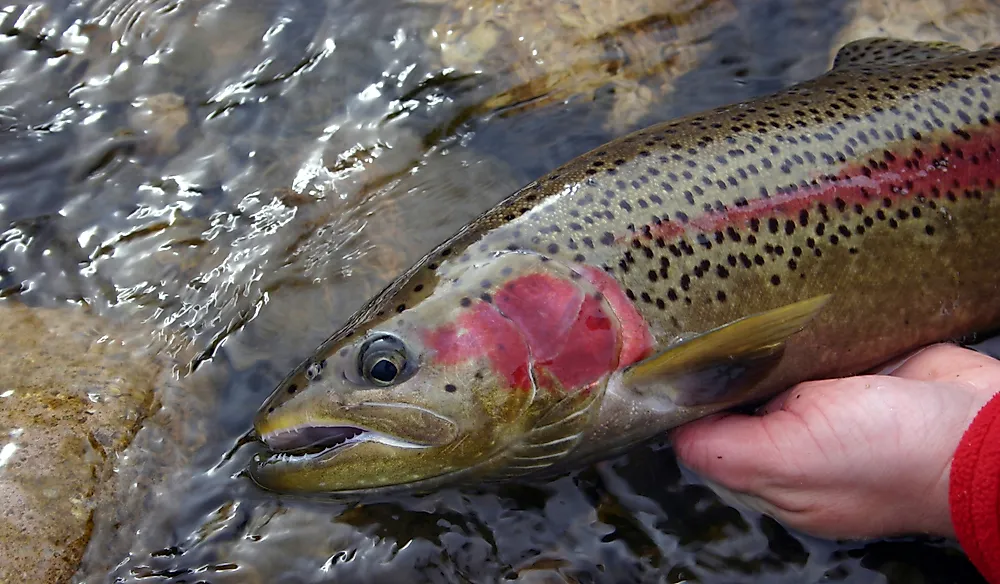
These steelhead are ocean-going rainbow trout. Scale analysis showed an average marine stay of about two years before adults returned through the Skeena, mainly in mid-August and early September. That Pacific feeding period explains much of their weight.
The river enters the Skeena about ten miles north of Hazelton after flowing roughly 87 miles through north-central British Columbia. Glaciers in the Skeena Mountains supply its headwaters, while small lakes and bogs help moderate flows. The provincial report described Kispiox steelhead as among the world's largest. Its reputation rests on hundreds of measured adults across more than two decades, not a lone trophy.
Kenai River, Alaska

A Kenai rainbow longer than 30 inches may have spent 13 years moving through the same freshwater drainage. Alaska biologists describe these trout as primarily resident fish, not steelhead, although they travel widely between river reaches and Kenai and Skilak lakes.

Salmon provide the food that supports their growth. Trout feed on eggs during the spawning runs and use salmon carcasses later in summer and fall. Tagging studies have followed fish into tributaries for spring spawning, then back toward lakes and main-river habitat. Densities around some middle-river spawning areas have reached about 1,000 trout per mile, with the most sensitive water closed during that period. Fishing effort peaks in fall, when the lower Kenai holds more trout after months of salmon activity. A 30-inch Kenai rainbow can represent more than a decade of feeding and movement within one freshwater drainage.
Situk River, Alaska

Thirty inches is approximately average for an adult Situk steelhead. These rainbow trout spend part of their lives feeding at sea, where abundant marine food supports rapid growth before their spring return to freshwater.

Steelhead trout portrait.
The Situk flows about 18 miles across the Yakutat forelands, yet it supports Alaska's largest known steelhead population. The main fishing season extends through spring, with peak effort in May. Wading access is available near Lower Landing and 9 Mile Bridge, while the float between those points covers about 14 miles. Old-growth spruce lines the banks, while tight bends and submerged timber keep the float technical. Catch-and-release fishing now dominates, helping protect the wild run. In some years, roughly one Situk steelhead in twenty measures more than three feet.
Nipigon River, Ontario

Dr. J. W. Cook set a benchmark that has lasted since July 21, 1915. His Nipigon River brook trout weighed 14 pounds, 8 ounces and measured about 31.5 inches. The International Game Fish Association still recognizes it as the all-tackle world record.

Brook trout are members of the char group despite their familiar name. Cook initially believed he had landed a lake trout, but Indigenous guides with the party identified the fish correctly. The Nipigon Historical Museum commemorates Cook's world-record catch, and his original rod and reel were exhibited there during the 2015 centennial celebrations.
The Nipigon links Lake Nipigon with Lake Superior, passing between rugged cliffs and old-growth forest. Hydroelectric development later submerged Rabbit Rapids, the location associated with Cook's catch, and altered the original fishery. Water-management agreements and stronger catch-and-release practices aided its recovery. Modern visitors can follow the Nipigon River Recreation Trail for elevated views, then stop at the museum to learn about Cook's record catch.
Why Trout Grow So Large Here
The records above come from very different environments. Great Lakes browns and Pacific steelhead use connected waters, while Kenai rainbows remain in freshwater and feed heavily around salmon runs. Arkansas tailwaters offer cold discharge below major dams. A 4.8-mile Ozark tailwater and an Alaskan river flowing to the Pacific can both support remarkable trout, but the fish reach that size by entirely different routes.