How Many National Parks Can You See In A Week?
Visiting every national park in the United States at once would involve driving between some of the most remote corners of the United States to visit national parks in Washington, Maine, and Florida, flying across the Pacific Ocean to Hawaii, and sailing along the coast of Alaska. This is not exactly feasible in a week. Even if it were, each national park would be quickly ticked off a list, rather than properly experienced. National parks can be found across 30 states, with the American West holding the greatest concentration of them. While it might not be possible to visit every national park in a week, it is possible to see them in clusters. Visitors can see Utah's red rock landscape and natural stone arches, walk among California's giant sequoias, and spot grizzly bears from the highway in the Rocky Mountains.
The Mighty Five (5 National Parks)

If Las Vegas is the starting point and Salt Lake City is the ending point, then visiting all five of Utah's national parks within a week is achievable.
Starting in Las Vegas allows visitors to reach Zion National Park in less than three hours of driving. From Zion, Bryce Canyon National Park, Capitol Reef National Park, and Canyonlands National Park can be reached within three hours of driving between one another. Since Canyonlands and Arches National Park are both near Moab, the drive between the two can be completed in as little as thirty minutes.

This makes it possible to visit all five parks in seven days without spending the entire week behind the wheel. Visitors can spend an entire day in each park. The Narrows and Angels Landing are popular hikes in Zion. View hoodoos at the Bryce Amphitheater in Bryce Canyon. Stand under the 133-foot span of the Hickman Bridge in Capitol Reef. Gaze at the Milky Way at Canyonlands' International Dark Sky Park. Finally, hike to one of the many viewpoints of Delicate Arch in Arches National Park.
The best time to visit Utah's Mighty Five is in spring and fall. However, even in the off-season, Zion can be as busy as other national parks in their peak season. Additionally, permits are required for certain activities like Angels Landing or backcountry camping.
California National Park Loop (8 National Parks)

San Francisco is the most central point for a circular loop through California's national parks (excluding Channel Islands National Park). With eight national parks on land to visit, trying to see them all in a week is definitely a tight schedule.
Redwood National Park is a seven-hour drive north of San Francisco. The Newton B. Drury Scenic Parkway, a ten-mile-long paved road, allows visitors to drive underneath giant old-growth redwoods. Lassen Volcanic National Park is a five-and-a-half-hour drive from Redwood. Visitors can camp beside Manzanita Lake and, if time permits, hike Lassen Peak before setting off.

The following three national parks, Yosemite, Kings Canyon, and Sequoia, are connected by the Majestic Mountain Loop. Yosemite's Wawona Road provides viewpoints of El Capitan and Half Dome. Since Sequoia and Kings Canyon border one another, they can be reached in a two-and-a-half-hour drive. Visitors can easily navigate both parks, seeing sights like the General Sherman Tree in Sequoia and hiking Panoramic Point Overlook in Kings Canyon.
Death Valley National Park is less than five-and-a-half hours away. Many people walk on Badwater Basin, the lowest point in North America. But do not spend too much time out of the car, as summer temperatures can reach 130 degrees Fahrenheit. Joshua Tree National Park is six hours away, where the Mojave and Colorado Deserts meet. Upon return to San Francisco, stop at Pinnacles National Park, the smallest in California, to see rare talus caves.
Rocky Mountain Road Trip (4 National Parks)

Rocky Mountain National Park is only an hour-and-a-half drive away from Denver. Visitors can access alpine tundra on the highest continuous paved road in the United States, Trail Ridge Road, eleven miles of which travel above the tree line near an elevation of 11,500 feet.
Getting to Grand Teton National Park requires an entire day of traveling, as it is a seven to eight-hour drive away. Spend the night in Jackson, and then explore the park the following day. Most activities in the park are centered around the Tetons. Jenny Lake Scenic Drive follows the east shore of Jenny Lake while granting unobstructed views of the peaks.

The drive from Grand Teton's northern boundary to Yellowstone National Park's South Entrance takes approximately 45 minutes of driving via the John D. Rockefeller Memorial Parkway. However, Yellowstone has five entrances, and it takes several hours to drive between them. It takes even longer to account for stops at Old Faithful or viewing grizzly bears from the side of Grand Loop Road.
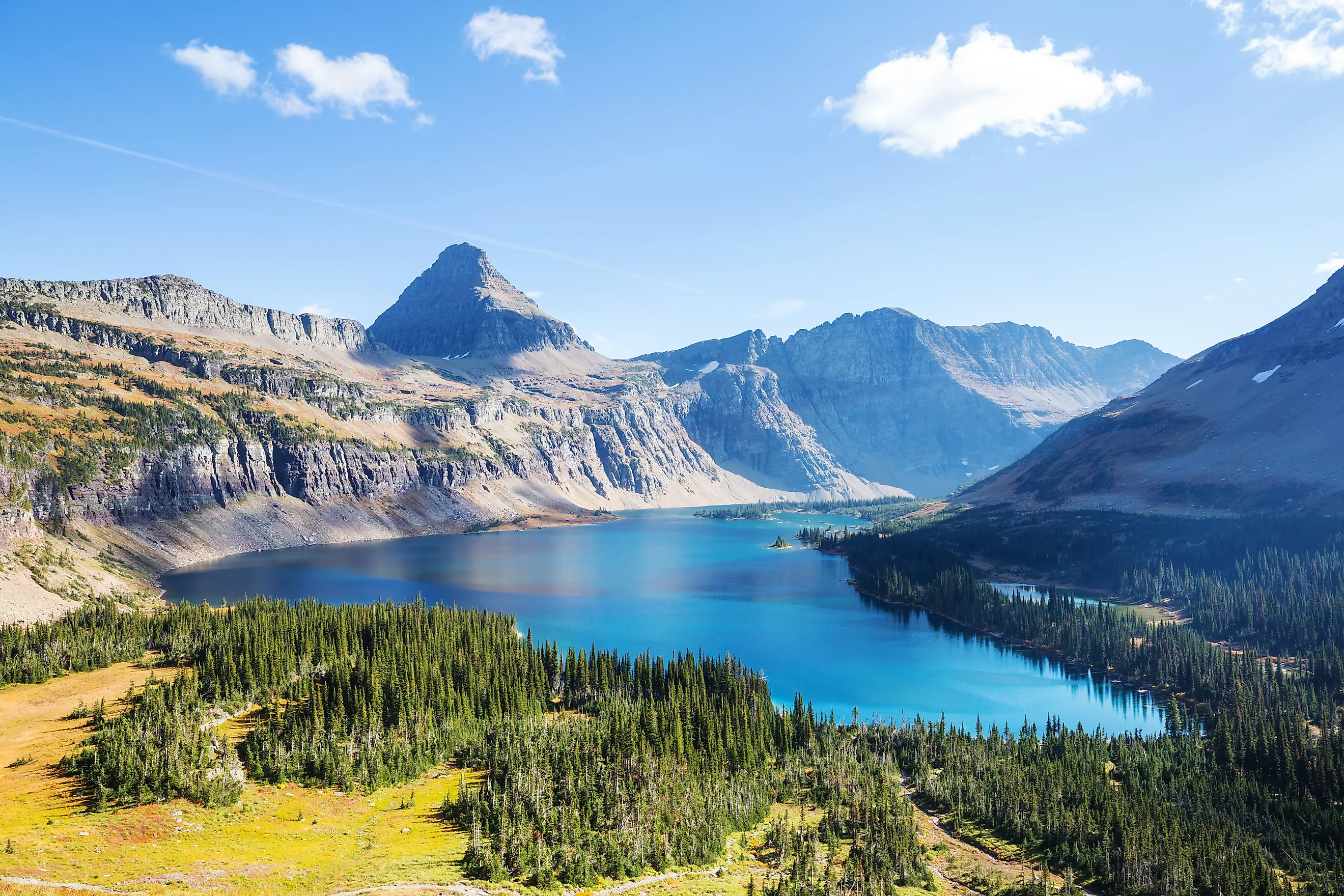
Expect a six-hour drive between Yellowstone's North Entrance and Glacier National Park. Going-to-the-Sun Road traverses the park, with opportunities to view wildlife at the side of the road and Jackson Glacier from an overlook.
Speedrunning National Parks
Ultimately, the number of national parks someone can see in a single week can be determined by how much they want to experience each park versus how much time they are willing to spend driving between them. Utah's Mighty Five allow visitors to spend a day in each park with reasonably short commutes between parks, while California's national parks require long hours on the road and very little time in each park. Although there are long drives between some of the national parks in the Rockies, the mountainous scenery is constant on the road.
So, while seeing several national parks in a week is certainly achievable, many of them require extended visits. Some parks, like Yellowstone, are large enough that visitors could spend an entire week there, let alone any other parks.