The Oldest Tree East Of The Mississippi
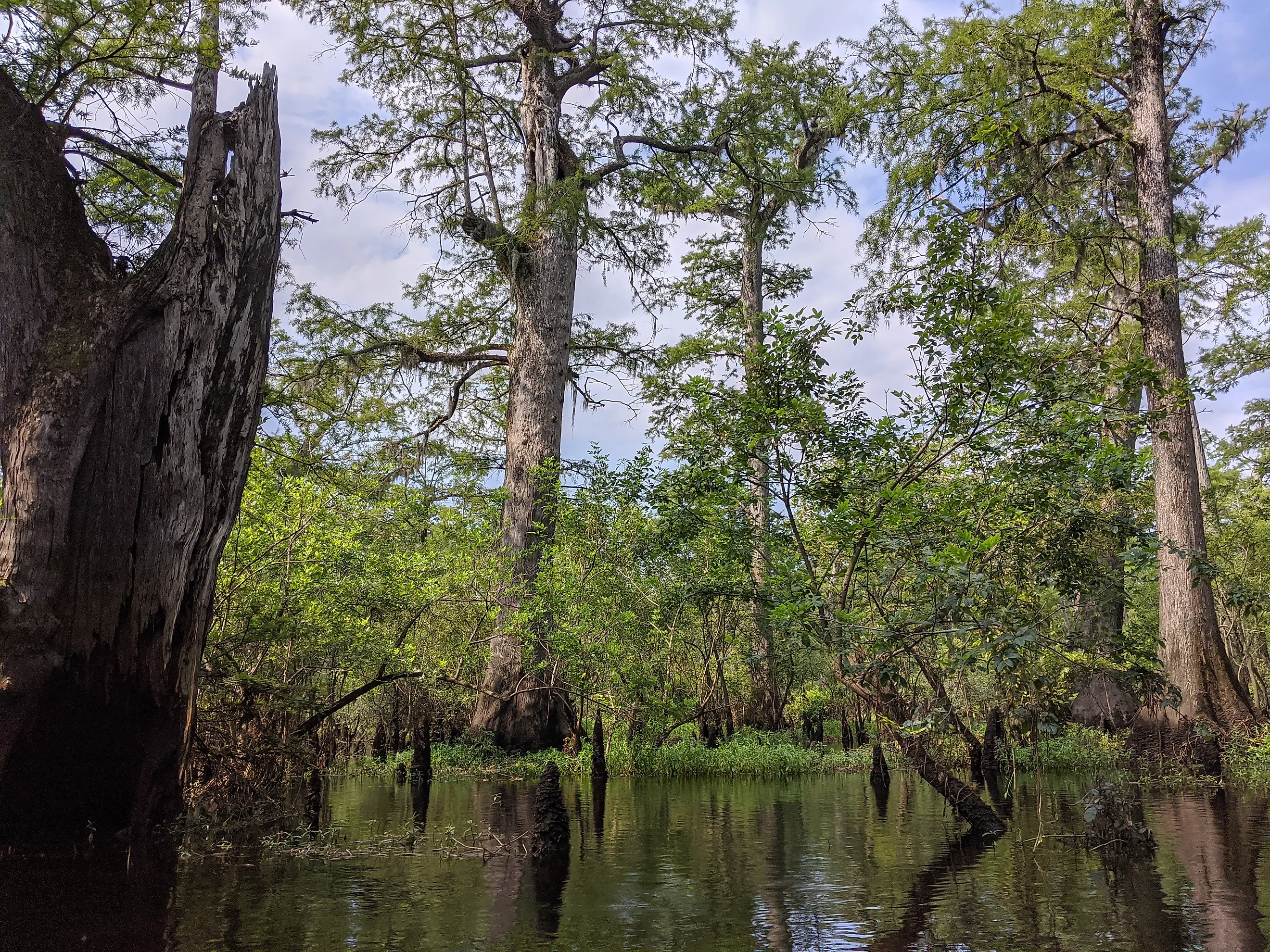
In North Carolina's Three Sisters Swamp, the Black River spreads around the flared bases of ancient bald cypresses. One of those trees is the oldest known living tree east of the Mississippi with a scientifically verified age.
Identified as BLK227, it was at least 2,624 years old in 2018, with its oldest dated wood reaching back to 605 B.C. It grows northwest of Wilmington, in a river corridor where ancient cypresses still stand along much of the waterway. Getting close involves paddling into the swamp. Above the water, storm-damaged crowns mark trees that have survived centuries of hurricanes, with broken upper limbs and flattened tops.
The Tree With Wood Dating To 605 B.C.

BLK227 has a straight trunk among its more contorted neighbors. During the Black River survey, guide Charles Robbins brought sections of a 36-foot extension ladder into the swamp by canoe. Climbing allowed the team to search for solid wood above hollow trunk bases.
BLK227's age was established through slender cores taken from the living tree. Its annual growth rings were dated, and radiocarbon testing independently supported the result. The cores came from roughly 10 feet above the swamp floor, above the swollen base. All the years the tree needed to reach that height sit outside its measured age. The cypress was already growing when its earliest sampled ring formed in 605 B.C. Nearby, another tree had dated wood reaching back to 70 B.C.
Why These Cypresses Escaped The Sawmill

Rot-resistant cypress wood went into shingles and railroad ties, and commercial cutting removed much of the Southeast's original cypress forest. Along the Black River, timber cutting began in the colonial period. Steamboats could reach the river through the Cape Fear during the 1800s, when logging removed cypresses and other bottomland trees.
Many of the survivors were poor candidates for a sawmill. Hollow interiors reduced their usefulness as timber, probably helping them escape the cutting. Such hollows are common among the Black River's largest and oldest cypresses, leaving gaps where the earliest growth rings once formed. Even a very old living tree can have too little intact wood inside to establish its full age. Growth is exceptionally slow in the Black River's acidic, nutrient-poor conditions.
A Forest That Grows In The River

Farther down the Black River, the current slows and water spreads into broad swamps dominated by bald cypress. The trees' flared bases and extensive roots help keep them upright in soft, wet ground. Around them, woody projections called knees grow upward from their roots. Above the water, the branches carry soft needles that turn reddish brown and fall each autumn. A winter cypress with bare branches may be perfectly healthy.
New cypresses need a different start. Their seeds cannot germinate underwater; they need wet ground exposed as water recedes. Once a seedling sprouts, it must keep some foliage above subsequent flooding to continue growing. Prolonged complete submergence can kill a seedling.
The surrounding floodplain supports river otters, and prothonotary warblers nest in the river corridor.
Reaching Three Sisters Swamp

Canoes and kayaks provide access to the ancient grove, where narrow channels run between the trunks. Three Sisters lies between the State Road 1550 crossing and the N.C. 53 bridge. Its interior has no marked paddling trails, so an outfitter or experienced local group is useful for a first visit. Water levels change substantially, and a route that is passable during higher flow can require dragging or carrying a boat during dry periods. Check conditions before choosing a launch and takeout. The river also has public boat landings, including one off Long View Road near the N.C. 11/53 crossing. For a shorter look at the forest, some old-growth cypresses are visible from the N.C. 53 bridge near Atkinson. The record holder itself stands within the swamp.
Three Sisters Swamp is protected within a conservation effort covering more than 17,000 acres along the Black River. The Nature Conservancy and its partners also conserve surrounding floodplain forests and restore longleaf pine on higher ground. Much of the land along the river remains privately owned. Conservation easements let owners retain their properties, including opportunities to hunt and fish, while restricting logging and development. The protected forests help limit nutrients and other pollutants reaching the river. Work to conserve the Black River began in 1989. In December 2018, the conservancy acquired 319 acres encompassing Three Sisters Swamp and adjoining uplands in Bladen County.