The Best National Parks You Can Reach By Train
Renting a car is not the only way to reach some of America's most spectacular national parks. Amtrak's long-distance routes, as well as some commuter trains, pass within miles of park entrances from the Appalachian Mountains all the way to Northern Montana and the Southwest. In a few cases, the train even stops inside park boundaries. These national parks offer some of the country’s best rail-accessible escapes, with established connections from nearby train stations to park entrances and attractions. The Empire Builder reaches Glacier’s western gateway, the Grand Canyon Railway travels to the South Rim, and the South Shore Line stops within the Indiana Dunes. The Cardinal stops inside New River Gorge, while Amtrak routes provide gateways to Rocky Mountain, Shenandoah, and Everglades National Parks.
Glacier National Park

Glacier National Park covers over 1 million acres in northwestern Montana along the Canadian border and contains more than 700 miles of hiking trails, 130 named lakes, and roughly 26 glaciers, all of which are shrinking in size. The Empire Builder, Amtrak's Chicago to Seattle route, is a 46-hour trip that stops at three stations near the park: West Glacier, East Glacier Park, and Whitefish. West Glacier is near the park's west entrance, but the limited seasonal station shuttle must be reserved in advance and serves only Apgar or Lake McDonald Lodge. Onward Going-to-the-Sun Road shuttle travel requires separate planning and a ticket.
The Going-to-the-Sun Road is the park's 50-mile highway, crossing the Continental Divide at Logan Pass at 6,646 feet. It passes almost every type of terrain the park has to offer: glaciers, cascading waterfalls, mountain walls, and valleys full of wildflowers. If you are lucky, you may even see mountain goats or bighorn sheep. For the hikers out there, take the Highline Trail along the Garden Wall above the road, or Grinnell Glacier Trail, which will lead you through wildflower meadows to one of the park's most accessible remaining glaciers. Glacier drew more than 3.1 million visitors in 2025, its third-highest visitation year on record, so you'll want to plan accordingly in order to beat the crowds.
Grand Canyon National Park

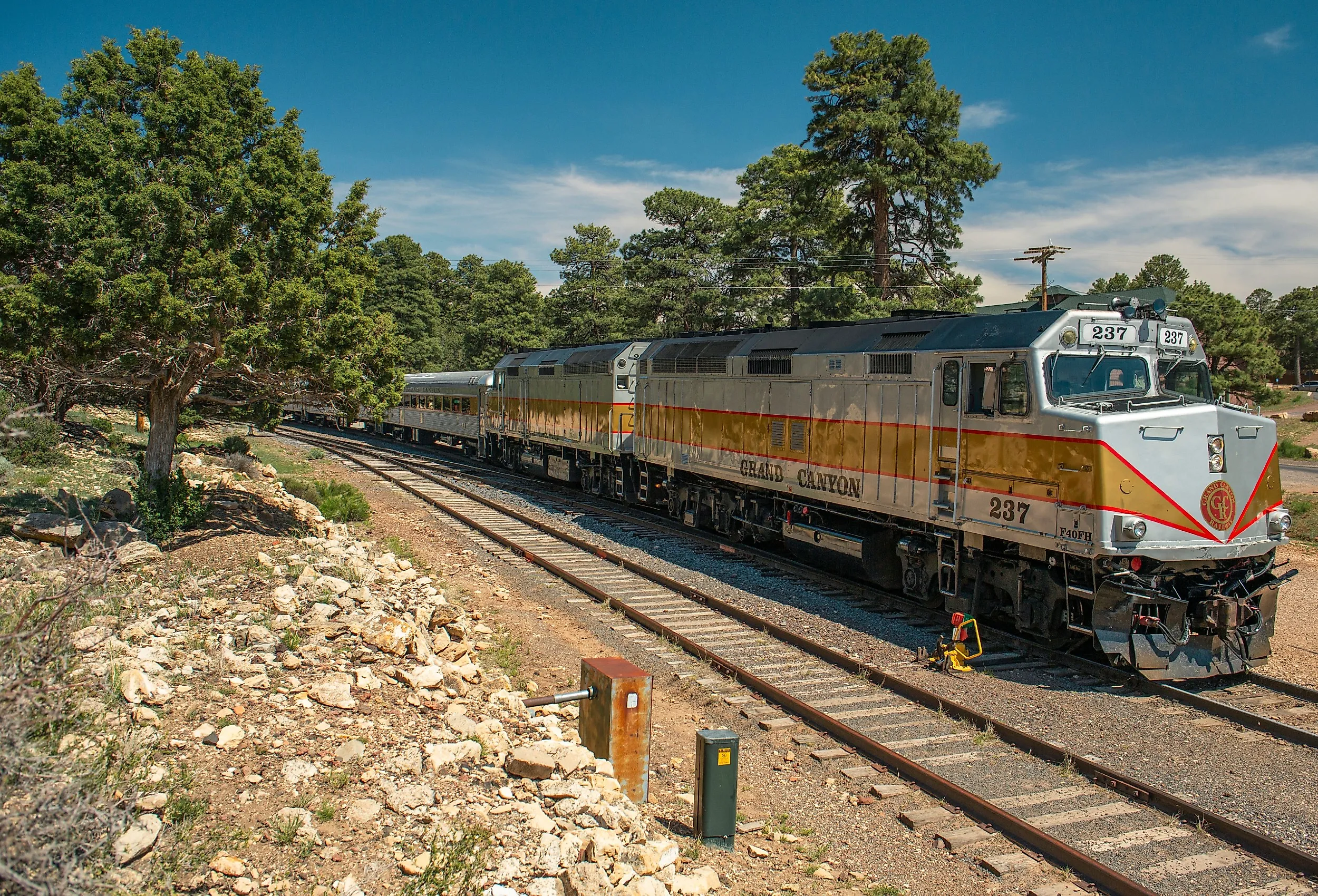
The Grand Canyon stretches 277 miles along the Colorado River in northern Arizona, reaches depths of over a mile, and spans up to 18 miles across at its widest point, exposing nearly two billion years of geological history in its layers. The Southwest Chief stops in Flagstaff, where passengers must arrange transportation to Williams Depot. From there, the separately ticketed Grand Canyon Railway travels 65 miles to the South Rim. Bright Angel Trail descends 4.5 miles to Havasupai Gardens Campground before continuing deeper into the canyon toward the Colorado River.
The South Kaibab Trail offers exposed ridge walking with wide canyon views, while the roughly 13-mile Rim Trail runs between the South Kaibab Trailhead and Hermits Rest, with accessibility varying by segment. Desert View is a separate destination about 23 road miles east of Grand Canyon Village. Grand Canyon National Park Lodges operates South Rim mule trips into the canyon, while Grand Canyon Trail Rides offers shorter rides outside the park in Kaibab National Forest. If you are looking for the best view in the park, try Grandview Point around sunrise, or check out The Abyss, a sheer drop of about 3,000 feet. Grand Canyon was the fourth most visited national park in 2025, drawing in over 4.4 million visitors.
New River Gorge National Park

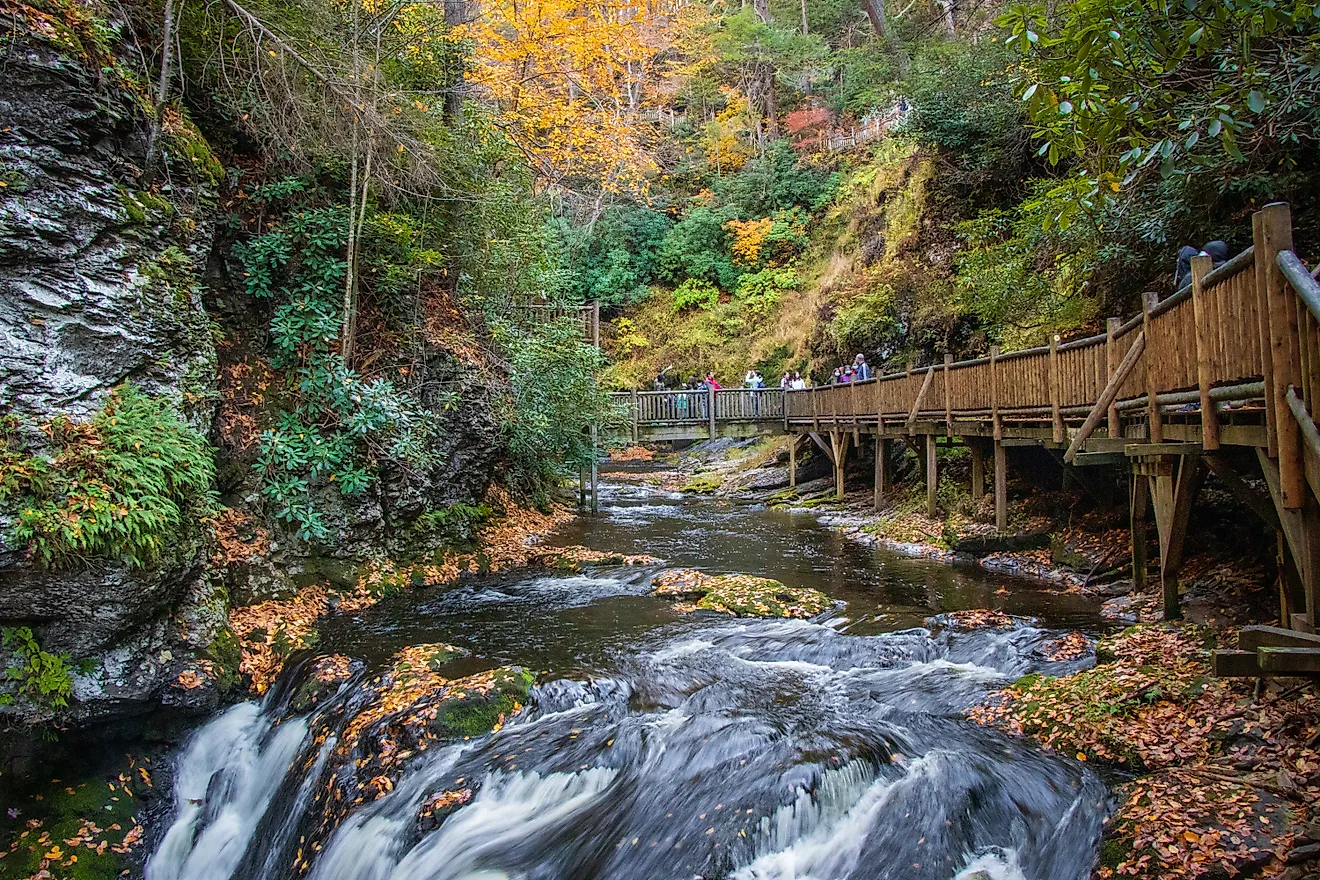
New River Gorge became the country's 63rd national park in 2020, protecting more than 70,000 acres of wooded Appalachian hills, sandstone cliffs, and 53 miles of the New River in southern West Virginia. The Cardinal route, an Amtrak train that runs between Chicago and New York three days a week, stops at Thurmond, Prince, and Hinton, all of which sit inside park boundaries. The Thurmond depot doubles as a seasonal park visitor center, so passengers who step off there are already standing in the park. Take a guided trip offered by Adventures On The Gorge or West Virginia Adventures on the river's lower gorge, which has 20 rapids rated Class III through Class V over its final eight miles.
If you want to see the sights in a more relaxing way, take Route 20 up to the town of Hinton, then head downstream along River Road, the park's only riverside drive. The route includes Sandstone Falls Overlook, about 600 feet above the 1,500-foot-wide falls, and Brooks Overlook, which looks down on mile-long Brooks Island, a perennial bald-eagle nesting site. If you're into climbing or hiking, the park contains more than 1,400 established rock climbs and almost 100 miles of hiking trails. Some are flat former railroad grades along the river. Others include the Glade Creek Trail, which follows a cascading stream with waterfalls, and the Kaymoor Miner's Trail, where 821 wooden steps lead to the remains of an old coal-processing and mine site. New River Gorge set a visitation record in 2025 with almost 2 million visitors.
Indiana Dunes National Park

Indiana Dunes covers 16,000 acres along 15 miles of Lake Michigan shoreline in northwestern Indiana, a narrow strip of sand dunes, wetlands, and prairies formed by glacial retreat roughly 14,000 years ago. The South Shore Line, a commuter rail service connecting Chicago's Millennium Station to South Bend, stops at four stations throughout the park, including Dune Park and Beverly Shores, and Dune Park is the only in-park stop that allows bikes on board. It is one of the most botanically diverse national parks in the country, with over 1,100 plant species and a globally rare black oak savanna habitat, an open oak grassland rather than a distinct rare tree species. A self-guided birding tour booklet will guide you through the park, where more than 350 bird species have been documented, such as the Sandhill Crane, Short-eared Owl, Yellow-bellied Sapsucker, and occasionally, even the Snowy Owl.
Nearby Indiana Dunes State Park offers the separately administered 3 Dune Challenge, a 1.5-mile route over Mount Jackson, Mount Holden, and Mount Tom, and separate state-park admission applies. The Ly-co-ki-we Trail system covers about 6.4 miles with shorter loops available, and it is open for hiking, horseback riding, and even cross-country skiing during the winter months. Kayak the East Branch of the Little Calumet River Water Trail, subject to current closures, or paddle along the park's Lake Michigan shoreline when conditions are safe. For the really adventurous, sea kayakers work the whole southern shore of the lake, crossing state lines at either end. Indiana Dunes has a lot to offer, with the park recording more than 2.62 million recreation visits in 2025.
Rocky Mountain National Park

Rocky Mountain National Park stretches across 265,807 acres of the Colorado Front Range, containing 300 miles of hiking trails through alpine tundra and spruce forests, as well as scenic drives, overlooks, more than 900 species of wildflowers, and over 60 species of mammals. The California Zephyr stops in Granby, about 16 miles south of Grand Lake, with the park entrance a few miles beyond the town. There is no public transit between the station and the park, and no walk-up rental counter, so prebook a rental-car delivery or a local taxi before you arrive. Trail Ridge Road is generally open in summer and early fall, climbing out of Grand Lake toward Estes Park and topping out at 12,183 feet, and travelers should check weather closures and current timed-entry requirements. Along the way, Holzwarth Historic Site preserves a 1920s dude ranch with self-guided tours through the original cabins and lodge buildings of a family that homesteaded here in 1917. Continuing through the park, a series of overlooks line the route, including Medicine Bow Curve, Gore Range, Forest Canyon, and Rainbow Curve.
Horseshoe Park, where bighorn sheep, moose, and elk can often be spotted, provides access to the East Alluvial Fan Trailhead, a short hike where water cascades through a field of boulders beneath Horseshoe Falls, with views of the Mummy Range and Endovalley. Bear Lake Road serves as a 9.2-mile scenic drive and provides access to popular high-country trails into Glacier Gorge, as well as hikes to lakes including Dream, Emerald, Fern, Mills, and Jewel. With more than 4.1 million visitors in 2025, Rocky Mountain National Park ranked sixth among the country's most visited national parks.
Shenandoah National Park

Shenandoah National Park is 95% forested and covers almost 200,000 acres in Virginia's Blue Ridge Mountains, making it the largest fully protected area in mid-Appalachia. The Cardinal serves Staunton and Charlottesville, while the Crescent and Northeast Regional also serve Charlottesville. Both cities require onward ground transportation, and Charlottesville sits about 25 road miles from the Rockfish Gap entrance. Skyline Drive, the park's main road, runs the full 105-mile length of the park along the mountain ridge, with over 70 overlooks and pull-outs to take in the sights, and it will take roughly three hours to travel. The challenging 9.4-mile Old Rag circuit includes rock scrambling, and between March 1 and November 30, visitors need an Old Rag day-use ticket in addition to a park entrance pass.
Rapidan Camp, President Herbert Hoover's summer retreat, sits at the intersection of two trout streams deep in the park's backcountry and can be reached by ranger-led tours, hiking, or horseback riding. The Brown House, in which Hoover stayed, is furnished to reflect the era, while the other remaining buildings are either marked with signs detailing their use or are current exhibits to share what life was like. Black bears are common in Shenandoah, and the National Park Service estimates the park's population in the hundreds. Shenandoah has over 500 miles of hiking trails, 200 miles of horse trails, 101 miles of the Appalachian Trail, 1,400 plant species, and over 300 species of animals, all helping to contribute to the approximately 1.68 million recreational visits in 2025.
Everglades National Park

Covering approximately 1.54 million acres, including expansion lands, the Everglades is the largest subtropical wilderness in the United States. The park has documented more than 300 bird species and protects the Western Hemisphere's largest contiguous mangrove forest. Some 36 native Florida species that may occur there are federally listed as threatened or endangered, while roughly 180 carry broader state or federal conservation designations. The Silver Meteor and Floridian serve Miami, and Amtrak Vacations offers a Miami-and-Everglades package. Because Amtrak does not enter the park, travelers need a prearranged tour or other ground transportation. The Everglades Institute, the park's nonprofit education partner, runs naturalist-led van tours down to Flamingo, guided canoe trips on Nine Mile Pond, and cypress dome wet walks that put you knee-deep in a cypress stand.
For a rare experience, Gator Park offers airboat tours to see alligators in the wild, while Everglades Safari Park offers 40-minute educational tours exploring the plant and animal life. The Anhinga Trail, a half-mile boardwalk from the Royal Palm area, is one of the most reliable wildlife viewing spots in the park, where anhingas, herons, and alligators can be seen throughout the year. Shark Valley has a 15-mile paved loop you can ride by bike or cover on the park tram, with an observation tower at the halfway point looking out over the marsh. The park recorded nearly 780,000 visitors in 2025, making it one of the less crowded major parks relative to its size and the amount of wildlife that can be seen.
Your Ticket to Ride to the National Parks
Indiana Dunes and limited destinations at New River Gorge offer the most direct rail access; reaching the other parks requires reserved shuttles, separate rail tickets, tours, rental cars, or other ground transportation. New River Gorge puts passengers on the platform inside park boundaries. Glacier's Empire Builder runs one of the most scenic rail corridors in North America before the park even comes into view. Grand Canyon's heritage railway handles the final steps to the South Rim Entrance. If you are looking to take a trip without flying, where you can relax, take in the sights, and just be along for the ride, you may consider taking a train.