Why New York City Is Five Different Counties
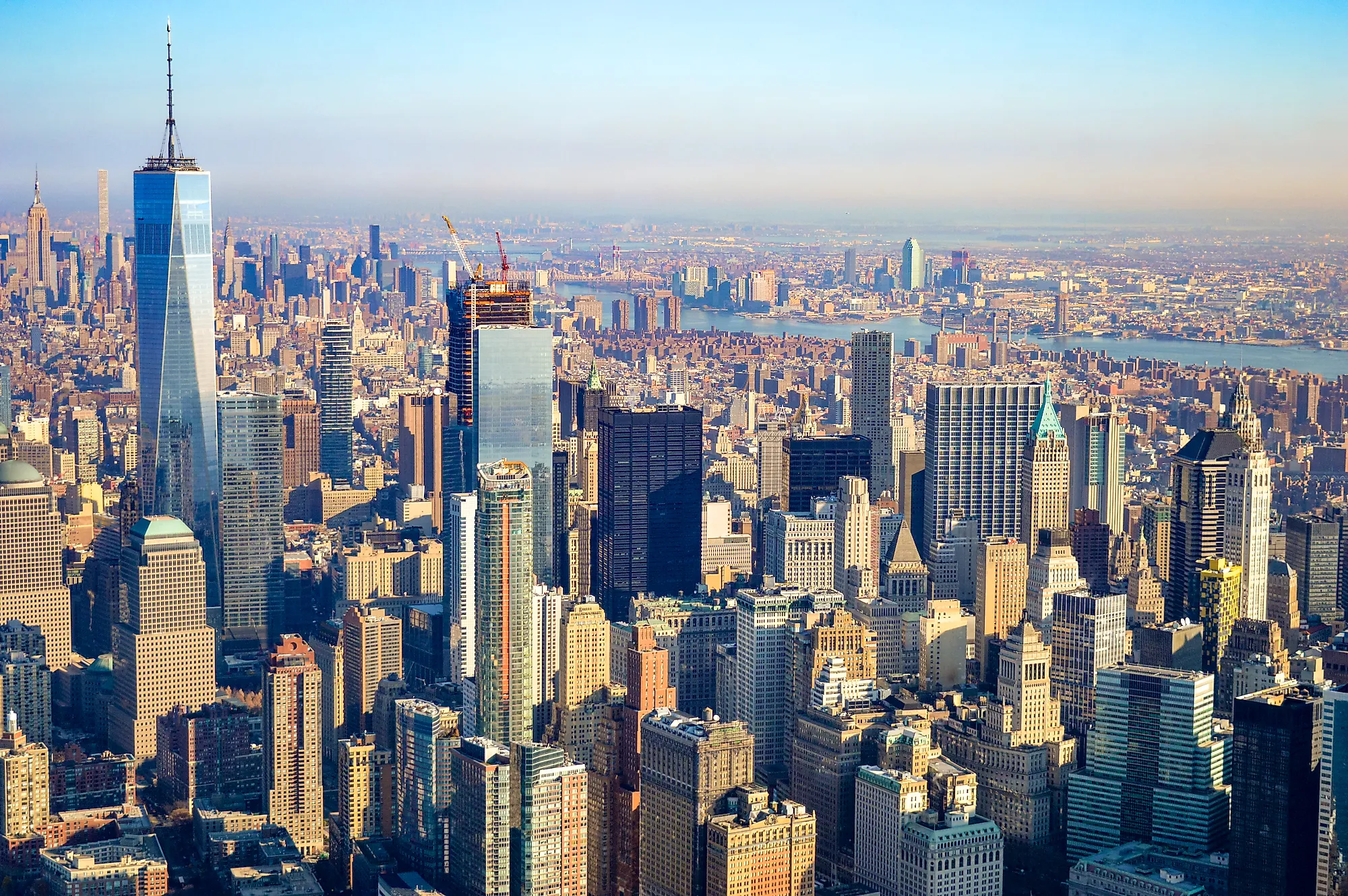
Most cities sit inside one county. New York City completely encompasses five of them. Stranger still, when the five boroughs were united in 1898, the new city contained only four counties. It would take another 16 years for the Bronx to become a county of its own. This unusual arrangement is the result of a political experiment that merged independent local governments, addressed growing infrastructure demands, and permanently changed the map of America's largest city.
The History of the Five Boroughs

In 1664, the British took control of the Dutch settlement of New Amsterdam and renamed it New York. The Province of New York was divided into counties in 1683, establishing New York County on Manhattan, along with Kings, Queens, Richmond, and Westchester counties.
In the 1860s, New York City was still confined to Manhattan Island. Staten Island, also known as Richmond County, was a largely rural and maritime area with five separate town governments. Queens County was a mostly agricultural region that included present-day Queens and what would eventually become Nassau County. The territory of today's Bronx belonged to Westchester County, north of the Harlem River. Brooklyn, occupying Kings County, was already one of the largest cities in the United States.
In 1868, politician and urban planner Andrew Haswell Green proposed bringing New York City and its surrounding communities under one municipal government. His plan included Kings County, portions of Westchester and Queens counties, and Staten Island. Green believed coordinated planning would improve the region's transportation, infrastructure, and economic development. He would later become known as the "Father of Greater New York."
After years of political debate, a nonbinding public referendum on consolidation passed in 1894. The vote was particularly close in Brooklyn, where consolidation won by just 277 votes. On January 1, 1898, a greatly expanded New York City was established, called "Greater New York." The new city consisted of five boroughs.
Manhattan: New York County

Manhattan was the historical center of New York City and the anchor of the newly consolidated metropolis. Bordered by the Hudson River to the west, the East River to the east, and the Harlem River to the north, it contained the city's financial and commercial center. Manhattan retained the name New York County, although the county still included the Bronx at the time of consolidation. Today, New York County also includes Marble Hill, a Manhattan neighborhood physically connected to the Bronx mainland.
The Bronx: Bronx County

The Bronx lies north and east of Manhattan, bordered by Westchester County to the north and Long Island Sound to the east. Its territory originally belonged to Westchester County, but New York City annexed the western portion in 1874 and most of the eastern portion in 1895. These expansions brought additional land into the city for housing, parks, and transportation. When the Bronx became a borough in 1898, it remained part of New York County. On January 1, 1914, the state officially established Bronx County, finally giving New York City its fifth county.
Brooklyn: Kings County

Brooklyn occupies the southwestern end of Long Island, across the East River from Manhattan. Before consolidation, it was an independent city with its own government, extensive waterfront industries, and a rapidly growing population. The Brooklyn Bridge had physically connected Brooklyn and Manhattan in 1883, but political union remained controversial. Brooklyn's increasingly inadequate water supply and the prospect of funding improvements through a larger municipal government helped encourage consolidation. When Brooklyn joined New York City in 1898, Kings County remained intact.
Queens: Queens County

Queens occupies western Long Island, north and east of Brooklyn. Before 1898, Queens County stretched much farther east, encompassing agricultural communities that had little interest in joining New York City. The western municipalities, including Long Island City and several surrounding towns, became part of Greater New York. The eastern towns of Hempstead, North Hempstead, and Oyster Bay remained outside the city but initially continued as part of Queens County. In 1899, they were separated into the newly established Nassau County. From that point onward, Queens County and the Borough of Queens shared the same boundaries.
Staten Island: Richmond County

Staten Island sits across New York Harbor from Manhattan and Brooklyn. Before consolidation, its five town governments administered a largely suburban and rural island with limited connections to the surrounding metropolitan area. Joining Greater New York offered access to a much larger tax base for infrastructure and public improvements. The island entered the consolidated city as the Borough of Richmond, matching its county name. In 1975, the borough was officially renamed Staten Island, although its county remains Richmond County.
The consolidation brought formerly separate municipal governments under a single mayor and city administration. The five boroughs retained borough presidents to represent local interests, while major municipal responsibilities became citywide functions. County governments lost many of their former administrative roles, but the underlying county boundaries remained important for state government and the courts.
The Legacy of a Five-County City
New York City's unusual political geography reflects more than a century of compromise between local identity and centralized government. The city manages major public services, including policing, sanitation, and public education, while state courts, district attorneys, and other legal functions continue to operate along county boundaries.
The five counties also preserve the geographical history of communities that once governed themselves. Brooklyn was an independent city, Queens was partly agricultural, Staten Island consisted of separate towns, and the Bronx was once part of Westchester County. Their consolidation created a single metropolis without completely erasing the boundaries that preceded it.
Today, New York City remains one municipality with five boroughs, five counties, and five distinct local identities. Its boundaries are a lasting reminder of the enormous political experiment that created Greater New York in 1898.