The US Lakes Where Invasive Crayfish Are Spreading
Few invasive species have transformed American lakes as quietly as crayfish. In one, their numbers have exploded past 280 million, up from an estimated 56 million. In another, they overran 95% of the shoreline in barely a decade, up from half. Wherever these crustaceans turn up beyond their native range, they can rewire an entire lake, and US wildlife agencies are scrambling to keep pace. Drawing on state and federal agency records and peer-reviewed studies, the lakes below each capture a different stage of the same invasion, some only recently detected, others already remade from the bottom up.
Lake Tahoe

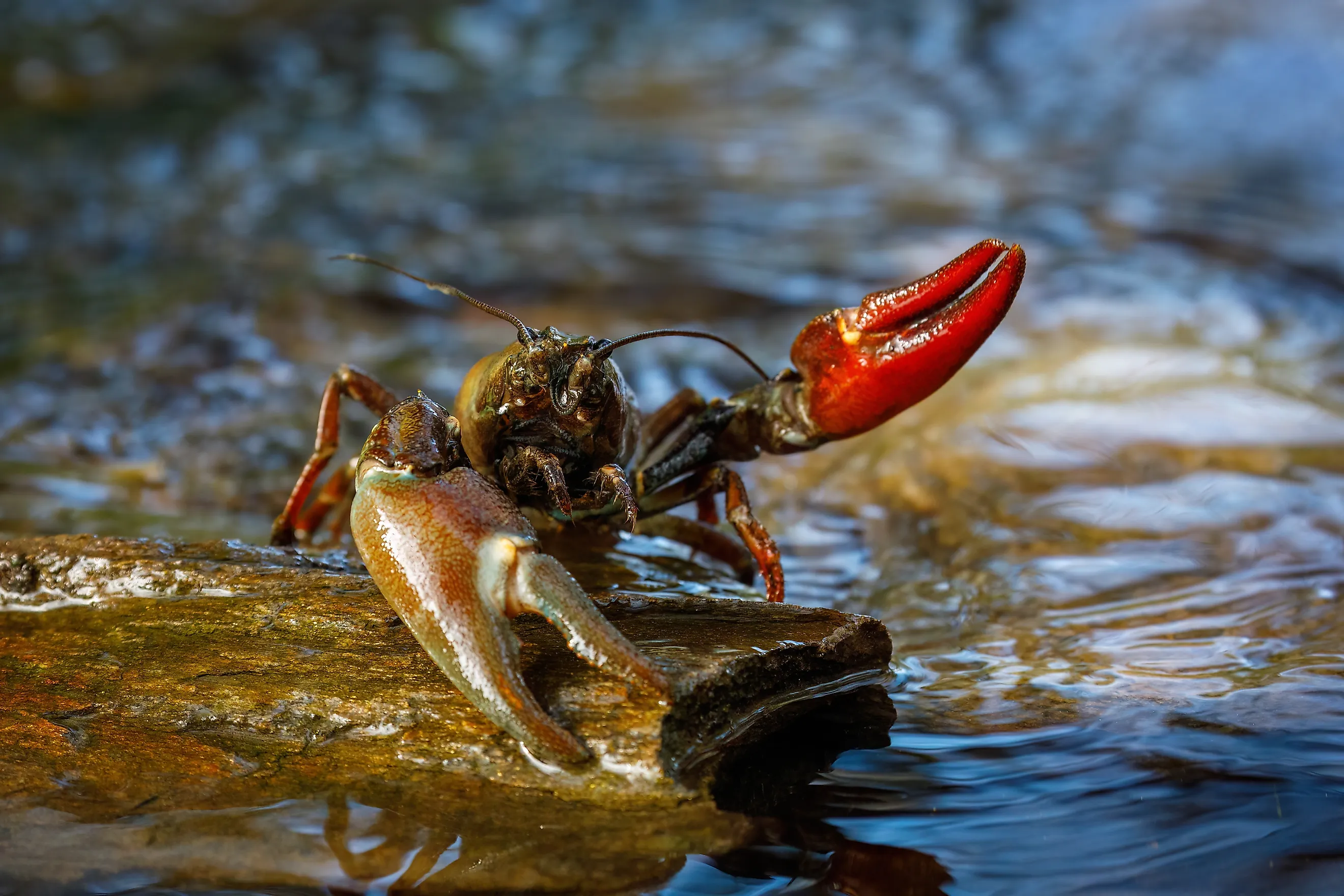
Almost no one visits Lake Tahoe to see its most abundant animal, and almost no one realizes that animal is an invasive crayfish. Recent estimates put roughly 240 million to 280 million signal crayfish, Pacifastacus leniusculus, in the lake, up from about 56 million in the 1960s. Introduced in the late 1800s as food for stocked trout and for local tables, the crayfish now rules the rocky bottom along much of Tahoe's shoreline. Agencies including the Tahoe Regional Planning Agency and the UC Davis Tahoe Environmental Research Center track them across the roughly 490 km² lake, part of the fortune California and Nevada spend fighting invasive species here.

The damage runs deeper than the head count. Signal crayfish devour native insects, fish eggs, algae, and plants, churning up bottom sediments as they forage, and researchers tie their spread to crashes in native invertebrates and a scrambled nearshore food web. Worse, they now feed introduced smallmouth bass, so a booming crayfish population helps bankroll yet another invasive predator.
Eradication is off the table; there are simply too many. Instead, researchers and managers run targeted trapping projects, pulling thousands of crayfish while testing whether local knockdowns give native species any room to recover.
Lake Champlain

Lake Champlain runs 120 miles (193 km) from northern New York and Vermont into Québec, feeding prized fisheries for lake trout, Atlantic salmon, walleye, yellow perch, and bass. It is also among the Northeast's most closely watched lakes for aquatic invaders. The Lake Champlain Basin Program has documented 51 non-native and invasive species across the basin, among them rusty crayfish, Faxonius rusticus, though no one knows exactly how many now prowl the lake.

Native to the Ohio River Basin, rusty crayfish hitchhiked out of their range mostly in anglers' bait buckets. Once settled, they breed fast, muscle native crayfish out of shelter, and eat nearly anything they can overpower: aquatic plants, insect larvae, snails, fish eggs, even small fish. Their feeding even shreds Eurasian watermilfoil into drifting fragments that take root elsewhere, handing a second invader a foothold.
There is no known way to erase an established rusty crayfish population, the Basin Program notes, so agencies focus on the doors still open: urging boaters and anglers to clean, drain, and dry their gear, never dump leftover bait, and inspect equipment before moving between waters. Stopping the next introduction has become far more realistic than reversing the last one.
Lake Of The Woods

The rusty crayfish takeover of Lake of the Woods didn't happen overnight; it has been tracked for more than half a century. Minnesota's Department of Natural Resources says the species turned up in the lake's Ontario waters in the late 1960s, then reached Minnesota waters in 2006. Since then, the crayfish have "slowly expanded their range southward" and now occupy all of the Minnesota portion of the 70-mile-long lake. The DNR pins much of that march on anglers hauling and dumping live crayfish for bait.
The DNR doesn't put a number on the population, but it has cataloged the fallout. As in Lake Champlain, the crayfish shove out native species, drag down aquatic vegetation, and make poorer fish food than the natives they replace. The lake's 2025-2035 Fisheries Management Plan notes the densest concentrations sit in Little Traverse Bay, proof the invasion has not blanketed the lake evenly.
Crater Lake

Crater Lake is one of the few places on Earth where scientists have watched an invasive crayfish swallow almost an entire shoreline. When signal crayfish were dropped in as fish food in 1915, the lake had never held a single crayfish. A first lake-wide survey in 2008 found them along about half the shore. By 2020, National Park Service monitoring clocked them at 95% of the lake's 22-mile (35 km) shoreline, leaving only a few rocky coves untouched. Hundreds of thousands, perhaps millions, may now patrol the lake that fills a collapsed volcano.

The stakes are unusually high in this Oregon caldera, because Crater Lake is the only home of the Mazama newt, Taricha granulosa mazamae, a subspecies found nowhere else. NPS researchers report that newts vanish almost everywhere crayfish take hold, while native aquatic insects collapse across invaded zones. The crayfish haven't merely added a predator; they have rewritten a shoreline that evolved in isolation for thousands of years.
Park biologists even tried clearing crayfish from the water around Phantom Ship, the jagged volcanic islet off the southeastern shore. After three years of intensive trapping, the population didn't fall. It jumped roughly tenfold.
Lake Mead

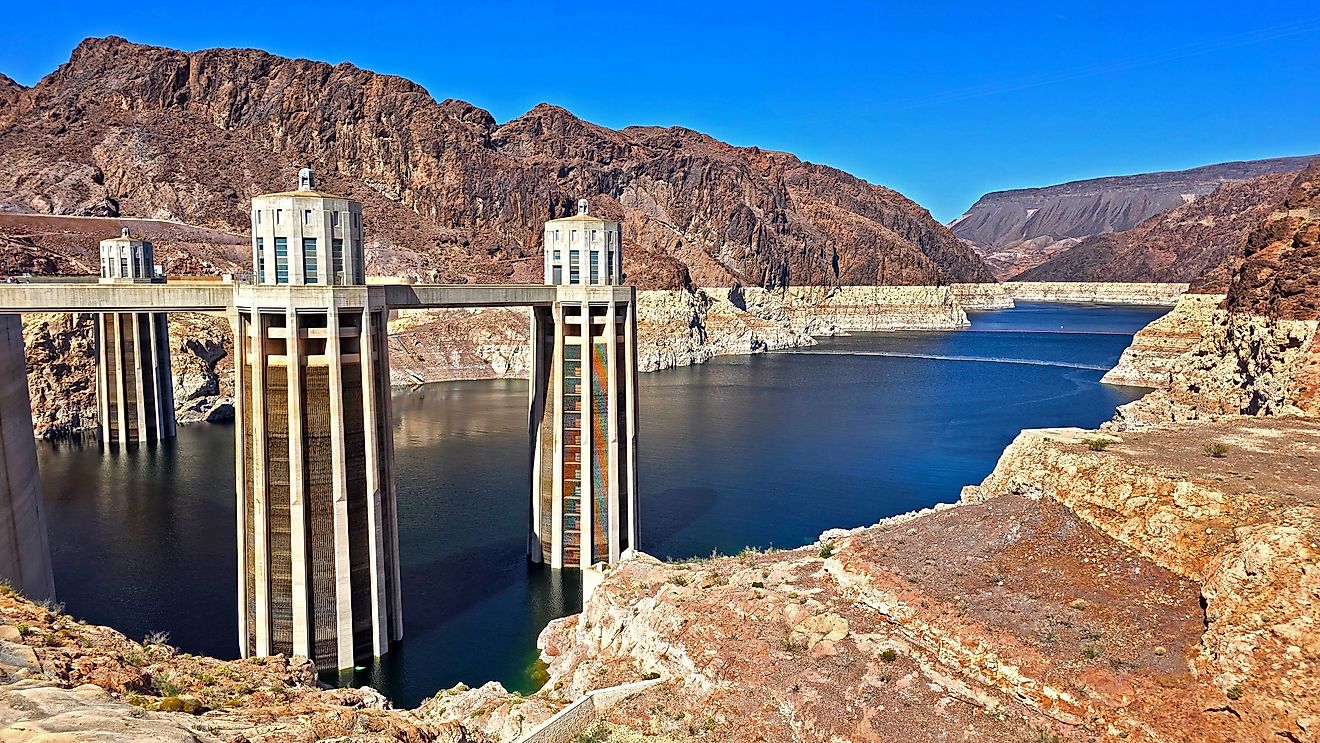
Covering 247 square miles (640 km²) at full pool and stretching more than 110 miles (177 km) along the Colorado River, Lake Mead is the largest reservoir in the United States by storage capacity. Unlike the cold, rocky lakes farther north, its warm coves, marshy edges, and slow backwaters suit the red swamp crayfish, Procambarus clarkii, a Gulf Coast native that has settled in for the long haul.

No one has published a population estimate for Lake Mead's crayfish. University of Nevada, Las Vegas researchers first documented red swamp crayfish in the reservoir in the late 1980s, finding them scattered in low numbers, and both the U.S. Geological Survey and the National Park Service still list the species as established in the system. But numbers alone aren't what worry managers here.
The bigger question is where the crayfish go next. Wildlife agencies flag red swamp crayfish as a species to watch around Lake Mead, tracking them in Las Vegas Wash, cattail marshes, and the tributaries feeding the reservoir. The fear is that they push upriver and into surrounding desert springs, fragile habitats where they can prey on native species, including the endangered razorback sucker, that have nowhere else to go.
Lake Michigan

Along Lake Michigan's shoreline, rusty crayfish didn't just arrive; they raced. Comparing more than a century of crayfish survey records reaching back to 1882, researchers found the species expanded far faster here, beginning in the 1990s, than in most other Great Lakes. Lake Erie had hosted rusty crayfish for over a hundred years with only slow creep; Lake Michigan saw one of the fastest crayfish invasions ever documented.

No agency has counted them, and the geography explains why: 22,300 square miles (57,800 km²) of water and nearly 1,640 miles (2,640 km) of U.S. shoreline across four states. Instead, scientists map the invasion by time and place, matching old records against new surveys to show rusty crayfish claiming fresh stretches of shore and displacing natives across nearshore habitat.
When researchers fought back on northern Lake Michigan's fish spawning reefs over two field seasons, they pulled 3,182 rusty crayfish across 17,825 trap-days. Trapping knocked densities down at one reef, but before the next season's crews arrived, the population had roughly tripled. Published in 2023, the study became a case study in how fast an established rusty crayfish population rebounds, even after thousands are hauled out.
Here To Stay In America's Waters
The numbers tell a blunt story: 240 million to 280 million signal crayfish in Lake Tahoe, an invader gripping 95% of Crater Lake's shoreline, rusty crayfish still pushing south through Lake of the Woods, and thousands hauled out of Lake Michigan only to bounce right back. Across every one of these lakes, the same lesson holds. Once invasive crayfish dig in, the fight is no longer about keeping them out; it is about managing what they have already changed.