How Snapping Turtles Survive Under A Frozen Lake
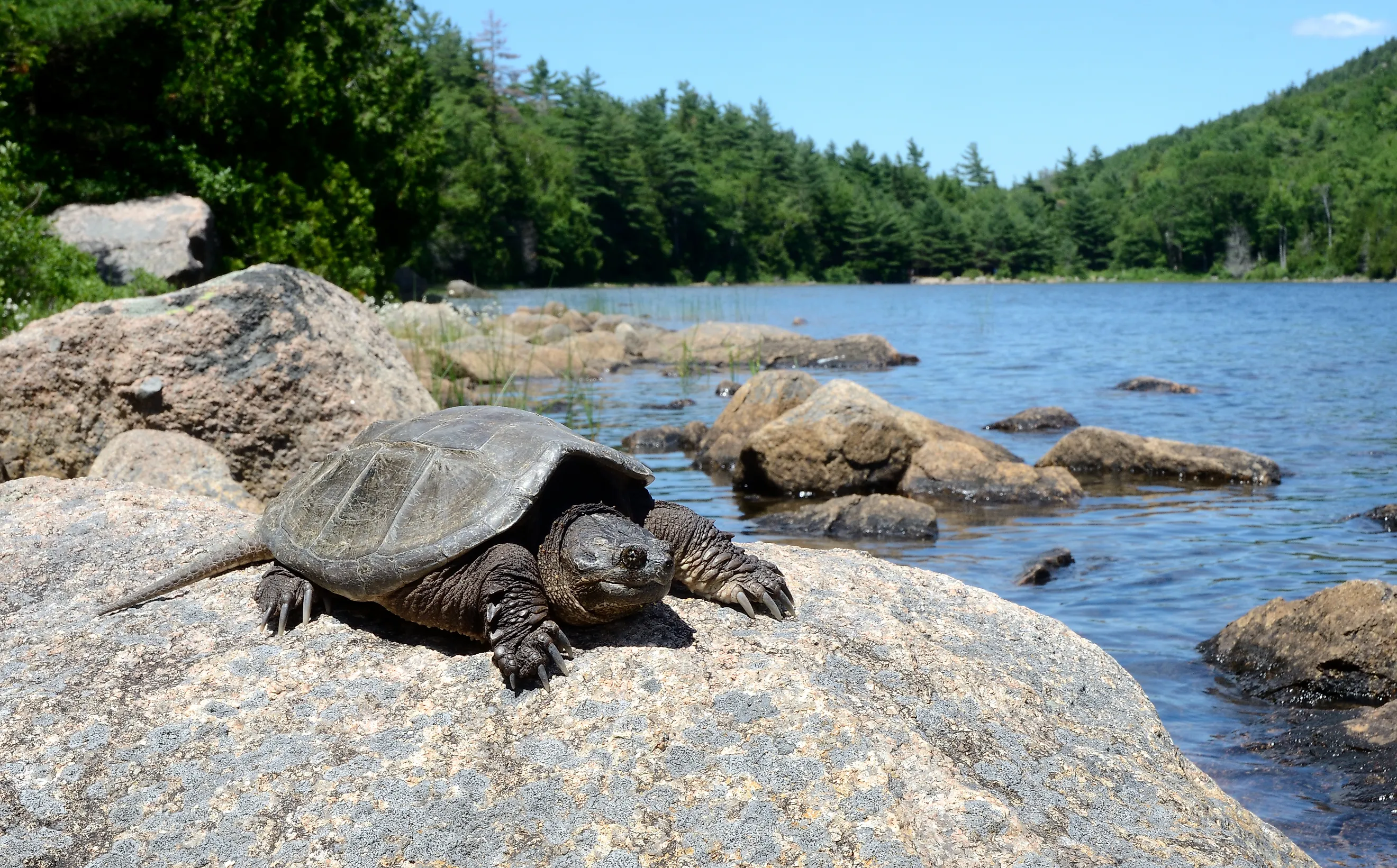
When winter arrives, lakes and ponds across North America become frozen, almost lifeless stretches of ice and drifting snow. Beneath the surface, though, a survival story is unfolding. Common snapping turtles (Chelydra serpentina), reptiles that depend on their lungs to breathe during the warmer months, remain submerged for months at a time, sometimes without access to oxygen. These ancient reptiles slow their bodies almost to a complete standstill, relying on a collection of physiological adaptations that allow them to endure the long, cold, dark winter.
Their survival depends on finding suitable underwater shelter, conserving energy, and tolerating conditions that would be fatal to most air-breathing animals. This is how snapping turtles survive beneath a frozen lake.
Finding A Safe Place To Spend The Winter

As temperatures decline and light fades in autumn, snapping turtles begin searching for suitable overwintering habitat. Unlike some animals that retreat underground or migrate to warmer climates, snapping turtles remain in their aquatic environment to wait out winter.
Preferred overwintering sites include lakes, ponds, wetlands, marshes, and even slow-moving streams. Turtles have been found to settle beneath submerged logs and tangled roots, overhanging banks, or dense piles of aquatic vegetation. Some partially bury themselves in soft sediment, while others rest on the bottom beneath submerged cover. It is not uncommon to see a snapping turtle resting directly under the ice in a shallow wetland, visible from above. Abandoned muskrat lodges and beaver lodges are also suitable. Wherever they choose, the ideal location must be deep enough to prevent the water from freezing completely, but shallow enough that the turtle can surface if necessary.
Interestingly, snapping turtles often return to the exact spot they had previously used to overwinter. Their territory is mentally mapped in great detail, and removing them from it often leads to death when the cold arrives, because they do not know where to find a suitable overwintering site. Research has documented individuals traveling several miles to return to familiar winter habitat. Other research has shown some snappers overwinter in groups, while others rest alongside other turtle species.
In the Great Lakes basin, snapping turtles remain in their winter shelters from October through April, though timing varies with local temperatures and conditions.
Slowing Down To Conserve Energy

Snapping turtles are ectothermic, meaning their body temperature depends on the surrounding temperature. As temperatures fall in autumn, especially overnight, their body temperature declines, slowing the chemical reactions and biological processes that keep them active.
This seasonal slowdown is known as brumation, the reptilian equivalent of hibernation. Unlike mammals, which maintain stable internal body temperatures, snapping turtles allow their internal temperatures to match that of the surrounding water. During winter, their body temperatures fall to between 34-36°F (1-2°C). At these temperatures, their metabolism slows dramatically. Heart rate, breathing, digestion, and muscular activity all decrease, reducing the amount of energy their bodies require. A turtle that would normally be swimming, foraging, and exploring its habitat during summer becomes almost completely inactive.
This metabolic depression is essential to winter survival. By dramatically reducing energy consumption, snapping turtles can endure months without eating. They rely on energy reserves accumulated during the warmer months rather than searching for food beneath the ice. The reduction in metabolic activity also lowers their oxygen requirements, an important advantage when access to oxygen becomes limited.
Surviving Without Breathing

Perhaps the most remarkable aspect of snapping turtle winter survival is their ability to remain submerged without breathing atmospheric oxygen. Although snapping turtles have lungs and normally breathe air, they can absorb some dissolved oxygen directly from the surrounding water through specialized tissues. This process, known as aquatic respiration, can help meet their reduced oxygen requirements when dissolved oxygen is available.
However, oxygen levels beneath winter ice can fluctuate considerably. Cold water holds more dissolved oxygen than warm water, but as winter progresses, ice and snow restrict atmospheric exchange while decomposing organic material consumes oxygen. In some locations, dissolved oxygen levels become extremely low or disappear altogether. Snapping turtles possess an extraordinary adaptation that allows them to survive these conditions, called anaerobic metabolism. When oxygen is unavailable, their cells can continue producing energy through a process that does not require it. This process is far less efficient than normal aerobic metabolism, but the turtles' dramatically reduced energy requirements make it possible to sustain essential biological functions.
Research published in Physiological and Biochemical Zoology in 2002 demonstrated the capacity of common snapping turtles to tolerate prolonged submergence in completely oxygen-free water at 37°F (3°C). Researchers documented turtles surviving 100 days under these experimental conditions. This ability gives snapping turtles a considerable advantage in northern environments where oxygen availability can become severely restricted during winter.
Dealing With The Chemical Consequences

Surviving without oxygen presents another serious challenge. Anaerobic metabolism produces lactate, a substance that accumulates in the body and contributes to increasing acidity. If this accumulation becomes excessive, it can interfere with essential cellular functions and eventually become fatal. Snapping turtles have adaptations that help them tolerate this potentially dangerous buildup.
One particularly important feature is their extensive skeletal structure, including their shells. The shell and other bones contain mineral compounds that can help buffer the acids produced during prolonged anaerobic metabolism. Research on common snapping turtles submerged in oxygen-free water found substantial increases in calcium and magnesium concentrations in their blood, alongside rising lactate levels. These findings suggest that minerals released from the skeleton and shell help counteract the accumulating acidity.
Painted turtles, which are particularly well-studied for their ability to survive anoxia, use similar buffering mechanisms. Research indicates that their shells can both release carbonate compounds that neutralize acid and absorb some of the accumulated lactate. Although the precise contribution of these mechanisms differs among turtle species, the common snapping turtle's ability to tolerate substantial lactate accumulation is an impressive adaptation to prolonged oxygen deprivation. Combined with their exceptionally low metabolic rate, these physiological defenses allow snapping turtles to endure winter conditions that would be fatal to most vertebrates.
Waiting For Spring Beneath The Ice

For months, snapping turtles remain largely motionless beneath the frozen surface, conserving energy and waiting for conditions to improve. As spring approaches, rising water temperatures gradually increase their body temperatures and metabolic activity. Their physiological processes begin returning to normal, and the turtles eventually resume swimming and feeding.
The timing of their emergence depends on local conditions, including water temperature and ice cover. In many parts of the Great Lakes region, snapping turtles become active again around April, although some may emerge earlier or later depending on the weather. Once active, they return to their familiar summer habitats, where they resume feeding on aquatic plants, fish, amphibians, invertebrates, and other available food.
Their winter survival, however, is not without risks. Overwintering habitat must provide suitable temperatures, protection from freezing, and, when possible, access to dissolved oxygen. Prolonged exposure to unsuitable conditions can threaten their survival, particularly if water temperatures become too low or anaerobic metabolism produces more acid than their bodies can tolerate.
An Extraordinary Winter Survivor

Snapping turtles are among North America's most remarkable freshwater reptiles. Their ability to remain submerged beneath frozen lakes for months, sometimes enduring prolonged periods without oxygen, is made possible by an extraordinary combination of behavioral and physical adaptations. By selecting suitable winter refuges, dramatically reducing their metabolic demands, and tolerating the chemical consequences of anaerobic metabolism, they can survive conditions that would be impossible for most air-breathing animals.
The next time you encounter a frozen lake, remember that beneath the ice, a snapping turtle may be resting quietly in the mud, waiting for spring. It is a striking reminder that some of nature's most impressive survival strategies unfold where people cannot see them.