Why Great Lakes Freighters Stop Sailing In January
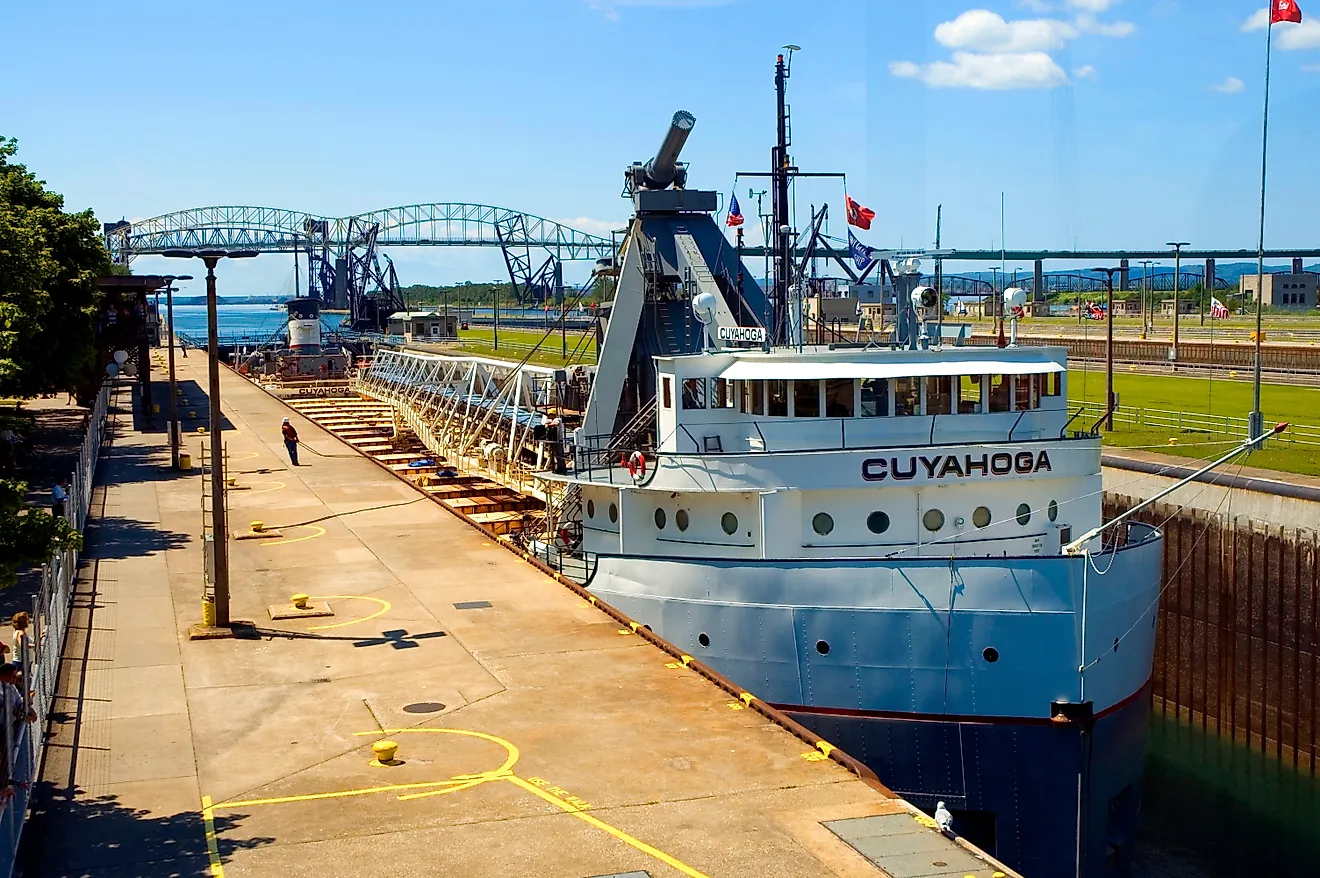
On the night of January 15, 2026, the 1,004-foot American Spirit, carrying 51,438 tons of iron ore, spent three hours getting through a single lock at Sault Ste. Marie, Michigan. Heavy ice in the chamber and its approach held it up. Then the Soo Locks closed. Nearly all the iron ore mined in the United States travels through them, and iron ore is the biggest cargo American freighters haul on the Great Lakes. For the next 10 weeks, that route was shut.
It happens every winter. The closing at the Soo is only the last step in a shutdown that starts weeks earlier and hundreds of miles east, on the St. Lawrence River.
The St. Lawrence Seaway Shuts Down First

Oceangoing freighters, called salties on the lakes, reach ports such as Duluth through the St. Lawrence Seaway, and they have to get back out before the Seaway's locks close for the winter, or else stay inside the lakes until it reopens in late March. For the 2025 season, the Seaway planned to end transits in its Montreal to Lake Ontario section after December 24 and to have every ship out by January 5, 2026. In Duluth, a convoy of six grain ships began departing on December 13, and the last of them, the Polsteam ship Miedwie, likely the last saltie of the season from the Twin Ports, sailed just before Christmas.
The last stretch of the route was the hardest to finish. Cold weather built up ice in the South Shore and Beauharnois canals near Montreal and delayed the Seaway's closing, and in early January at least 10 vessels were still between Lake Ontario and Montreal. Farther upriver, the Welland Canal, which connects Lake Ontario and Lake Erie, had been scheduled to clear by January 10, and its season officially ended on January 13, three days late.
Lake Erie Starts Freezing Before the Season Ends

While the Seaway was clearing its last ships, the lakes themselves were freezing, starting with Lake Erie. It is the shallowest of the Great Lakes, so it loses heat more quickly than the others, and in most years it ices over earlier and reaches the highest ice cover. Ice was already delaying freighters in early January 2026 at ports including Duluth-Superior, Green Bay, Toledo, and Sandusky, according to the Lake Carriers' Association, the trade group for U.S.-flag freighter owners. Coverage across the five lakes stood at 5 percent on January 14 and had reached 51 percent by January 31. Lake Erie was nearly 80 percent covered by January 20.
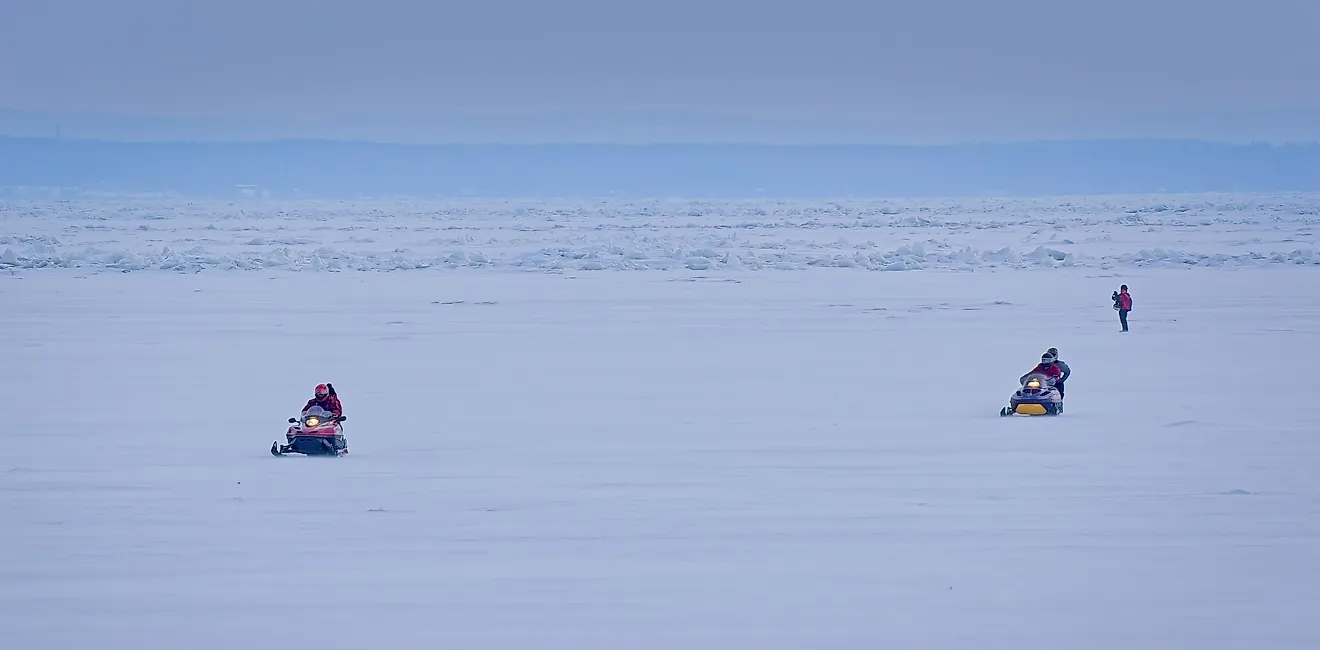
Those January weeks are only the start of the ice season. On Lake Erie and the other lower lakes, ice normally reaches its maximum between mid-February and the end of February, and on Lake Superior between the end of February and early March. The winter of 2026 peaked at 58 percent on February 9, the highest in seven years, and Lake Erie reached 95 percent ice cover that winter. The mid-January closing at the Soo comes a month or more before the ice reaches its peak.
A Federal Rule Closes the Soo Locks on January 15

The end of the season at the Soo is written into federal regulations. Under 33 CFR 207.440, the locks at Sault Ste. Marie stay open for downbound ships that leave a Lake Superior port before midnight on January 14, and for upbound ships that pass Detour, where the St. Marys River meets Lake Huron, before midnight on January 15. The same rule puts at least one lock back in service on March 25. More than 4,500 vessels carrying up to 80 million tons of cargo pass through the Soo in a typical year, and the rule gives all of that traffic the same deadline.
Steel mills prepare for the gap by stocking up before it. "The way we prepare for it, obviously, is to build inventories," Dan Cornillie of ArcelorMittal USA told FreightWaves in 2015. At the mining end, the closing worked the other way. In its 2019 annual report, before it became mainly a steelmaker, Cleveland-Cliffs told investors that while the Soo Locks were closed it kept producing pellets but could not ship most of them by lake vessel, so its inventories rose in the first and second quarters of the year.
The Poe Lock Can Only Be Repaired Empty

Once the last ship clears, the Corps of Engineers starts its own work season at the locks, and the most important job is draining the Poe. Around 88 percent of the iron ore moving through the Soo depends on that one chamber, which the Corps has called "a single point of failure in our nation's iron ore supply chain." With the water out, crews can reach the parts of the lock that sit underwater all season. Over the winter of 2025-26, they cleaned out the underfloor, inspected its manholes, carried out a five-year periodic inspection, worked on Gates 1, 2, and 4, and tested an experimental coating designed to shed ice. None of that can happen while ships are passing through, so it waits for the 10 weeks when the ore trade has already stopped. The smaller MacArthur Lock had its own winter work without being drained and was set to reopen in late April.
The Few Ships Still Sailing Lose Days to Ice

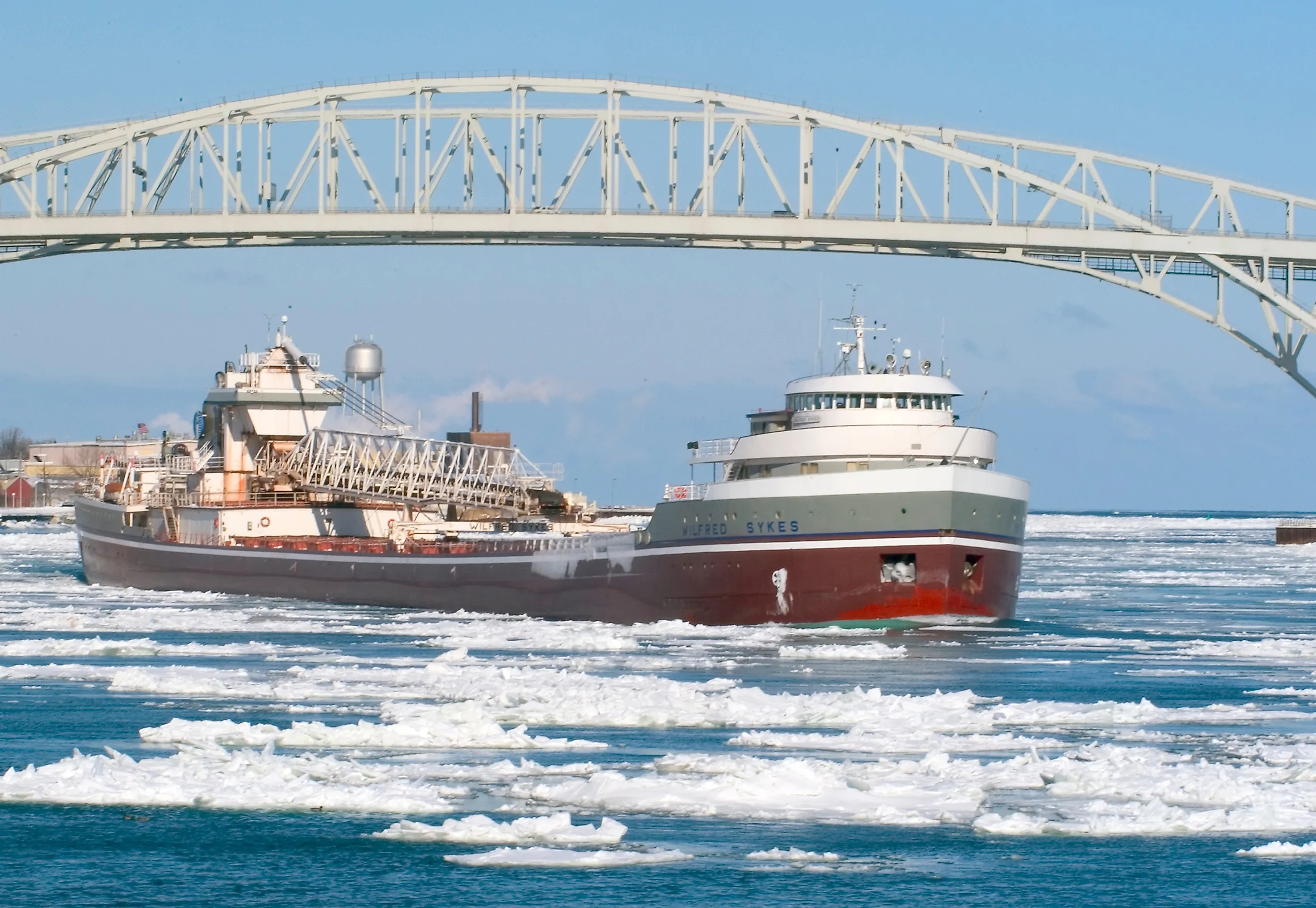
A few freighters still have trips to finish on the lower lakes after the Soo closes, and by late January those trips run slowly. On January 21, 2026, the Wilfred Sykes was stuck in Lake Huron until the Coast Guard icebreaker Mackinaw broke through and freed it. A trip that normally takes three days took six. The Sykes reached Milwaukee around 8 a.m. on January 24 and laid up there beside the Joseph L. Block, another freighter operated by Central Marine Logistics. On the same day the Sykes was freed, the American Spirit, done with its last run through the Soo, was having trouble moving through heavy ice near Cleveland until the cutter Neah Bay came to help.
Help comes from an aging fleet. Between December 9 and April 23 of the 2025-26 winter, Coast Guard icebreakers on the lakes assisted more than 400 vessels, with the Mackinaw working alongside 140-foot icebreaking tugs that are more than 40 years old. U.S.-flag freighters lost 1,953 hours that winter, or 82 ship days, waiting for icebreaking help. "We only get nine months of shipping," said Eric Peace, vice president of the Lake Carriers' Association.
Freighters Need Their Own Winter Repairs

Once a freighter reaches its winter dock, its own repairs begin. The Paul R. Tregurtha's layup work has included rudder and rudder bearing inspections and repairs, a hull structural survey, and large steel renewal projects inside the cargo holds. Jobs like those take a ship out of service for weeks, and doing them while the Soo is closed means it misses no trips through the locks.
Most of the crew leaves at the same time. The Tregurtha sails with a crew of 21 to 28, and in layup it typically keeps two ship keepers aboard. An officers' union official described the arrangement to Cleveland's Ideastream Public Media in 2017: "Basically they're all laid off, and then it's up to them what they do."
The shipyards move in the opposite direction. Fraser Shipyards in Superior, Wisconsin, employs about 200 people, and its workforce swells to around 600 in midwinter. In Sturgeon Bay, Wisconsin, Fincantieri Bay Shipbuilding expected three 1,000-foot freighters during the 2025-26 layup, for work that included hull plating renewal and machinery repairs, and one of them was scheduled to spend three weeks in dry dock.
Lake Superior Ice Lasts Into Spring

The ice that ends the season is still on the upper lakes when the locks reopen. At the end of March 2026, ice covered 24 percent of the Great Lakes, above average, and in places it was still two feet thick on Lake Superior. The Poe Lock had reopened at 12:01 a.m. on March 25, and the tug-barge Dirk S. VanEnkevort and Michigan Trader was the first vessel through. In Duluth, the Paul R. Tregurtha arrived the next day after the Coast Guard cutter Spar cleared a path, and the 1,013-foot freighter loaded pellets at the Canadian National dock.
On both sides of the Soo, the ice brought the fleet to a standstill. Two days after the reopening, the lower St. Marys River and Whitefish Bay were clogged with it, and the Mackinaw's engineering problems had restricted its work below the locks. The first vessel carrying iron ore needed 96 hours to get through the locks, and 19 ships were stuck in ice for days before icebreakers reached them. Between March 25 and April 3, the Coast Guard assisted 43 freighters, some of them beset and stranded for up to two days.
Stretching the season has been tried at both ends of the route. A federal winter navigation program that began in 1970 set out to test whether Great Lakes shipping could run longer than the traditional eight and a half months, and by late 1981 recession and federal budget cuts had stalled its demonstration work. The Seaway is testing a smaller extension now, with its 2026 season scheduled to run through January 5, 2027, the third year of a pilot program. At Sault Ste. Marie, the ice still builds after mid-January, the Poe Lock is still repaired empty, and the new Great Lakes icebreaker the Coast Guard has planned, priced at about $350 million, still had no contract in August 2026. Unless the federal rule changes, the Soo Locks are set to close again on January 15, 2027, and the last downbound ore carriers will have to leave their Lake Superior docks before midnight the night before.