How Much A Great Lakes Freighter Costs To Build Today
In 1973, a 1,000-foot Great Lakes freighter cost about $35 million to build. Carried forward by the consumer price index, that sum comes to roughly a quarter of a billion dollars in 2025 money, and it is still the clearest price on record for a big U.S. laker.
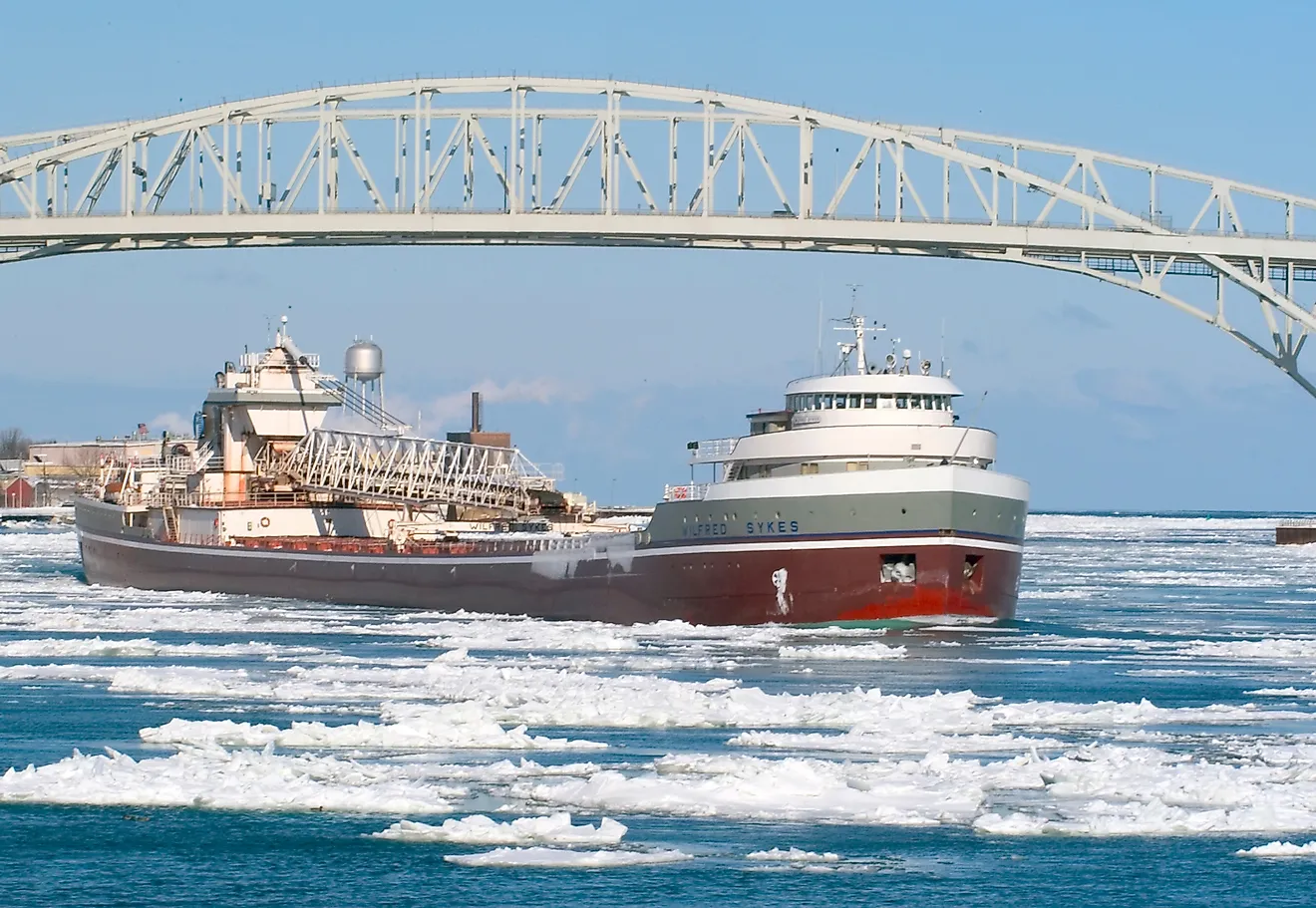
Most of the American fleet working today was built in that same decade. The average American laker is about 52 years old, past the roughly 50-year life it was designed for. The newest of them, the 639-foot Mark W. Barker, came out of a shipyard in Sturgeon Bay, Wisconsin, in 2022 as the first freighter built on the Great Lakes for U.S. service since 1983, and its owner has never published what it paid.
The Newest U.S. Laker's Price Was Never Made Public

Interlake Steamship has not disclosed what it spent on the Barker, which Fincantieri Bay Shipbuilding began building in 2019. The figure of more than $100 million that appeared in coverage of the ship's arrival in Duluth and Superior is the amount the company had invested in upgrading its older ships.
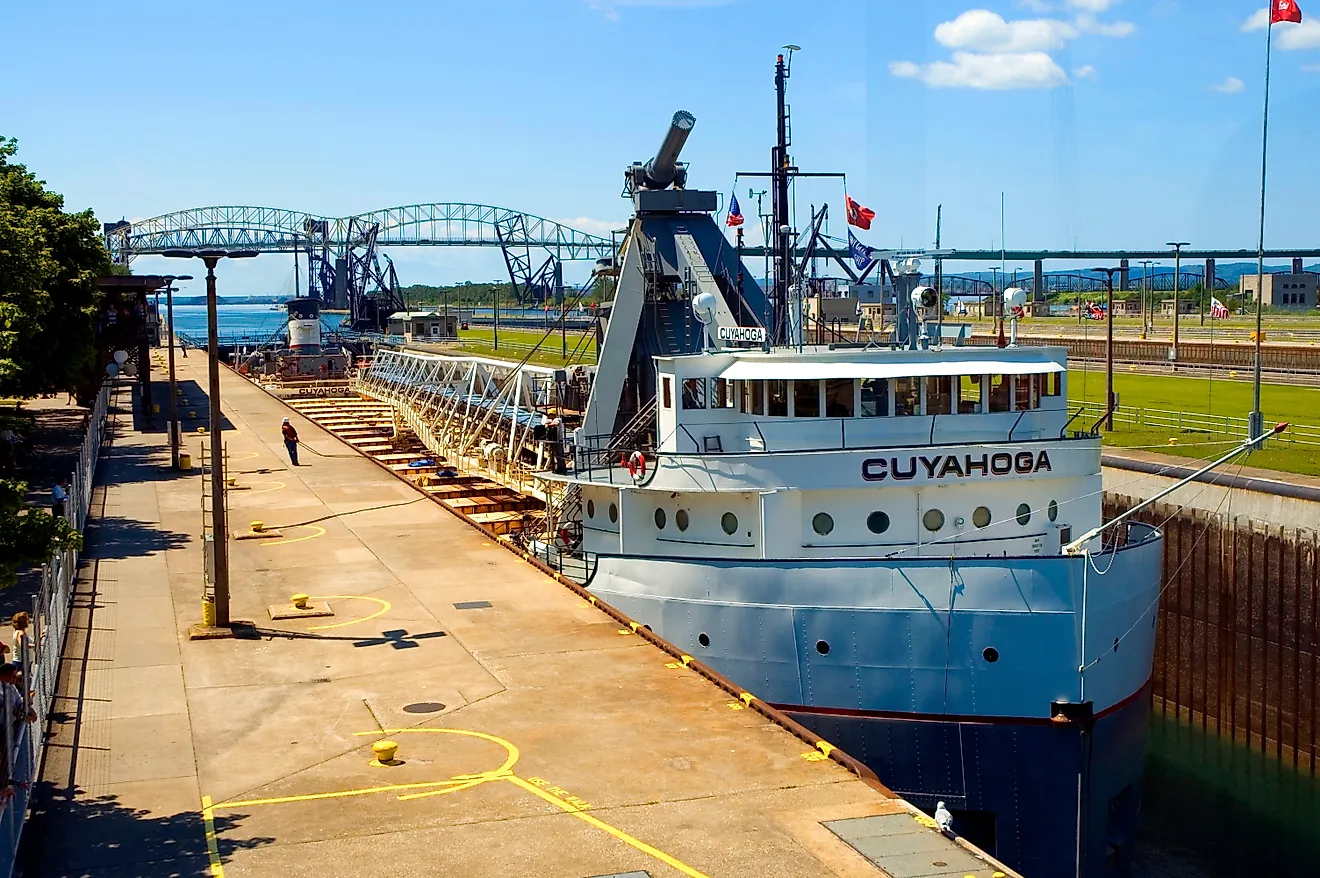
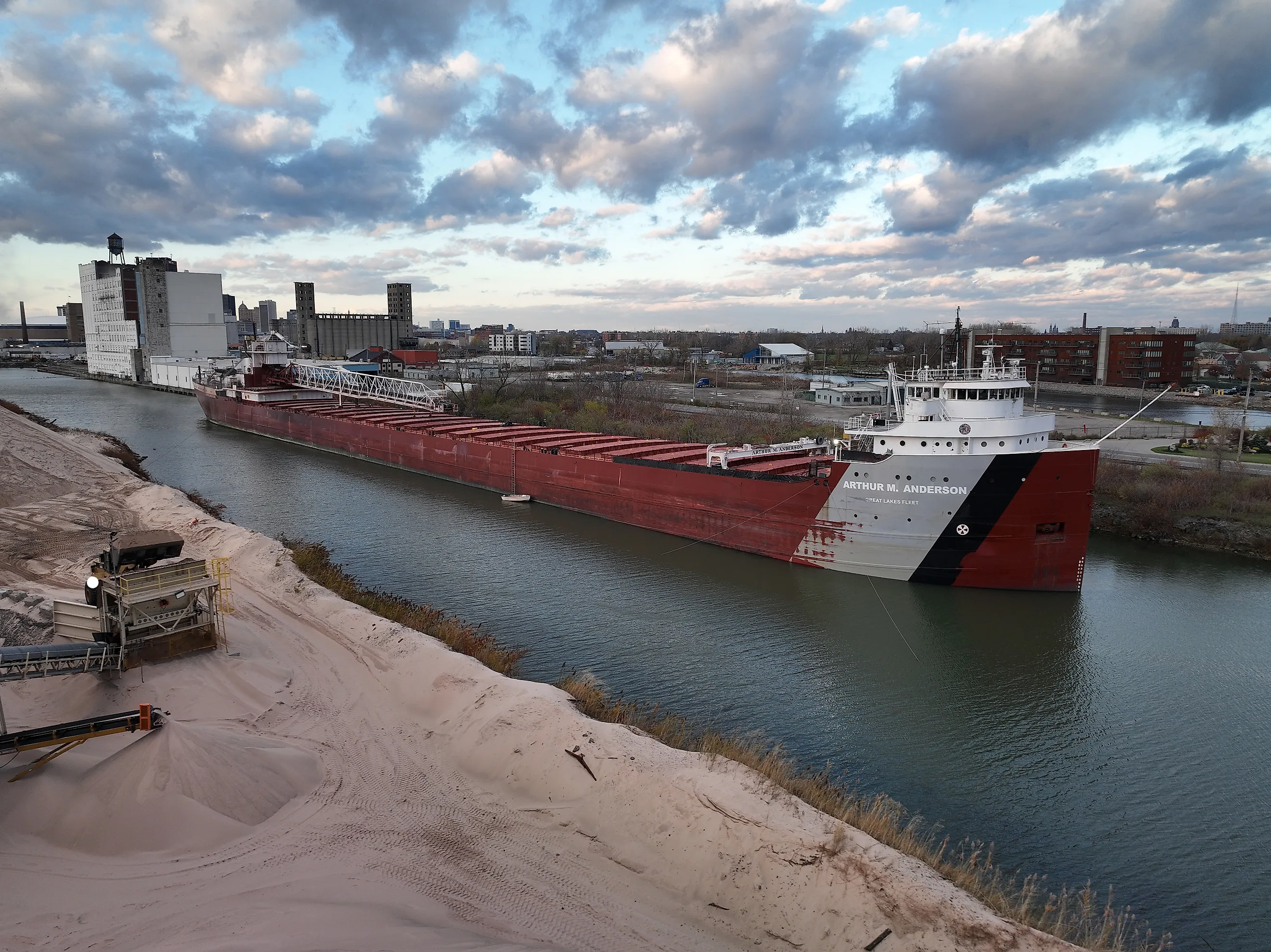
What the money bought can be read from the ship itself. The hull is 639 feet long and 78 feet wide, rated at 28,000 deadweight tons. Two 16-cylinder EMD diesel engines produce 8,000 horsepower and made the Barker the first ship on the Great Lakes with engines that meet the Environmental Protection Agency's Tier 4 emissions standard. Its steady work is a long-term partnership moving salt mined under Lake Erie for Cargill, along with cargoes such as iron ore and stone. A 250-foot boom swings out over the dock so the ship can unload its own cargo, and that equipment is one of the costlier parts of a laker. When Canada Steamship Lines ordered self-unloaders from a Chinese yard in 2010, the unloading gear added about $16 million to $18 million to each ship.
A 1973 Thousand-Footer's $35 Million Equals About $254 Million in 2025

The U.S. fleet's last major period of construction came in the 1970s, and its prices were printed in the trade press. Maritime Reporter's December 15, 1973, issue put the estimated combined cost of two 1,000-foot freighters ordered by Pickands Mather from the American Ship Building Company's yard in Lorain, Ohio, at more than $70 million, about $35 million per ship. The Presque Isle, another thousand-footer launched that same month, was built for a reported $35 million. The consumer price index, a measure of general prices, rose about 7.25 times between 1973 and 2025, so each of those ships cost the equivalent of about $254 million in 2025 dollars.
Thousand-footers were sized to fit the Poe Lock at Sault Ste. Marie, Michigan, which measures 1,200 feet long and 110 feet wide. The Paul R. Tregurtha, the last of the class to enter service, in 1981, is 1,013.5 feet long and 105 feet wide, and it can carry up to 68,000 gross tons of taconite pellets. Interlake rates the Barker at 26,000 gross tons, so one thousand-footer carries about two and a half times as much cargo per load as the newest laker.
U.S. Law Requires an American Shipyard, at Several Times the Global Price

Every one of those thousand-footers, and the Barker after them, had to come from an American yard. The Jones Act requires that vessels carrying cargo between U.S. ports be U.S.-built, and the Coast Guard's test for a U.S.-built ship allows only up to 1.5 percent of the steel weight of the hull and superstructure to come from abroad.
That requirement comes with a steep price gap. A 2019 Congressional Research Service report estimated that a U.S.-built tanker costs about four times the global price of a similar vessel, and that a U.S.-built container ship may cost five times as much. Those estimates cover ocean ships, and the same pressure applies on the lakes. Writing in Marine Log, Brendan Falkowski, owner of Shipwatcher News, described American steel and labor costs as multiples of those seen around the globe and said shipbuilding costs had put newbuilds out of reach.
Few Shipyards on the Lakes Are Still Equipped to Build a Freighter

An American yard also has to be equipped for the job, and on the Great Lakes that list has grown short. Falkowski wrote that local yards no longer have full-service machine shops or fabricating capabilities. Fincantieri, which runs three shipyards in northeast Wisconsin, took on the Barker at Sturgeon Bay. The same yard delivered the Michigan Trader in October 2020, a self-unloading barge pushed by a tug that carries up to 37,500 metric tons, and in April 2026 Fincantieri joined two other shipbuilders to compete for a Coast Guard contract for seven light icebreakers. Before the Barker, the Sturgeon Bay yard had not built a self-propelled freighter of more than 20,000 tons since 1987.
Canadian Owners Buy Their Lakers Overseas for Far Less

In 2010, Canada waived its 25 percent duty on imported general cargo vessels and tankers, which let Canadian shipping companies order lakers from foreign yards without the tax. A 2011 report noted that Chinese-built boats had been reported to cost less than half as much as similar boats built in North America. In 2014, Algoma Central ordered six ships from the Nantong Mingde yard in China for CA$300 million, an average of about CA$50 million per ship.
Algoma's Equinox-class lakers are 740 feet long, the Seawaymax size designed to fit the restricted space of the St. Lawrence Seaway locks. The last of the class, the Algoma Endeavour, was delivered from the 3 Maj shipyard in Rijeka, Croatia, on February 26, 2025. Since 2013, Algoma has built 23 vessels for its lake and ocean fleets, tankers included, with 12 more on order or under construction.
The price of a new U.S. laker is fixed before any steel is cut. The order has to go to an American yard at several times the global price, and the yard that took the Barker had gone more than 30 years without building a big self-propelled freighter. Canadian owners, buying in China and Croatia, run a fleet with an average age of about 24 years. American owners have kept their ships running instead, and only 10 vessels in the U.S. fleet have been built since 1981. The Stewart J. Cort, the oldest thousand-footer, still hauls taconite pellets from Superior, Wisconsin, and Silver Bay, Minnesota, more than 50 years after its 1971 launch. The SS Alpena, launched in 1942, opened its 2026 season in March as the oldest freighter still working the lakes under its own power. Each season those ships sail puts off a replacement whose last printed price, for a thousand-footer, equals about $254 million in 2025 dollars.