8 of the Oldest Incorporated Towns in The Great Lakes
While Indigenous peoples have called the Great Lakes region home for thousands of years, explorers and settlers came in the 19th century for lumber and furs, and the lakes became irreplaceable shipping routes for minerals and grain. All of the towns in this article were incorporated in the 1800s, and all sit directly on the shore of one of the Great Lakes. The earliest is Sandusky, Ohio, incorporated in 1824. Oswego, New York, was an active settlement well before its incorporation. Niagara-on-the-Lake in Ontario, Canada, served as the first capital of Upper Canada. Mackinac Island was considered sacred ground by indigenous peoples long before Europeans arrived. These are eight of the oldest incorporated towns on the Great Lakes.
Sandusky, Ohio

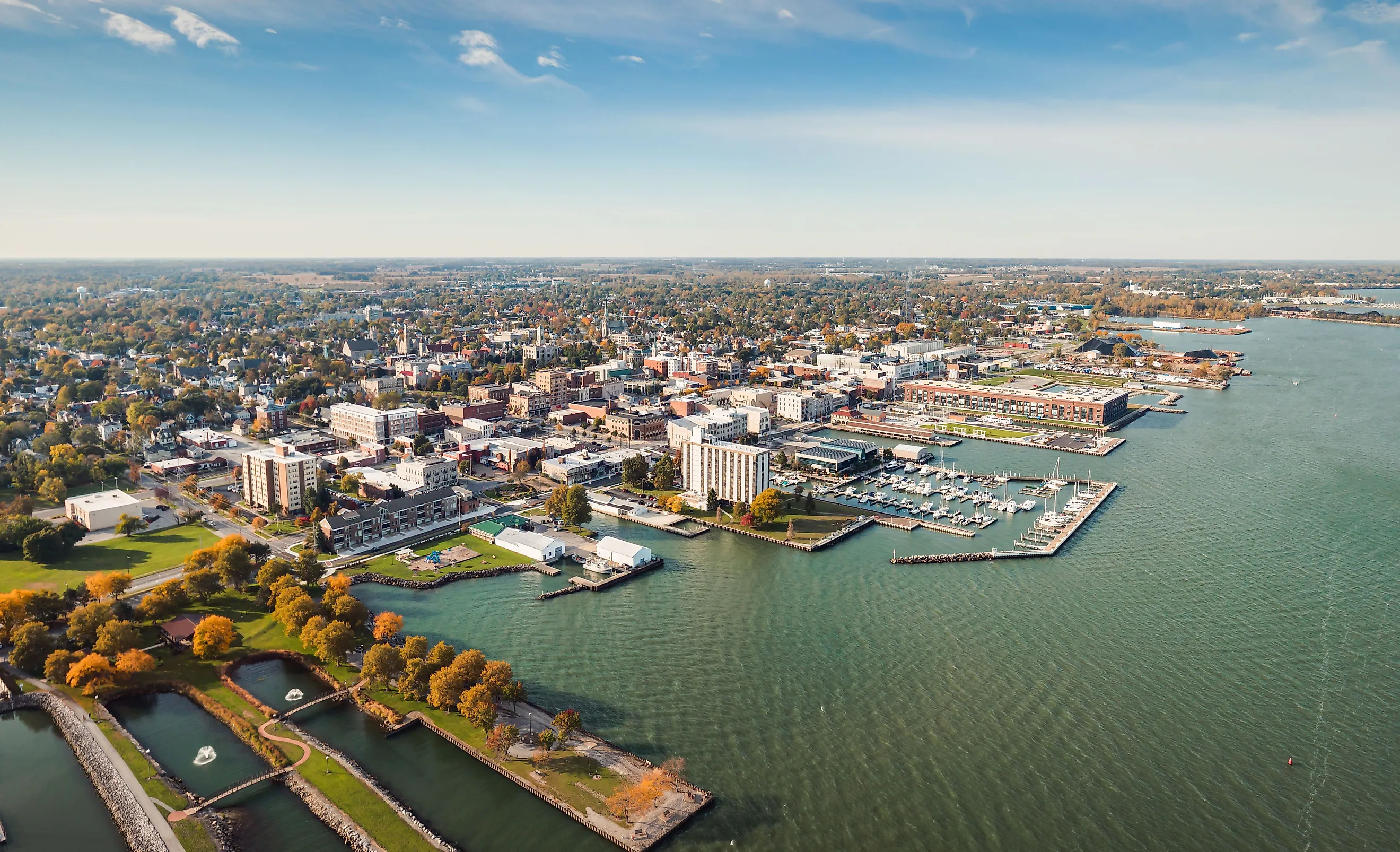
Sandusky, Ohio, was first incorporated as a town in 1824. It was originally home to several Native American tribes, including the Ottawa and the Wyandot, and its name comes from the Wyandot word "saundustee," which means "at the cold water." In the 1810s, European settlers came to the area, and the town soon became a thriving community, due in no small part to its location directly on the shores of Lake Erie.
This made it a popular port of call for traders and a major station along the Underground Railroad, sending escaped slaves north and into Canada. In 1845, Sandusky incorporated as a city. Today, it is a connection to the popular Lake Erie Islands and water sports of all kinds, and it is known for some of the best walleye and perch fishing in the Great Lakes.
Oswego, New York
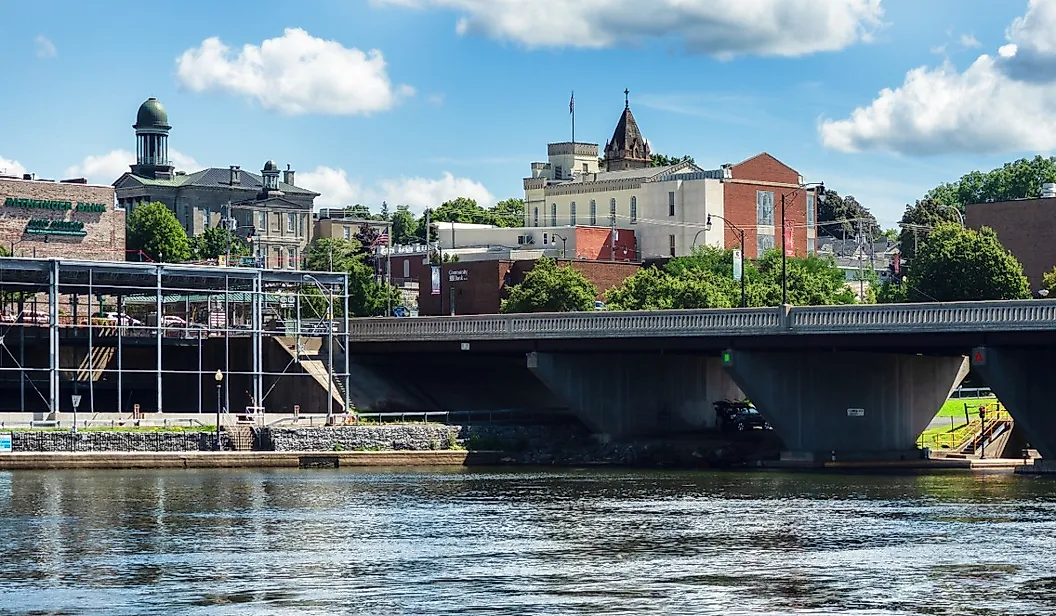
Oswego, 35 miles northwest of the city of Syracuse, derives its name from an Iroquoian word, "ish-we-ge." This translates to a "pouring out place," named for the river mouth where the Oswego River meets Lake Ontario. In 1722, it became a fur-trading post, and in 1727, Fort Oswego was built. That and a second fort, Fort Ontario, were major fortification sites during both the French and British colonial wars.
Oswego was incorporated as a town in 1828 and as a city in 1848. Due to the opening of waterways, such as the St. Lawrence Seaway, it now enjoys the status of a world port, handling materials such as wood, cement, and grain. Tourists enjoy water sports and the maritime heritage showcased at the H. Lee White Maritime Museum and the Oswego Pierhead Lighthouse.
Michigan City, Indiana

Despite being in Indiana, Michigan City got its name because it was the terminus of the Michigan Road, an early Indiana highway. Real estate speculator Major Isaac Elston purchased 160 acres of land there in the early 1830s, and by 1836, the area had already been incorporated. Located along the southern coast of Lake Michigan, it was an ideal location for a bustling lumber port.
In the modern age, it balances its identity between manufacturing items such as clothing, air compressors, and steel and serving as a popular tourist destination. One of the most awesome features of Michigan City is the massive sand dunes. Indiana Dunes National Park is just to the southwest of town. It is also known for its casino and retail shopping.
New Buffalo, Michigan

Not many towns can trace their exact beginning to a shipwreck. But that is how New Buffalo became settled when the schooner Post Boy, captained by Wessel D. Whittaker, crashed ashore in 1834. Recognizing its potential as a river-mouth harbor, he purchased the land and returned in 1835 to build a village, which he named after his hometown, Buffalo, New York. In 1836, it was incorporated.
New Buffalo is located on the eastern coast of Lake Michigan, 70 miles from downtown Chicago and close to the Michigan/Indiana border. In 1849, Michigan Central Railroad built a line intended to terminate in New Buffalo, and the railroad and lumber businesses eventually helped the town to thrive. In the 1920s, vacationers began renting small cabins, and today the tourist trade has expanded into a high-end destination, with some calling it the "Hamptons of the Midwest."
Cobourg, Ontario, Canada

Cobourg was incorporated in 1837. It was originally occupied by the Mississauga people and, in the late 1790s, by British Loyalists. The town was not always called Cobourg, though. In its earliest years, it was a collection of small settlements, variously referred to as Buckville or Hamilton. In 1819, it was officially renamed Cobourg to honor the marriage between Princess Charlotte Augusta of Wales and Prince Leopold of Saxe-Coburg-Saalfeld.
Situated along the shores of Lake Ontario, about 60 miles east of Toronto, its position was thought to be ideally suited for a shipping port, so an artificial harbor was constructed in 1829. A stunning grand Palladian neoclassical building, Victoria Hall, was built in 1860 and officially opened by the future King Edward VII. It still serves as a concert hall, a gallery, and the home of municipal offices. In the late 19th century, the town became a popular destination for well-to-do vacationers.
Niagara-on-the-Lake, Ontario, Canada

Niagara-on-the-Lake lies on the southern shore of Lake Ontario at the mouth of the Niagara River, about 14 miles below the falls. Originally named Butlersburg and then renamed Newark, the town was established in 1792 as the first capital of Upper Canada. Fort George was constructed there in the late 1790s and played an important part in the War of 1812. In 1797, the capital was moved to York (now Toronto), and in 1798, the town was renamed Niagara. In 1850, it became an incorporated town, and it adopted its current name around 1880.
Niagara-on-the-Lake is also famous for having passed the 1793 Act to Limit Slavery, the first such legislation in the British Empire. Today, it is known for its beautifully preserved 19th-century buildings and for the Shaw Festival, a world-renowned celebration that showcases plays by the Irish playwright, George Bernard Shaw.
Sheboygan, Wisconsin

Sheboygan is about 50 miles north of Milwaukee, along the western shore of Lake Michigan. It was first established as a fur-trading outpost in 1818 and, in 1835, as a lumber village. Around the time of its incorporation in 1846, a very large wave of German immigrants settled in the area and had a large influence on local culture. Today it is nicknamed the "Bratwurst Capital of the World" due to its fascination with the German sausage. It's also a thriving outdoor recreation area with beaches and a boardwalk along the shore.
Mackinac Island, Michigan

Although not the first town on this list, Mackinac (pronounced mack-i-naw) Island was settled quite early by Europeans, in 1671. Prior to that, the island was considered a sacred and spiritual place by numerous indigenous tribes. The 1600s saw the island become a major fur-trading corridor. Its strategic location in the Mackinac Straits, where Lake Michigan and Lake Huron meet, also made it an ideal site for British defenses, who moved a fort from the mainland to the island in 1780.
The island was signed over to the US in 1796. During the Victorian era, the island became a watering hole for the rich, many of whom stayed at the famous Grand Hotel (which was used as the filming location for the movie Somewhere in Time). All motor traffic is prohibited, and transportation is limited to horses, bicycles, and on foot. The island became the second National Park in the US before it was transferred to the State of Michigan, and the town itself was incorporated in 1847.
Towns With a Long History
The Great Lakes have been home to various peoples for thousands of years. Many of the incorporated towns along their shores have fascinating histories that are well worth getting to know more about and maybe even seeing in person.