Why Copperheads Den In Woodpiles
Stack a nice cord of firewood in copperhead country and, without ever meaning to, you may have just built the snake equivalent of a luxury hotel. To a copperhead, a woodpile quietly checks nearly every single box it looks for in a home. Here is exactly why these venomous snakes find a plain stack of logs so completely irresistible.
A Woodpile Is the Perfect Hideout

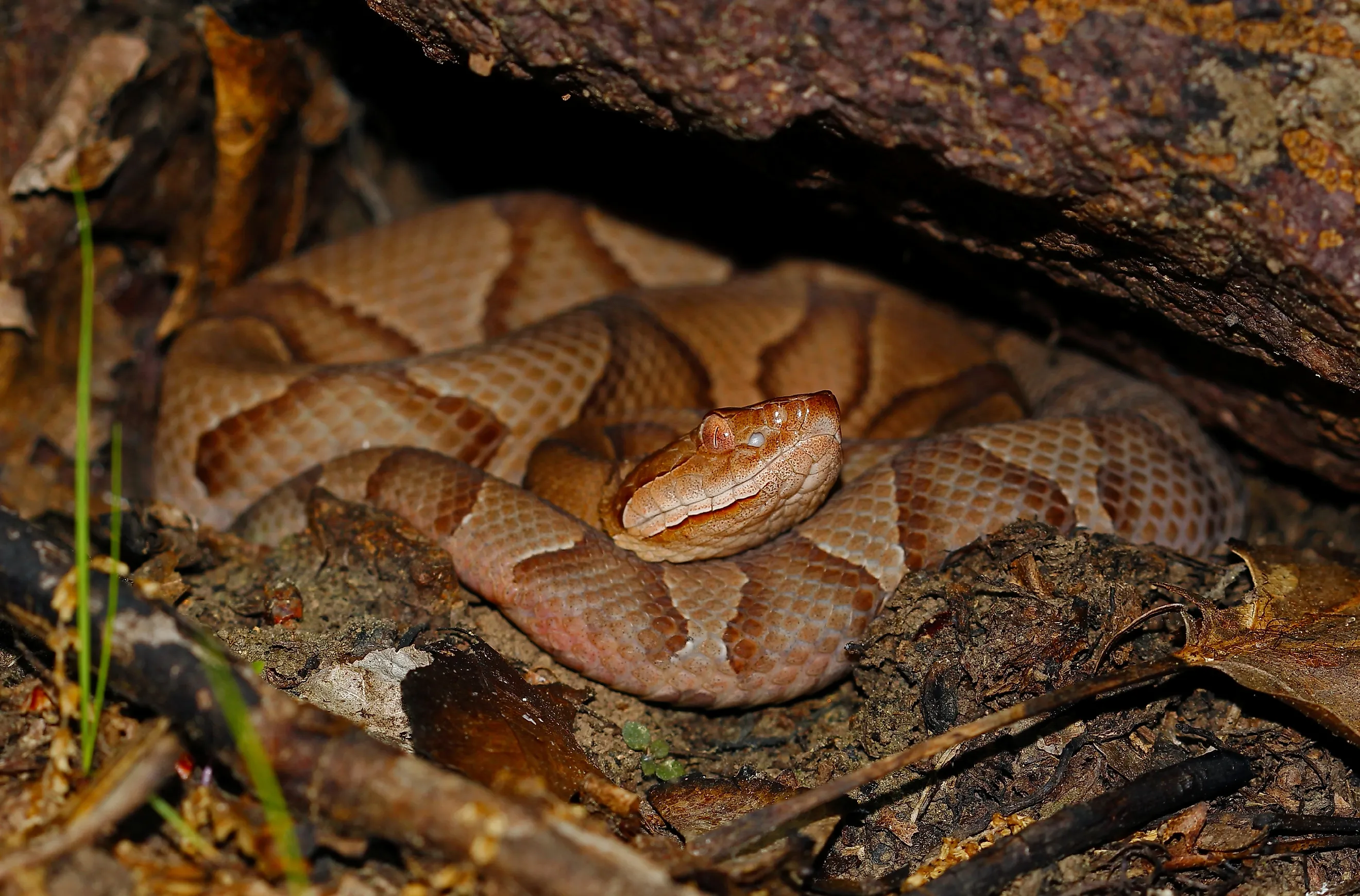
A copperhead is an ambush predator that wants, above all else, to stay hidden, and a woodpile is riddled with exactly the tight gaps, dark crevices, and deep shade it craves. Better still, the snake arrives pre-camouflaged: its coppery, hourglass-banded body blends almost perfectly against bark, split logs, and fallen leaves, so a copperhead can lie coiled in a woodpile completely unseen. The stacked logs double as climate control, too. On a hot afternoon the snake can slip into the cool, shaded interior, and on a chilly night the pile traps warmth, blocks the wind, and insulates far better than open ground, letting a cold-blooded animal ride out temperature swings in real comfort.
A Rodent Colony With a Roof

Shelter, though, is only half the appeal. A woodpile is also, in effect, a rodent colony with a roof. Mice love to nest in the dark, protected gaps between logs, and where there are mice there are also insects, frogs, and lizards, which is to say an all-you-can-eat buffet for a hungry copperhead. Since copperheads hunt by lying patiently in wait for prey to wander within range, a woodpile offers them the two things they want most in a single convenient package: a place to hide and a steady supply of dinner.
Cover as the Cold Comes

Woodpiles get especially busy in autumn, when copperheads are on the move toward their winter dens. A stack of logs makes tempting cover and insulation along the way, and an undisturbed, ground-level pile can shelter a snake for a good long while. Their deepest true winter dens are usually rocky crevices that reach below the frost line, often shared year after year with other snakes such as rat snakes and timber rattlers. But a snug woodpile is exactly the kind of waypoint, and warm-season hideout, that a copperhead will happily use the rest of the year.
Keeping Them Out of Your Woodpile

The good news is that a few simple habits make your woodpile far less inviting. Raise the stack about a foot off the ground on a rack so air can flow underneath and the dark, damp pockets disappear, and move it at least 20 feet away from the house so you are not stacking snake habitat against your back door. Clearing nearby debris and keeping rodents in check removes the food supply, which matters most of all. And whenever you do grab wood, wear gloves, never reach in blindly with a bare hand, take extra care on evening trips out to the pile, and if you do spot a copperhead, simply back away and give it several feet of room. They tend to freeze and rely on their camouflage rather than chase anyone, and they earn their keep by eating mice, so the smartest move is usually just to let them be.