How Long It Takes A Forest To Recover From Beetle Kill
A forest killed by bark beetles usually takes several decades to a century to grow back into a mature forest, and spruce forests can take centuries. The early stages move faster than that. The dead needles fall within a few years, young trees often start filling in during the first decade or two, and about half of the dead trunks come down within 15 to 20 years in high, cold forests. Forest Service scientists saw just how slow that last step can be at Colorado's Fraser Experimental Forest, where more than four out of five beetle-killed lodgepole pines were still standing a dozen years after the outbreak peaked. How quickly any one forest heals depends mostly on which tree the beetles killed, how high the forest grows, and how many young trees survived underneath.
The First Few Years, Red Needles Turn Gray

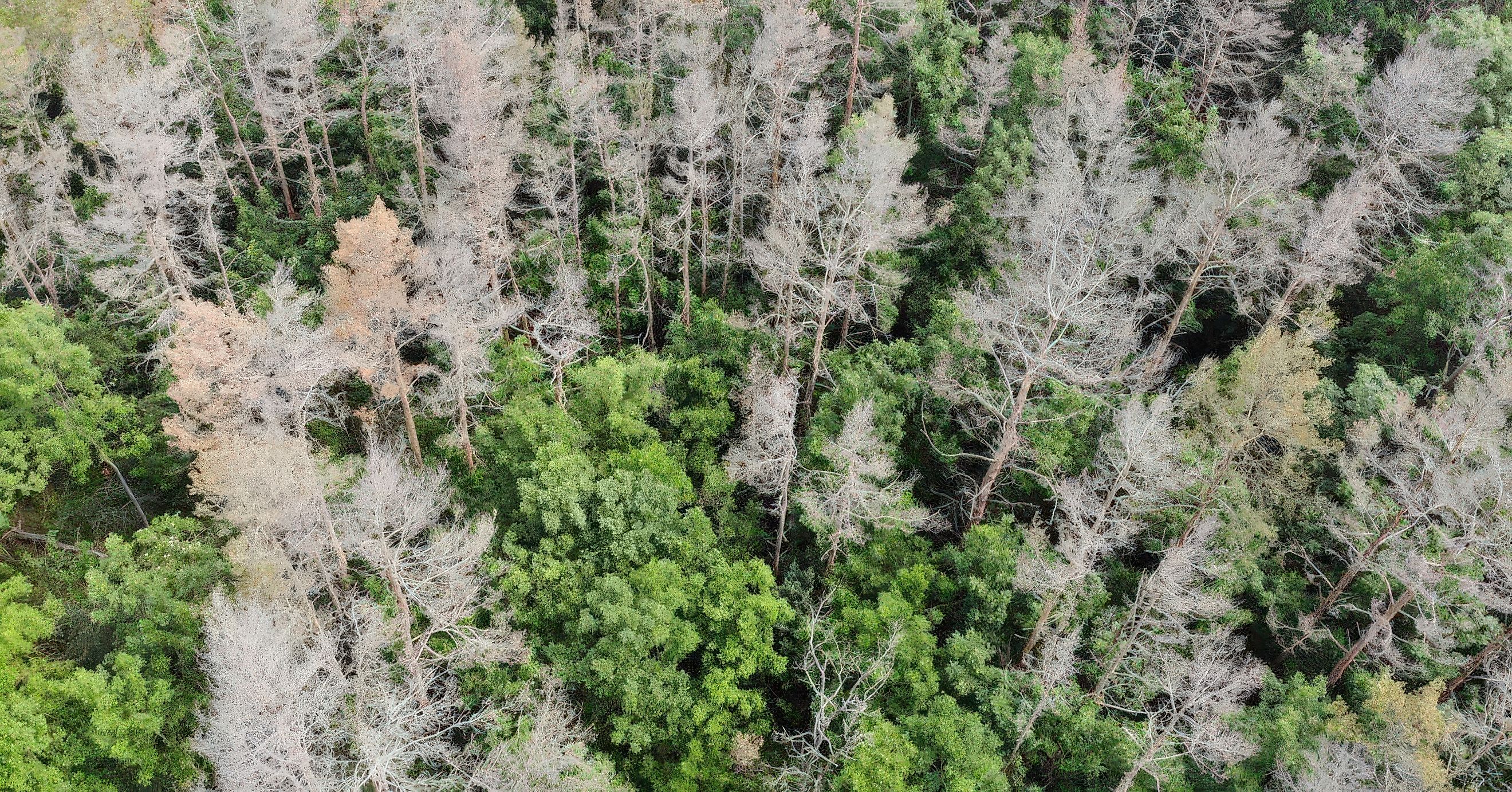
Recovery starts with a forest that looks as dead as it will ever look. When mountain pine beetles bore into a mature lodgepole pine, the tree's needles fade to a rusty red, usually within a year, and over the next few seasons those needles drop to the ground, leaving bare gray trunks. In Colorado, where the Forest Service and Colorado State Forest Service mapped more than 5,000 square miles of affected forest, this red-to-gray shift played out across whole mountain ranges in the 2000s. It is the shortest stage of recovery, lasting only a few years, and it ends with sunlight reaching the forest floor for the first time in decades.
Years 3 To 20, Dead Trees Stay Standing

The dead trees, called snags, take far longer to clear out than most people expect, and elevation sets the pace. At Fraser, high in north-central Colorado, researchers estimate that half of the beetle-killed lodgepoles will fall within 15 to 20 years of the outbreak, because cold temperatures slow the rot that eventually snaps them at the base. In warmer, lower forests, half of the snags come down in roughly 7.5 to 10 years. Some trunks will keep standing for decades beyond that, so a beetle-killed forest can carry visible scars for well over 20 years even as new trees grow beneath it.
The First Decades, New Trees Fill In

The most important recovery happens during those same decades, at knee height. Beetles target big trees and mostly spare the saplings below, and once the canopy dies, those survivors and new seedlings grow quickly in the extra light. Lodgepole pine has a head start, because its sealed cones can keep dropping seeds from dead branches for years after an outbreak. When researchers pooled 16 field studies from across the Southern Rocky Mountains, they found that more than four in five plots already held enough young trees to return to their former density without any more seedlings.
Recovery is uneven, though. A Forest Service survey found no new lodgepole seedlings in about one in seven beetle-hit stands, and trees the beetles skip, such as aspen and subalpine fir, often gain ground. That means the regrown forest may be a different mix than the one that died.
A Century Or More For Spruce Forests

Forests killed by the spruce beetle take the longest to recover. Engelmann spruce seedlings prefer shade, so they struggle in the open, sunny conditions left after an outbreak, and subalpine fir usually takes over first. A Forest Service study of Rocky Mountain spruce-fir stands hit by beetles as long as a century earlier found that fir can dominate for many years before spruce finally returns to the top of the canopy. On southern Utah's Markagunt Plateau, where a 1990s outbreak killed nearly all the large spruce across parts of Dixie National Forest, scientists concluded that spruce may need many decades, and possibly centuries, to regain its former dominance.
What Can Slow Recovery Down

A second disturbance can reset the clock. Researchers have found that seeds stored in cones on long-dead lodgepole pines gradually lose their ability to sprout, so a severe fire that burns through a beetle-killed stand many years after the outbreak may leave fewer viable seeds behind and slow the next forest's start. Browsing by animals can also hold back young aspen. Where neither happens, a lodgepole forest such as those in Wyoming's Medicine Bow National Forest or Colorado's Arapaho and Roosevelt National Forests is well on its way to recovery within the first few decades, even if it still needs many more years to grow tall.
The Timeline At A Glance
A beetle-killed forest sheds its needles within a few years, loses about half of its dead trees within one to two decades depending on elevation, and starts regrowing almost immediately from the young trees left behind. Reaching a mature canopy again takes several decades to a century for lodgepole pine, and spruce forests can need centuries to look the way they did before the beetles arrived.