Niagara-on-the-Lake, Ontario
Cradled where the Niagara River meets Lake Ontario, the storybook town of Niagara-on-the-Lake moves at an unhurried pace, yet hums with energy through the warmer months. This corner of the Niagara Peninsula feels worlds away from nearby urban centers, pairing pastoral vineyard landscapes and lake views with a meticulously preserved 19th-century core.
Grand historic homes, tree-lined streets, and flower-draped verandas set it apart from more utilitarian wine-country hubs, while its theaters, boutiques, and polished hospitality give it a different flavor than sleepier rural villages. With award-winning wineries, the renowned Shaw Festival, lakeside walks, and a compact, walkable downtown full of independent businesses, Niagara-on-the-Lake strikes an elegant balance between resort town and living community. The result is a destination that invites both slow wandering and full itineraries, often turning a simple day trip into a longer stay.
Geography: Getting Here

Niagara-on-the-Lake sits at the very mouth of the Niagara River, where it flows north into Lake Ontario, in the Niagara Region of southeastern Ontario, Canada. The town occupies a scenic corner of the Niagara Peninsula, facing the state of New York across the water and sitting roughly 23 kilometers (13-14 miles) downstream from Niagara Falls. This position, on fertile, gently rolling land buffered by the lake, helps create the mild microclimate that has turned the surrounding countryside into one of Canada's premier wine regions.

The historic "Old Town" cluster lies just off the Niagara Parkway, a famously scenic drive that follows the river between Niagara Falls and Lake Ontario. Highways and regional roads link Niagara-on-the-Lake with the broader Greater Golden Horseshoe: it is about 125-130 kilometers by road from downtown Toronto, often reached via the Queen Elizabeth Way and Niagara Regional Road 55 (formerly Highway 55), and sits a short drive north of St. Catharines and the Queenston-Lewiston Bridge border crossing. While most visitors arrive by car or tour bus, seasonal shuttle services and regional transit routes from Toronto and Niagara Falls make it an accessible, logical base for exploring both the vineyards and the falls.
History

Long before theatres, vineyards, and Victorian storefronts defined Niagara-on-the-Lake, this fertile peninsula was home to the Attawandaron, or Neutral Nation, whose villages dotted the Niagara region and acted as a buffer between rival Indigenous confederacies. Today, local institutions often acknowledge the enduring presence and stewardship of the Anishinaabe and Haudenosaunee peoples, whose historic agreements to share and protect the lands around the Great Lakes continue to shape how the region understands itself.

European powers were quick to recognize the strategic importance of this spot at the mouth of the Niagara River. Through the late 18th century, the community grew around Navy Hall, a riverside complex that served as a military depot and briefly housed the first Parliament of Upper Canada before the town of Newark (as it was then known) was burned during the War of 1812. Fort George, constructed in the 1790s to guard the river and replace Fort Niagara across the water, became the focal point of British defences and the scene of fierce fighting, bombardment, and eventual reconstruction.
In the war's aftermath, new military installations such as Butler's Barracks and Fort Mississauga shifted inland or closer to the lake, while the civilian town slowly rebuilt around its grid of streets and gracious homes. Over the 19th century, Niagara-on-the-Lake evolved from a frontier garrison into a genteel lakeside community. Its unusually intact stock of Regency, Georgian, and classical revival buildings later prompted both provincial heritage protection and, in 2003, the designation of the historic core as a National Historic Site of Canada, cementing the town's identity as one of the country's best-preserved historic districts.
Climate: When to Visit

Niagara-on-the-Lake shares a humid continental climate with much of southern Ontario, but its position between Lake Ontario and the Niagara Escarpment creates a notably mild pocket. Summers are warm without being extreme, with daytime highs often in the low-to-mid 20s Celsius, making June through September the prime season for strolling the historic streets, cycling quiet backroads, and lingering on winery patios. Spring arrives early by Canadian standards, bringing blossoms to orchards and vineyards, though April and early May can still feel cool and damp. Autumn is especially appealing for those who prefer fewer crowds, with comfortable temperatures, vivid foliage, and the grape harvest in full swing. Winters, by contrast, are cold and can be snowy, but tend to be less harsh than in more exposed parts of the province; some businesses shorten their hours or close, yet theatre off-seasons, spa stays, and winery visits keep a softer, slower tourist scene ticking along for those who don't mind bundling up.
Attractions
Heritage Core & Waterfront

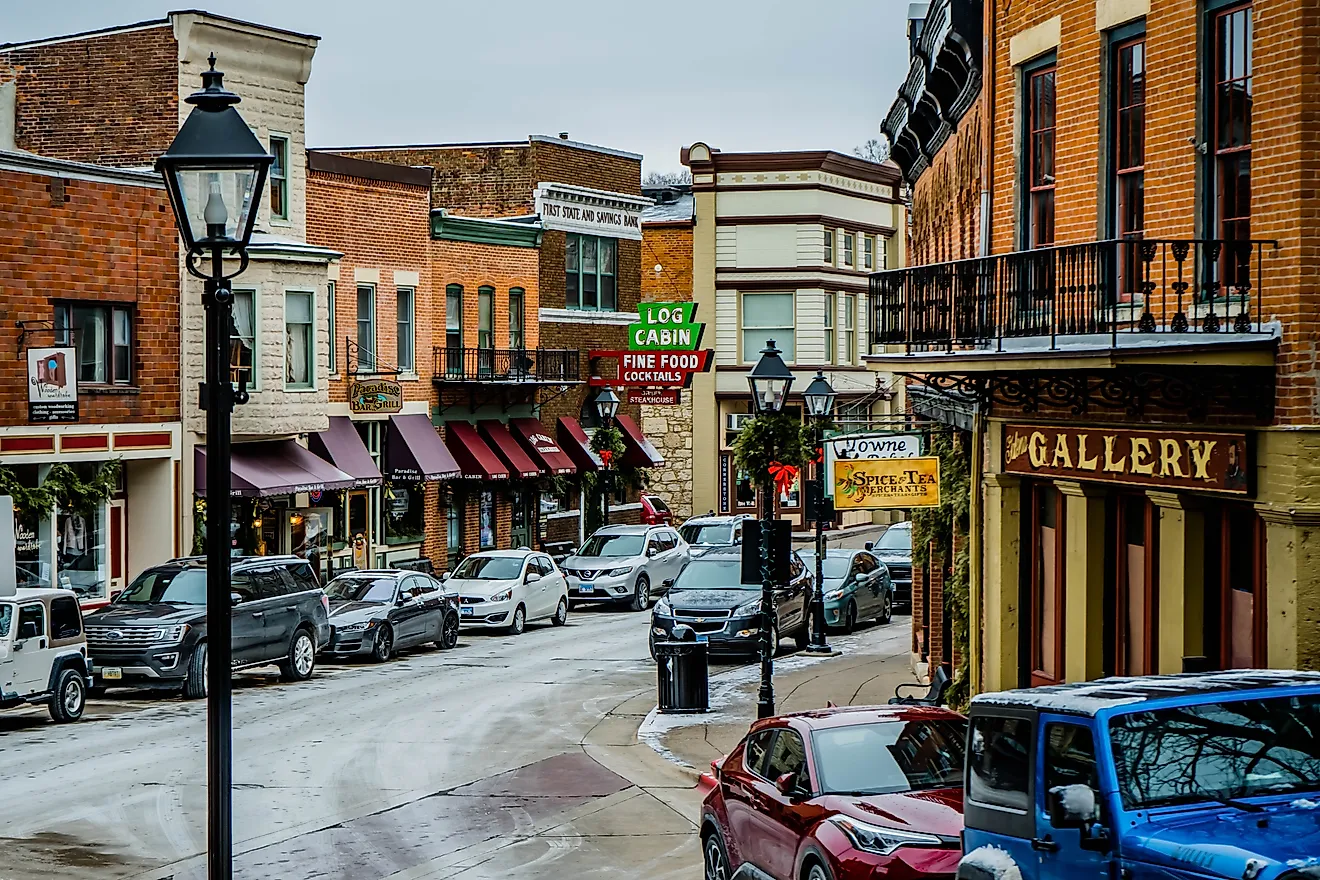
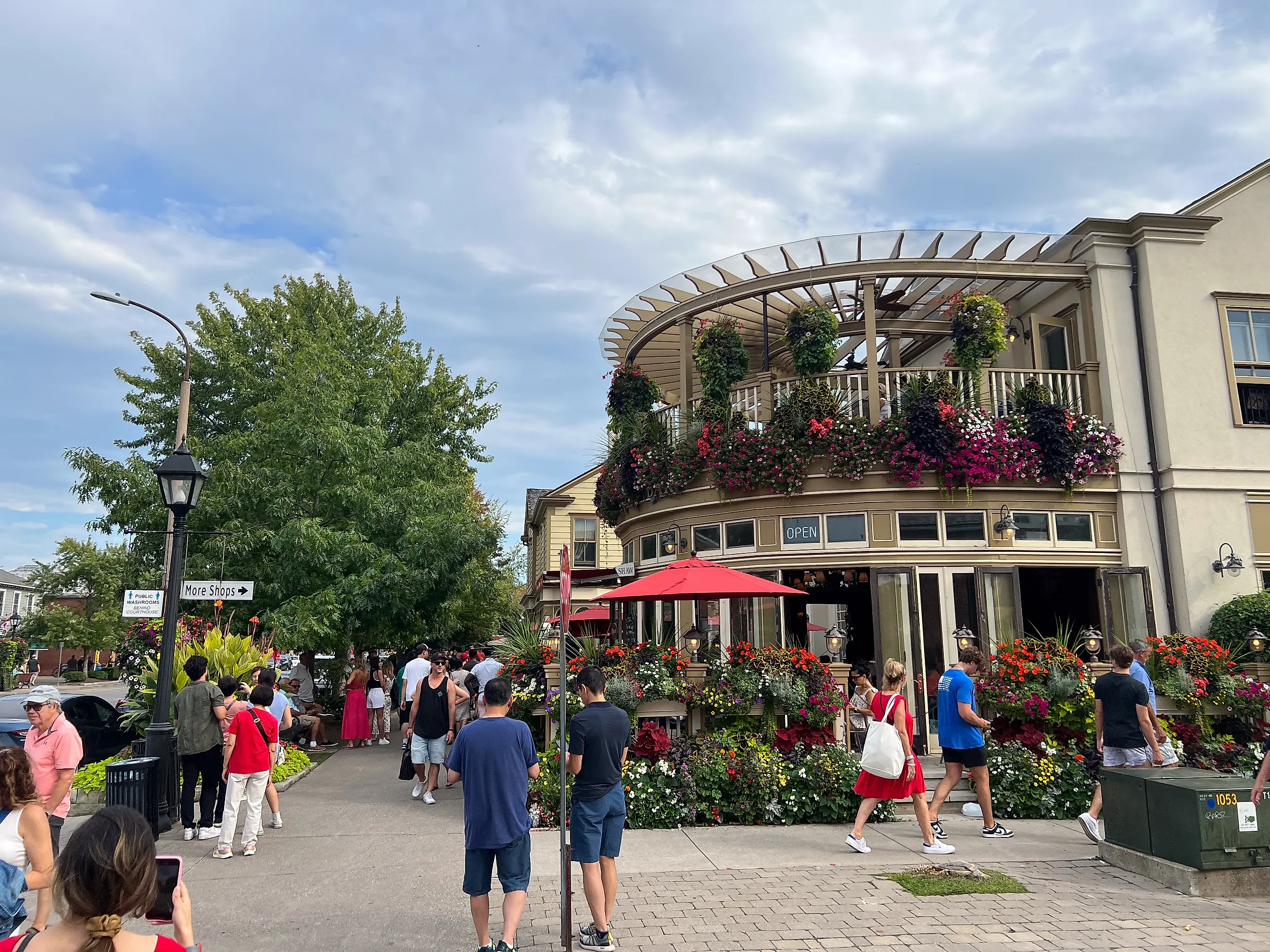
Tree-lined streets, manicured gardens, and 19th-century storefronts make Niagara-on-the-Lake's Old Town feel carefully preserved without tipping into museum territory. Queen Street forms the main spine, lined with boutiques, cafés, and galleries, while side streets reveal historic homes with verandas framed by overflowing flowerbeds. At the edge of town, the waterfront park offers benches, gazebos, and open lawns where the Niagara River meets Lake Ontario, with views across to Fort Niagara in New York and the distant Toronto skyline on clear days. Sunset strolls and picnics by the water are as much a part of the experience as shopping or dining.
Fort George & Historic Sites

Just a short walk from the main commercial strip, Fort George National Historic Site anchors the town's military and early-Canadian narrative. Earthworks, wooden blockhouses, and costumed interpreters evoke the War of 1812 era, when this area guarded the approach to the interior of Upper Canada. Elsewhere around town, Navy Hall, Butler's Barracks, and a scattering of historic churches and civic buildings showcase the evolution from garrison community to genteel small town. These sites collectively offer a compact, easily explored primer on early Canadian history.
The Shaw Festival & Cultural Life

Culture is a major pillar of Niagara-on-the-Lake's appeal. The Shaw Festival, one of Canada's premier repertory theatre companies, stages a rotating slate of productions across multiple venues from spring through fall, drawing theatre-goers who then spill out into the town's restaurants and wine bars. Between performances, visitors can browse independent bookshops, discover local art in small galleries, or join guided walking tours that highlight the town's architecture and stories. The steady rhythm of theatre seasons, concerts, and smaller cultural events gives Niagara-on-the-Lake a lively but refined buzz for much of the year.
Wine Country & Countryside Drives

Beyond the compact town center, vineyards and orchards unfurl across the surrounding Niagara Peninsula. Dozens of wineries, from long-established estates to boutique producers, welcome guests for tastings, tours, and vineyard walks, often paired with farm-to-table dining. Cycling routes and scenic drives along the Niagara Parkway and backroads link cellar doors with roadside farm stands and fruit markets. In spring, blossoms line the fields; in late summer and early autumn, bunches of ripening grapes and harvest activity shape the landscape, adding a seasonal rhythm to any visit.