The Deadliest Storms in Great Lakes History
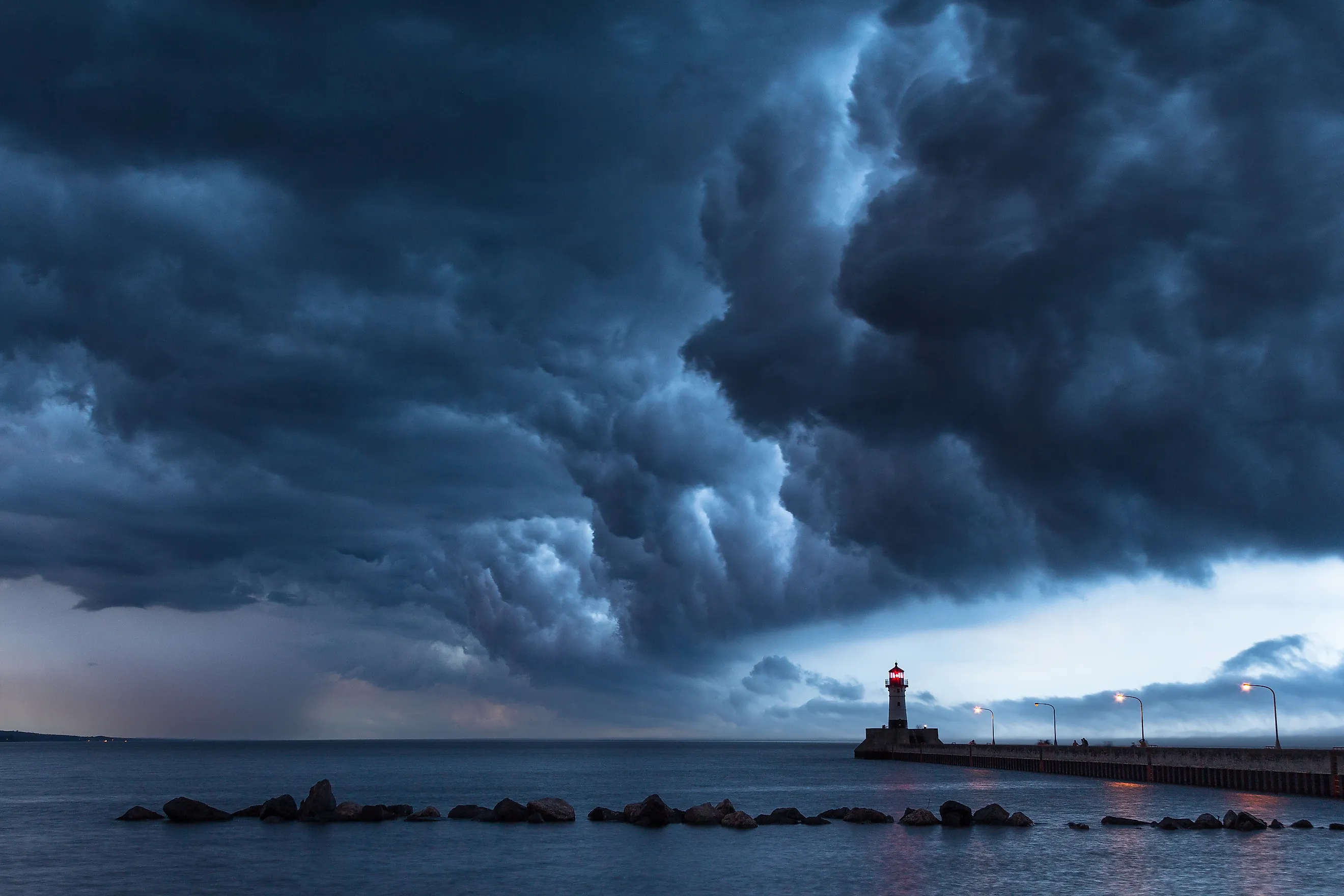
Major Great Lakes storms tend to share the same recipe: a fast-moving low-pressure system pulling Arctic air over still-warm lake water in October or November, with the temperature differential generating wave heights and wind speeds usually associated with the open ocean rather than an inland sea. Mariners learned to call this seasonal pattern the Witch of November, after the month in which the worst of the storms hit. The eight events covered below killed roughly 1,000 people in total and sank or wrecked at least 60 commercial vessels between 1844 and 1975. Most of them caught crews and shore communities off guard precisely because conditions just before the storm felt mild enough for one more shipping run, one more duck-hunting morning, or one more crossing before winter set in.
The Great Lake Erie Storm Of 1844
On the evening of October 18, 1844, a strong southwest wind set up over Lake Erie and pushed water from the western end of the lake toward the eastern end. The result was a seiche (a wind-driven oscillation of water level) that raised lake levels at Buffalo, New York by an estimated 22 feet, well above the 14-foot seawall. The lower part of the city flooded under 8 feet of water within about half an hour. The wall of water breached the stone harbor pier, threw the steamer Columbus into a pasture near Buffalo Creek, and tore the roofs off houses across the waterfront. Patrons at Huff's Hotel were swept into the lake, and over 200 buildings were destroyed; the standard death toll given in contemporary accounts is 78. The 1844 storm remains the most catastrophic seiche-driven flood in Great Lakes history and is the reason that 19th-century Buffalo built much of its later waterfront infrastructure to a higher elevation standard than its earlier counterpart.
The Lady Elgin Disaster Of 1860

The 252-foot (77-meter) sidewheel steamer Lady Elgin left Chicago for Milwaukee just before midnight on September 7, 1860, with somewhere between 350 and 400 passengers and crew. At about 2:30 a.m. on September 8, in deteriorating gale conditions and near-zero visibility, the schooner Augusta ran into the Lady Elgin amidships. The Augusta lost her foremast in the collision and continued toward Chicago without realizing how badly the Lady Elgin had been damaged. The Lady Elgin sank within about half an hour, leaving most of those aboard in the water with debris and overcrowded lifeboats as their only flotation. Bodies, debris, and survivors washed ashore at Winnetka, Illinois, where many of the survivors saw the shore through the surf but could not get through it.
The death toll is conventionally given as roughly 300, which still ranks the Lady Elgin as the deadliest open-water loss of a single vessel in Great Lakes history. The schooner's master was later found to bear primary responsibility for the collision (the Augusta was sailing without lights in busy waters), and the public outrage following the disaster drove the federal navigation regulations that, by 1871, required masthead lights and side lights on Great Lakes sailing vessels.
The Alpena Gale Of 1880

The Alpena Gale (often called the "Big Blow" in 19th-century newspapers) ran for three days starting October 15, 1880, and remains one of the most violent storms ever recorded on Lake Michigan, even though its death toll falls below several others on this list. The morning of October 15 was warm enough that the air temperature in Grand Haven, Michigan reached about 65°F (18°C). The 197-foot (60-meter) sidewheel steamer Alpena left Grand Haven for Chicago that evening. By midnight, the temperature was dropping fast as a deep low-pressure system rolled across the lake, and by daybreak on October 16 the storm had turned to snow, ice, and sustained gale-force winds.
The Alpena was last seen at about 8 a.m. that morning by the steamer City of Grand Haven, listing heavily and struggling against 15-foot (4.5-meter) waves. She was never seen above the water again. Death-toll estimates for the Alpena alone range between 60 and 90; the storm took at least 90 vessels in total across the lake over its three-day run, and was so violent that the cargo of apples the Alpena had been carrying washed ashore on the western Michigan beaches for weeks afterward.
The Mataafa Storm Of 1905

The storm of November 27-28, 1905 damaged or destroyed 29 ships on Lake Superior, killed 36 sailors, and caused about $3.57 million in damage (a figure equivalent to roughly $130 million in 2025 dollars). Forecasters initially expected the system to bring only easterly winds to the lakes, but by the evening of November 27 the wind was already at 44 mph (71 km/h) at Duluth. Storm-warning flags went up on the morning of the 28th, by which time the storm was already across Lake Superior, Lake Huron, and Lake Erie.
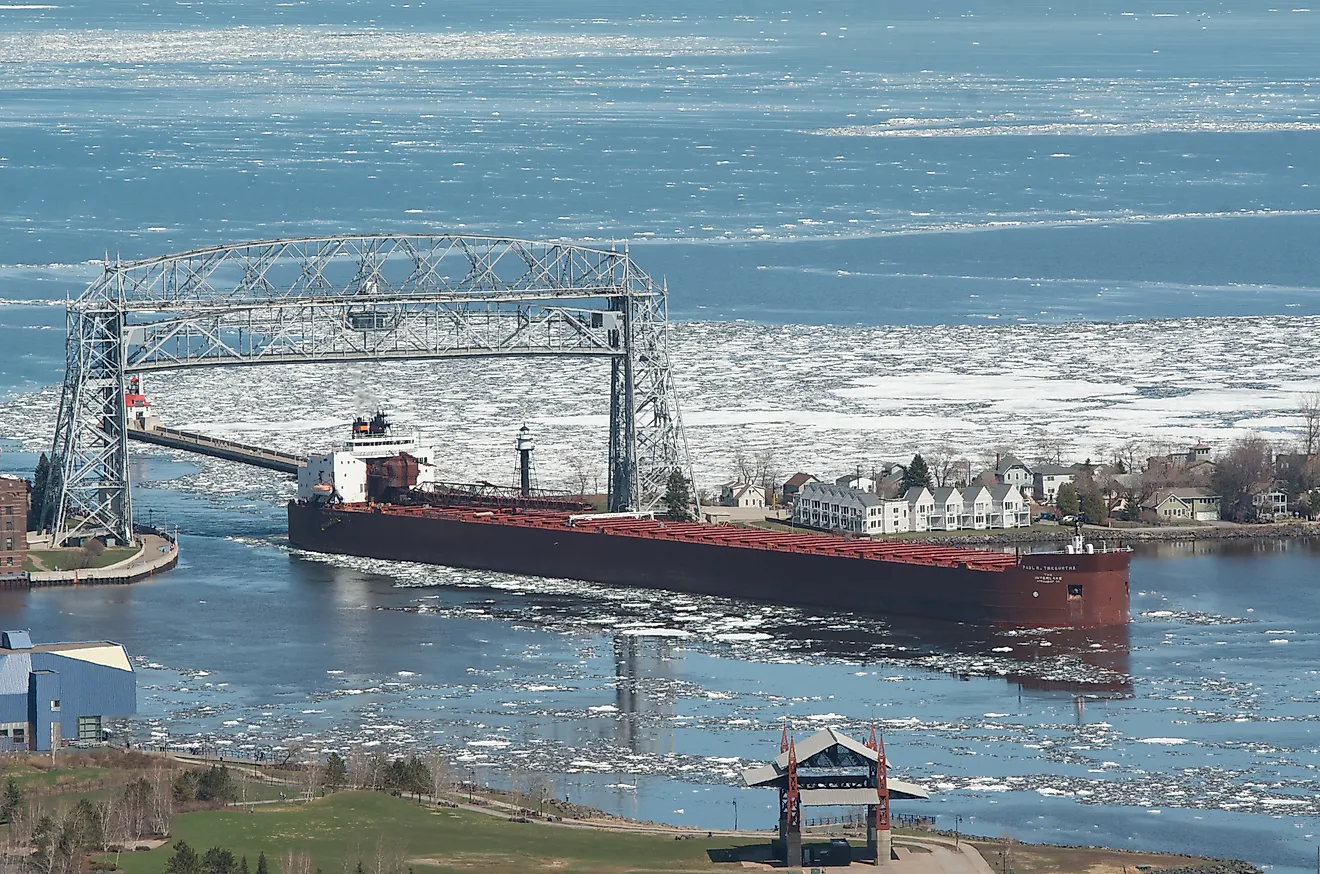
The storm takes its common name from the SS Mataafa, a 430-foot iron-ore freighter that was leaving Duluth on the afternoon of November 27 with the barge James Nasmyth in tow. When the storm hit, the Mataafa's captain tried to return to harbor and cut the Nasmyth loose to give himself maneuvering room. As the Mataafa approached the Duluth canal, a heavy wave threw her against the north pier; she ran aground and broke in two. Twelve crew were trapped in the aft section, and nine of them died of exposure overnight in temperatures well below freezing, in full view of crowds gathered on shore who could see the wreck but could not reach it through the surf.
The White Hurricane Of 1913

The four-day storm of November 7-10, 1913 is the most destructive natural disaster ever recorded on the Great Lakes. All five lakes were affected. Lake Huron was hit worst, with sustained winds reported at 70 mph and gusts to 100 mph, waves cresting at 35 feet (11 meters), and snowfall measured in feet rather than inches. The death toll is conventionally given as at least 250. Twelve major ships were sunk and seven others stranded or wrecked beyond repair. The storm has been variously called the White Hurricane, the Big Blow, and Storm King; the warm Gulf of Mexico air that moved north in the days before the storm fooled many shipping companies into squeezing one more late-season run.
One of the largest vessels lost was the 550-foot Canadian freighter SS James Carruthers, launched only months earlier in Collingwood, Ontario. She was loaded with 375,000 bushels of wheat when the storm caught her off the Michigan thumb on November 9; she went down with all 22 crew. The wreck of the Carruthers was located on May 26, 2025 by David Trotter's Undersea Research Associates, lying upside down in 190 feet of water about 12 miles northeast of Port Sanilac. The discovery made the Carruthers the last of Lake Huron's missing 1913 wrecks to be found, 112 years after she sank. Other major losses included the Wexford, Regina, Argus, Hydrus, Henry B. Smith, John A. McGean, and Charles S. Price, the last of which floated upside down off Port Huron after the storm with her crew still trapped inside the inverted hull. The Plymouth (a schooner barge lost in Lake Michigan) and the Leafield (lost in Lake Superior) are still missing as of late 2025.
The Black Friday Storm Of 1916

On October 20, 1916, the remnants of an Alabama hurricane combined with two high-pressure systems to produce 60 to 75 mph winds across Lake Erie for several hours. Four commercial vessels were lost in the storm and 49 sailors died. The wooden schooner D.L. Filer (a 161-footer, 45 years old at the time) sank off Bar Point near the mouth of the Detroit River with the loss of six of her seven crew; the only survivor was Captain John Mattison, who clung to the masts above the water all night and was rescued the next morning by the carferry Marquette & Bessemer No. 2. The 302-foot whaleback freighter James B. Colgate went down bow-first off Long Point in Canadian waters with the loss of 25 of her 26 crew; the only survivor was Captain Walter Grashaw, on his first voyage as master, who spent two days on a small life raft before being picked up. The Canadian steamer Merida was lost with all 23 crew. The lumber carrier Marshall F. Butters sank near the Detroit River as well, but all 13 of her crew were rescued by nearby vessels.
The Armistice Day Blizzard Of 1940

The morning of November 11, 1940 was unseasonably warm across the Midwest, with temperatures around 60°F (16°C) in many areas. By mid-afternoon, a deep low had collided with an Arctic air mass moving south out of Canada, and by evening the temperature in places had dropped to 10°F (-12°C) with sustained winds gusting to 80 mph (129 km/h). The cold air moved over the still-warm lake water, intensifying the wind speeds further over Lake Michigan.
The Lake Michigan death toll on the marine side was concentrated in three freighters. The William B. Davock, a 420-foot (128-meter) steel freighter, was overwhelmed when trying to turn into the wind, and sank with all 33 hands. The Anna C. Minch, a 380-foot (115-meter) Canadian freighter, foundered nearby with all 24 of her crew. The Novadoc, a 253-foot freighter, ran aground on a sandbar off Juniper Beach near Pentwater, Michigan; two of her crew were swept overboard and died, but Captain Clyde Cross of the Pentwater fishing tug Three Brothers worked his small boat through the surf in the second day of the storm and brought the remaining 17 men ashore.
The storm also caught hundreds of duck hunters on Green Bay, the islands of Lake Michigan, and the Upper Mississippi backwaters, many of whom had set out in light clothing because of the warm morning. The wind blew water out of marshes, grounding boats; snow and freezing spray then disabled the hunters' ability to walk to safety. Total deaths from the Armistice Day Blizzard are usually given at about 154, of whom roughly 67 were sailors and the remainder a mix of duck hunters and people caught in the snow on land.
The Edmund Fitzgerald, 1975
The November 10, 1975 storm that sank the SS Edmund Fitzgerald killed 29 men rather than the hundreds of earlier disasters, but it has become by far the most culturally familiar of the Great Lakes storms thanks to Gordon Lightfoot's 1976 ballad "The Wreck of the Edmund Fitzgerald." The Fitzgerald was a 729-foot ore carrier launched in 1958, at the time the largest ship on the Great Lakes. She left Superior, Wisconsin on the afternoon of November 9 with a load of 26,116 tons of taconite pellets bound for Zug Island in Detroit. A low-pressure system that had crossed the Oklahoma Panhandle hooked northeast into the Great Lakes overnight and built into one of the worst storms in years.
The Fitzgerald was being followed at a distance by another freighter, the Arthur M. Anderson, whose Captain Jesse B. Cooper kept radio contact with Fitzgerald Captain Ernest McSorley through the afternoon of November 10. The Fitzgerald reported losing both radars, taking on water, and developing a list. The last message, received at about 7:10 p.m., was McSorley's reply to a check-in from the Anderson: "We're holding our own." The Fitzgerald disappeared from the Anderson's radar minutes later and sank in 530 feet of water about 17 miles northwest of Whitefish Point with all 29 crew. The cause has never been conclusively determined; the leading theories involve hatch-cover failure, structural damage from groundings earlier in the trip, and a rogue wave. The 50th anniversary of the sinking was marked on November 10, 2025. The Fitzgerald remains the largest ship ever lost on the Great Lakes.
The Witch Of November And What It Costs
The eight storms above represent the upper end of a longer list. The 1958 sinking of the SS Carl D. Bradley off Cathead Point in northern Lake Michigan during a similar November gale killed 33 of her 35 crew. The 1966 loss of the SS Daniel J. Morrell on Lake Huron killed 28 of 29 (sole survivor Dennis Hale spent 38 hours on a life raft in freezing water). Several smaller incidents over the past 50 years have killed crews of two or three on tugs and fishing boats. Modern weather forecasting, satellite communications, and Coast Guard patrols have reduced the number of large commercial losses to near zero in recent decades, but the underlying atmospheric setup that drives the Witch of November (warm lake water under cold Arctic air, with the open lake providing hundreds of miles of uninterrupted wind fetch) has not changed and will not change. The lakes remain capable of producing genuine open-ocean storm conditions on a few days every November, and the historical record above is the reason commercial captains still treat the gales-of-November forecasts with the seriousness they deserve.