The State Parks Where Rattlesnakes Den For The Winter
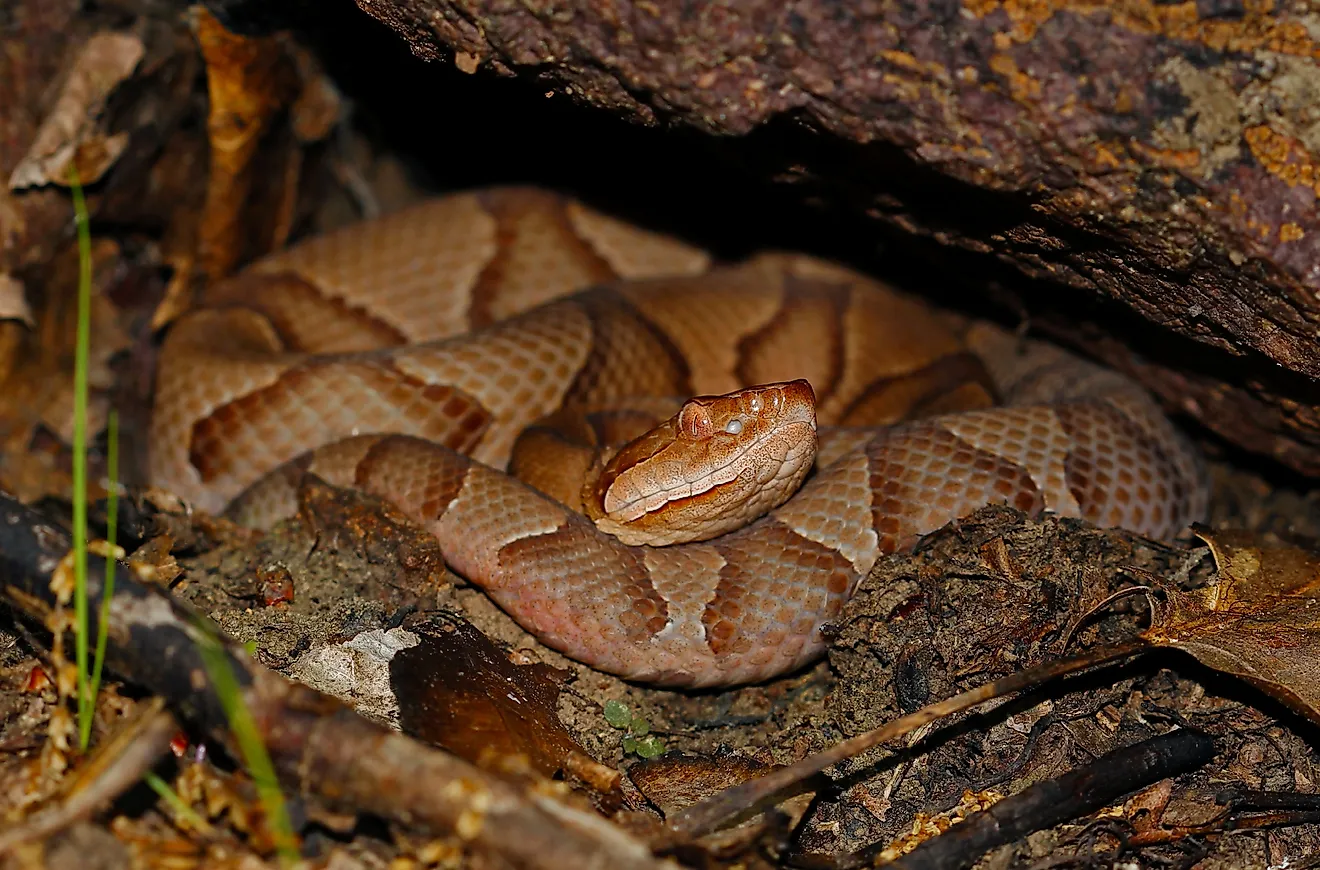
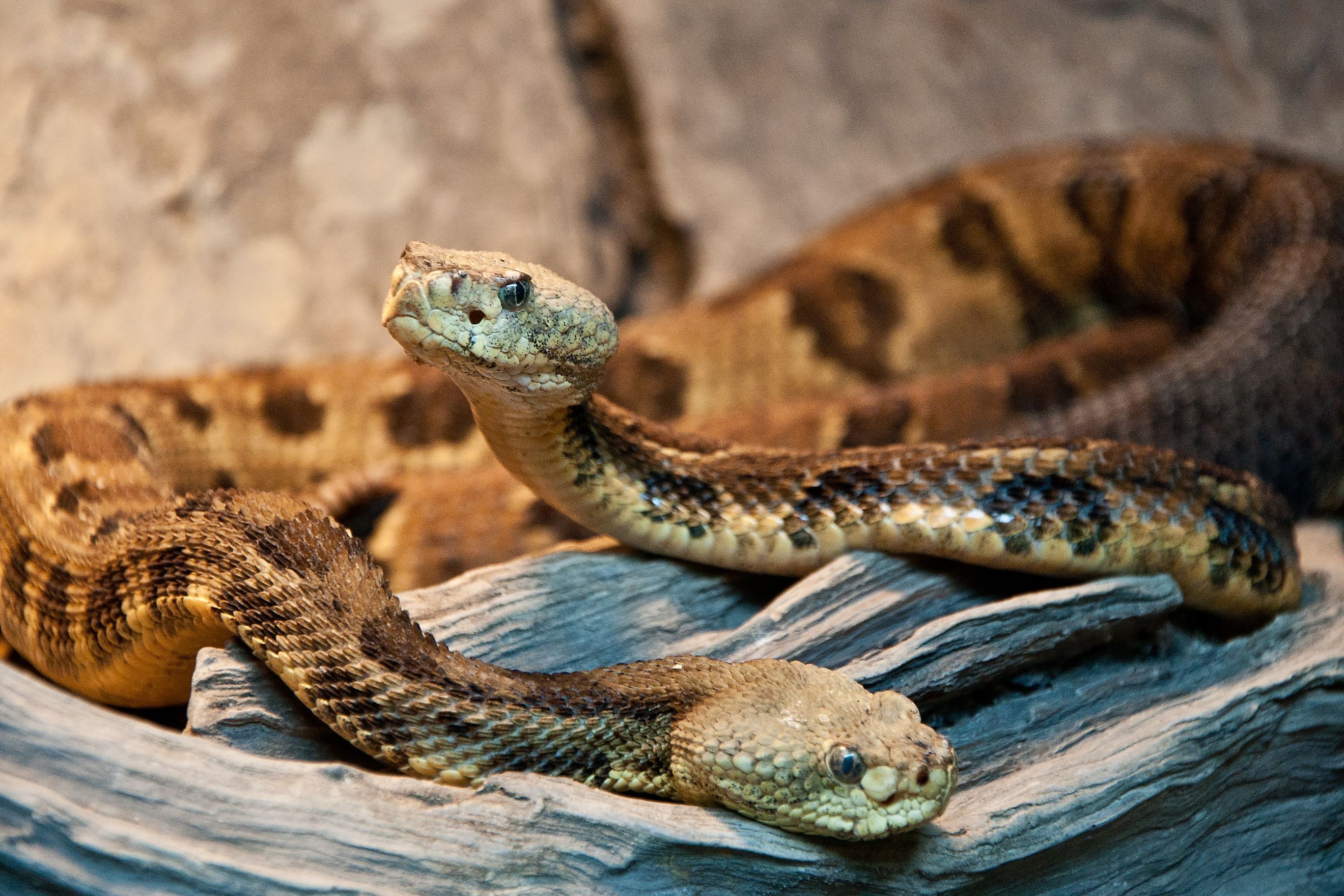
When the cold sets in, rattlesnakes in these state parks return to the same patch of rock they used the previous winter. Most species overwinter in underground dens, or hibernacula, usually on south-facing hillsides exposed to direct sunlight. In New York, the ridges in and around Sterling Forest State Park contain ten known dens. Brown County State Park in Indiana has tagged 115 rattlesnakes with transponders to track their location and growth rates. At Hanging Rock State Park in North Carolina, some timber rattlesnakes share their dens with copperheads and black rat snakes. To prevent disturbance, parks generally do not disclose den locations, so tread lightly and keep your eyes peeled when visiting these hot spots during the cooler months.
Sterling Forest State Park, New York

Sterling Forest State Park sits in the Highlands of Orange County, in the Hudson Valley of New York, along the New Jersey border. Created in 1998 with the purchase of 15,280 acres, the park has since grown to more than 18,000 acres. A habitat study by the U.S. Fish and Wildlife Service found that the complex of ridges and valleys in and around Sterling Forest has ten known den sites for timber rattlesnakes (Crotalus horridus), making it one of the more important areas for the species in the Highlands.

Those dens are part of a larger network. The same study recorded at least 30 known den sites in the New York portion of the Highlands, most of them in or near wooded, rocky ledges with southern exposures. The distribution of the dens indicated at least three distinct populations, separated by Interstate 87 and the Hudson River. Cornell researchers who studied timber rattlesnakes from 19 hibernacula in four New York regions, including Sterling Forest, found that no genetic group spanned a road, major or minor. The timber rattlesnake has been listed as threatened in New York since 1983.
Brown County State Park, Indiana

Brown County State Park is another notable stronghold for timber rattlesnakes, which are listed as an endangered species in Indiana. The park has marked 115 rattlesnakes with Passive Integrated Transponder (PIT) tags, including 52 males, 34 females, and 29 of unknown sex, and has identified 10 dens. While others are known to exist, their locations remain unknown. The ten known dens are mainly in undisturbed portions of the park. The snakes favor dry, rocky ridgetops in mature oak-hickory forest, so where rattlesnakes are present, park staff mow human activity areas and clear them of woody debris.

By marking the snakes with PIT tags, the park can determine their previous location and growth rate upon recapture. Snakes occasionally have to be temporarily captured if encounters with humans become common. This usually happens between July and August when male rattlesnakes venture far in search of a mate. However, if a snake is relocated too far from its home range, it could result in overwinter mortality. To combat this, the park temporarily removes captured snakes before releasing them at or near their original capture sites at a later date.
Hanging Rock State Park, North Carolina

Timber rattlesnakes favor the Sauratown Mountains of Hanging Rock State Park as viable den sites. The 9,011-acre park in Stokes County makes up the largest section of the Sauratown range. Biologist John Sealy captured and tracked timber rattlesnakes here from 1990 to 1997. Nine documented dens are found on the lower, rocky slopes of the mountains, where the soil supports mature oak woodlands. Out of these nine, five were found on south- or southeast-facing slopes, two were facing east, and two others were facing west. Den elevations ranged from 1,528 feet (466 meters) to 2,148 feet (655 meters).

Timber rattlesnake dens usually contain dozens of snakes, but in Hanging Rock they hibernate singly or in small groups of no more than three. However, in some instances, this is with other snake species. Timber rattlesnakes in Hanging Rock have also shared their den with black rat snakes (Pantherophis alleghaniensis) and the eastern copperhead (Agkistrodon contortrix). Tracking also showed how the snakes move around people. One radio-tracked adult male actively avoided roads, picnic areas, and parking lots in the late summer of 1994, and the park changed its response to nuisance snakes after the study.
High Point State Park, New Jersey

While Hanging Rock demonstrates how several den sites can occur within a state park, High Point State Park illustrates how wildlife is not limited to park boundaries. High Point is the summit of Kittatinny Ridge at 1,803 feet (550 meters), making it the highest point in New Jersey. Kittatinny Ridge is part of the Appalachian Mountain system and stretches through Pennsylvania and New Jersey, continuing into New York as the Shawangunk Ridge. At least six more den sites are known on the northern Shawangunk Ridge, mostly on a southwest-facing slope where large slabs of conglomerate rock form basking habitat.

Although seven known timber rattlesnake den sites occur along the habitat complex of the Kittatinny Ridge, only one of them is within the boundaries of High Point State Park. The other six dens occur along the southeast slopes of the Kittatinny Ridge, south of the habitat complex and north of the Delaware River. There are no known den sites along the narrower middle section of the ridge, likely due to a lack of suitable basking sites. That section may still serve as a corridor between the northern and southern populations.
Rattlesnake Dependency on Dens
Rattlesnake dens are more than seasonal shelters for the winter. They are essential for the long-term survival of local populations, because snakes return to the same den year after year, and a snake relocated too far from its home range risks dying over the winter. The number of documented dens varies between parks. Hanging Rock State Park has nine, while only one of the seven Kittatinny Ridge dens sits inside High Point State Park. Highways and smaller roads further split populations, which is why state parks protect dens by not disclosing their locations.