Why Did Roman Military Strategy Shift From Expansion To Defense?
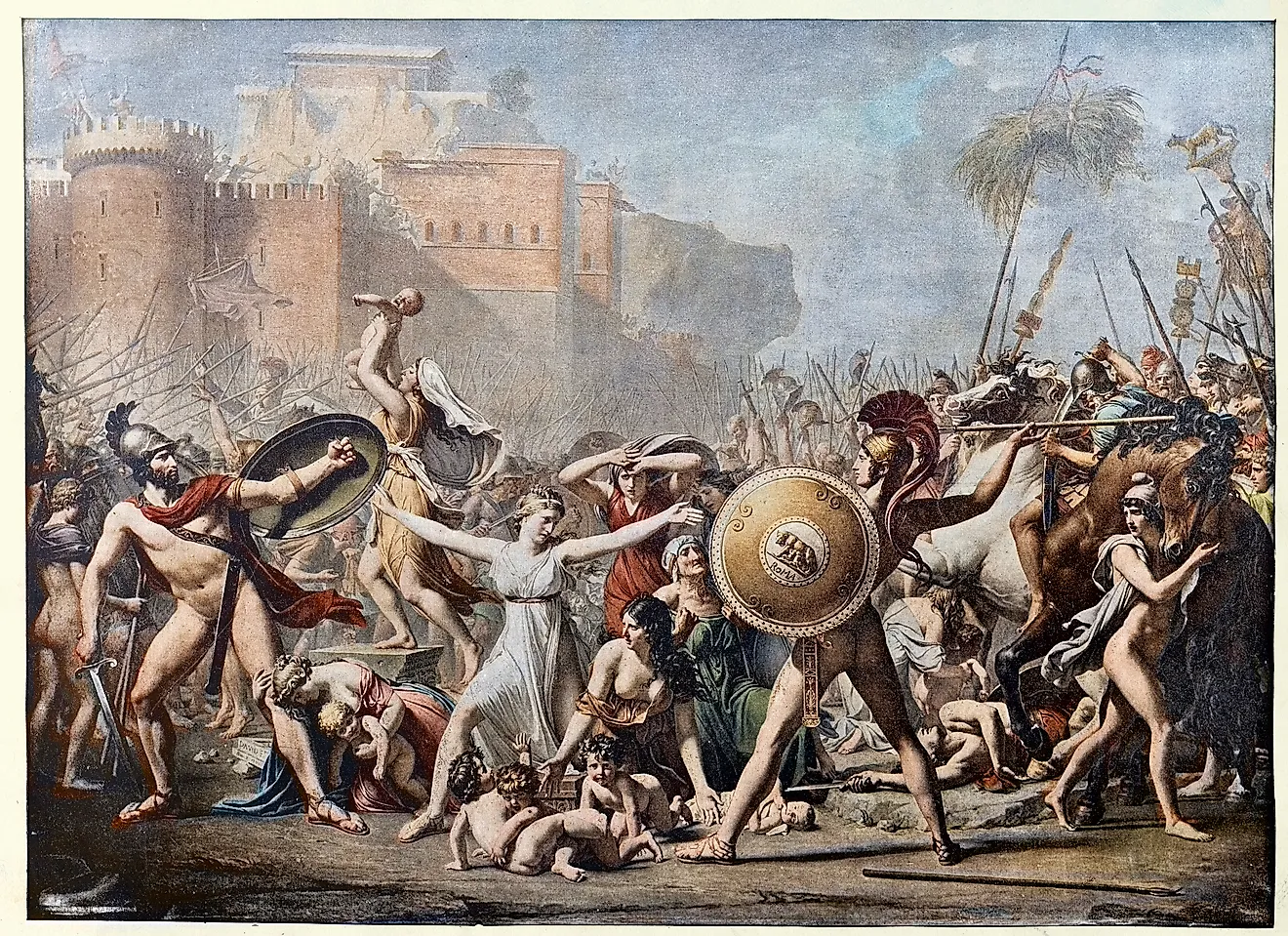
Roman military strategy evolved significantly throughout its history. During the Republic, it was highly aggressive. This allowed Rome to rapidly accumulate territory and become the most powerful state in Europe and the Mediterranean world. However, with the rise of the Empire in 27 BCE, a notable shift towards defense occurred. Rome's sheer territorial reach, the ease of defending natural borders, and several crushing defeats were just some of the motivating factors behind this change. Exploring these reasons helps paint a clearer picture of this defining feature of the Roman Empire.
The Empire Became Too Big

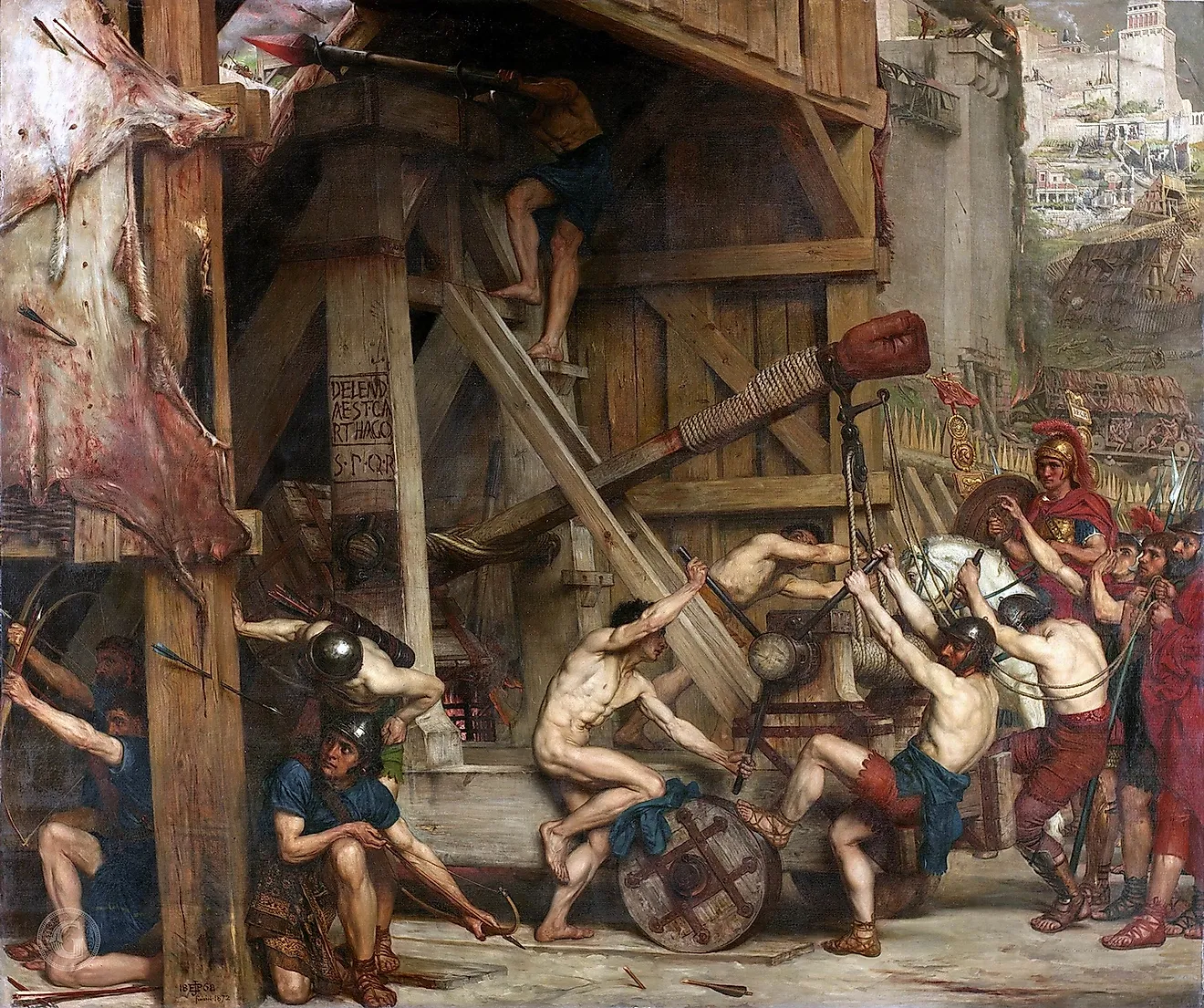
At the beginning of the Republic (509 BCE), Rome was a small Italian city-state. Successful wars could bring Rome land, captives, and valuable plunder. Victorious armies brought back enormous amounts of money and slaves. Expansion also increased Rome's tax-paying population, thereby providing the government with a reliable source of recurring revenue. In short, expansion during the Republican period simply made economic sense.
By the early second century CE, the economics had changed. Roman territory now spanned Britain, Mesopotamia, Germany, and North Africa. Any further expansion required more roads, forts, and supply lines. On top of this, the cost of controlling existing territories was growing. Britain required three to four legions just to maintain order, and Julius Caesar's Gallic Campaign (58 to 50 BCE), while successful, took nearly a decade and expended enormous resources. Finally, places like Germany contained difficult terrain and dispersed tribes who had little in the way of wealth. Conquering them likely would have provided minimal economic benefit. To summarize, due to Rome's enormous territorial reach, future conquests eventually provided diminishing returns.
Natural Barriers Were Easier To Defend

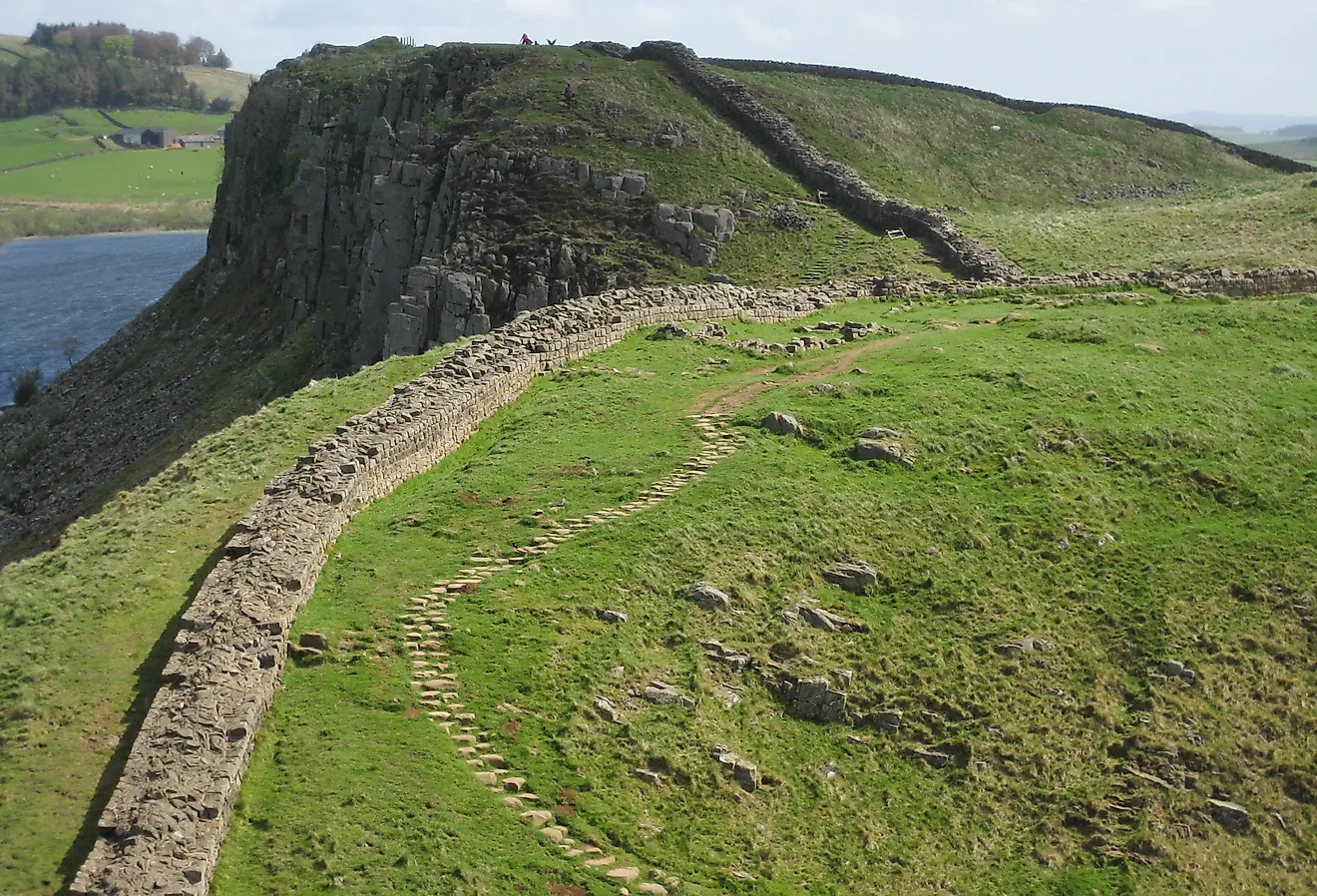
Expansion during the Republican period was often a defensive measure. Enlarging Rome's territorial reach created a buffer between the capital and invading armies. However, by 27 BCE, Rome had begun acquiring several excellent natural borders. In the north, the Rhine and Danube Rivers formed a natural barrier against Germanic invasions. In the South, the Sahara Desert proved nearly impenetrable. Finally, in the east, the Euphrates River marked a frontier that Parthian forces struggled to cross. Rather than expanding beyond these points, the Romans instead focused on fortifying them. Watchtowers and fortresses were built, and roads were expanded to ensure that reinforcements could easily reach the borders in times of invasion. Perhaps the most famous fortification was Hadrian's Wall in Britain.
Internal Crises Redirected the Army

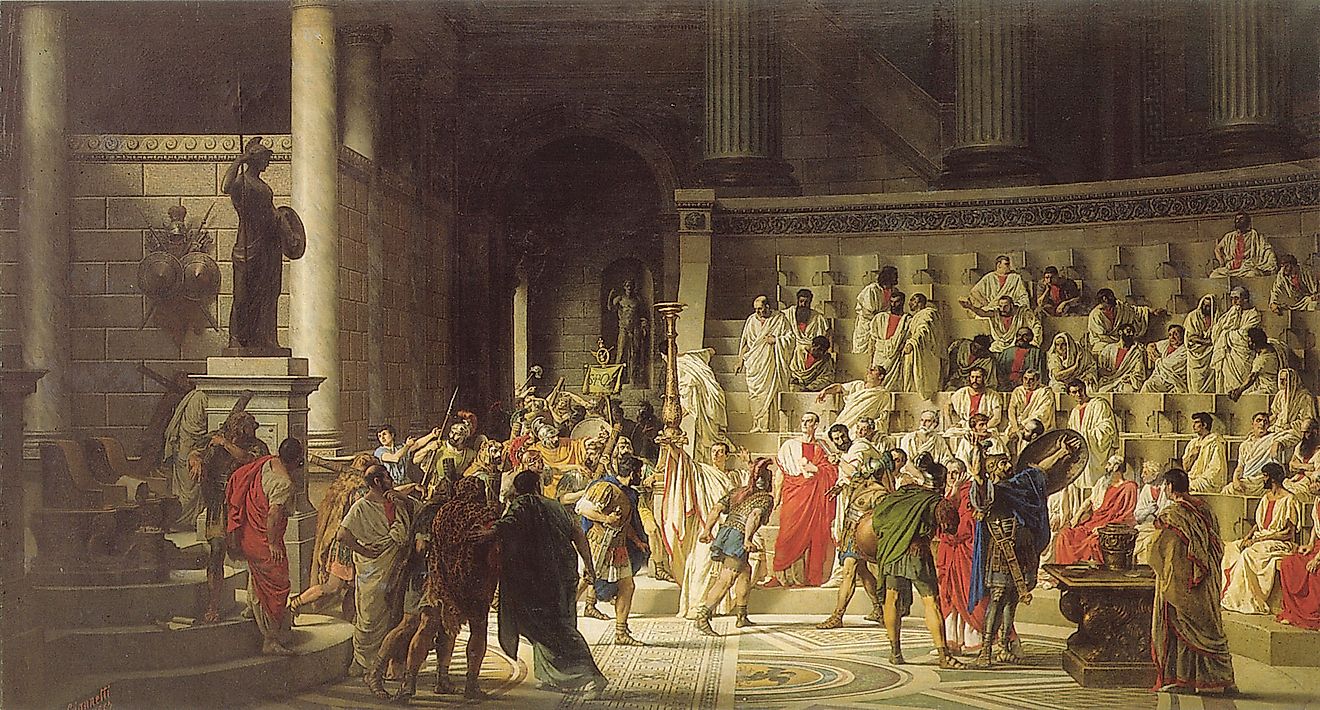
Rome's military resources were not used only against foreign enemies. Emperors also needed troops to stop revolts, suppress rival claimants, and protect their own positions. A general commanding several legions could be almost as dangerous to an emperor as an army crossing the frontier. Soldiers were therefore moved repeatedly between frontier wars and struggles for control of the empire. Internal rivals sometimes received priority over foreign threats because an emperor who lost a civil war also lost his throne and usually his life.
These pressures became extreme during the Crisis of the Third Century, conventionally dated from 235 to 284 CE. The period began after the assassination of Severus Alexander and brought repeated civil wars, foreign invasions, epidemics, economic disruption, and dozens of imperial claimants. At its weakest point, the Roman world fractured between the central government, the breakaway Gallic Empire in the west, and the Palmyrene regime in the east. Aurelian reunited the territory during the 270s, while Diocletian later reorganized the government and military. His Tetrarchy, established in 293, placed two senior emperors and two junior emperors in different regions so that threats could be answered more quickly.
Disease and warfare also placed pressure on recruitment, taxation, and military supply. Rome continued to field enormous armies, but more of those soldiers were needed to patrol borders, defend cities, and respond to several emergencies at once. By late antiquity, Rome was usually reacting to invasions and internal challenges rather than choosing freely where its next war would take place.
A Series Of Crushing Defeats

Despite how it's commonly portrayed and remembered, the Roman army wasn't an unstoppable force. In fact, it suffered several crushing defeats that profoundly affected military strategy. The Battle of the Teutoburg Forest in 9 CE is one such example. For years, the Romans had attempted to make inroads into Germany. Arminius, a Germanic nobleman who had received Roman citizenship and served in Rome's auxiliary forces, gained the confidence of the Roman commander Publius Quinctilius Varus while secretly organizing a revolt. He then lured three Roman legions into a section of unfamiliar forest, where multiple Germanic tribes ambushed them. Over the course of several days, all of those legions were wiped out. Emperor Augustus was reportedly distraught by the incident. It also marked a turning point, ending Augustus's immediate plan to turn more of Germania into Roman provinces, although Roman armies continued to campaign east of the Rhine.
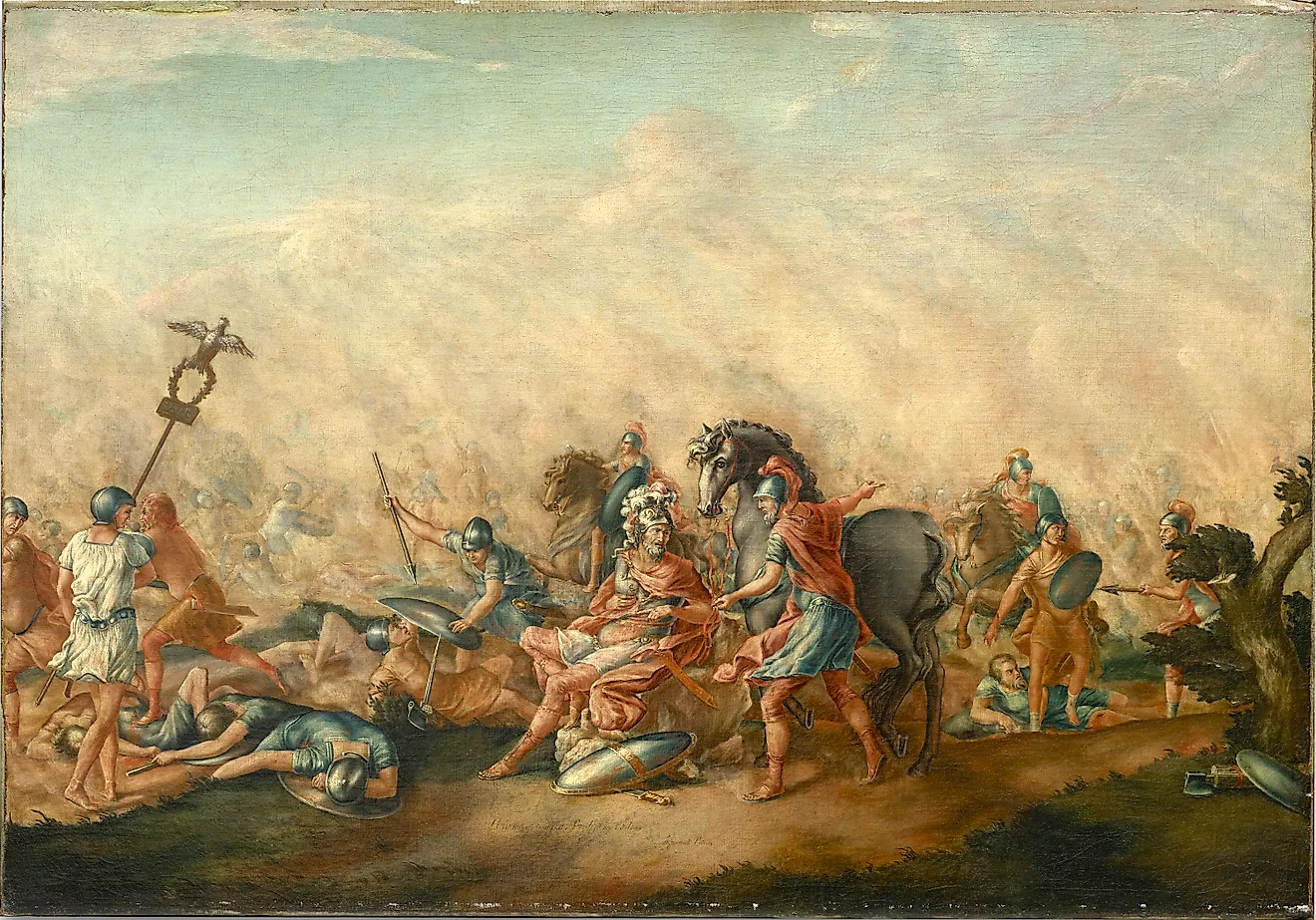
Another defeat occurred over half a century earlier with the Battle of Carrhae (53 BCE). As Caesar was racking up victory after victory in Gaul, Marcus Licinius Crassus, Caesar's ally, sought a victory of his own. Therefore, he invaded the Persia-based Parthian Empire seeking similar glory. The campaign was an utter disaster. Crassus was unprepared for the Parthians' mobile horse archers and heavily armored cavalry. This was made clear in the Battle of Carrhae, where over 20,000 Romans died and another 10,000 were captured. Crassus himself was also killed. While Rome continued to try to expand into Mesopotamia over the coming centuries, it gained a valuable lesson in over-reach.
Impact And Legacy
Several forces moved Rome away from conquest and toward defense. The sheer size of the empire eventually meant that further territorial accumulation delivered diminishing returns. Natural borders and recruitment problems also made defense more practical. Civil wars expended resources that could otherwise be used for conquest. Finally, crushing military defeats, like the Battle of the Teutoburg Forest and the Battle of Carrhae, made the government more cautious about launching campaigns of aggression. By the third and fourth centuries, Roman forces increasingly fought to preserve the empire rather than enlarge it. Rome had not lost its belief in conquest, but it had lost the freedom to choose expansion over more urgent threats.