The Most Feared Warriors of the Ancient World
Enemy soldiers ran from the sight of a Carthaginian war elephant before it reached their line. The Persian Immortals held their number at exactly 10,000 and replaced every fallen man overnight. Spartan boys entered military training at age seven and grew into the heavy infantry that stalled a Persian army at Thermopylae. Roman legionaries locked their shields into a testudo shell that turned incoming arrows aside. Hun horsemen struck without warning and vanished before a slower army could form up. Fear was the weapon each of these forces sharpened first.
Spartans

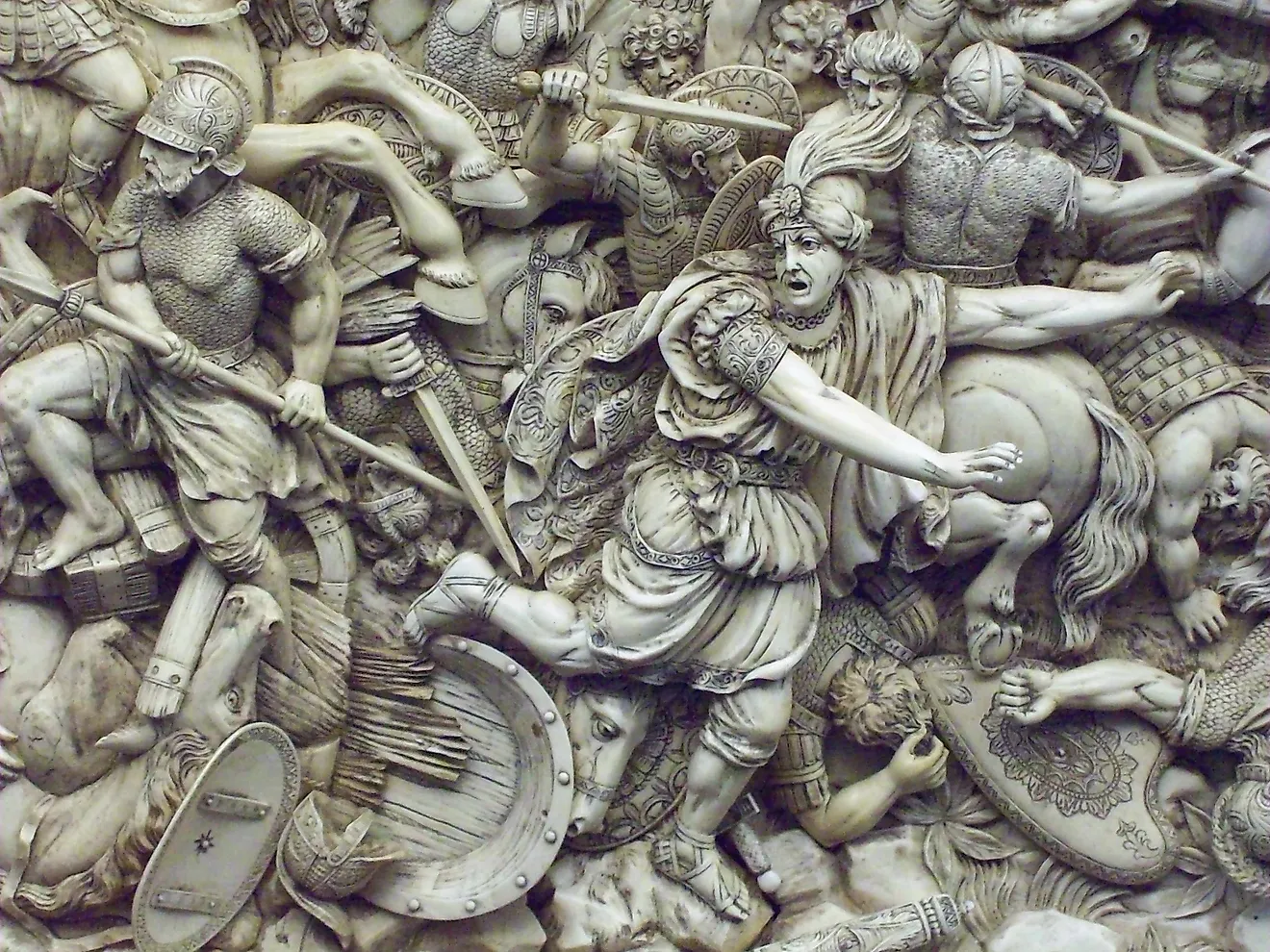
The Spartans were synonymous with highly disciplined, militaristic living. They originated in the eponymous city-state of Sparta in Ancient Greece. Founded sometime in the 10th century BCE, Sparta eventually evolved into a dual monarchy in the northern Eurotas valley, a vital strategic area in the Peloponnesian peninsula. As Sparta grew, a stern soldierly culture took hold. The armed forces were supported by the labor of neighboring populations. Sparta maintained harsh control over the helots, whose subjugation helped sustain the citizen army. Spartan boys entered the agoge at age 7, a long state training system that prepared them for military service as hoplites, or heavy infantry.
By the time of the Greco-Persian Wars in 480 BCE, the Spartans were widely regarded as having one of the strongest armies in Greece. At the Battle of Thermopylae, Spartan king Leonidas and 300 of his soldiers temporarily held off a much larger force sent by the Persian Empire. Other Greek allies fought alongside them in the effort to resist Persian authority over Greece. The battle ended in Spartan defeat, but the Spartan-led Greeks ultimately emerged victorious against the Persians. The ensuing Peloponnesian War saw Sparta rise to the most powerful city-state in Greece. By 371 BCE, Spartan dominance began to decline until eventual conquest by the Romans.
Persian Immortals

The one-time foes of Sparta, the Immortals were present at the famous battle where 300 Spartans fell. According to Herodotus, the name came from the unit's fixed strength of 10,000. Casualties, sick soldiers, and retiring members were immediately replaced. This system helped create the impression that the unit never diminished. Their early history, however, is difficult to reconstruct. The force is associated with the Achaemenid Empire and is best known from Herodotus's account of Xerxes' invasion of Greece in 480 BCE. Later Persian tradition links Pantea Arteshbod with the formation of the Immortals, but the unit's origins remain uncertain. Other accounts suggest they were derived from the palace guard of the Persian emperor Cyrus.
Soldiers were mostly drawn from the Persian population, with a minority of Medes and Elamites. Training to become members of the Persian army began at age 5 and involved horse riding, archery, and the skills needed for nomadic living. After reaching age 20, soldiers were formally inducted into the military and could be granted retirement at 50. The top fighters, judged by combat skill and discipline, were allowed to join the ranks of the Immortals. They remained a fighting force of the Persian Empire until its defeat by Alexander the Great in 331 BCE. Their reputation inspired later elite units.
Roman Legionaries

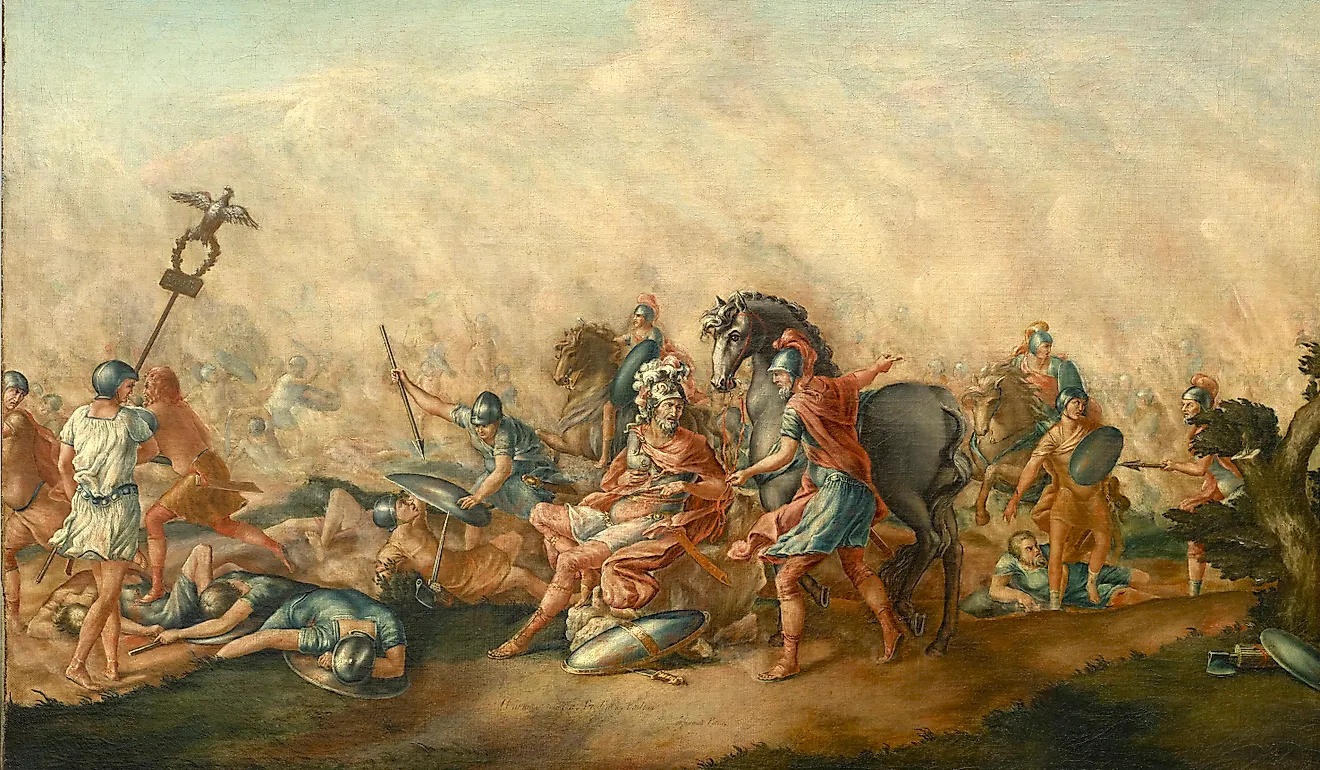
The Roman legionaries served the Roman Republic and, later, the Roman Empire. The term legionary comes from legion, the name of a major Roman army unit that often numbered around 5,000 soldiers and was commanded by a legate. Each legion was subdivided into cohorts made up of 480 men. These were then divided into centuries of 80 men led by centurions. Finally, each century was divided into ten eight-man groups known as contubernia. This structure allowed the Roman army to assign tasks quickly, including guard duty, road building, and the construction of fortifications.
The effectiveness of legionaries came from rigorous training, discipline, and unit cohesion. They fought in coordinated formations and could adapt to different enemies across the empire. Perhaps the most famous formation was the testudo, Latin for "the tortoise." In this formation, legionaries packed tightly together and placed their shields in front and above them. The result was a protective shell. The formation slowed movement, but it offered strong defense against incoming missiles. Soldiers at the front could still stab at nearby enemies. Roman armies could also use supporting archers and cavalry, but the legionaries' core strength was disciplined heavy infantry. As the Roman Empire crumbled, the legionary system also faded into history.
Carthaginian Army

Carthage's military nearly destroyed Rome through strategy, discipline, and battlefield force. Traditionally a seafaring power with a formidable navy, the Carthaginians also employed effective land forces to defend territory and attack rivals. The army itself included about 2,500 elite armored infantry drawn from the citizenry and known as the Sacred Band. Carthage also deployed regional Numidian cavalry. These riders used javelins and small shields to harass enemy forces.
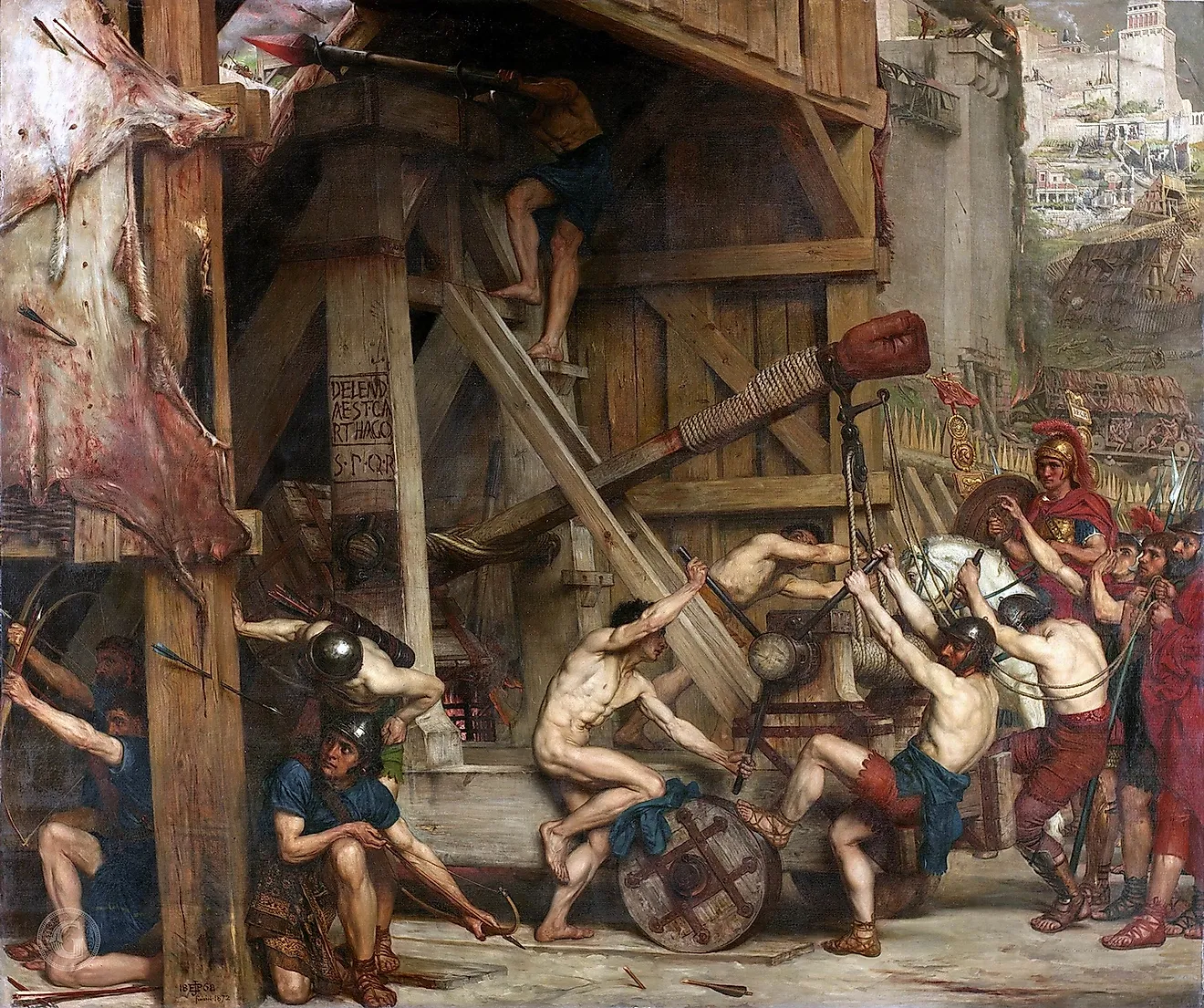
As a North African state, Carthage also used native elephants, turning them into one of the most intimidating parts of its military. Carthaginian war elephants could terrify enemy troops. They were difficult to control, however, and could create disorder if they panicked. On the battlefield, their size and force gave them an effect similar to a shock weapon. They disrupted formations and spread fear among soldiers unfamiliar with them. Because of that impact, elephant corps were often placed at the front of battle lines to unsettle opposing armies. Despite substantial successes over the years, the Second Punic War against Rome ended in surrender and harsh peace terms that sharply reduced Carthaginian power.
The Huns

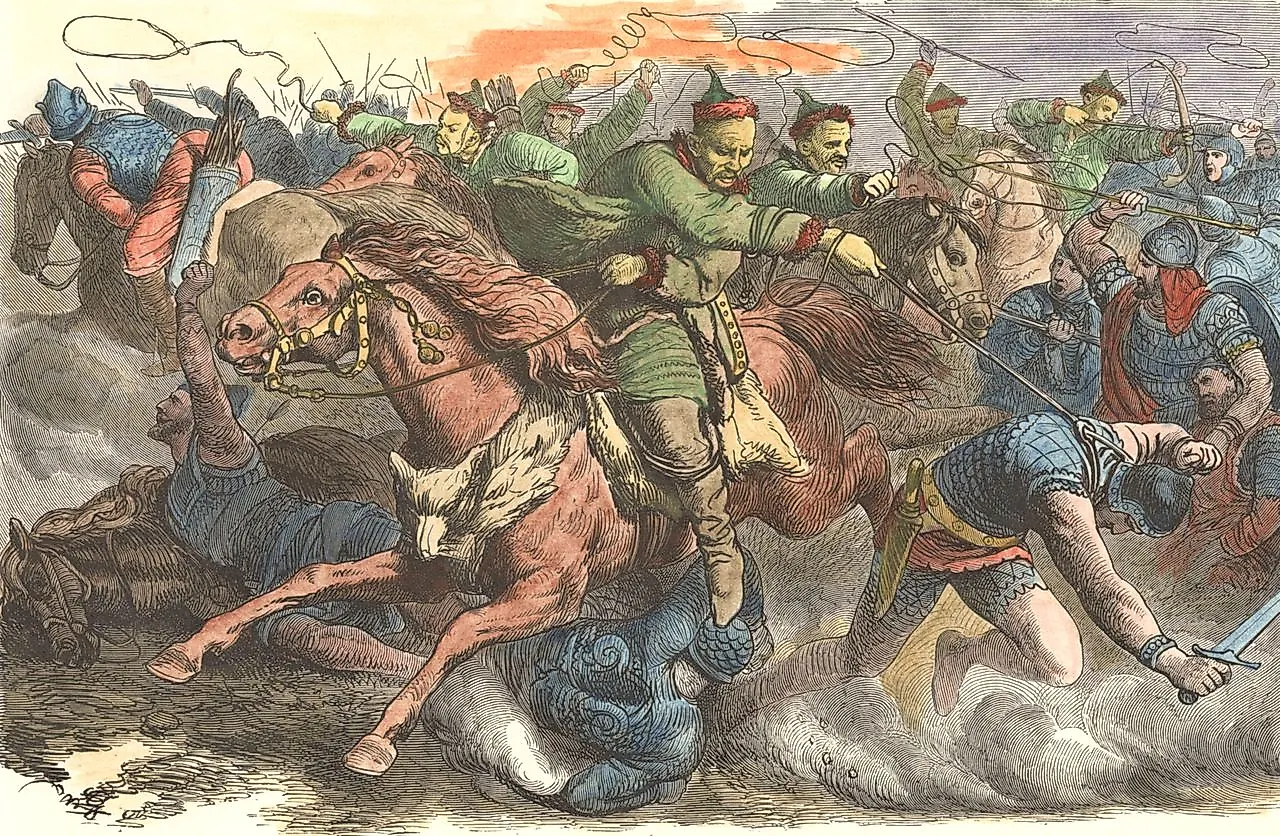
Considered a scourge of Europe in the 4th and 5th centuries, the Huns were a nomadic steppe people whose exact origins remain debated. They are often linked broadly with Central or Inner Asia. The Huns were master horsemen who made use of short reflex bows in fast-moving warfare. Their mobility allowed them to strike suddenly, withdraw quickly, and pressure settled armies that depended on heavier formations. Their mobile method of fighting was supported by heavy leather armor, steel helmets, and chain mail covering the neck and shoulders. Hun riders used mounted warfare to unsettle their foes and often attacked with little warning.
By 445 AD, the Huns came to be ruled by Attila. Their territorial holdings extended between the Caspian Sea in the east and the Rhine River in the west. The Huns' advance in Gaul was checked in 451 AD at the Battle of the Catalaunian Fields, also known as the Battle of Chalons. A Roman-led coalition that included Visigoths stopped the advance. Two years later, Attila died following marriage. The Hunnic kingdom quickly splintered through infighting among his sons and uprisings by subjugated peoples. After 469 AD, the Huns had largely ceased to be a threatening power.
The Art of War
These warriors were often remembered through hostile sources, but their military systems still shaped the societies around them. Sparta built a citizen army around discipline and state control. Persia maintained an elite guard whose reputation became part of imperial power. Rome used organization and training to expand across the Mediterranean. Carthage challenged Roman dominance with cavalry, infantry, and elephants. The Huns showed how mounted mobility could shake older empires. Their methods were different, but each left a lasting mark on ancient warfare.