The Best Leaders In Ancient Greece
Ancient Greece produced some of the best leaders the world has ever known. Consider Themistocles, who led the defense against the Second Persian Invasion of Greece, or Epaminondas, who disrupted Spartan hegemony. Exploring these figures, and several more, is crucial to comprehending one of the most important civilizations in history.
Themistocles (525 to 459 BCE)

In 480 BCE, Xerxes I, King of Persia, invaded Greece. The second time in ten years the Persians had done so, Xerxes sought revenge for the previous defeat. He also wanted to punish mainland Greece for supporting revolting Greek city-states in Anatolia twenty years earlier. The Persians quickly made progress but faced a setback at the Battle of Thermopylae. While they ultimately won, they suffered enormous losses. They nonetheless moved into Athens and took the city. However, it had already been evacuated, and the Athenians were preparing to strike back.

Themistocles masterminded the counterattack. According to Herodotus, he sent a message to Xerxes saying that the Greeks were fleeing in their ships. Seeing this as an opportunity to destroy them once and for all, Xerxes ordered his fleet to sail into the narrow waters near the island of Salamis. There, the Greeks surprised and decimated the Persians. With his naval capacity greatly diminished, Xerxes was forced to withdraw much of his army. The remaining Persian troops retreated the following year. Even though Themistocles was eventually exiled from Athens and even entered Persian service, his role in defending Greece at its most vulnerable moment still makes him one of its best leaders.
Pericles (495 to 429 BCE)

Pericles is primarily remembered for his political leadership and statecraft. Born in 495 BCE, his father was a general who fought during the Greco-Persian Wars, and his mother came from an aristocratic background. These connections, paired with his intelligence, discipline, and public speaking ability, allowed Pericles to rise to the top of Athenian politics by the end of the 460s BCE.
Pericles’ reign is associated with two main things: the strengthening of democracy and the rise of the Athenian Empire. Regarding democracy, he introduced and expanded payment for certain public duties. This allowed poorer citizens to serve as jurors and work in the government, since they no longer lost the income they needed to survive.

Concerning the Athenian Empire, Pericles transformed the Delian League, an alliance of Greek city-states created to repel the Persians, into a vehicle for Athenian power accumulation. He moved the league’s treasury from Delos to Athens in 454 BCE. He then demanded tribute from member states in the form of money or ships. If a state refused or tried to leave the Delian League, Athens responded militarily. These measures, paired with his building program that produced several iconic buildings like the Parthenon, made Athens the political, military, and cultural center of the Greek world.
Spartan anxiety about Athenian power ultimately caused the Peloponnesian War. Lasting from 431 to 404 BCE, Pericles oversaw Athenian strategy during its opening stages. He chose a defensive approach. By utilizing superior Athenian supply lines and its Long Walls, Pericles aimed to win via attrition. While a good strategy on paper, it had one fatal flaw. When Sparta invaded the region to the north of Athens, the people living there fled into the city. Overcrowding soon became an issue, leading to a devastating plague. Between 75,000 and 100,000 died, or about 25 to 33 percent of the entire Athenian population. Pericles himself perished in 429 BCE, his reputation now greatly diminished.
Epaminondas (418 to 362 BCE)

Sparta won the Peloponnesian War and, in turn, became the most powerful city in Greece. This wouldn’t last long. Its inexperience governing a Greece-wide empire, paired with power struggles from other states, meant that it faced constant challenges. One such challenge occurred in Thebes in 379 BCE, when exiles returned to the city and overthrew the Spartan-backed regime. Epaminondas, a statesman and general from an aristocratic background, soon became involved in this Theban revitalization.
Epaminondas’ masterpiece occurred in 371 BCE at the Battle of Leuctra, when he led the Theban army to victory against Sparta. Rather than distributing his troops evenly, he made his left flank much deeper than the other sections. By doing so, he created an oblique formation that smashed through one part of the Spartan defenses. In turn, the entire Spartan army collapsed.

The Battle of Leuctra signified the end of Spartan hegemony and the rise of Theban domination of Greece. Epaminondas subsequently led several invasions of the Peloponnese, the region in which Sparta was located, where he liberated the helots (Sparta’s slaves) and founded the city of Megalopolis. Ultimately, he was killed at the Battle of Mantinea in 362 BCE. Even though Thebes won the battle, it declined in power soon afterward without Epaminondas’ leadership.
Alexander The Great (356 to 323 BCE)

Alexander the Great became king of Macedonia in 336 BCE. The son of Philip II, many doubted that he would live up to his father’s legacy. After all, Philip transformed the Macedonian army and united Greece under his rule. Alexander quickly proved the doubters wrong. He began by subduing revolts at home, first by campaigning against the Thracians and Illyrians in the north. Thereafter, he decimated Thebes. This shocking act of brutality continues to stain Alexander’s legacy, but it was effective in preventing future rebellions.
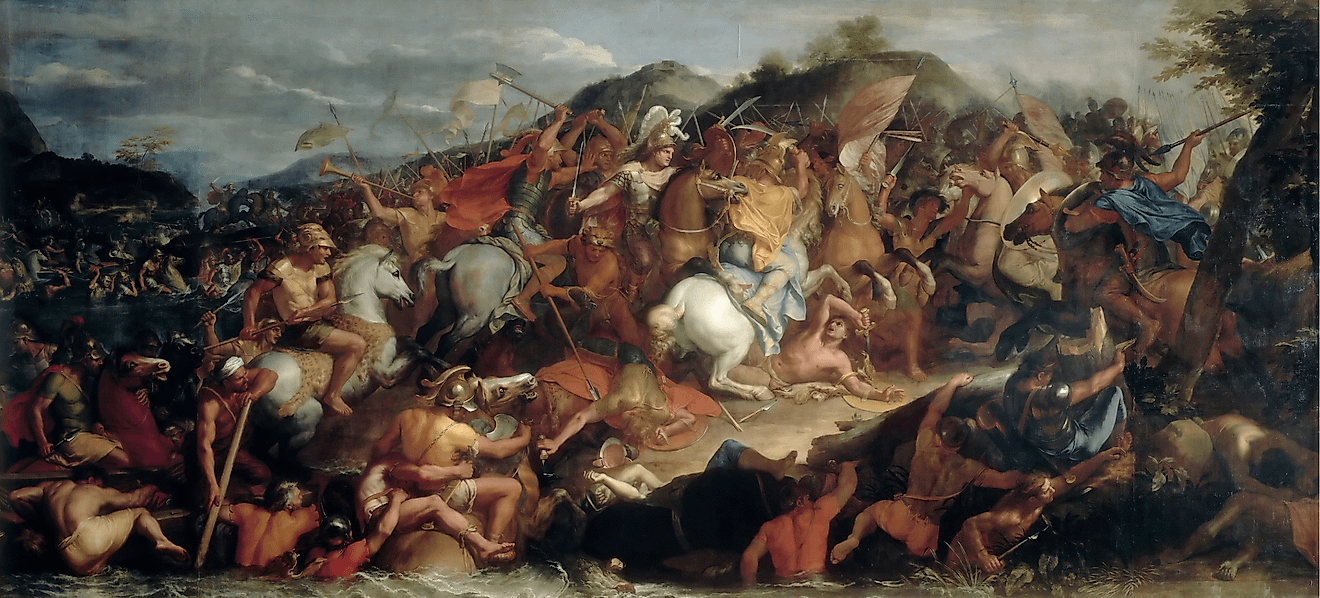
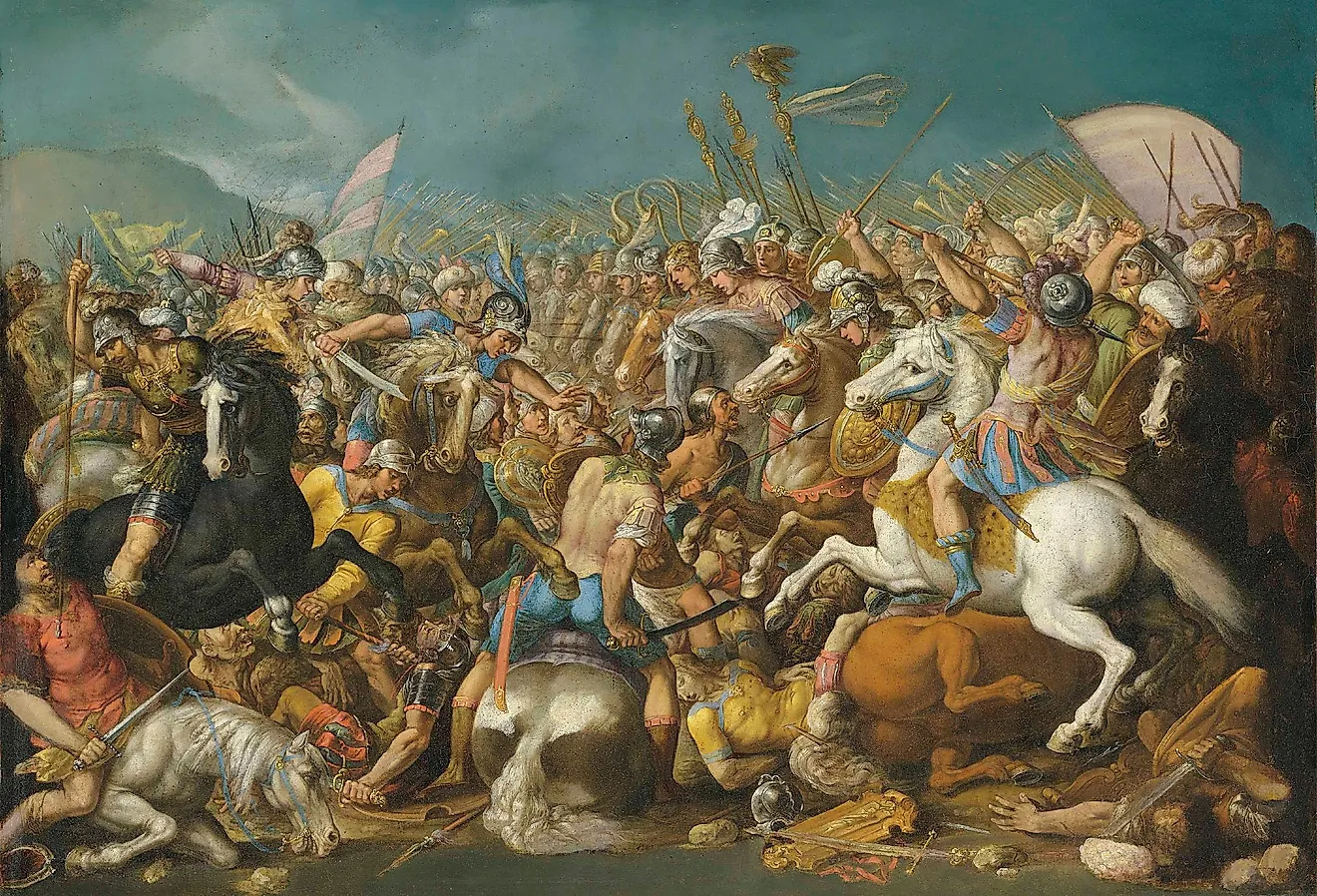
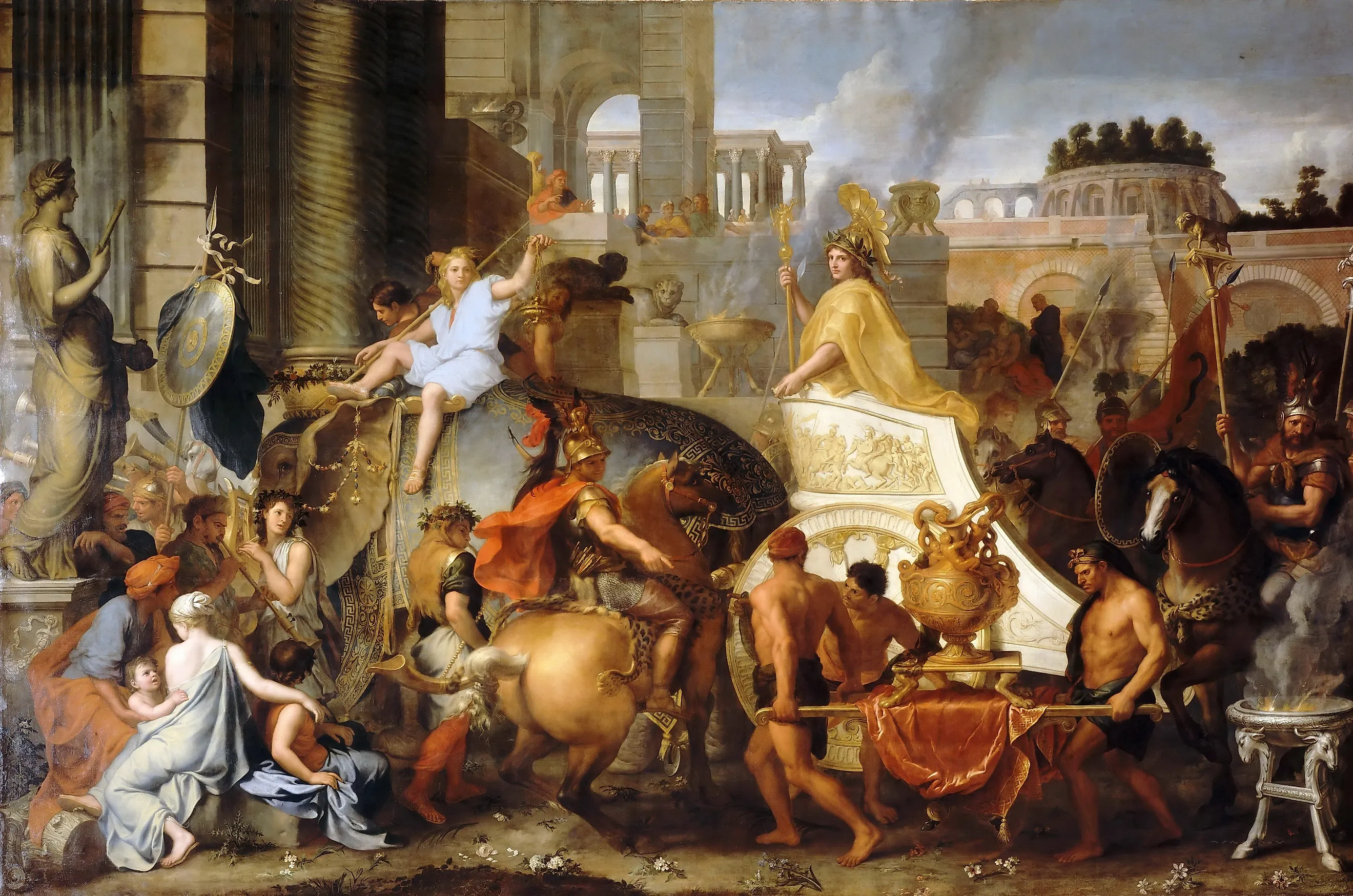
In 334, Alexander invaded the historic enemy of the Greek world: Persia. He made rapid progress, working his way down the Anatolian coast, through the Levant, and eventually reaching Egypt. After founding the city of Alexandria, he set his sights on the Persian heartland. The decisive moment of the campaign came in 331 BCE with the Battle of Gaugamela, in which Persian King Darius III was forced to flee.

After taking the Persian capitals, Alexander invaded Central Asia. Far more difficult than the Persian campaign due to the treacherous terrain and guerrilla warfare tactics from local tribes, Alexander nonetheless prevailed and set his sights on India. Despite winning the Battle of the Hydaspes in 326 BCE, his exhausted army refused to follow him any further. Alexander thus turned back, returning to Persia in 324 after a disastrous trek through the Gedrosian Desert. The Macedonian king then died the following year under mysterious circumstances. Even though he was 32, Alexander had already created one of the largest empires the world had ever known.
Impact And Legacy
Ancient Greece’s best leaders shaped its historical trajectory. Themistocles’ cunning trick at the Battle of Salamis halted the Persian invasion. Pericles’ leadership resulted in Athens becoming the most powerful city-state of the Greek world. Epaminondas' strategy at the Battle of Leuctra led to the end of Spartan hegemony and the rise of Thebes. Finally, Alexander the Great never lost a battle and established an empire that stretched from Albania to India.