Pericles and His Strategy in the Peloponnesian War
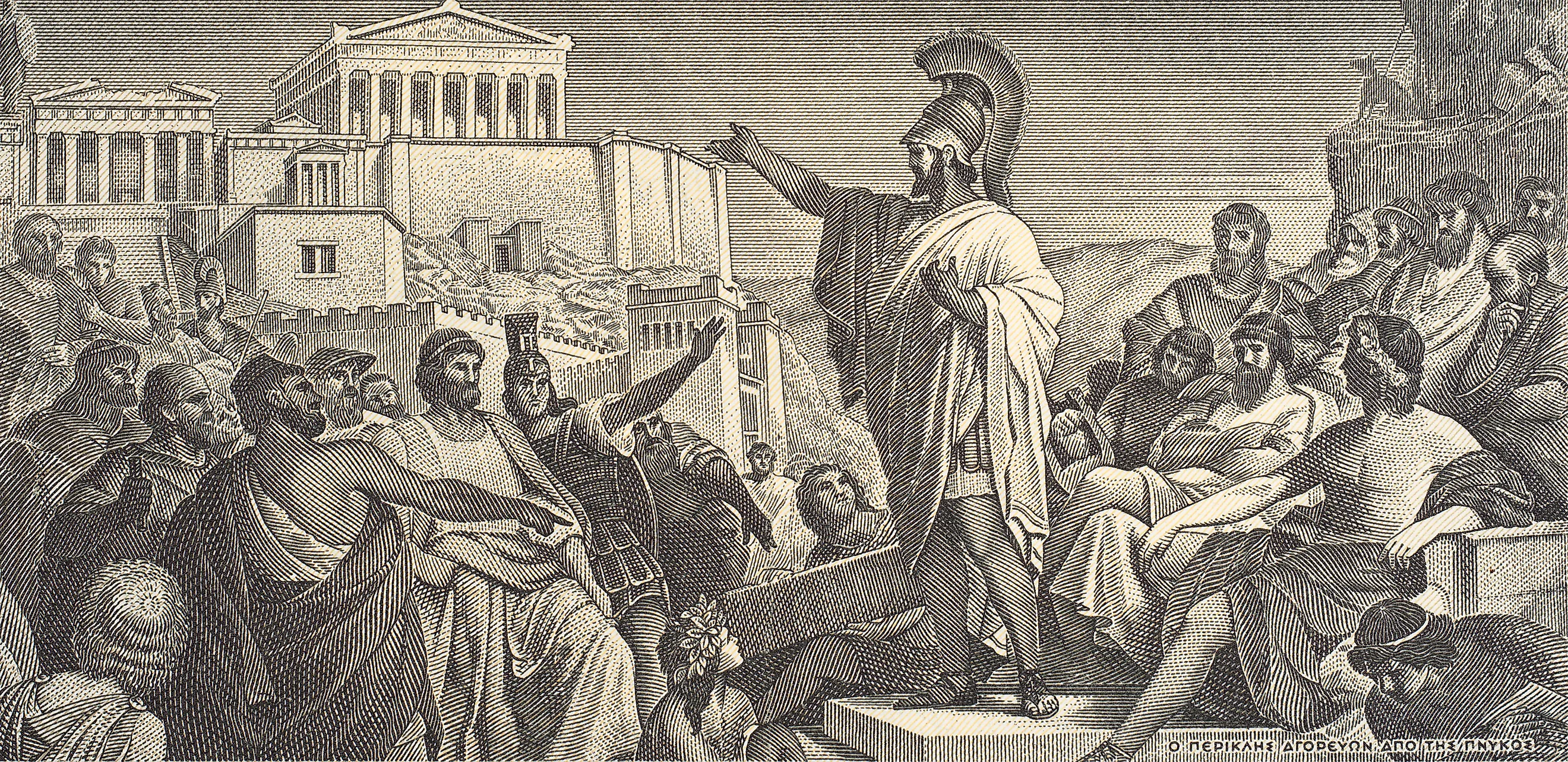
Pericles is one of the most important figures in the history of Ancient Greece, a major statesman for over three decades who led Athens to the height of its power. He also oversaw Athenian military strategy during the early stages of the Peloponnesian War (431 BCE to 404 BCE), which focused on winning the war through defensive strength, attrition, and naval power. While Pericles ultimately died in 429 BCE, his impact on Athens and its wartime strategy remained important for years to come.
Background

Before the Peloponnesian War, Pericles oversaw what is often considered Athens' Golden Age. He accomplished this by first strengthening Athenian democracy. Indeed, Pericles introduced pay for public officials and juries. This allowed poorer Athenian citizens to participate in the democratic process, as they could now maintain a source of income while serving in government. In turn, Athenians became more civically involved and loyal to the state, thereby making Athens one of the most advanced democracies in Greece.
Another core component of Athenian strength under Pericles was its military power. He believed that Athens needed to maintain and expand its military strength, even if it came at the expense of anxiety from the traditional Greek hegemon, Sparta. Therefore, Pericles strengthened Athens through its main alliance, the Delian League, by forcing tribute payments in the form of money and ships. Pericles also led the Athenian navy in the Samian War from 440 BCE to 439 BCE. This campaign saw Athens suppress a revolt on the island of Samos, which was a member of the Delian League. In short, Pericles oversaw the domination of the Delian League, making it effectively function as an Athenian Empire. In turn, he significantly strengthened Athenian power, particularly its navy.
Pericles' (Mostly) Defensive Strategy

Spartan anxiety about the continued growth of Athenian power grew increasingly intense due to Pericles' actions. When combined with more immediate tensions between Athenian and Spartan allies, this led to the outbreak of the Peloponnesian War in 431 BCE. However, Pericles had a plan. The sources of Athenian and Spartan power were very different: Athens dominated the sea, while Sparta controlled the land. Therefore, rather than trying to match the strength of the Spartan land army, Pericles instead avoided major battles and leveraged Athenian naval superiority. Hence, when Sparta invaded Attica, the region surrounding Athens, the Athenians stayed in the city. Sparta proceeded to destroy the farmland, which was problematic since it was Athens' most easily accessible source of food. Nonetheless, strong naval shipping routes from the Black Sea enabled Athens to survive. Furthermore, the city's Long Walls provided ample protection, meaning that Sparta was never able to effectively siege the city. Pericles thus implemented a largely defensive strategy at the beginning of the Peloponnesian War.
Key Athenian Offensives

All of these strategies were indicative of Pericles' broader goal of winning a war of attrition. While largely defensive, Pericles did oversee some offensive maneuvers. For instance, after Sparta destroyed Attica, Pericles sent the Athenian navy to raid Spartan allies along the coast of the Peloponnese. The goal was not to completely defeat them or gain their territory, but rather to further stress Spartan resources and supply lines. Athens also made incursions into the Sparta-allied Megara, which had already been weakened due to Athenian sanctions before the war. This let the Athenian army destroy farmland and infrastructure in the region.
The Death of Pericles

While Pericles' strategy had some successes, it also had one crippling failure. As thousands fled from Attica into Athens, the city became overcrowded. This resulted in increased poverty, as even though the city maintained crucial food supply lines, the growing population still strained them. Furthermore, poor sanitation and tight living spaces created ideal conditions for disease to spread quickly. Thus, in 430 BCE, a plague broke out. Between 75,000 and 100,000 people were killed, including Pericles' sons. On top of personal loss, the plague had enormous political consequences for Pericles, since his wartime strategy was blamed for worsening its spread. He was therefore temporarily removed from power and fined. While Pericles soon returned to a leadership role, he also contracted the plague in 429 BCE and died.
Impact and Legacy

Pericles' death marked a major turning point in the war. While imperfect, as shown by the plague that caused his death, his strategy was nonetheless rooted in long-term thinking and discipline. It also kept Athens out of major military defeats. Subsequent leaders lacked this forethought and adopted a much more aggressive approach. While it sometimes resulted in major victories, like the Battle of Pylos and Sphacteria in 425 BCE, this approach also led to major catastrophes. Perhaps the most notable of these failures was the Battle of Syracuse in 413 BCE, which led to the loss of hundreds of ships and permanently weakened the Athenian navy. This battle, widely considered the beginning of the end for Athens, may not have occurred under Pericles’ leadership. Therefore, the legacy of his strategy, and its abandonment, looms large over the entire Peloponnesian War.