Why Was The Library Of Alexandria Important?
The Library of Alexandria is one of the most famous institutions in ancient history. Built in Egypt as the cultural and intellectual heart of the Greek-speaking Mediterranean world, it was much more than a building full of scrolls. It was a research center, a hostel for scholars, and a piece of political theater meant to prove that Egypt was the rightful heir to Alexander the Great's empire. Its slow decline is also one of history's most quoted lessons in why preserving knowledge takes constant work.
How the Library Came to Be

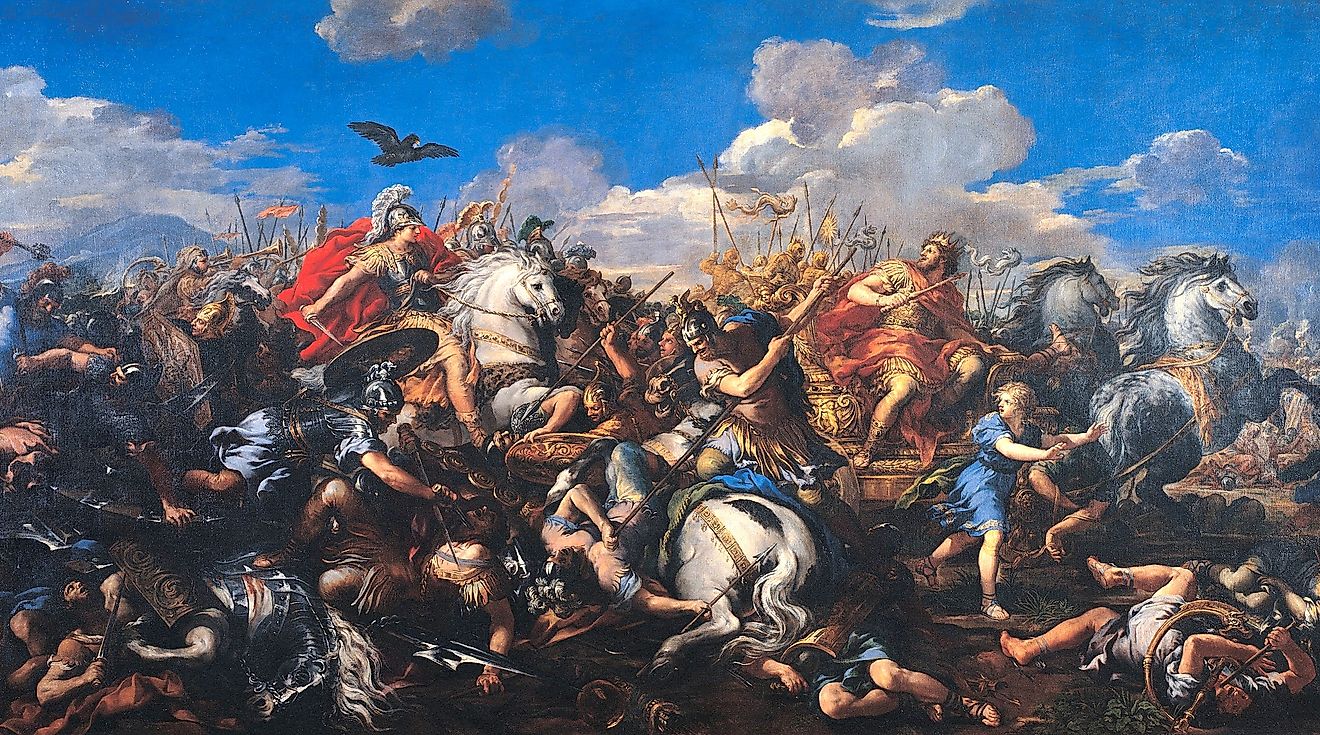
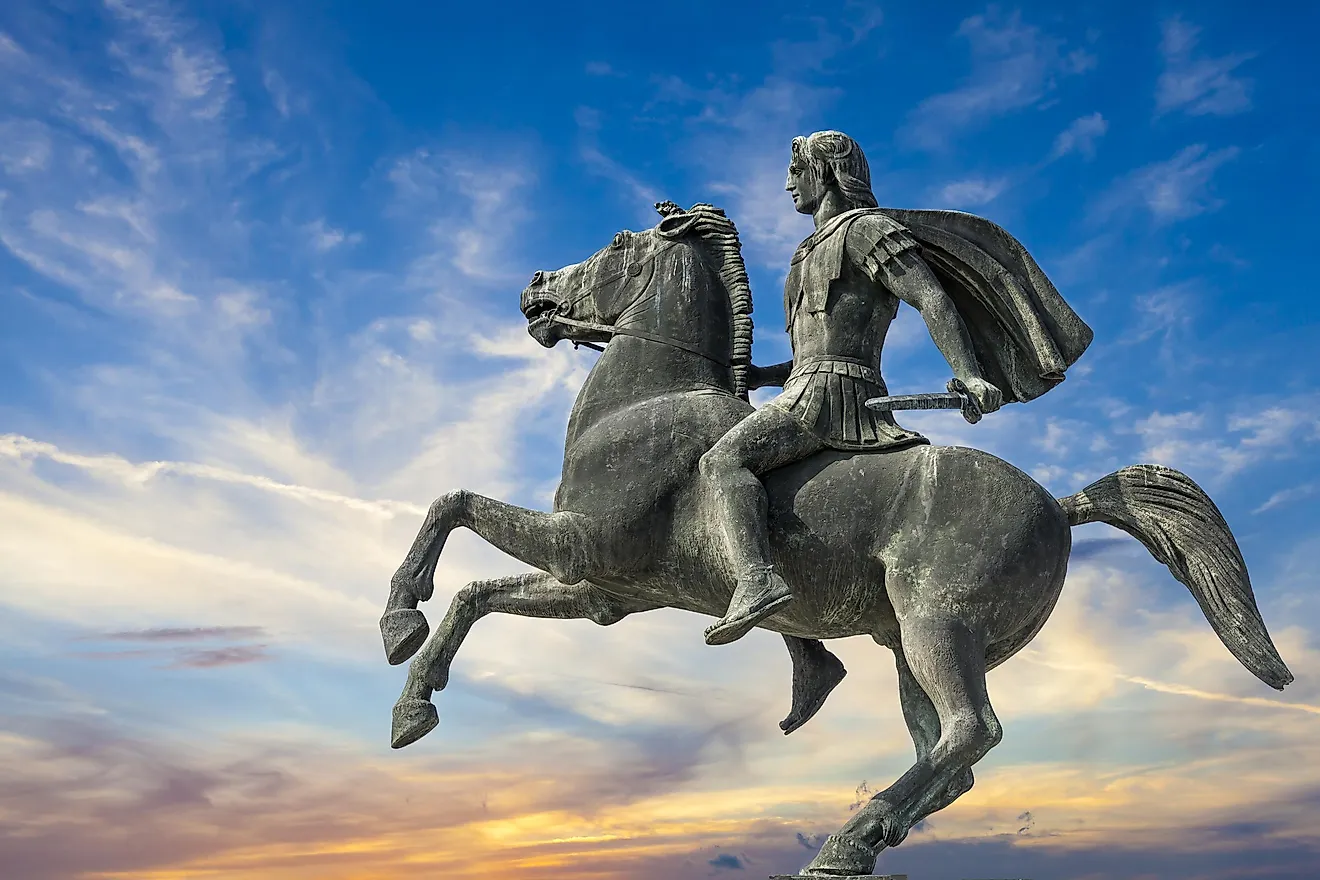
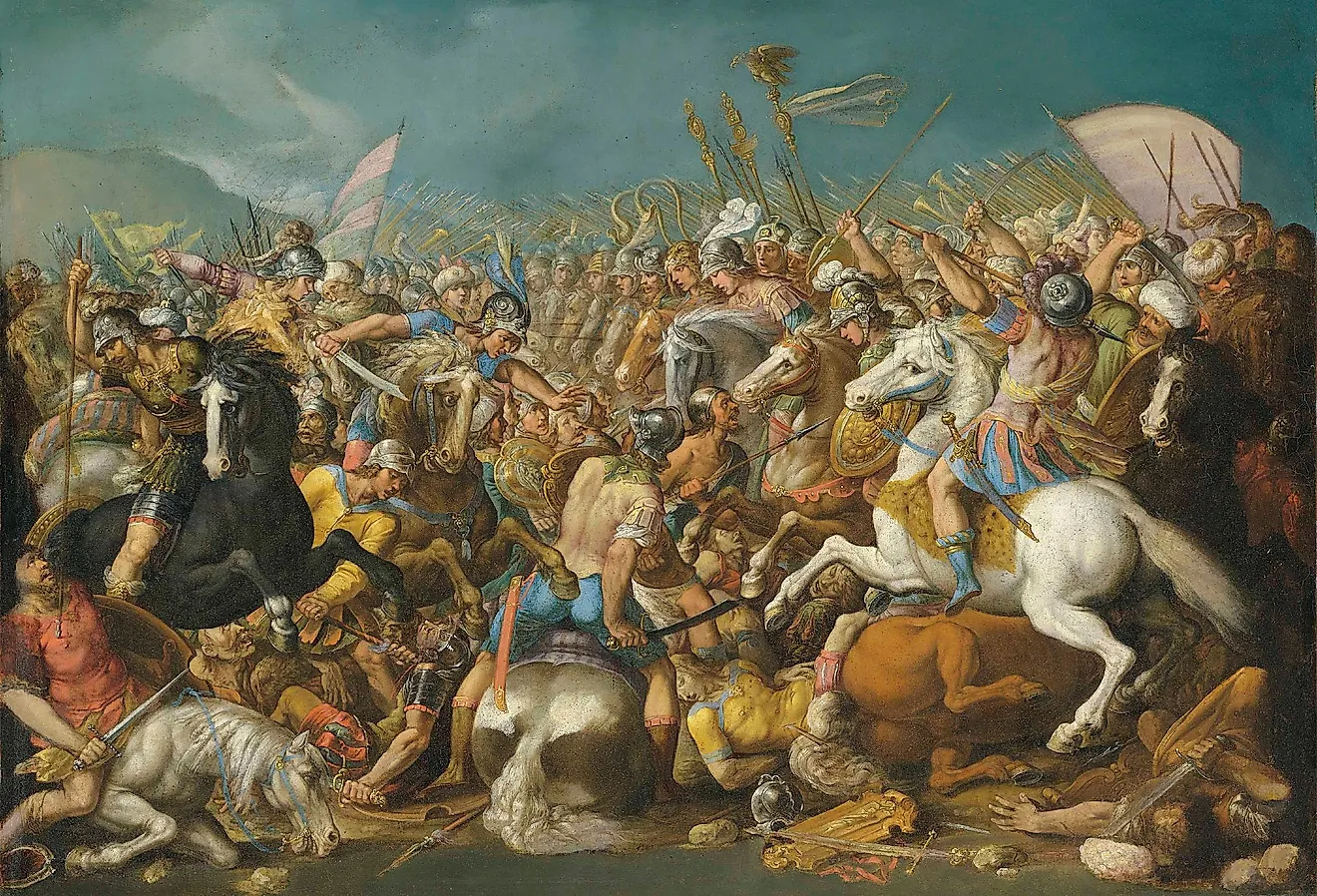
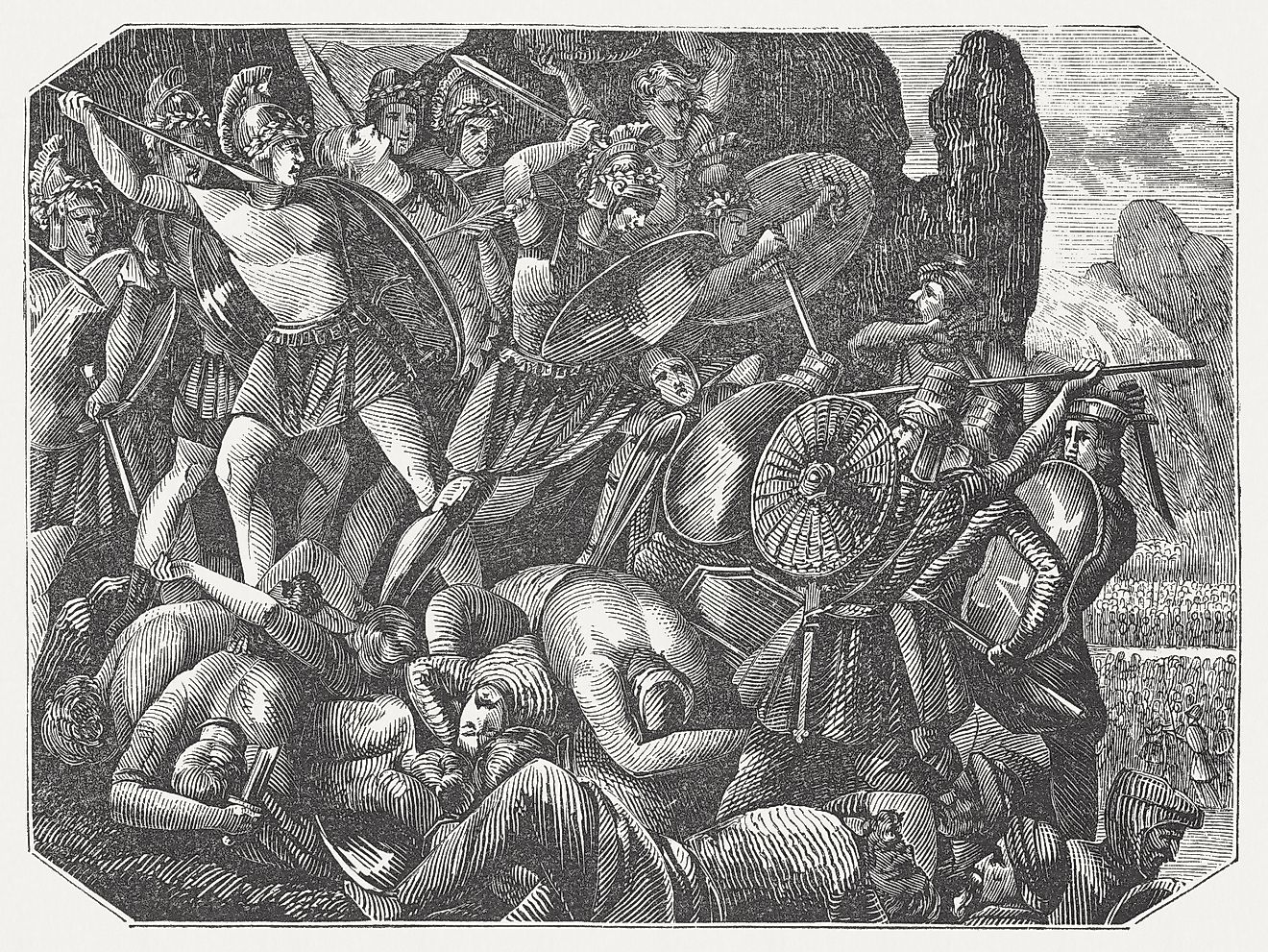
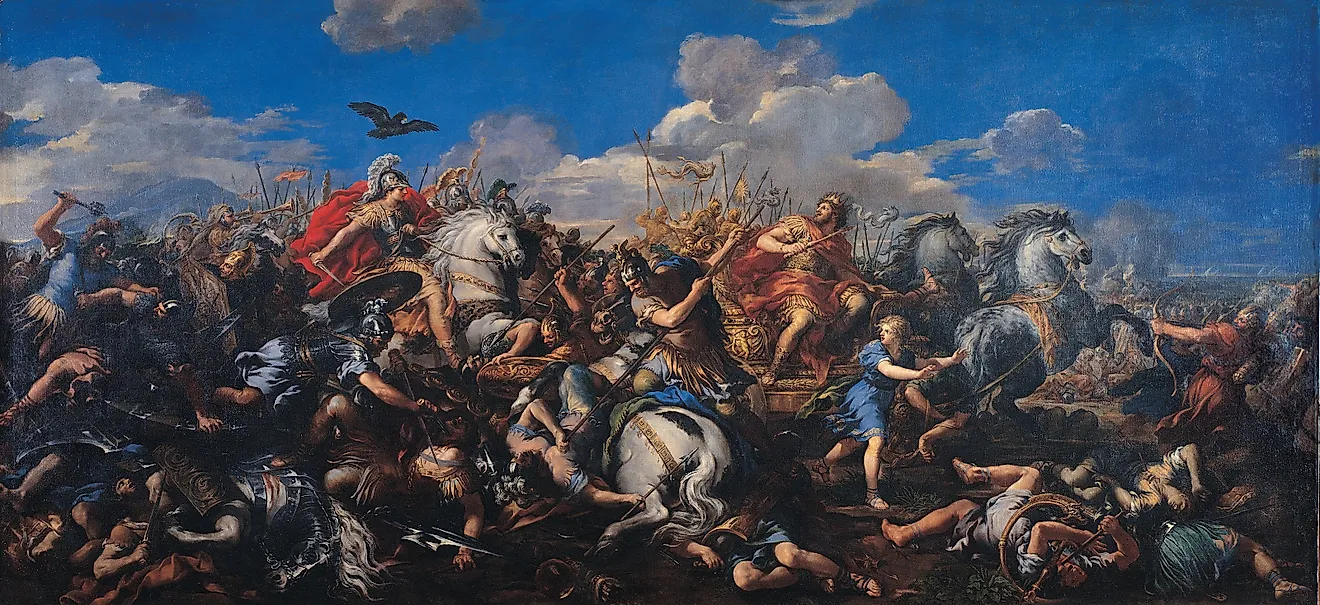
When Alexander the Great died in 323 BCE, his enormous empire collapsed into a long civil war between his generals, known as the Diadochi. One of those generals was Ptolemy, who controlled Egypt. To stake his claim as Alexander's true successor, Ptolemy hijacked the funeral procession carrying Alexander's body back to Macedonia and rerouted it to Egypt. The other generals were furious, and a failed invasion of Egypt followed in 321 BCE. By 305 BCE, the empire had settled into three major successor kingdoms: the Antigonids in Macedon and much of Greece, the Seleucids across a vast belt running from Anatolia and Syria through Mesopotamia and Persia, and the Ptolemies in Egypt.

Each of the three kingdoms had its own way of selling itself as Alexander's real heir. The Antigonids restored stability to Macedon, the way Alexander and his father, Philip II, had decades earlier. The Seleucids leaned into the Greek-Persian cultural fusion that had been central to Alexander's vision. In Egypt, Ptolemy went a different route: he built a personality cult around Alexander, treated him as a god, and poured money into public projects designed to spread Greek culture across his new kingdom. The Library of Alexandria was the crown jewel of that effort.
What the Library Actually Was

The word "library" usually brings to mind a single building stacked with books. The Library of Alexandria was not that. It was the centerpiece of a much larger research complex called the Mouseion, a campus that included lecture halls, study rooms, gardens, dining halls, and living quarters for resident scholars. Estimates of the collection vary wildly, from around 40,000 scrolls on the low end to as many as 400,000 on the high end.
The library's stated goal was to collect "all known knowledge," and its shelves reflected that ambition. Homer's Iliad and Odyssey, the philosophical works of Plato and Aristotle, the mathematics of Euclid, and the geography of Eratosthenes were all there, alongside Egyptian, Persian, and possibly even Indian texts.
It was also a state-funded operation. The Ptolemaic kings paid scholars salaries, fed them, and gave them rooms to live in so they could spend their days researching, teaching, and writing. The library aggressively grew its collection: ships entering Alexandria's harbor were searched for books, and copies were made and standardized for preservation. In many ways, it functioned as one of the earliest research universities in the world.
The Cultural Capital of the Greek World

The library shifted the center of gravity in the Greek world. Athens had long been the region's intellectual heavyweight, and most Greek cities, Athens included, had their own libraries. None of them came close to Alexandria in size or in state backing. The salaries alone were enough to pull thinkers from across the Mediterranean to Egypt, and as those thinkers mixed with one another, the city took on a cosmopolitan, idea-driven feel that other Greek cities could not match. By the high Ptolemaic period, Alexandria, not Athens, was the cultural capital of the Greek world.
A Slow, Drawn-Out Decline

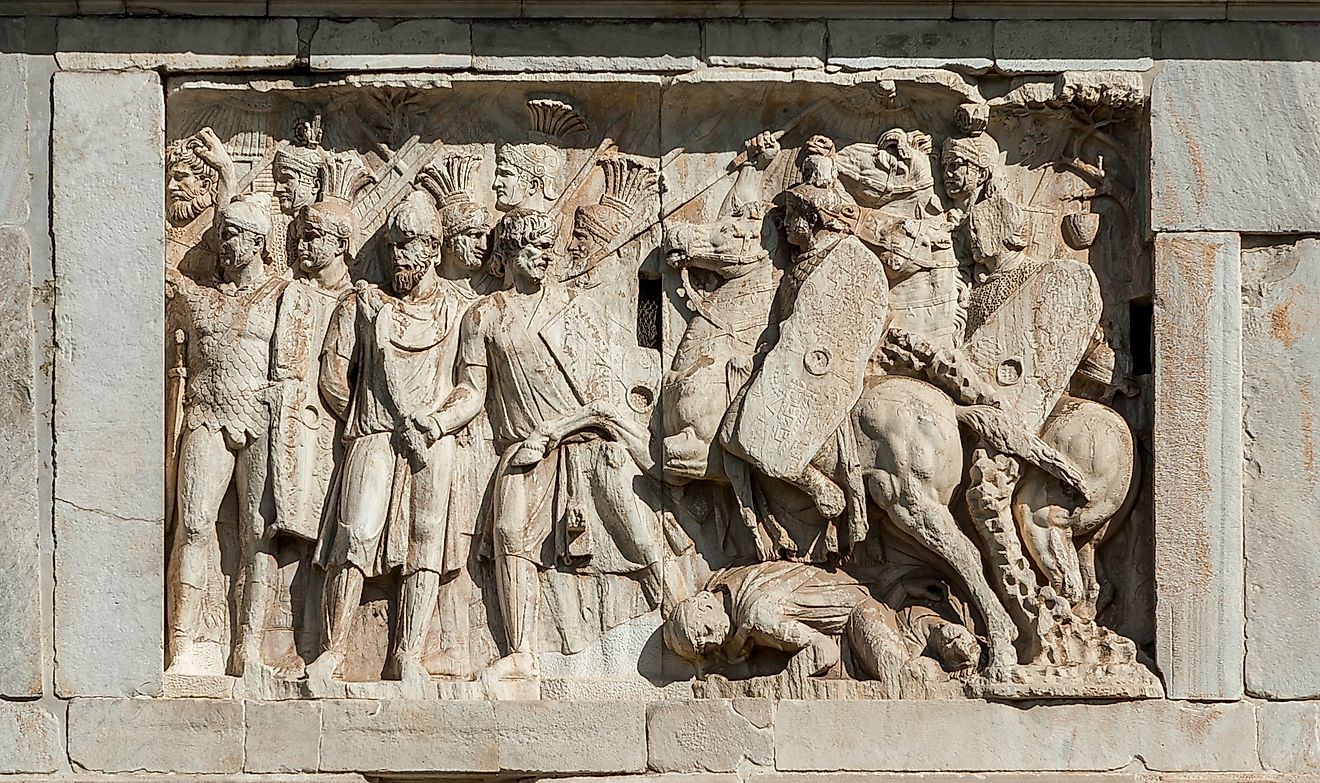
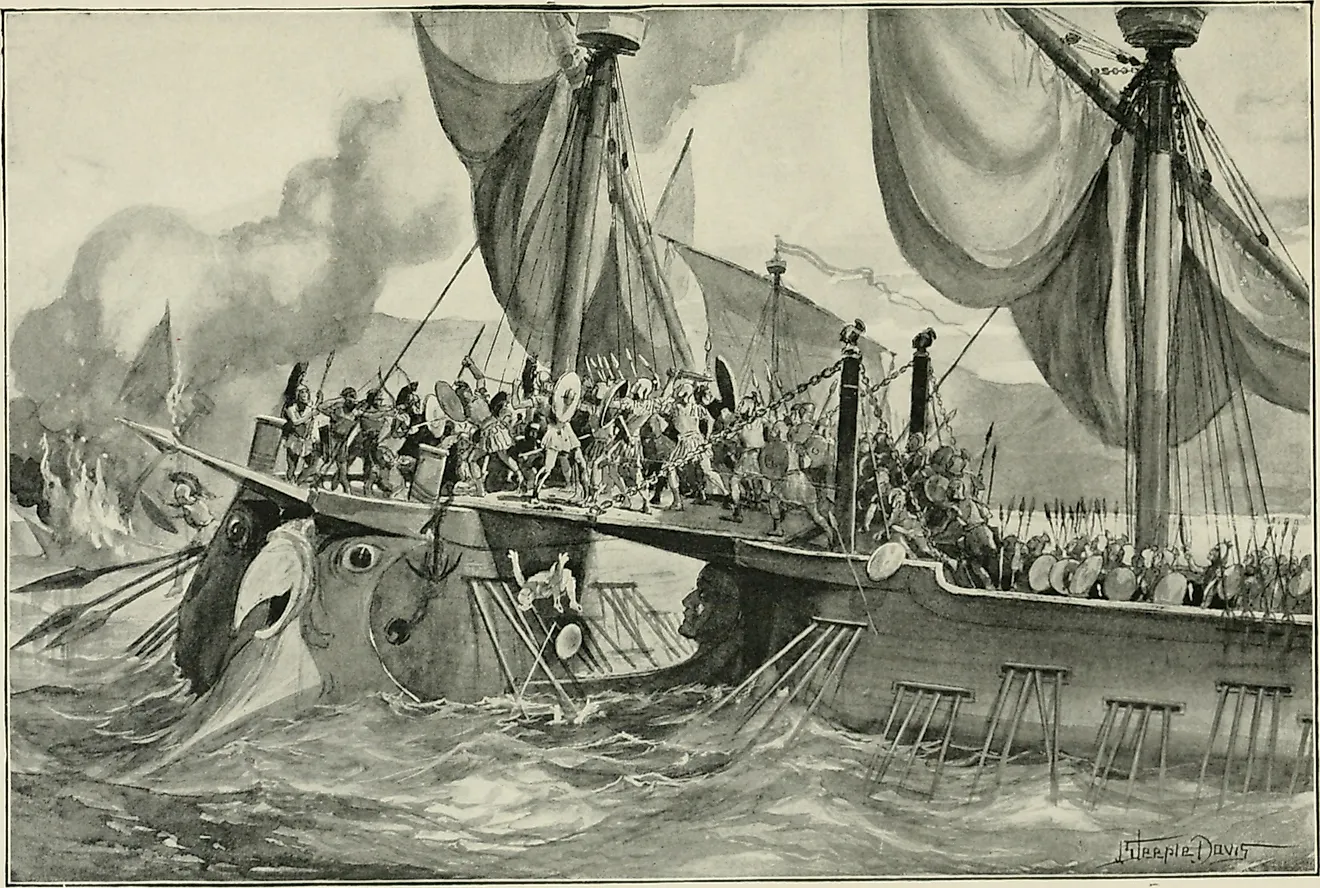
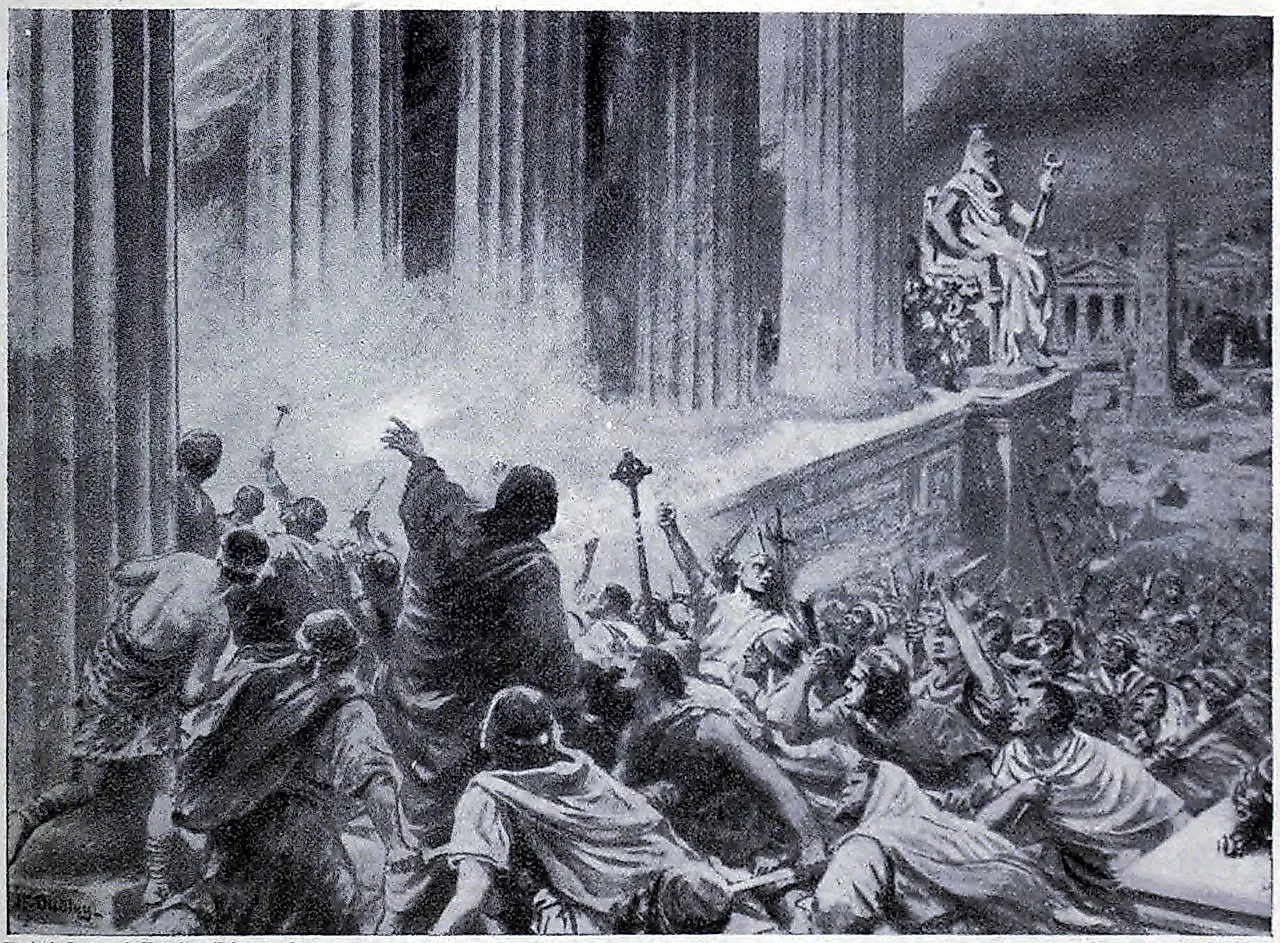
The library's fortunes tracked the Ptolemaic dynasty's. The first major blow came in 48 BCE during the Siege of Alexandria, when Julius Caesar set fire to ships in the harbor and the flames spread to part of the library. The full extent of the damage is unknown, but the Roman writer Seneca the Younger later put the loss at around 40,000 scrolls. In 30 BCE, Cleopatra died, the Ptolemaic dynasty ended, and Egypt became a Roman province. The new Roman rulers had no particular interest in subsidizing Greek scholarship in Alexandria, and from the 1st through the 3rd centuries CE the library quietly faded. Without state salaries, scholars drifted to other cities, and the collection's upkeep slipped along with them.

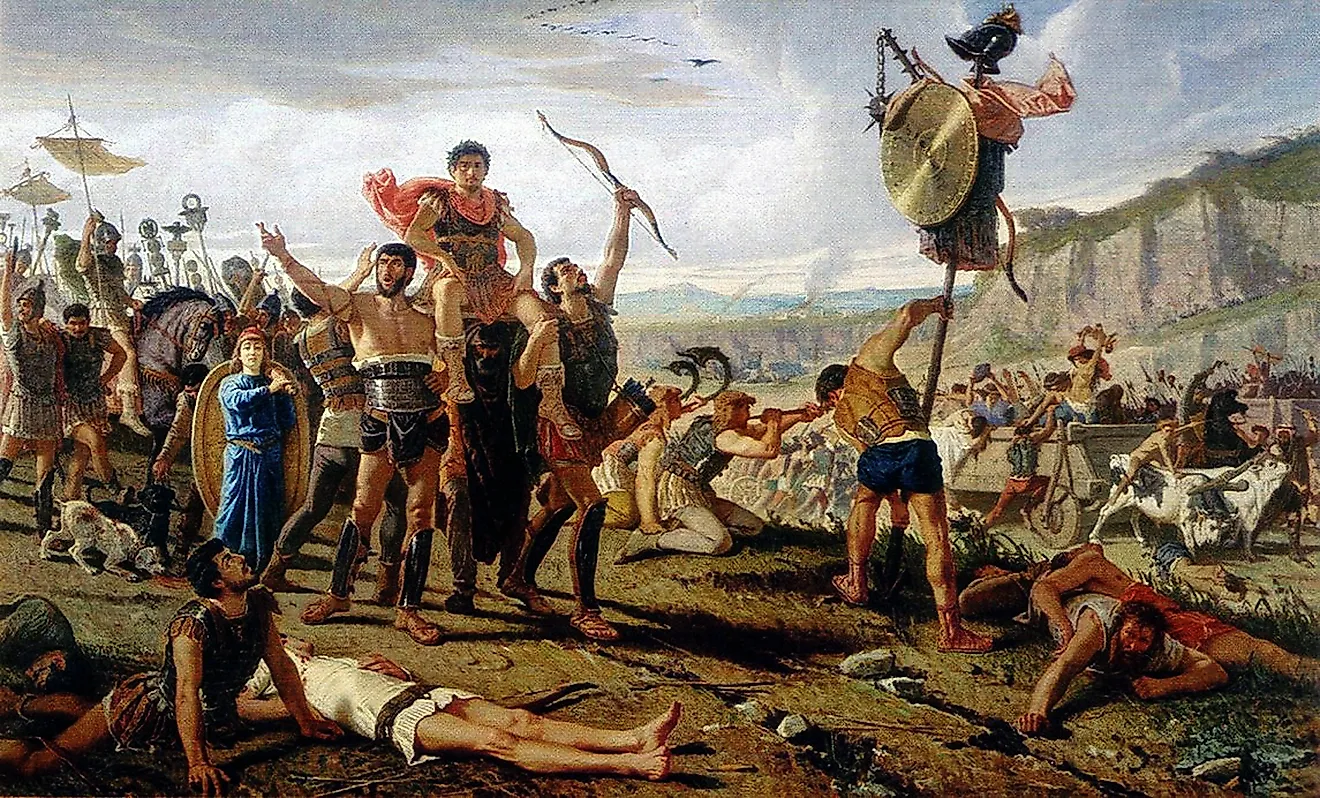
Some historians think the main library was destroyed outright during this stretch, though the evidence is thin. What is clearer is that fighting in Alexandria during Emperor Aurelian's recapture of the city around 272 CE damaged the Brucheion quarter, where the library stood. Then, in 391 CE, Emperor Theodosius I ordered the destruction of the Serapeum, an Alexandrian temple that housed a sister branch of the library's collection. By the time the Western Roman Empire fell in 476 CE, the Library of Alexandria as a working institution was effectively gone.
Why It Still Matters
The Library of Alexandria's importance is hard to overstate. It started as a political project to legitimize Ptolemy's hold on Egypt, grew into the engine that turned Alexandria into the cultural capital of the Greek world, and came apart over four centuries through politics, neglect, and the slow erosion of the people and money that had kept it running. That arc, more than any single fire, is what makes the library such a powerful symbol: knowledge does not preserve itself, and once an institution stops being supported, what it holds can quietly disappear.