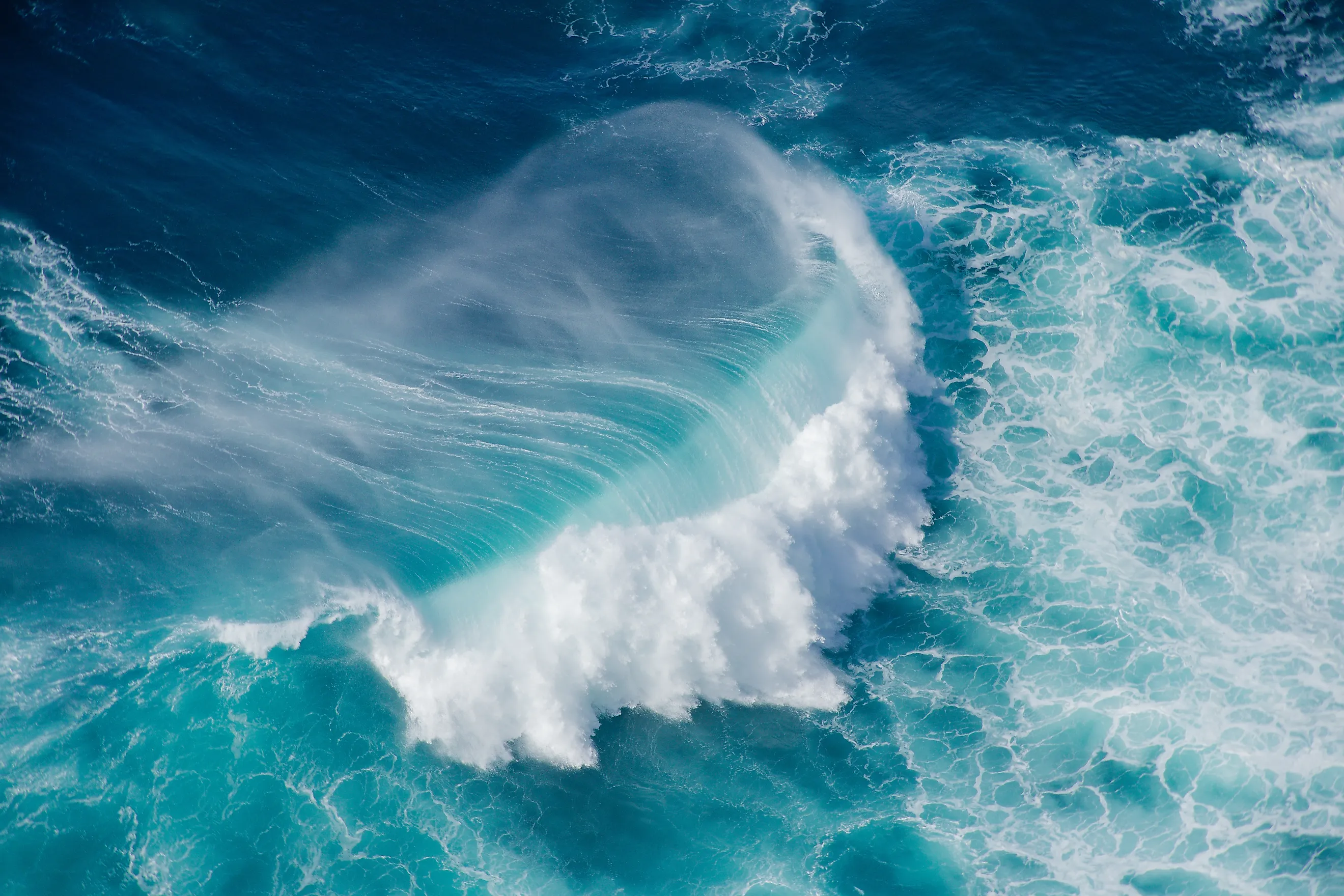
The Difference Between A Wave And A Swell
If you've ever sat on a beach and watched the ocean, you noticed that not all waves behave the same way. Some arrive at the shore in choppy, irregular patterns, and others roll toward the shore in long, evenly spaced lines. The difference between a wind wave and a swell comes down to where the wind generates it and how far it travels.
Wind waves are higher-frequency waves generated by the wind blowing across the water. Swells are waves that have traveled beyond the area where the winds generated them, becoming smoother and more organized as they move across the ocean. A storm thousands of miles across the Pacific can send swells toward California or Hawaii, where they arrive days later, even when winds are calm.
How Wind Creates Waves

Most ocean waves begin when wind blows across the water's surface, transferring some of its energy to the water. Small ripples develop first, and with enough wind, they grow into larger waves. Three factors influence how large those waves can become. They are wind speed, how long the wind blows, and fetch, the stretch of open water the wind blows across. Strong winds blowing steadily across a large stretch of ocean can generate much bigger waves than a brief breeze near the shore.
Although waves appear to carry water across the ocean, they mainly transport energy. Individual water particles in deep water move in nearly circular paths as a wave passes, returning nearly to where they started instead of traveling across the ocean with the wave.
Waves differ in wavelength and period as well. Wavelength is the distance between successive crests, and wave period is the time between them. Locally generated wind waves usually have shorter wavelengths and periods, and swells tend to have longer ones.
How Ocean Swells Form

When waves travel beyond the area where the wind generated them, they become swells. Waves with longer periods travel faster in deep water than those with shorter periods. As they move away from the wind, the faster waves pull ahead of the slower ones, gradually separating waves with different wavelengths.
As the waves separate, waves with similar periods eventually travel together in more regular patterns, unlike the choppy mixture of waves found in stormy seas. Some swells travel vast distances before reaching land, far from the weather that generated them.
Each winter, powerful storms in the North Pacific generate swells that travel across thousands of miles of open water before reaching Hawaii. When those swells encounter the shallower waters along Oahu's North Shore, they can produce towering breaking waves, even when the weather along the coast is sunny and calm. The waves arriving at the beach may have more to do with a distant storm than with local weather.
How To Tell A Wave From A Swell

Watching how waves arrive at the shore is usually enough to tell wind waves from swells. Wind waves tend to arrive in short, irregular intervals, giving the ocean a choppy appearance. Swells usually have longer periods, meaning more time passes between successive wave crests. They tend to travel in more consistent directions as well, sometimes arriving from a completely different direction than the local wind.
Marine forecasts use wave period, measured in seconds, to help describe ocean conditions. A wave period of four to six seconds often indicates locally generated wind waves, and a longer period of 12 to 16 seconds usually suggests a swell. These are general guidelines, not fixed rules, and both kinds of waves can appear at the same time. A beach might experience small, choppy waves from an afternoon sea breeze as a larger swell rolls in from a distant storm. Both can break as they approach the shore, so the presence of breaking waves alone does not reveal where they originated.
Ocean buoys help meteorologists track these conditions. Equipped with sensors, they measure the movement of the water, allowing scientists to calculate wave height, period, and direction. Marine forecasts may report wind waves and swells separately because the two can arrive from different directions and create quite different conditions on the water. For example, a boat might encounter short, steep waves generated by nearby winds as a longer swell passes beneath it from another direction. The combination can make the sea feel unsettled, even when neither wave system is large.
What Happens When A Swell Reaches Shore

A swell can travel thousands of miles across the open ocean without breaking, but its behavior changes as it approaches land. When the water becomes shallow enough for the wave to interact with the seafloor, the wave slows down, its wavelength shortens, and its height may increase. Eventually, the wave becomes unstable and breaks, creating the familiar surf you see at the beach. The shape and slope of the seafloor help determine whether waves break gradually or crash with more force.
Large swells can create dangerous conditions along beaches where the local weather seems calm. Waves generated by a distant storm may reach the shore days later, creating hazardous surf and increasing the risk of rip currents. Along California's coast, for example, swells generated far out in the Pacific can create powerful breaking waves even with little wind at the beach. Sunny skies and calm winds do not necessarily mean the water is safe for swimming.
The Waves Surfers And Swimmers Encounter

Surfers often prefer swells because their longer periods and more regular patterns can produce smoother, more predictable waves to ride. Locally generated wind waves can make for good surfing conditions as well. The waves children jump over or splash around in at the edge of the beach can be either kind. Once they reach shallow water, both wind waves and swells can break into the familiar whitewater that washes onto the sand.
The way waves break matters as well. Some spill gently over a sloping beach, and others curl and crash more suddenly. Waves that break directly onto the shore are called shorebreak, and even small ones can knock swimmers off their feet.
Why Some Swells Produce Bigger Waves Than Others

Not every swell produces towering surf. A gently sloping sandy beach may cause waves to break gradually, and a steep reef or sudden change in depth can produce powerful, plunging breakers. The direction a swell approaches from can make a difference as well. Headlands and offshore islands can shelter some beaches and leave others exposed to the same incoming waves. Two beaches a few miles apart can experience completely different surf conditions on the same day.
Reading The Water From The Beach
Every wave at the beach has a story behind it. Short, choppy waves usually come from wind blowing nearby, and long, evenly spaced lines may have started as a storm hundreds or thousands of miles away. The time between crests is one of the best clues, and marine forecasts track it for that reason. Knowing the difference helps surfers find better rides and reminds swimmers that a calm, sunny day at the shore can still bring powerful surf from somewhere far out at sea.