How The Aral Sea Compares To The Great Lakes
In 1960 the Aral Sea covered 68,000 square kilometers, which made it larger than Lake Huron, larger than Lake Michigan, and larger than Erie and Ontario put together. Only Superior beat it. Today it covers about 8,300, which makes it roughly a third the size of Erie, the Great Lake everyone treats as the runt. The Aral did not shrink. It resigned from the competition. And the reason it could is the same reason Erie keeps getting mocked, which is that it was never deep.
It Would Have Finished Second

Dropped into the Great Lakes at its 1960 extent, the Aral would have taken silver on area without much argument.
At 68,000 square kilometers it beat Huron's 59,600, Michigan's 58,000, Erie's 25,700 and Ontario's 18,960. Only Superior, at 82,100, was bigger. It was the fourth largest lake on Earth, behind the Caspian, Superior and Victoria.
It stretched 435 kilometers north to south and 290 east to west, which is roughly the footprint of West Virginia.
On Volume It Would Have Finished Fourth

Switch from surface to substance and the Aral drops four places, which is the clue to everything that happened next.
The Aral held 1,089 cubic kilometers. Superior holds 12,100, Michigan 4,920 and Huron 3,540. The only Great Lake it beat was Erie, at 484, and it came nowhere near Ontario's 1,640 despite being three and a half times larger on the surface.
A lake that ranks second on area and fourth on volume is telling you something about its depth before you look it up.
It Was Shallower Than Erie

Here is the number that explains why the Aral could disappear and the Great Lakes cannot. The Aral averaged 16 meters deep. Lake Erie, the shallowest Great Lake and the punchline of every comparison in this series, averages 19. Superior averages 147.
The Aral Sea was spread across an area larger than Huron at a depth thinner than Erie. It was, in effect, an enormous puddle, and enormous puddles are the easiest large objects on Earth to remove.
Ninety-Three Percent Of The Water Is Gone

The scale of the loss only lands once you convert it into things people can picture, which in this series means Great Lakes.
Volume fell from 1,089 cubic kilometers to roughly 75 across all the surviving remnants. That is 93 percent gone, and the missing 1,014 cubic kilometers is more than two Lake Eries.
Surface area fell 88 percent, from 68,000 square kilometers to about 8,300. Superior now holds 161 times as much water as everything left of the Aral Sea combined.
It Took About Forty Years

The timeline is the part that should bother anybody who assumes large lakes are permanent fixtures.
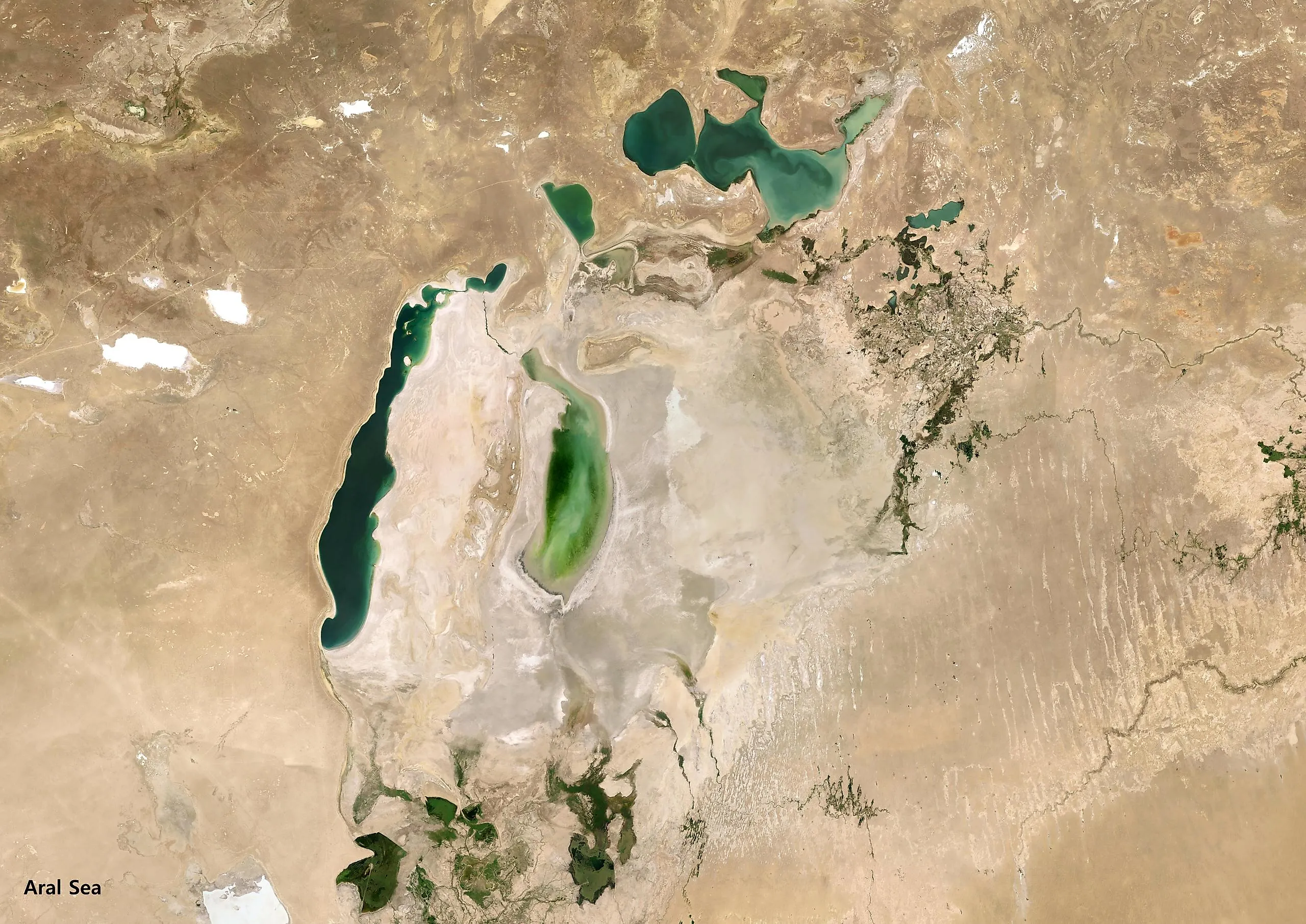
Soviet irrigation schemes began diverting the Amu Darya and Syr Darya in the 1960s, mostly to grow cotton. By 1998 surface area was down 60 percent and volume down 80. By 2004 only a quarter of the water surface remained. By 2007 it was at 10 percent of original size and had split into four separate lakes.
The Amu Darya no longer reaches the Aral Sea at all. Its mouth now sits in dried-up seabed.
The Desert Has A Name

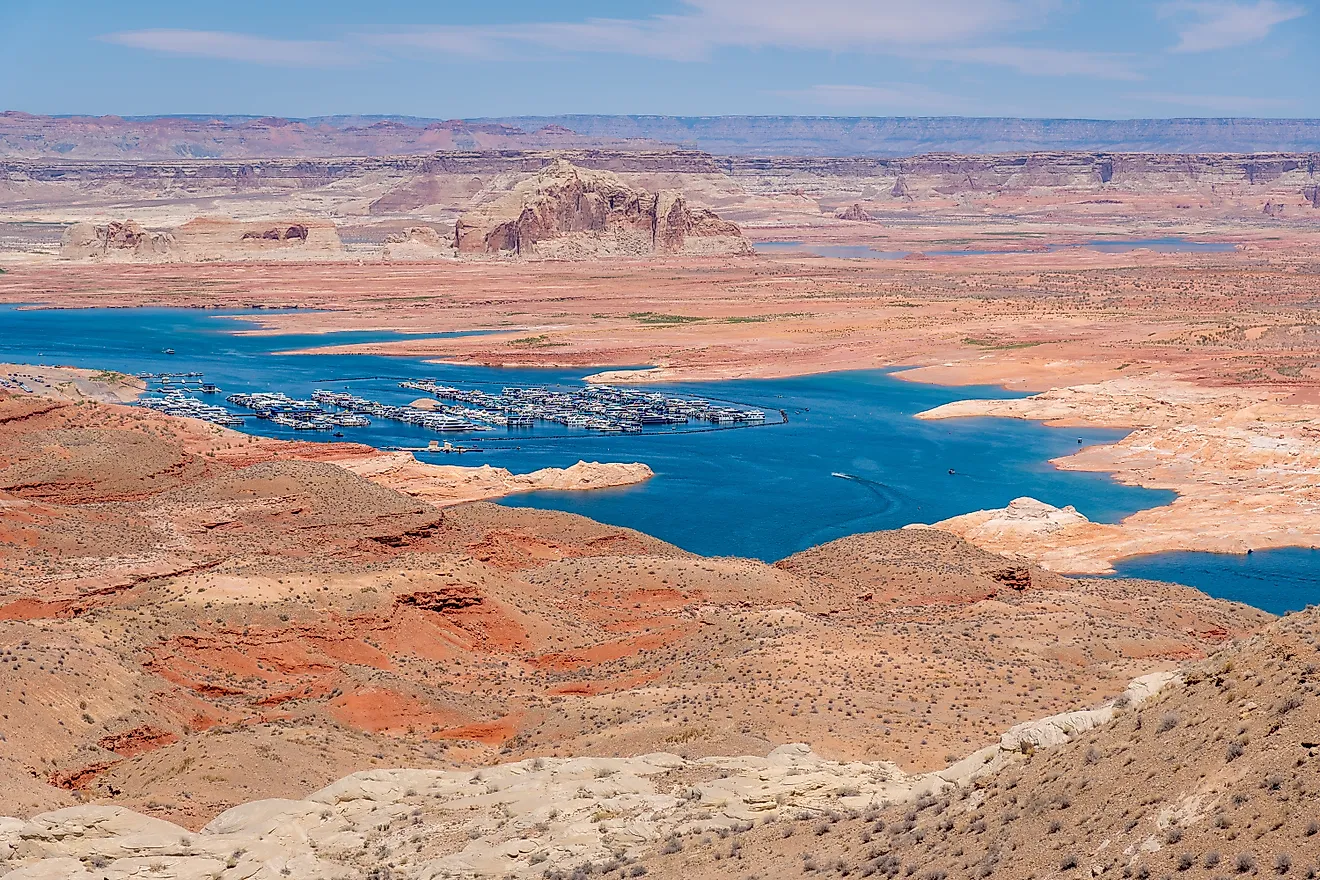
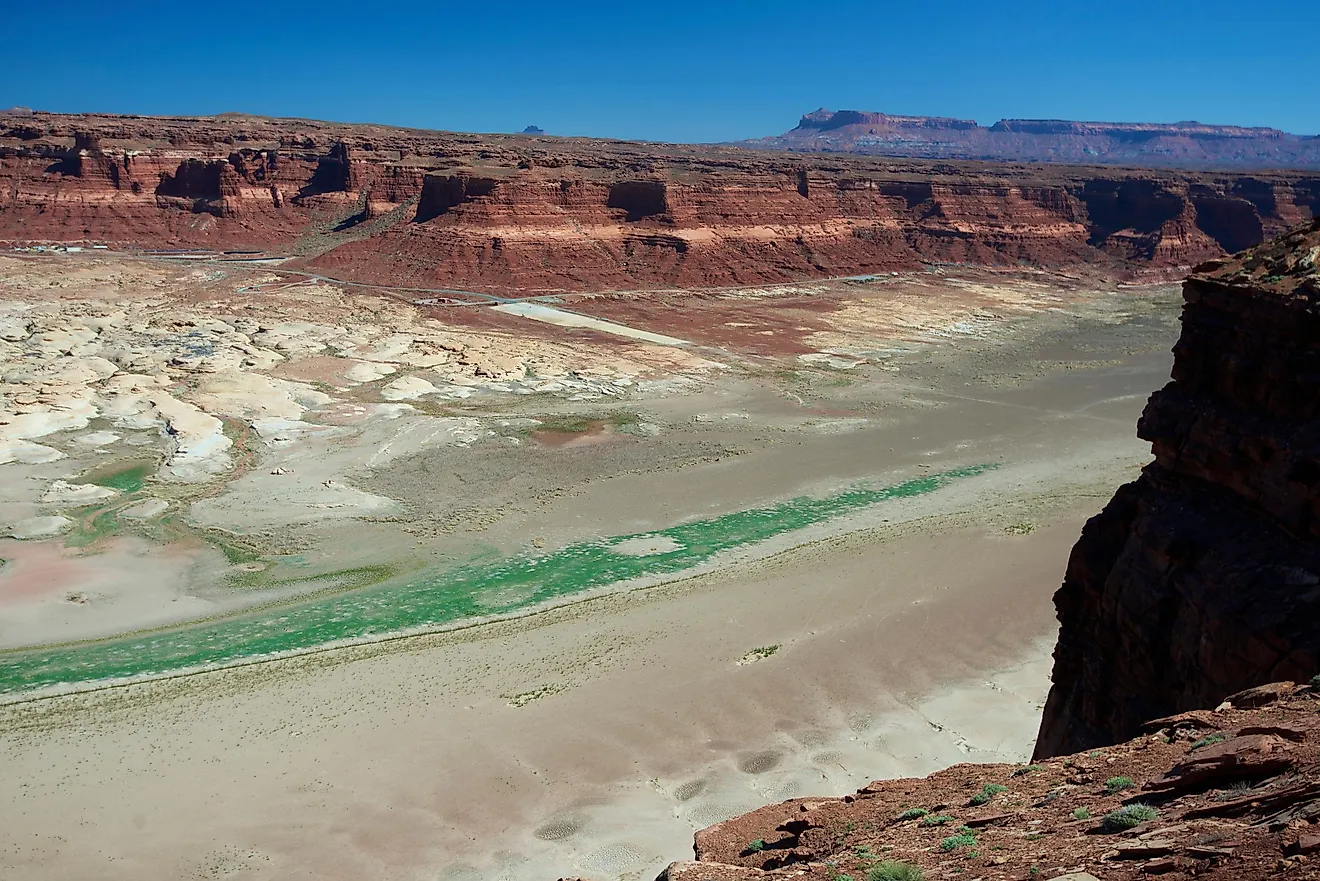
What replaced the water is new enough that somebody had to name it. The exposed seabed is now the Aralkum Desert, among the youngest deserts on Earth, covering ground that was underwater within living memory. It is salt-encrusted, barely vegetated, and the wind lifts the salt and pesticide residue into the surrounding region.
Barsakelmes Lake, the last remnant of the South Aral's eastern basin, dried out completely for the first time in November 2025. Wikipedia currently lists its water volume as zero.
Half Of It Is Coming Back

The story is not uniformly bleak, and the recovery is real if modest. Kazakhstan built the 13-kilometer Kok-Aral Dam in 2005 to hold Syr Darya water in the northern basin. The North Aral Sea has since grown by nearly a quarter, deepened from 30 meters in 2003 to 42 by 2008, and fish stocks have returned.
The North Aral now holds about 21.4 cubic kilometers. That is a real achievement and it is also four percent of Lake Ontario.
The South Is Not Coming Back
The other half of the split is a different matter entirely, and the dam is part of the reason why.
Holding water in the north means not sending it south. The South Aral Sea has continued shrinking and growing saltier, and the western basin has gone from 102 meters deep in 1989 to under 40.
Assessments of the South Aral describe it as likely gone permanently. The water that would refill it is in Uzbek and Turkmen cotton fields.
Why The Great Lakes Are Not Next

The obvious question after all that is whether it could happen in North America, and the honest answer is mostly no.
The Aral was endorheic, meaning it had no outlet and depended entirely on two rivers that could be turned off. The Great Lakes drain to the Atlantic through the St Lawrence and are fed by precipitation across a 766,000 square kilometer basin rather than by two diversible channels.
They are also enormously deeper. Replicating the Aral's 93 percent volume loss at Superior would mean removing about 11,265 cubic kilometers of water, which is more than every other Great Lake combined.
The Scoreboard

In 1960 the Aral Sea would have ranked second among the Great Lakes by area and fourth by volume, beating Huron and Michigan on the surface while holding less water than either.
Today it would rank last on both, below Erie on area by a factor of three and below Erie on volume by a factor of six and a half. The same lake, sixty-five years apart, moved from second place to last in a group it was never actually in, which is a trick only a very shallow lake can perform.