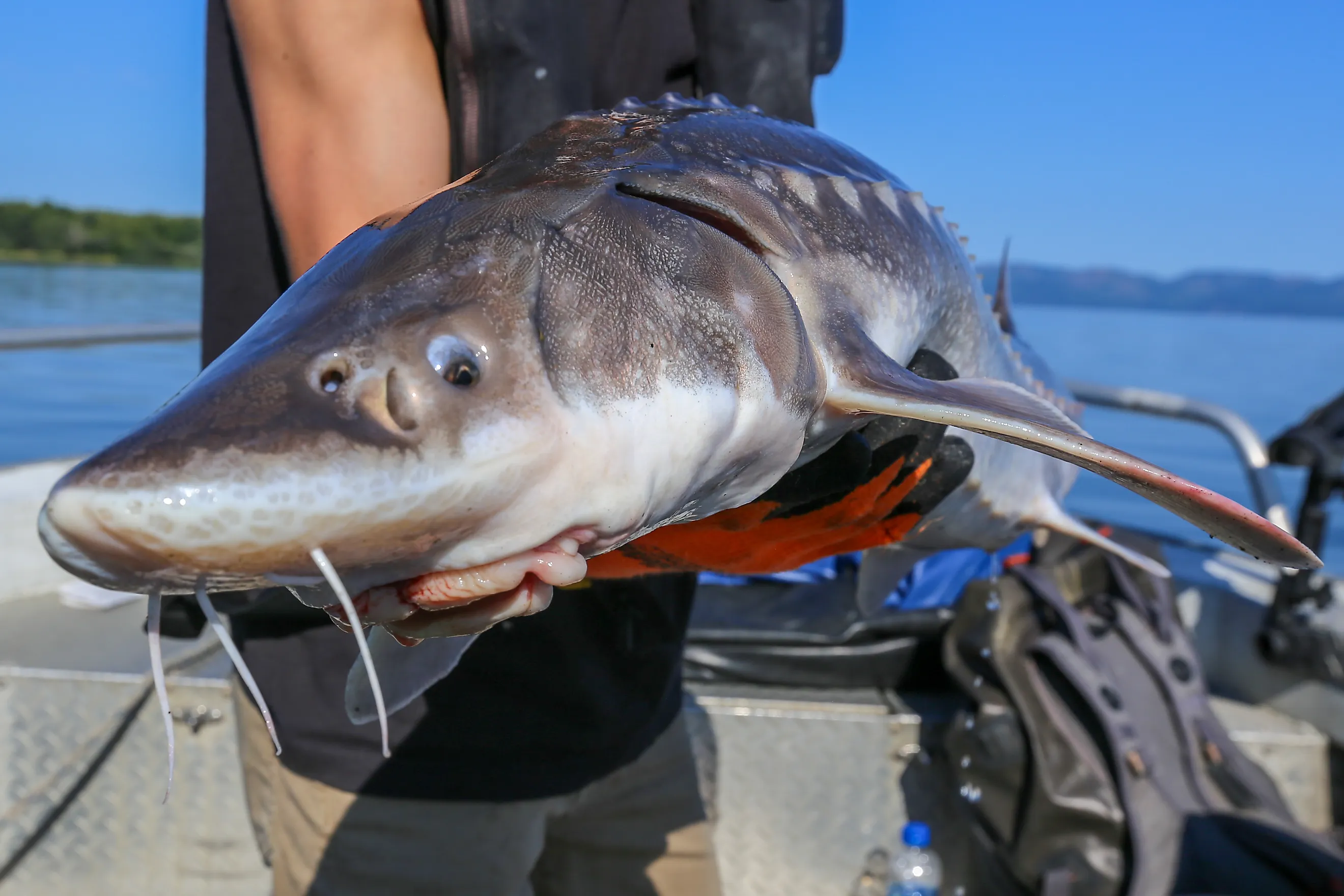
The Rivers Where Sturgeon Grow Largest
Sturgeon are built to grow big and to take their time doing it. The largest pass 12 feet and several hundred pounds, at ages that run well into the decades and sometimes beyond a century. Only a handful of North American rivers still grow them to that size, and each faces the same quieter test: the water that holds a 500-pound adult also has to carry its young through their first vulnerable years. That means clean spawning bottom and enough food on it. Some of these rivers manage both; others are losing the next generation even as the giants remain.
Columbia River, Oregon And Washington

Below Bonneville Dam, white sturgeon can move between the Columbia, its estuary, and the lower Willamette. Oregon manages the fish across both rivers as a shared population. Their mouths sit beneath their heads, where sensitive barbels help locate food along the bottom. Large fish can eat salmon and lamprey; smaller sturgeon feed on prey including worms and clams.
Some Columbia sturgeon reach 12 feet and 800 pounds, although fish of that size are exceptional. Dams farther upstream divide the Columbia into separate pools, changing where fish can travel. The largest sturgeon are protected even where smaller ones can legally be kept. Washington generally requires sturgeon over 55 inches in fork length to remain in the water. Fork length measures the distance between the snout and the fork of the tail.
Snake River, Idaho, Oregon And Washington

In Hells Canyon, white sturgeon weighing more than 500 pounds have survived in a river now divided by dams. The population occupies a 137-mile reach between Hells Canyon Dam and Lower Granite Dam. Fish moving downstream over Lower Granite have no demonstrated route back through its fish ladder.
Farther upstream, the Snake's C.J. Strike Reservoir produced Greg Poulsen's 124-inch catch in August 2022, establishing Idaho's catch-and-release record. That is 10 feet, 4 inches. Biologists had already handled an even longer fish near C.J. Strike, measuring 131.5 inches in 1993.
A survey completed in 2025 found that the Hells Canyon population had declined by one-third over the preceding decade. Large adults remained, but the number of young fish had been shrinking. Some small sturgeon in deep, slow river pools grew only a few centimeters a year, with limited food helping explain their sluggish growth.
Sacramento River, California

The Sacramento is the principal spawning river for California's white sturgeon, whose feeding grounds extend into the Delta and San Francisco Bay. That connected estuary produced a 468-pound rod-and-reel catch in 1983, taken in Carquinez Strait. These fish move through a connected river-and-estuary system, although fish longer than 6.5 feet are now rare in the state's waters.
Adults move upriver to reproduce, with spawning concentrated in the middle Sacramento. After hatching, young sturgeon eventually move downstream toward the estuary. Eggs must stick to suitable hard surfaces on the bottom, and juveniles must survive the downstream journey. A 60-inch female can produce more than 200,000 eggs. California's population faces losses from water diversions and poaching, as well as harmful algal blooms in the bay.
Hudson River, New York

Near Hyde Park, a sonar survey in June 2018 detected an Atlantic sturgeon estimated at 14.1 feet long. It was swimming through a spawning reach. Other sturgeon on the scans measured about 10 feet.
Atlantic sturgeon returning to the Hudson can exceed 300 pounds, with adults reaching eight or nine feet. They spend much of their lives in coastal waters before entering the river to spawn, generally during May and June. The Hudson also holds shortnose sturgeon, a separate species usually under four feet long and weighing less than 20 pounds. New York closed its Atlantic sturgeon fishery in 1996 after severe declines. The large fish returning past the riverfront towns today are protected breeding adults, and catching them deliberately is prohibited.
James River, Virginia

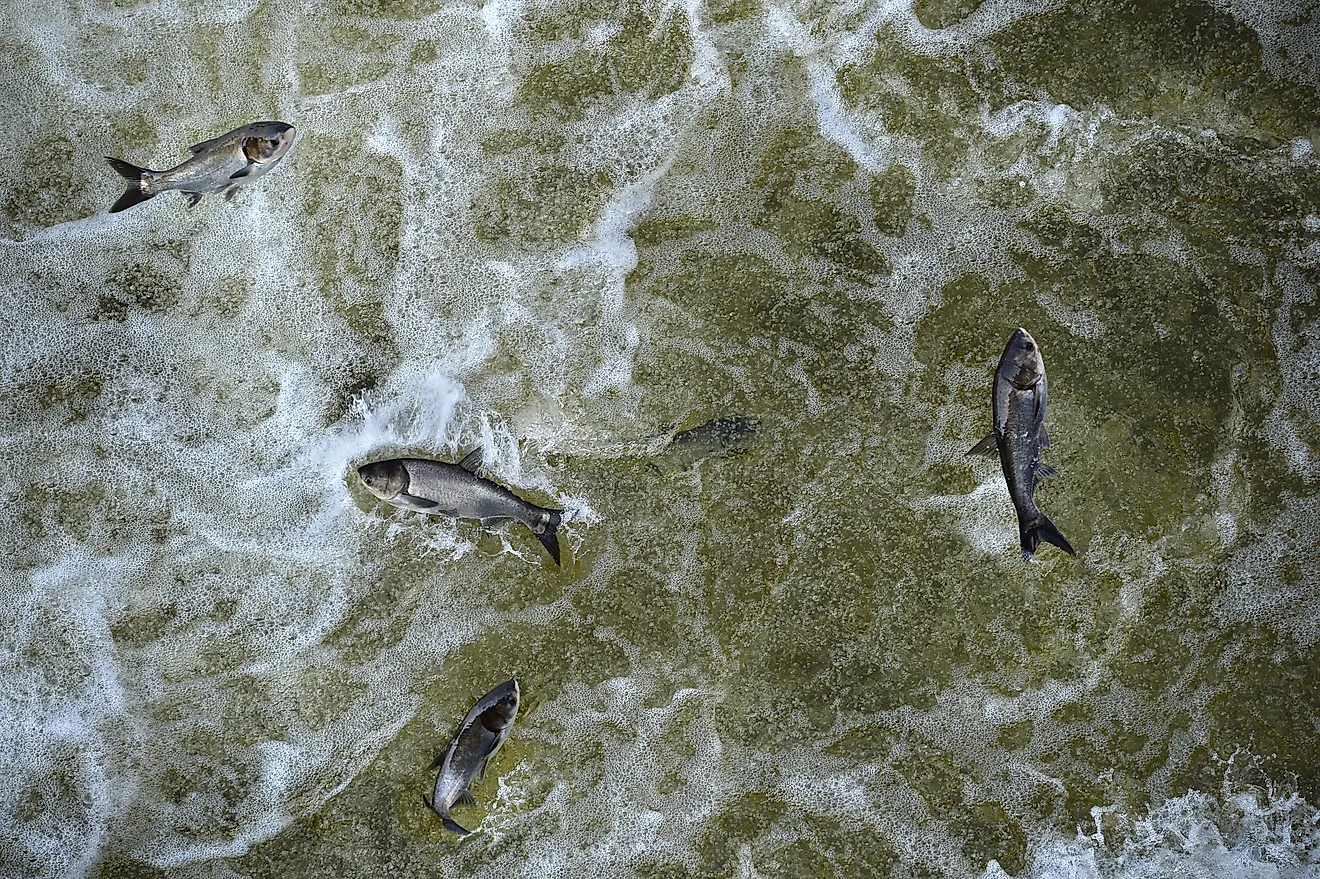
Atlantic sturgeon can launch their entire bodies out of the James River. Around the Rice Rivers Center in Charles City County, these jumps bring otherwise submerged fish into view. In an October 2026 interview, Virginia Commonwealth University biologist Matt Balazik described the largest sturgeon he had caught as nine feet, 10 inches long. The James has two distinct spawning runs, one in spring and another in fall. By 2022, VCU researchers had tagged 2,000 Atlantic sturgeon there. Their work revealed a much larger fall group than the spring group. Beneath the surface, spawning fish need clean, hard bottom where eggs can attach. Artificial reefs installed between Presquile National Wildlife Refuge and the Interstate 295 bridge have added that habitat. Passing ships present a separate problem: vessel strikes can kill adults during their movements through the tidal river.
Pearl River, Louisiana And Mississippi
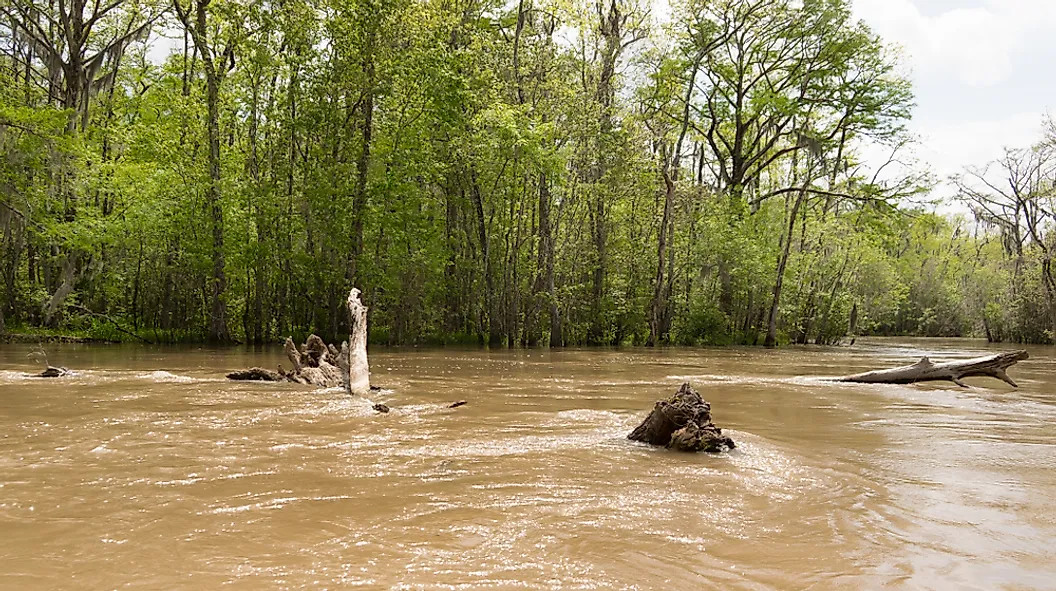
A 300-pound Gulf sturgeon has been reported from the Pearl River in Louisiana. This southern subspecies of Atlantic sturgeon spends part of the year fasting in freshwater. Adults do much of their feeding after leaving the rivers in fall, eating bottom-dwelling animals in estuaries and coastal waters. They return upriver in spring carrying the energy reserves needed for months without regular meals.
For fish in the Pearl River system, those seasonal movements extend well beyond the river mouth. Tracking work has located winter habitat around the barrier islands of Mississippi Sound, including Cat and Ship islands. Summer habitat also extends into the Bogue Chitto River, a Pearl tributary. During tracking between 2000 and 2003, adults concentrated in the Bogue Chitto, while subadults concentrated in the Pearl.
Detroit River, Michigan

The Detroit River produced a 240-pound lake sturgeon during a federal fisheries survey in April 2021. At six feet, 10 inches long, it was large enough for a crew member to lie beside it for a photograph. Its girth was nearly four feet. The team believed it was a female more than 100 years old, an estimate based on its size, and released it after processing.
Lake sturgeon stay in freshwater, feeding along the bottom of lakes and rivers. Here, their breeding habitat has needed rebuilding. At a constructed reef near Fighting Island, sturgeon spawned during the first two springs after installation in 2008. Researchers found fertilized eggs and larvae, followed by young fish downstream. The adults showed a preference for the island side of the channel, where the current ran faster.
Rainy River, Minnesota

Travis Keating's April 18, 2026, lake sturgeon measured 80 inches, or six feet, eight inches, earning Minnesota's catch-and-release record. He landed it near the mouth of the Rainy River after moving out of Four Mile Bay. The river forms part of Minnesota's border with Ontario and empties into Lake of the Woods. Sturgeon spend much of their lives in the lake before entering the river to spawn. Commercial fishing devastated this population during the late 1800s and early 1900s. Pollution then damaged the spawning and nursery habitat needed for recovery. Improved water quality following clean-water legislation allowed reproduction to recover. The population of fish longer than 40 inches increased substantially between surveys in 1990 and 2014. Today's large adults include fish that survived those earlier decades; the river now supports successful reproduction in most years.
What It Takes To Replace Them

A large female Atlantic sturgeon can produce hundreds of thousands of eggs during a spawning season, with egg production increasing with her size. Reaching that stage takes decades in some rivers. On the Hudson, females take about 29 years to reach half of their maximum lifetime egg production. They survive spawning and can reproduce again, although females commonly return only every second or third year. Each spawning trip requires access to freshwater bottom where the sticky eggs can attach. Dredging that removes those surfaces, or sediment that covers them, can damage breeding habitat even when adults still pass through. Newly hatched Atlantic sturgeon remain in freshwater for at least several months before beginning their movement toward the sea.