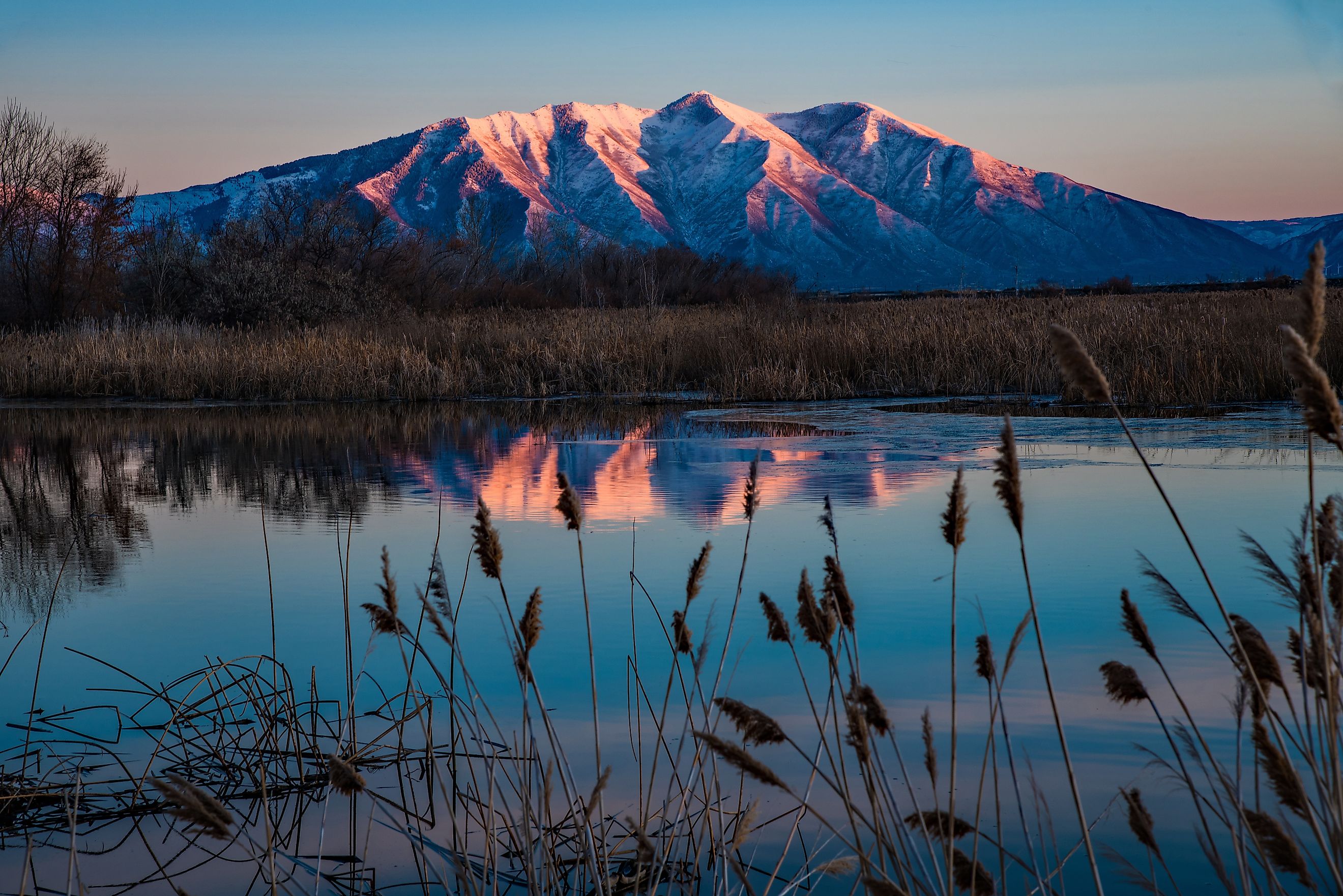
Why Utah Lake Is Fighting To Survive
Utah Lake is the largest freshwater lake in Utah, covering 148 square miles. One would think this would mean Utah Lake enjoys a good reputation, considering Utah's other famous lake is the saline Great Salt Lake. Unfortunately, that is not the case, as the lake has a reputation for being dirty and unhealthy, driven in large part by the ecological impact of runoff water. In addition, efforts to restore the lake have hit roadblocks due to continual PR and economic issues.
Geology

Located in Utah County, Utah Lake is what remains of a much larger ancient lake called Lake Bonneville. This prehistoric lake covered about 20,000 square miles and existed from 30,000 to 13,000 years ago. It contained islands that are now mountain ranges in western Utah.
However, as the Ice Age ended, the climate warmed, gradually drying up the lake and carrying its salts to the nearby Great Salt Lake. By about 8,000 to 10,000 years ago, Utah Lake emerged as a tiny remnant of Lake Bonneville. Utah Lake had periods of salinity and freshening over its history, as analysis of sediment cores has revealed wide ranges of salinity over time.
Today, Utah Lake is a very shallow body of water, with an average depth of 9 feet and a maximum depth of 14 feet. The reason it is so shallow is that it sits in a shallow basin, which itself is semi-arid, meaning the rate of evaporation is quite high, at 42% annually. To this day, the lake has a slight saline content due to this high evaporation.
Water from Utah Lake travels through the Jordan River to the Great Salt Lake, making the two directly tied together.
History

Despite this shallow and at times saline water, Native American tribes found it a useful place for water, with groups ranging from the Fremont to the Utes and Shoshones living near here, leaving behind beads, shells, arrowheads, and other items.
The first European to see the lake was Father Silvestre Vélez de Escalante, who visited the region through the Dominguez and Escalante Expedition in 1776, which traveled through the Utah Valley from New Mexico. Mormon settlers arrived in the Salt Lake Valley in 1847 and founded Fort Utah, near the lake, in 1849. Utah Lake would prove useful for agricultural water.
Unfortunately, conflict arose between the Mormon settlers and native people, especially the Timpanogos people. In one event known as the Provo River Massacre in 1850, Mormon militia surrounded and killed anywhere from 40 to 100 of the Timpanogos people and even mounted their heads on the wall of Fort Utah.
How did it become so dirty?

Utah Lake has faced several ecological threats in the last century, from overpumping to agricultural runoff and pollution that have sullied its once renowned reputation.
During the Dust Bowl event in the 1930s, when severe droughts combined with overfarming brought dust storms across the Great Plains, Utah Lake was excessively pumped to provide water, leaving it nearly completely dry. It was so dry, in fact, that two men held a boxing match at the lakebed in 1935.
Although measures were taken to limit overpumping, in the 1960s, another issue emerged. Pollution from agricultural nutrients such as phosphorus and nitrogen began to enter the lake through runoff, along with sewage. These nutrients and the warmer temperatures during the summer helped breed vast numbers of algae and cyanobacteria, which caused harmful algal blooms. These blooms are not only harmful to humans and animals, but they can also create oxygen dead zones that kill off fish.
These green blooms, combined with muddy sediments rushing up to the surface through waves, convinced many that Utah Lake was dirty and to be avoided at all costs, despite efforts at the state level to clean up Utah Lake.
Has Utah Lake been cleaned up?
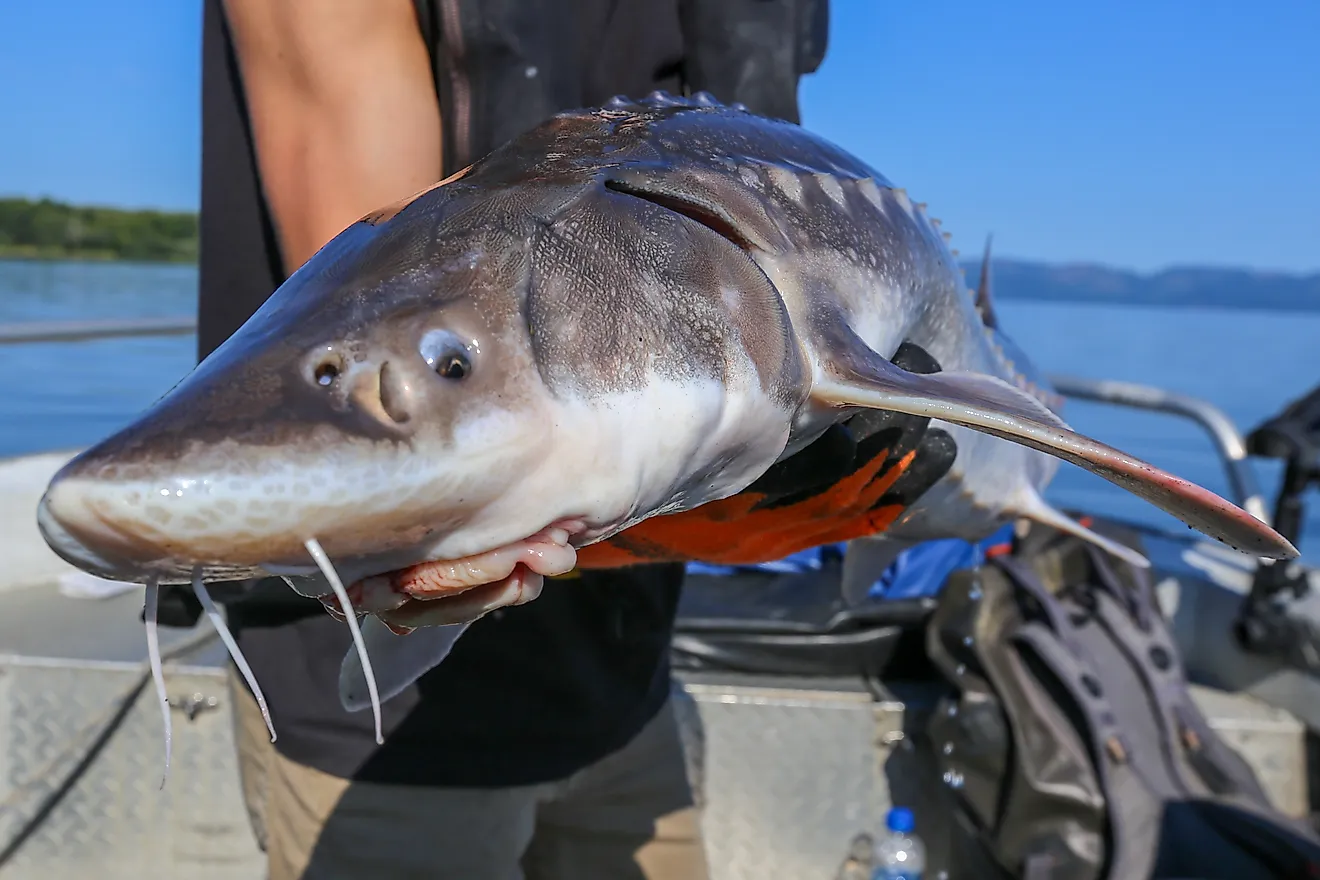
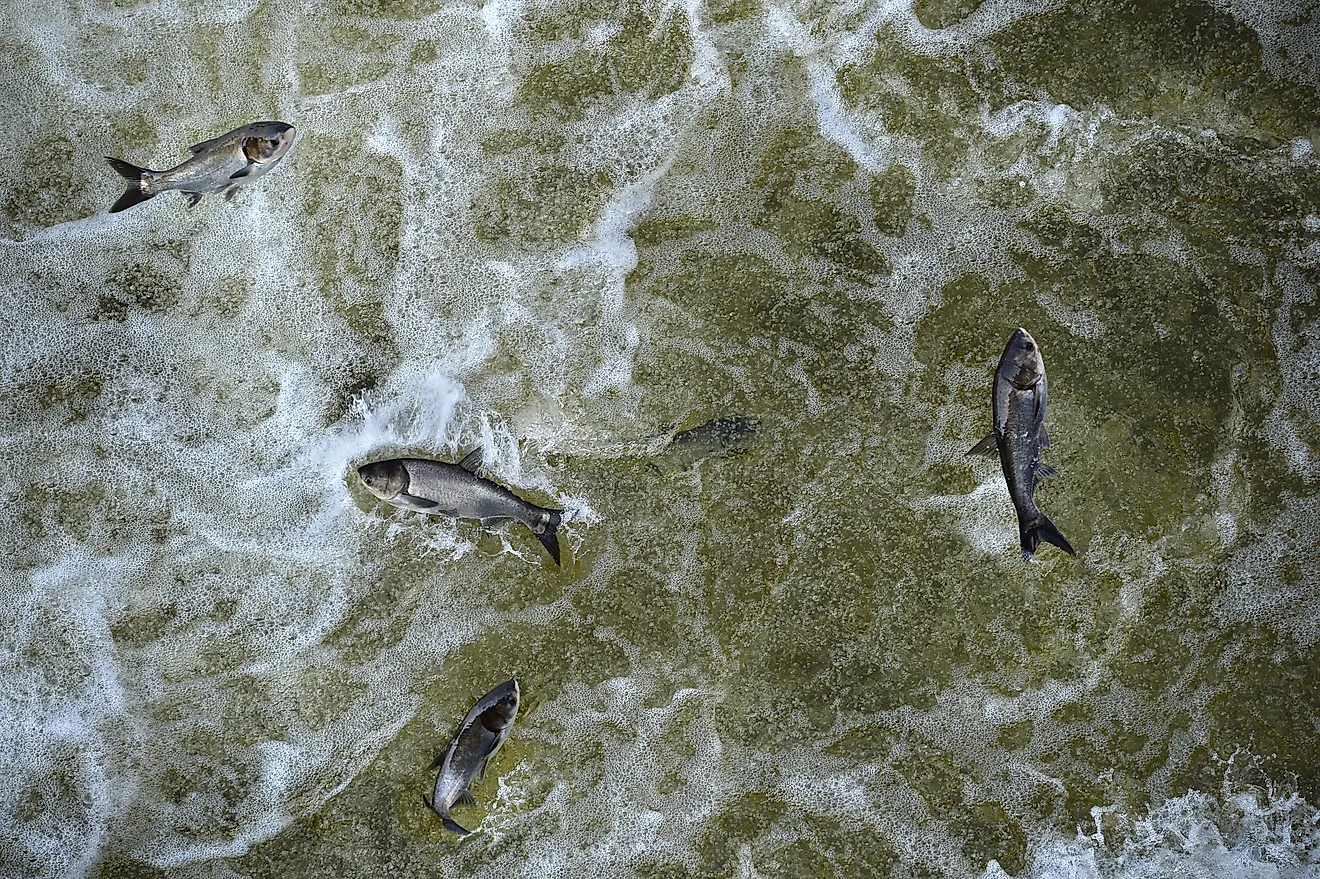
There have been several efforts to clean up and restore the habitats of Utah Lake. For example, in 1999 the June Sucker Recovery Implementation Program was finalized and later put into practice to restore the population of the June Sucker fish, once endangered but now is just threatened in 2021, which had been in decline due to pollution and invasive species such as the common carp.
In addition, raw sewage dumping was banned in the lake under the Clean Water Act of 1972, enabling the state to closely monitor water quality. The state worked together with farmers, wastewater facilities, and fisheries to help prevent larger algal blooms and habitat destruction.
More recently, in 2022, Utah passed the Utah Lake Preservation Fund Grant Program, a $30 million fund which used American Rescue Plan Act funds to implement better wastewater and stormwater infrastructure, and improve the overall quality of the lake. Projects can be approved if they improve the overall water quality of the lake and its watershed.
The controversial Utah Lake Restoration Project
The Utah Lake Restoration Project was a much larger project first proposed in 2017 by the company Lake Restoration Solutions. It aimed to remove a billion cubic yards of lakebed to create an artificial island chain.
In particular, this project would remove the sediment from the bottom of the lake, along with invasive plant and animal species, and replace it with native animals. This overall project would cost about $6.4 billion and aimed to completely restore the lake over a 15-year period.
However, the project was opposed by many conservationists, who argued that it would interfere with other programs under the Utah Lake Preservation Fund, and could cause significantly more damage if the project ran out of money.
Ben Abbott, a professor of ecology at Brigham Young University, in particular argued that the project would harm the lake by directly destroying its lakebed. In response, Lake Restoration Solutions sued Abbott for defamation. In an interview with Utah's Dailey Herald, he responded by stating this lawsuit was intimidation, and stated, "I think the question that we should all be asking ourselves is, is this the kind of group that we think is capable of building the world's largest dredged islands? Is this the kind of group we want to be working with for the next 15 to 40 years?"
On January 11, 2022, Ben Abbott met Jon Benson, president of Lake Restoration Solutions at Utah Valley University, to discuss the project. Abbott pointed to the overall recovery of the lake, such as reduced algal blooms and a booming population of June Sucker up to 50,000, while Benson focused on how the restoration would turn Utah Lake into a major attraction by removing the polluted sediments.
In 2023, the project died as Lake Restoration Solutions announced its dissolution, citing a lack of funding and ability to meet its obligations. Later that same year, the lawsuit against Ben Abbott was dismissed. As of 2023, the Utah Lake Restoration Project is dead.
What does the future hold for Utah Lake?
Although the Utah Lake Restoration Project is gone, many other smaller projects are underway under the Utah Lake Preservation Fund, including Utah Lake Carp Removal, ecosystem monitoring, shoreline restorations, and more.
A separate project is the Utah Lake Shoreline Restoration project, focusing on revegetation and controlling invasive species, such as Russian olive and tamarisk. These projects are far more incremental than the larger Utah Lake Restoration Project, but many conservationists, including Ben Abbott, believe this slower process is best suited to both protect the ecosystem of Utah Lake and gradually restore it.
On the public relations side, the Utah Lake Authority is working to restore Utah Lake's reputation as a premier place for guests to go, with a 2025 campaign called Utah Lake is my Lake encouraging residents not to leave the lake for tourists but to reclaim it as their own. At Utah Lake State Park, visitors can go to fish and swim in the warm waters, as long as one pays attention to local warnings about harmful algae blooms.
Overall, Utah Lake is recovering, but it will still take further cleanup efforts and campaigns to clean up its reputation.