The US Lakes Stocked With The Most Fish Every Year
Every spring and fall, hatchery trucks and tanker boats fan out across the country to refill America's favorite fishing holes. Fish stocking is the practice of releasing hatchery-raised fish, sometimes as fry only days old and sometimes as inch-long fingerlings, into public waters. Stocking helps to rebuild struggling populations, keep up with heavy angling pressure, or create entirely new sport fisheries where none existed before. State wildlife agencies and federal hatcheries stock hundreds of millions of fish into American lakes and reservoirs each year, a massive undertaking that supports a recreational fishing economy worth tens of billions of dollars and helps keep freshwater ecosystems in balance.
The lakes below are ranked by the most recent annual stocking figures reported by state and federal fisheries agencies, counted smallest to largest. Because agencies track fish at very different life stages, spanning nearly microscopic fry and yearling-sized fish, the raw totals are not always a perfect apples-to-apples comparison. Still, they paint a clear picture of just how much work goes into keeping the nation's lakes full of fish and its anglers happy.
Lake Taneycomo, Missouri

Tucked into the Ozark hills near Branson, Lake Taneycomo was originally created on the White River in 1913 by the Powersite Dam, but it was the completion of Table Rock Dam six miles upstream in 1959 that transformed it into a cold, trout-friendly tailwater by releasing chilly water from the depths of Table Rock Lake. According to the Missouri Department of Conservation, roughly 560,000 rainbow trout and another 15,000 brown trout are stocked into the lake every year, keeping this narrow 23-mile-long (37 km) reservoir productive despite its relatively small size.
That steady supply of trout has made Lake Taneycomo a year-round destination for anglers, complementing the bass and crappie fisheries found on nearby Table Rock Lake and Bull Shoals Lake. The lake's cold, clear water and consistent stocking schedule mean visitors can reliably hook rainbow and brown trout even in the heat of summer, a rarity for a lake so far south. For travelers exploring the most beautiful lakes in Missouri, Taneycomo's trout-filled waters are a highlight worth building a trip around, especially when paired with a stop at one of the best perch fishing lakes in America elsewhere in the region.
Lake Sakakawea, North Dakota

Lake Sakakawea, formed by the Garrison Dam on the Missouri River, is the second-largest reservoir in the United States by surface area, trailing only Lake Oahe to the south, and it receives one of the largest single-lake walleye stockings anywhere in the country. In 2026, North Dakota Game and Fish Department officials reported stocking 2.3 million walleye fingerlings into the reservoir alone, part of a near-record statewide production of almost 12 million walleye raised primarily at the Garrison Dam National Fish Hatchery.
That hatchery output, spread across more than 150 North Dakota lakes and rivers, has helped turn the state into one of the country's top walleye destinations, and Sakakawea's massive share reflects its status as the crown jewel of that program. The reservoir stretches for roughly 178 miles (286 km) across the rolling prairie of west-central North Dakota, offering enormous stretches of open water and rocky shoreline for anglers chasing trophy walleye. Anyone curious about the state's other standout waters can explore the 9 most beautiful lakes in North Dakota or read more about Lake Sakakawea itself, while those interested in reservoirs on this scale should also check out the largest reservoirs in the United States.
Blue Mesa Reservoir, Colorado

As Colorado's largest body of water, Blue Mesa Reservoir is best known among anglers for its kokanee salmon, and the numbers behind that fishery are staggering. Colorado Parks and Wildlife stocks approximately 3 million kokanee salmon into the reservoir each spring, released from the nearby Roaring Judy State Fish Hatchery to sustain what has long been one of the largest kokanee fisheries in North America.
The reservoir sits within the Curecanti National Recreation Area near Gunnison, its cold, deep waters carved into the high desert landscape of the Gunnison River valley. Because kokanee typically live only three to four years and cannot reproduce successfully within the reservoir, this annual stocking effort is essential to keeping the fishery alive season after season, drawing anglers from across the region every fall when spawning kokanee turn the tributary streams bright red. Travelers planning a trip can pair a visit with the 7 most beautiful lakes in Colorado or explore the 9 best lakeside towns in Colorado for a broader look at the state's mountain waters.
Fort Peck Lake, Montana

Stretching across the remote plains of northeastern Montana, Fort Peck Lake is the fifth-largest reservoir in the country and the largest lake in Montana by surface area, formed when the Fort Peck Dam was completed on the Missouri River in 1940. Under Montana Fish, Wildlife and Parks' current fisheries management plan, the reservoir is stocked with up to 3 million walleye fingerlings annually, the maximum output of the state's hatchery system, along with roughly 200,000 chinook salmon fingerlings released each June.
That combination of species makes Fort Peck a rare fishery where anglers can chase both walleye and chinook salmon in the same massive body of water, alongside naturally reproducing populations of northern pike and lake trout. The reservoir's sheer size and isolation give it a wild, uncrowded feel that few other stocked lakes in the country can match. For more on the state's waters, see the 9 most beautiful lakes in Montana, and for context on reservoirs of similar scale, the largest man-made lakes in the United States is worth a look.
Lake Michigan

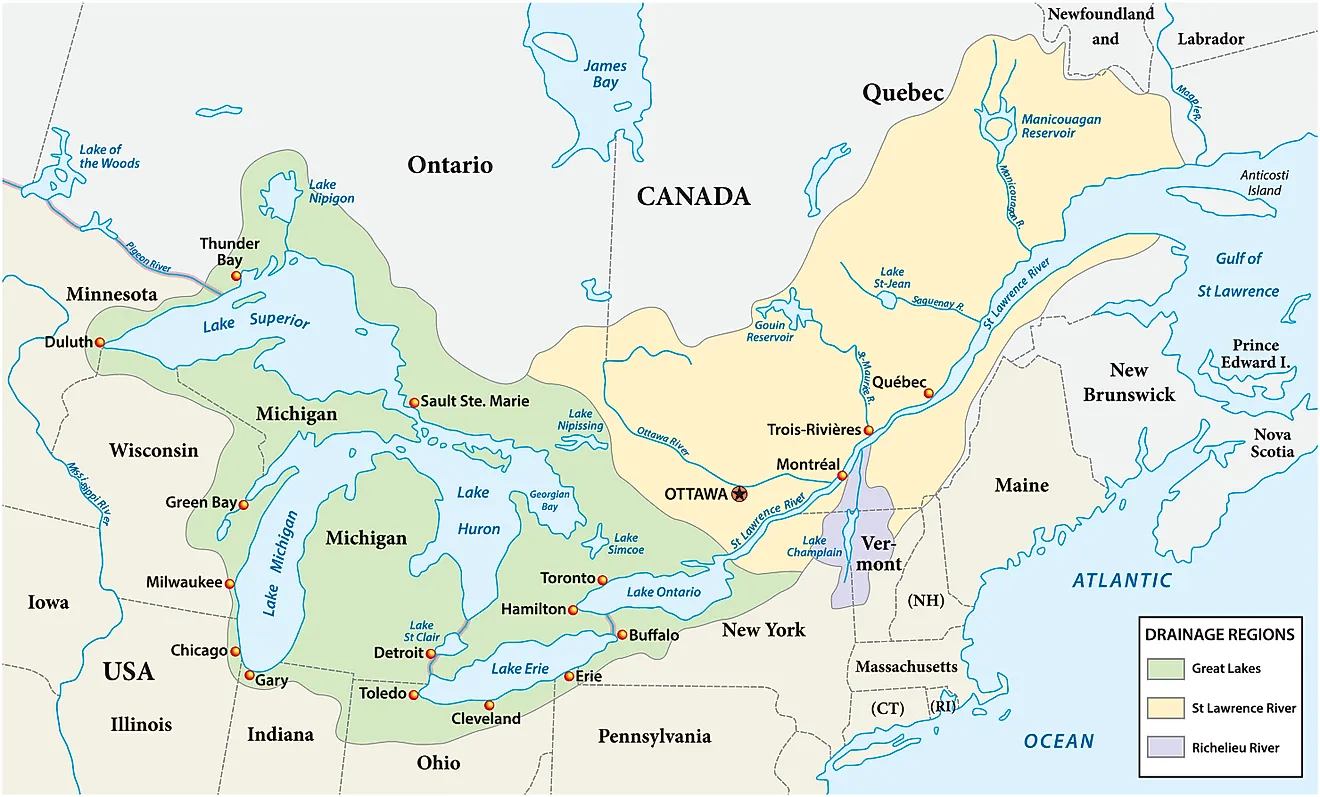
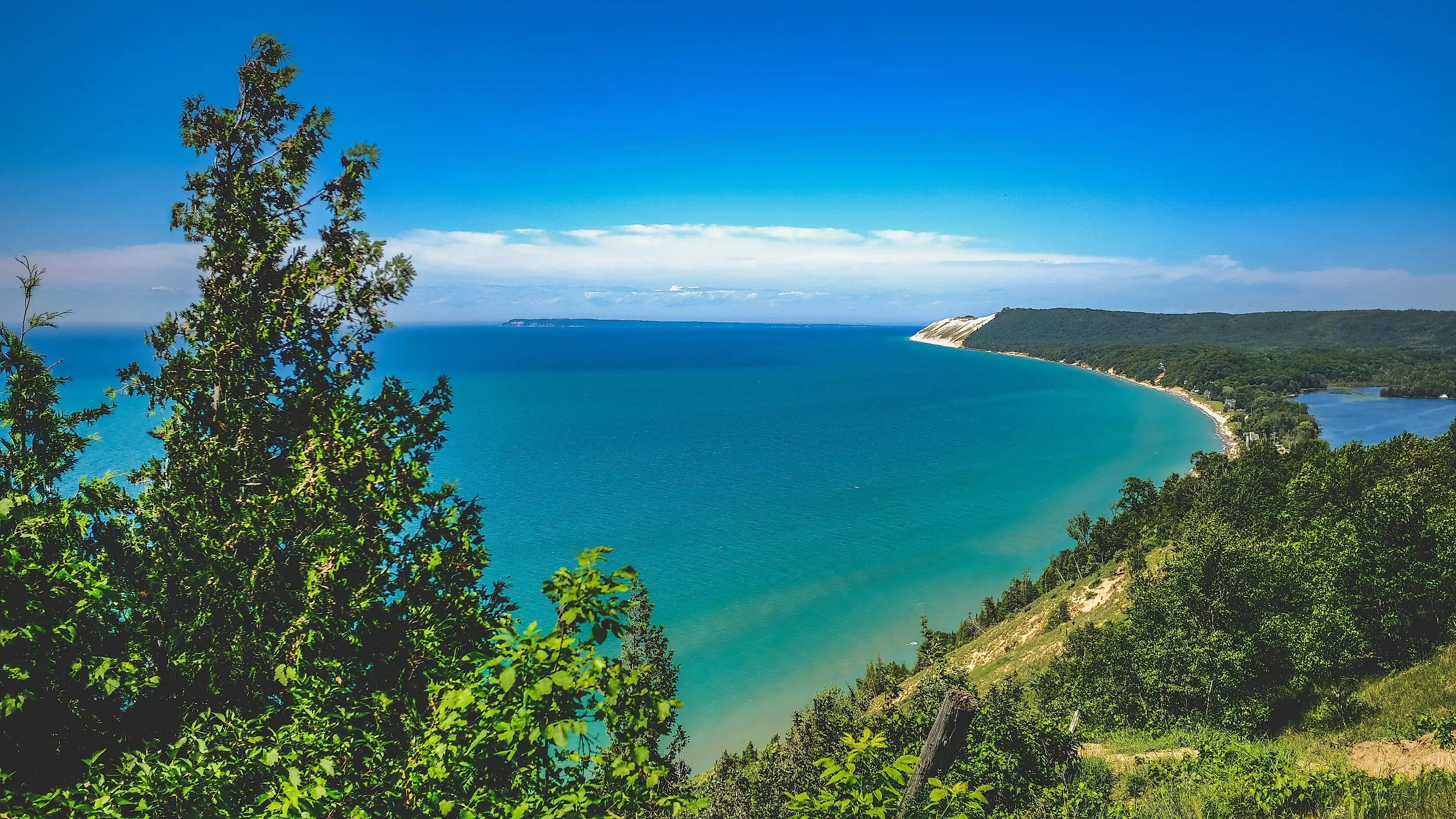
Bordered by Michigan, Wisconsin, Illinois, and Indiana, Lake Michigan is the only Great Lake located entirely within the United States, and it hosts one of the largest cooperative fish-stocking programs on the continent. For 2025, state fisheries agencies planned to release roughly 9.5 million salmon and trout into the lake, including 2.3 million chinook salmon, 2.5 million coho salmon, 1.75 million steelhead, 800,000 brown trout, and 2.11 million lake trout.
That massive stocking effort, built up over decades since chinook and coho salmon were first introduced to the Great Lakes in the 1960s to control invasive alewife populations, has turned Lake Michigan into one of the premier salmon fisheries in North America. Charter boats run out of harbor towns between Wisconsin's Door County and Michigan's Grand Traverse Bay chasing these stocked fish, which now support a multibillion-dollar regional fishing industry. Readers can dive deeper into the lake's story with Lake Michigan or discover more about why Lake Michigan and Lake Huron are technically one lake.
Oneida Lake, New York

No lake in the country comes close to Oneida Lake when it comes to sheer stocking numbers. According to the New York State Department of Environmental Conservation, the state's Oneida Fish Cultural Station released 146 million walleye fry into the lake in a single stocking event in late April 2024, by far the largest annual fish-stocking figure of any lake in the United States.
That number is so large because fry, the tiniest larval stage of a walleye's life, are released by the millions to offset high natural mortality rates, unlike the fingerlings and yearlings used in most other stocking programs. Oneida Lake, the largest lake entirely within New York State, has been intensively studied since 1957 by the Cornell Biological Field Station, making it one of the most closely monitored freshwater fisheries in North America. That decades-long research partnership has helped fisheries managers fine-tune stocking levels to keep Oneida's walleye population thriving even as fishing pressure remains high. To explore more of the region's waters, see the largest lakes in New York State or the 11 most beautiful lakes in New York.
Stock Up On Your Next Fishing Trip
Whether a quiet Ozark tailwater or a walleye factory in the heart of central New York, these six bodies of water show just how much effort federal and state agencies pour into keeping America's lakes fishable. Whether it is millions of walleye fry drifting into Oneida Lake or kokanee salmon restocking Colorado's largest reservoir every spring, these programs turn hatchery science into real opportunity for anglers of every skill level. So grab a rod, check your state's stocking schedule, and head to one of these heavily stocked lakes for a shot at reeling in "the big one."