Every National Park Bordering The Great Lakes
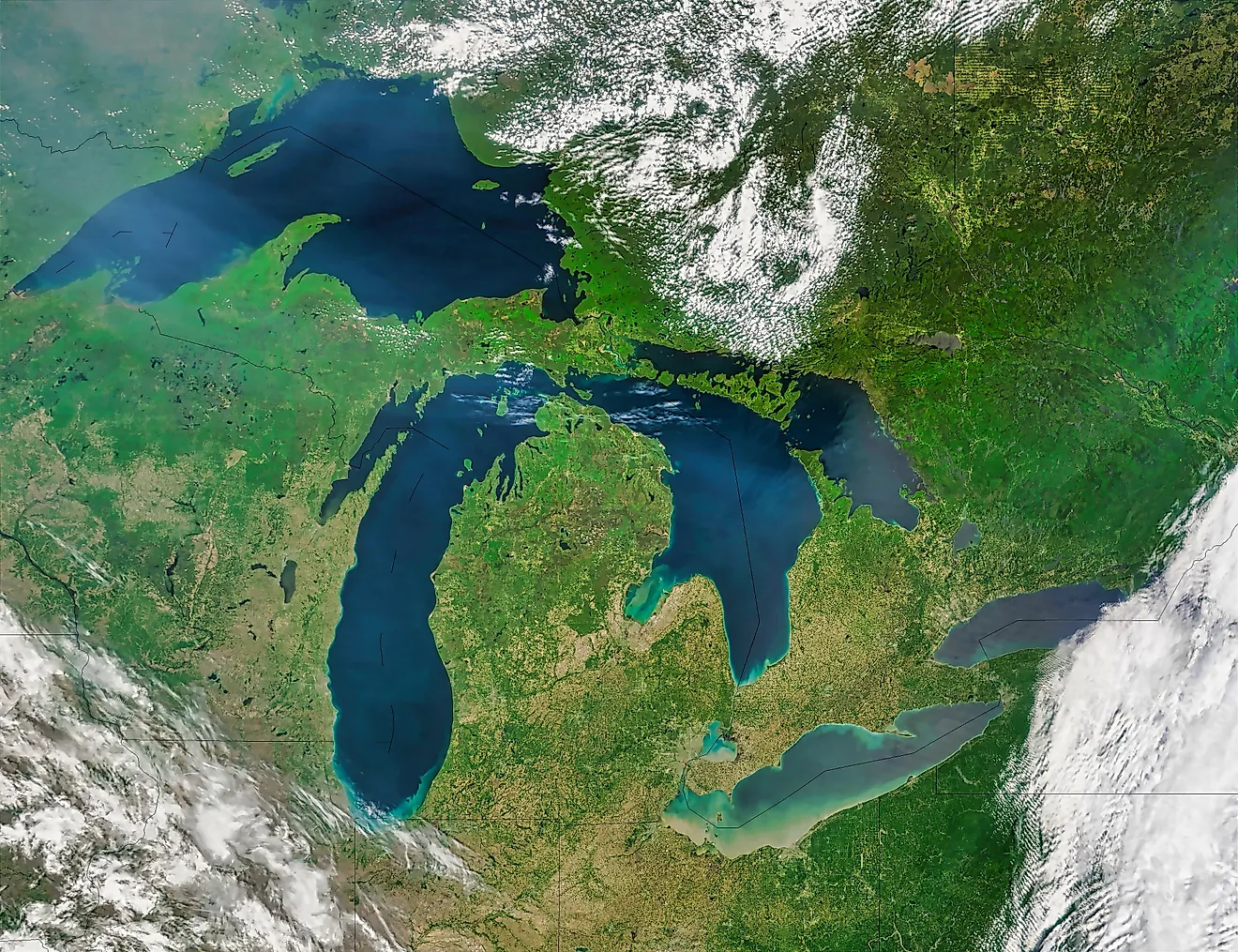
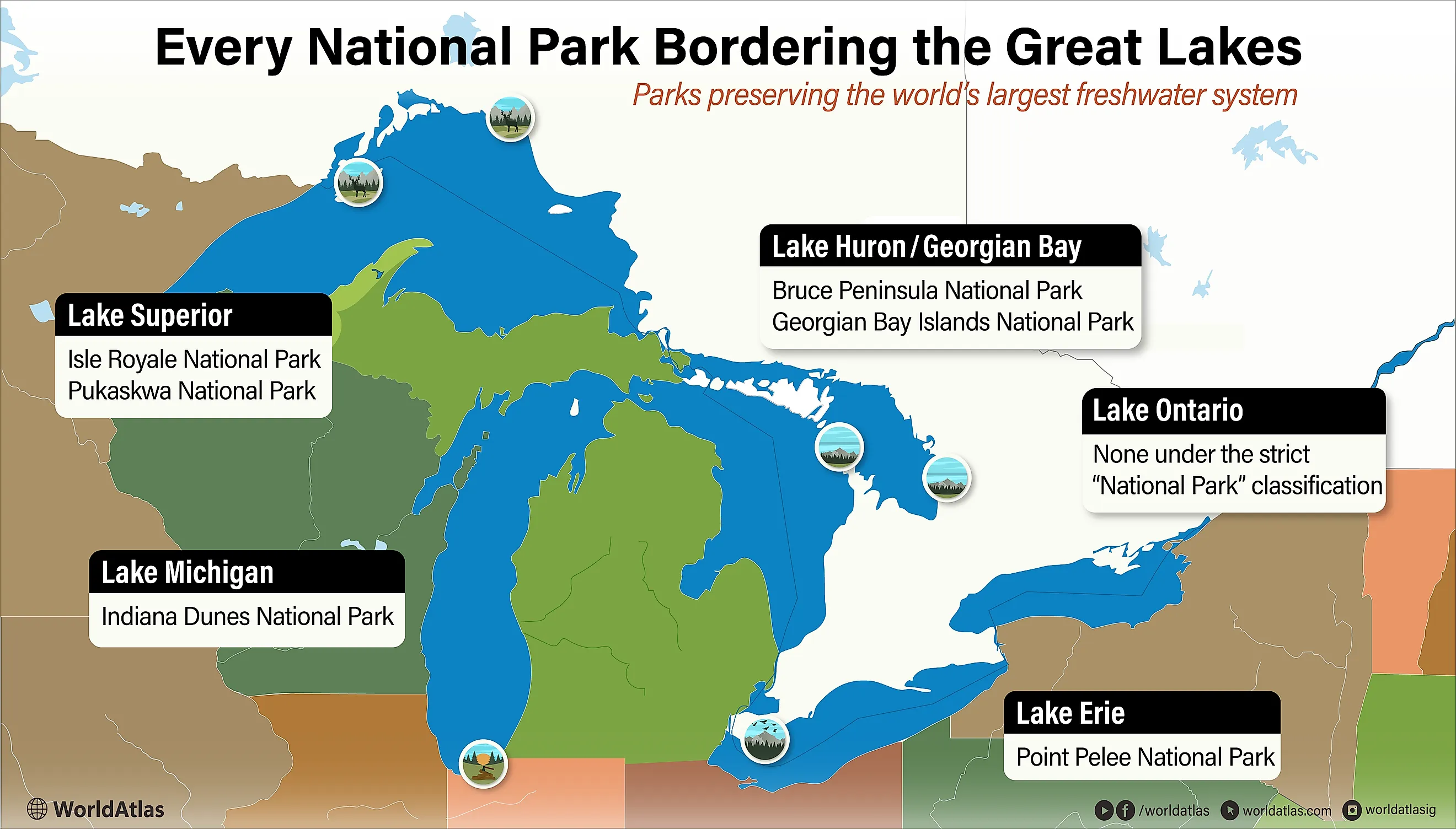
The Great Lakes are the largest chain of freshwater lakes in the world. With shorelines touching eight US states and one Canadian province, the lakes draw roughly 70 million visitors to their beaches each year. This list details each of the six National Parks in the United States and Canada with a shoreline on one of the Great Lakes. It starts with Isle Royale National Park on Lake Superior in Michigan and moves clockwise. While other designated units exist within the National Park System, such as National Lakeshores and National Monuments, this list highlights units classified specifically as National Parks.
Isle Royale National Park, Michigan (Lake Superior)

Isle Royale National Park is a remote island encompassing 850 square miles (2,201 square kilometers) of natural wilderness, expansive land, and aquatic life in the middle of Lake Superior. Isle Royale National Park is so remote that it is only accessible by ferry, seaplane, or private watercraft. The park is located in Michigan's Upper Peninsula. Part of the park's area includes submerged land that extends over four miles out into Lake Superior. The park is home to moose, wolves, loons, beavers, foxes, and other small mammals and birdlife. They inhabit the park's forests, waterways, and inland lakes. Many recreational opportunities are available, including 165 miles (265 kilometers) of scenic hiking trails, 36 campgrounds, and wreck sites for scuba diving, as well as several fishing sites and areas to launch watercraft.
Pukaskwa National Park, Ontario (Lake Superior)

At 725 square miles (1,878 square kilometers), Pukaskwa National Park is the largest National Park in Ontario. It is located on the northeastern shore of Lake Superior, of which it features 50 miles (80 kilometers) of the lake's granite shores and sandy beaches. Other than the Lake Superior shoreline, Pukaskwa National Park includes areas of Canadian Shield wilderness and many additional small lakes and streams. The park is popular among hikers, with the Coastal Hiking Trail being the longest at 37 miles (60 kilometers). The trail runs along the shoreline and crosses a suspension bridge over the White River. However, there are multiple trails in the park of varying length and difficulty that traverse boreal forests, rocky coastlines, and isolated beaches, ranging from short day hikes to multi-day treks. Similarly, there are traditional campsites and hike-in backcountry camping areas for a more primitive wilderness experience.
Indiana Dunes National Park, Indiana (Lake Michigan)

Indiana Dunes National Park covers 16,000 acres within Indiana, including 15 miles (24 kilometers) of Lake Michigan coastline. Immediately inland from the park's beaches, its signature sand dunes rise close to 200 feet, forming ridges, blowouts, and valleys. Over 50 miles (80 kilometers) of hiking trails weave through 15 different trail systems among the park's diverse landscape, comprised of dunes, bogs, marshes, rivers, prairies, and old-growth forest. This ecological diversity contributes to the park's status as one of the most biologically rich areas in the whole National Park System. The park is home to well over 1,100 plant species and more than 350 species of birds. Specific areas within the park that highlight its biodiversity and rare habitats found nowhere else in the Great Lakes region include Pinhook Bog, Miller Woods, and Cowles Bog.
Bruce Peninsula National Park, Ontario (Lake Huron)

Set atop the Niagara Escarpment on the northern tip of the Bruce Peninsula, Bruce Peninsula National Park sprawls across 60 square miles (156 square kilometers) of natural cliffs and rocky caves towering above the water of Lake Huron's Georgian Bay. The park is renowned for its rich biodiversity, including numerous rare orchid species, ancient eastern white cedars clinging to cliff faces, and karst formations such as caves, sinkholes, and underground streams that were formed by ancient rock more than 400 million years ago. Many unique outdoor activities are popular at the park, including paddling and scuba diving offshore, thanks to the numerous shipwrecks and the clear, turquoise waters in the adjacent Fathom Five National Marine Park. Due to the absence of artificial light pollution, the park is designated as a Dark Sky Preserve, making it popular among stargazers.
Georgian Bay Islands National Park, Ontario (Lake Huron)

Although Georgian Bay Islands National Park is Canada's smallest National Park at only 5.5 square miles (14 square kilometers), it is part of the largest freshwater archipelago in the world. The park consists of roughly 50 islands that are divided into two sections: one group is at the southeast end of Georgian Bay, and the other is in the western part of the bay, where the Main Channel links it to Lake Huron. Beausoleil Island is the largest island, which visitors may access by private watercraft, commercial operators, and a shuttle-boat service offered by the park. Visitors can rent mountain bikes, launch watercraft, swim, enjoy picnics on beaches, and explore hiking trails that lead to the island's natural focal points, such as Fairy Lake, Thumb Point, and Cedar Spring.
Point Pelee National Park, Ontario (Lake Erie)

Point Pelee National Park marks the southernmost point of mainland Canada. Extending only 6 square miles (16 square kilometers) at the tip of a long peninsula at the western end of Lake Erie, it is one of the smallest National Parks in Canada. Despite its small size, the park supports a range of habitats, including beaches, forests, wetlands, and open savannah. The park is a top spot in North America for birdwatching due to its proximity to two dedicated migratory flyways. Over 370 species of birds, such as wild ducks, Canada geese, and swans, utilize the park's marshlands as resting sites. There are several trails laced throughout the park, including a boardwalk that gives visitors access to the marshlands that make up much of the park, which happens to be one of the largest freshwater marshes left on the Great Lakes.
National Parks of the Great Lakes
While many people frequent the Great Lakes to relax on the beach and recreate on the water, these National Parks highlight the biodiversity and extremely varied landscapes of the region. Places like Indiana Dunes National Park stand out for their essential habitats for a wide range of flora and fauna, whereas Point Pelee National Park retains one of the largest freshwater marshes left on the Great Lakes. For visitors intent on venturing beyond beaches and marinas, these National Parks protect some of the most remarkable scenery across Canada and the United States.