How The Aral Sea Vanished In A Single Lifetime
Stand on the edge of Muynak today, and you will see fishing boats. You will not see water. The nearest shoreline is a two-hour drive north across the open desert. Sixty years ago, those same boats floated in the Aral Sea, the fourth-largest lake on the planet at one point. One generation of families watched it drain away. The remarkable part is what happened next in the north, where a stubborn piece of the sea has come back: the North Aral Sea.
A Sea That Fed a Region

Two rivers made the Aral Sea possible. The Amu Darya came up from the south and the Syr Darya came down from the northeast, both fed by snowmelt off mountains hundreds of miles away. Nothing drained out the other side, which makes the Aral an endorheic lake: rivers in, no outlet, and the fierce desert sun evaporating the difference. For centuries that balance held. In 1960 the lake covered about 26,000 square miles, roughly the size of West Virginia, and its surface sat some 175 feet above sea level.
It was barely salty then, about a third as briny as the ocean, and it was full of fish. Around twenty native species lived in it, and the towns on its shores hauled in close to a sixth of the entire Soviet Union's catch. Muynak in Uzbekistan and Aralsk in Kazakhstan ran busy canneries that employed thousands and shipped fish across the country by rail. This was a working sea, and people built their lives on the assumption it would always be there.
Cotton and the Rivers That Never Arrived

The trouble started with a plan. Around 1960 Soviet planners decided to make the Central Asian desert grow cotton, the cash crop they liked to call "white gold." Their engineers dug an astonishing amount of canal to do it, somewhere near 20,000 miles of it, pulling water off both rivers to irrigate cotton and rice across present-day Uzbekistan, Turkmenistan, and Kazakhstan.
As agriculture, it delivered. Cotton output climbed until Uzbekistan led the world in exports by the late 1980s. As hydrology, it was a slow catastrophe. The two rivers that kept the Aral alive were now being emptied before they ever reached it. By the 1980s the Amu Darya and Syr Darya routinely petered out in the summer heat and never made it to the lake at all. Here is the part that stays with you: none of this was an accident. The planners had weighed the sea against the cotton and picked the cotton.
The Water Pulls Back

Cut off from its rivers, the lake began to fall, and the falling fed on itself. Every foot of water that evaporated left its salt behind in what remained, so the sea grew saltier as it shrank. Salinity climbed past 30 grams per liter, and the native fish simply could not take it. The commercial catch collapsed by the early 1980s. A fishery that had fed millions was finished inside a couple of decades.
The lake came apart as it dropped. By about 1990 it had split into a smaller North Aral Sea in Kazakhstan and a much larger South Aral Sea in Uzbekistan, and the southern half soon broke again into eastern and western lobes. All told the Aral gave up roughly 88 percent of its surface and about 92 percent of its volume, and its level dropped some 85 feet. In the summer of 2014, NASA satellites caught the eastern basin bone dry, probably for the first time in six centuries.
Ships in the Desert

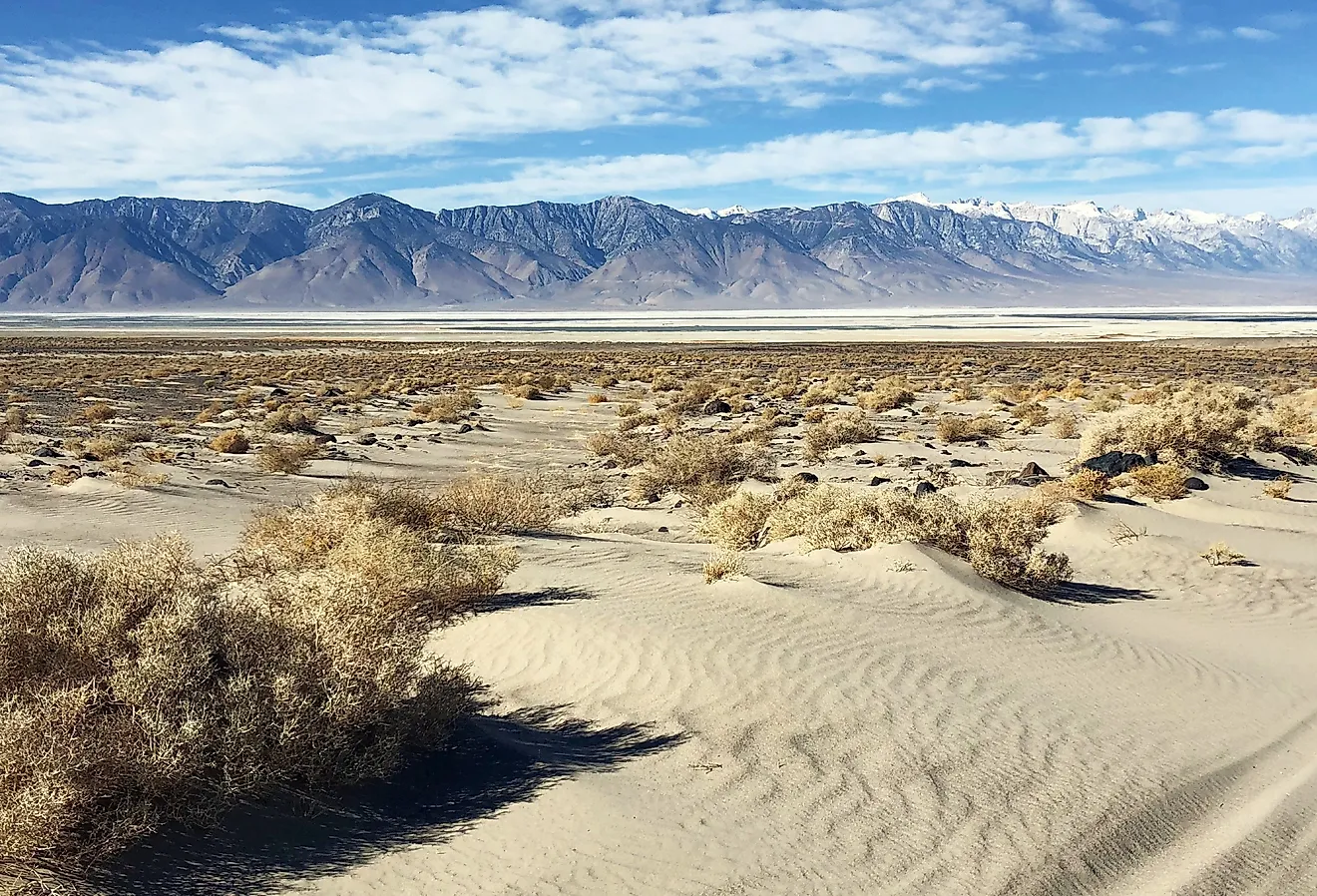
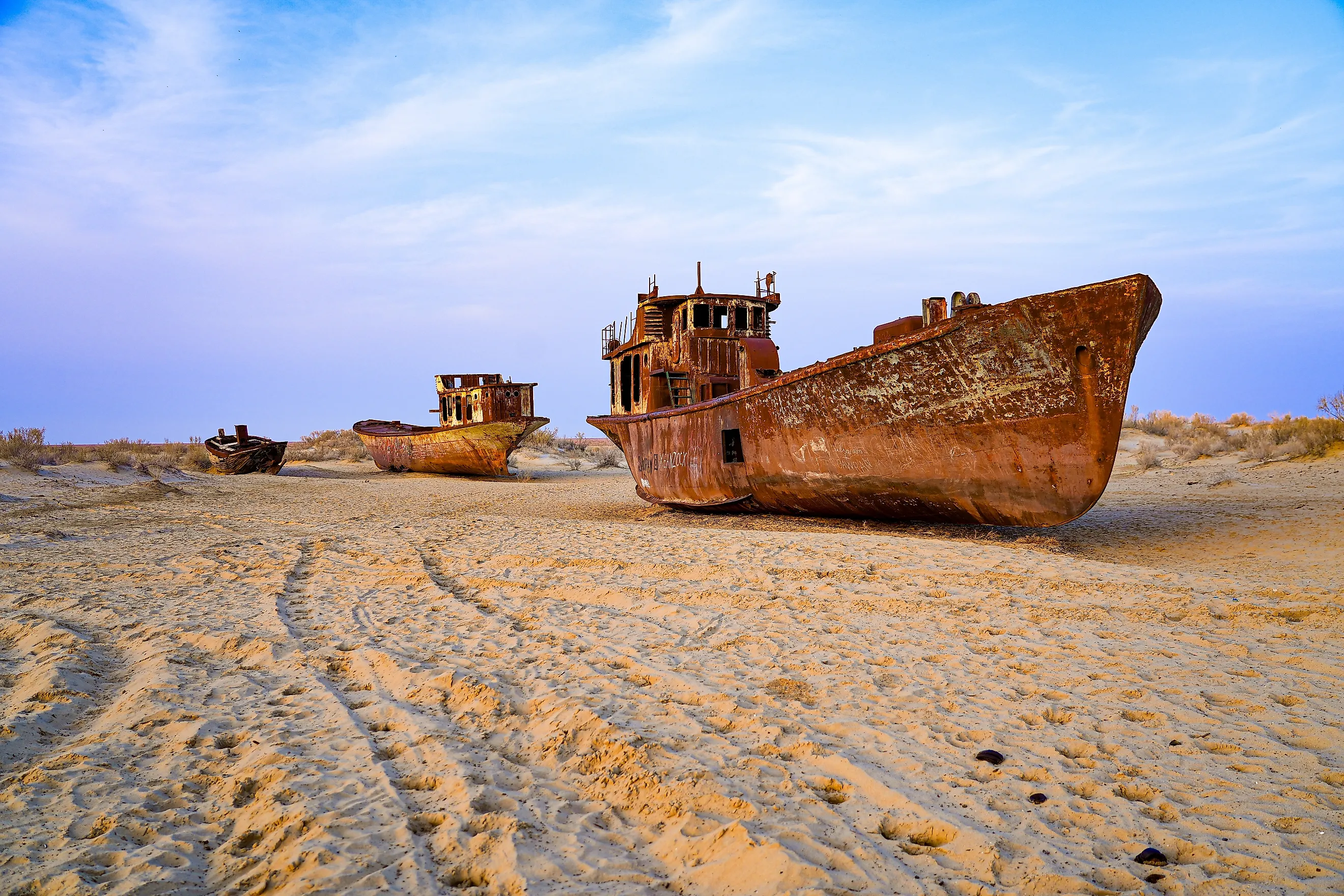
The retreating water stranded the old ports miles from anything wet. Muynak sat right on the shore in 1960; the nearest water now lies more than 60 miles away, and a line of rusting trawlers sits in the sand where the harbor used to be. Those boats have become the picture the whole disaster is remembered by, a fleet run aground in a desert that was a sea within living memory.
The wreckage went well past the boats. Wind picked up the bare lakebed and threw it into storms of salt and dust, carrying the pesticides and fertilizer that farming had washed downstream for decades, and dropped all of it on fields and lungs across the region. The sea had also kept the local weather in check, and once it was gone the summers ran hotter and the winters ran colder.
The Island That Stopped Being an Island

The shrinking water gave up a buried secret too. Out near the middle of the sea sat Vozrozhdeniya Island, and starting in 1948 the Soviet Union used it as an open-air biological weapons range, a site later code-named Aralsk-7 that tested anthrax, plague, and smallpox in the open. When the program was walked away from in 1991, drums of anthrax spores stayed behind in pits in the ground. As the sea kept dropping the island kept growing, and in late 2001 it touched the mainland and stopped being an island at all. That land bridge raised a real fear that the buried pathogens could reach people, and in 2002 a United States program committed about 6 million dollars to clean up the anthrax sites.
The People Who Stayed

The families who remained have carried the heaviest part of this. In Karakalpakstan, the Uzbek region along the old southern shore, infant mortality has ranked among the worst in the former Soviet world, and studies have found anemia in most pregnant women there. Tuberculosis, kidney disease, and respiratory illness all climbed as the toxic dust spread, and researchers have measured pesticide residues and heavy metals in local mothers' blood and breast milk. By the count of health workers on the ground, the disaster has reached into the lives of several million people across the wider region.
The North Aral Comes Back

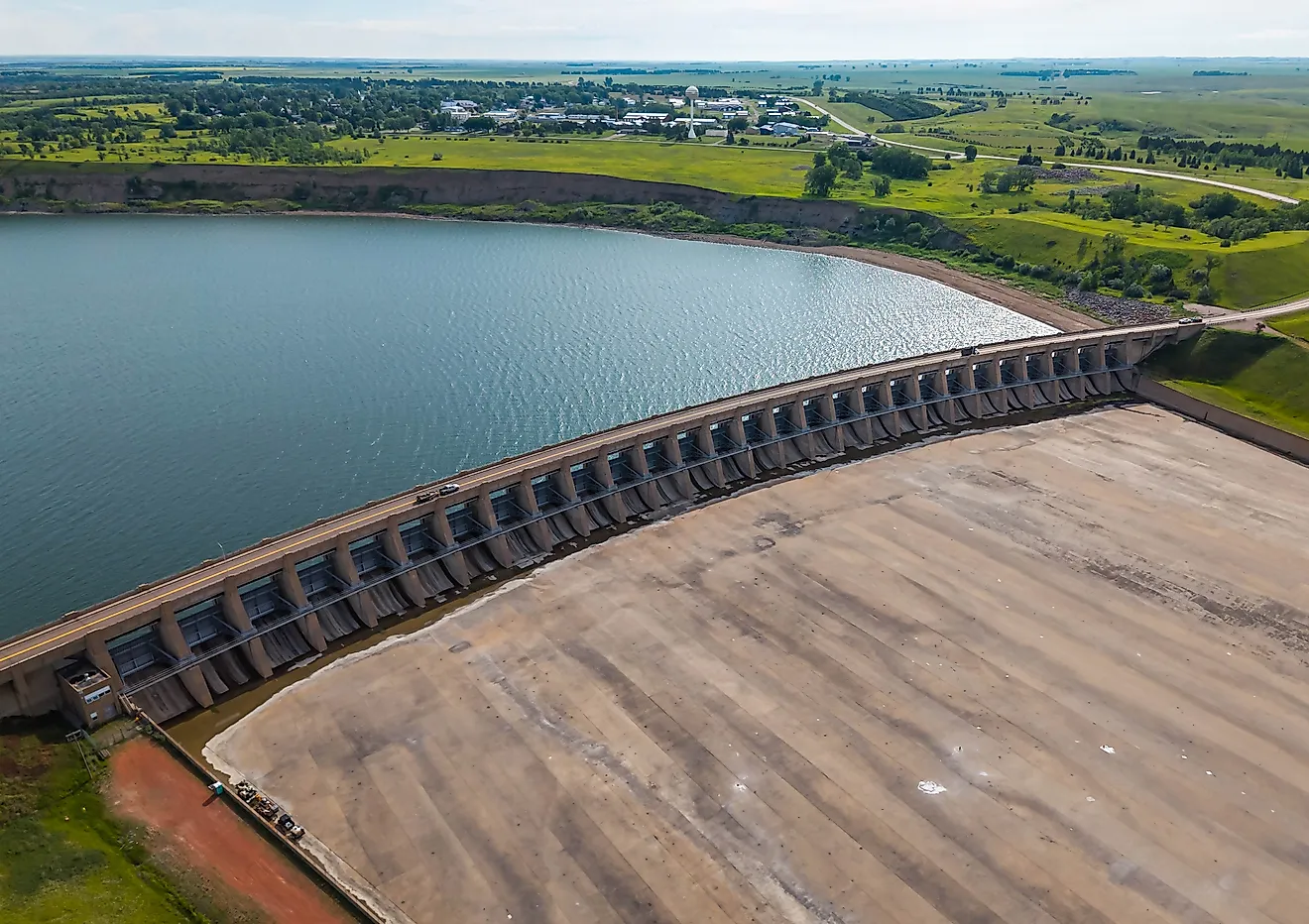
Here is where the story turns, and it turns genuinely hopeful. After Kazakhstan became independent in 1991, first the local people and then the national government set out to save the one piece of the lake still fed by the Syr Darya. In 2005 Kazakhstan and the World Bank finished the Kok-Aral Dam, an earthen wall about 8 miles long that pens the North Aral Sea off from the dry southern basin and keeps the river's water where it can do some good. The bill came to roughly 86 million dollars.
The payoff arrived far ahead of schedule. Engineers figured the water would need years to climb; instead it topped the dam's spillway within eight months. As the North Aral filled, its salinity slid back toward where it had been in 1960, the native fish came home, and the boats at Aralsk went back to work. The North Aral now holds steady at around 1,300 square miles. That is a slice of the original, and the vast southern basins are still desert, but a sea that everyone had written off is measurably alive again.
What the Aral Sea Leaves Us With
The Aral gets held up as a warning, and it has certainly earned that. Inside a single lifetime one of the largest lakes on Earth was drained on purpose, and the bill landed on the fisheries, the climate, and the health of everyone downwind. What the northern recovery adds is a second, sturdier idea sitting right alongside the warning. When the water was allowed back, it came back fast, which says that even brutal damage to a lake is not always the end of the story. The Aral Sea shows both how quickly people can unmake a body of water and, up north, how much of it can be won back when the rivers are finally let through.