What Happens To Ships That Vanish At Sea
Ships have been sinking for as long as people have been sailing, and a surprising number of them are never seen again. So where do they actually go? The ocean does not make a vessel vanish so much as slowly take it apart, piece by piece, over years or centuries. Some are pounded to scrap in the shallows, some are quietly eaten by bacteria in the deep, and a rare few are preserved almost perfectly. Here is what really happens to a ship after it slips beneath the surface.
The Long Way Down

The first reason ships seem to vanish is simple: the ocean is enormous and mostly unmapped. The average depth is around 3,700 meters, and much of the seafloor has never been surveyed in detail, so a ship that sinks far from land can settle into a search area the size of a small country. Some go down so fast they never send a distress call at all. The MV Derbyshire, the largest British ship ever lost, sank in a Pacific typhoon without a single Mayday and was not found for over a decade. Once you understand how deep the ocean gets, it is less surprising that so many wrecks are never located. There are millions of them down there, and only a small fraction have ever been found.
Two Very Different Fates

What happens next depends almost entirely on where the ship lands. A wreck in shallow water leads a violent afterlife. Waves shove it around, sand scours it like a sandblaster, and warm, oxygen-rich water feeds fast corrosion, so shallow wrecks tend to break apart within decades. A ship that sinks into the deep ocean gets the opposite treatment. Down there it is cold, pitch black, and under crushing pressure, with very little oxygen, so the physical battering stops almost entirely. You might expect a deep wreck to last forever. It does not, and the reason is alive.
The Bacteria That Eat Ships

The deep ocean has its own demolition crew: iron-eating bacteria. These microbes colonize a steel hull and slowly consume the metal, a process scientists call biocorrosion, and in the right conditions it eats a wreck faster than plain rust ever could. On the Titanic, the bacteria have built strange, icicle-shaped formations of rust called rusticles that hang off the hull. As they grow, they pull iron out of the ship, and eventually they crumble into a fine powder that drifts away on the current. Bit by bit, the metal is not so much destroyed as carried off and scattered across the seabed.
The Slow Undoing of the Titanic
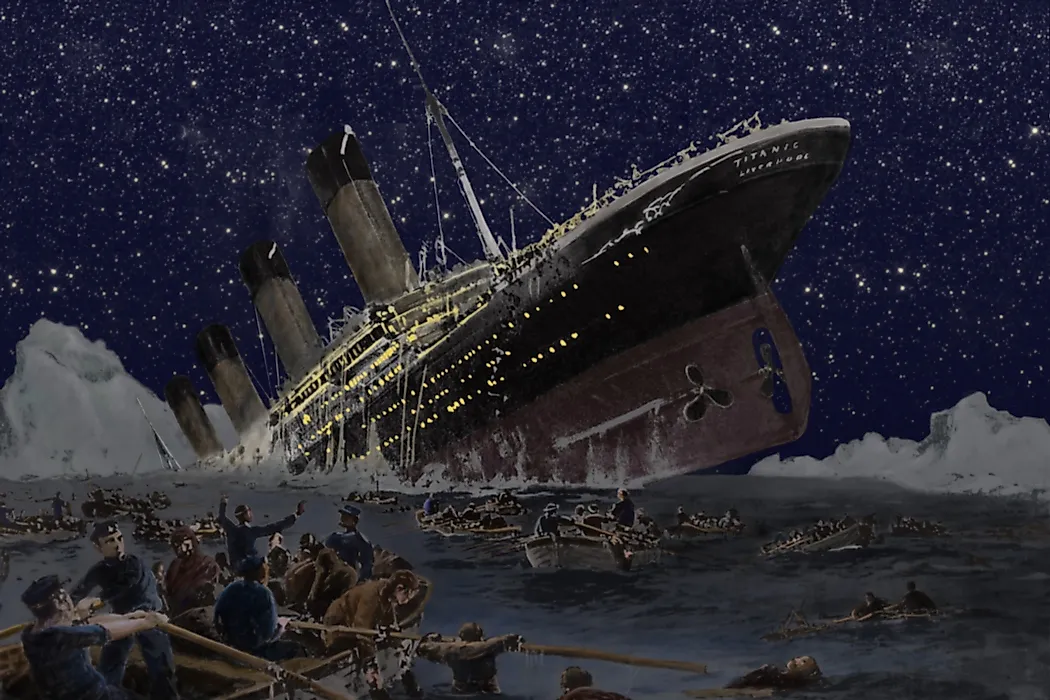
The most famous example of all is the Titanic, resting about 3,800 meters down in the North Atlantic since 1912. When it was found in 1985, much of the ship was still recognizable. It is not holding up well. The bacteria are said to consume hundreds of pounds of iron a day, and recent expeditions have watched famous features disappear between visits, including the crow's nest and the captain's bathtub. Researchers now think that within a few decades, large parts of the wreck could collapse into little more than a rust stain on the ocean floor. As one explorer put it, the Titanic is returning to nature.
What the Sea Keeps

Not everything gets erased. Change the conditions and the ocean turns from destroyer into preservative. In cold fresh water like the Great Lakes, or in oxygen-starved seas like the Baltic and the Black Sea, the organisms that normally devour a wreck cannot survive, so ships go down and simply stay, sometimes with masts standing and paint intact centuries later. It works on softer materials too. Currents and scavengers strip away wood and human remains, but tougher items like leather shoes can linger for a century, which is why explorers near the Titanic have found pairs of boots resting in the mud, marking spots where the ship's dead once came to rest.
A Second Life as a Reef

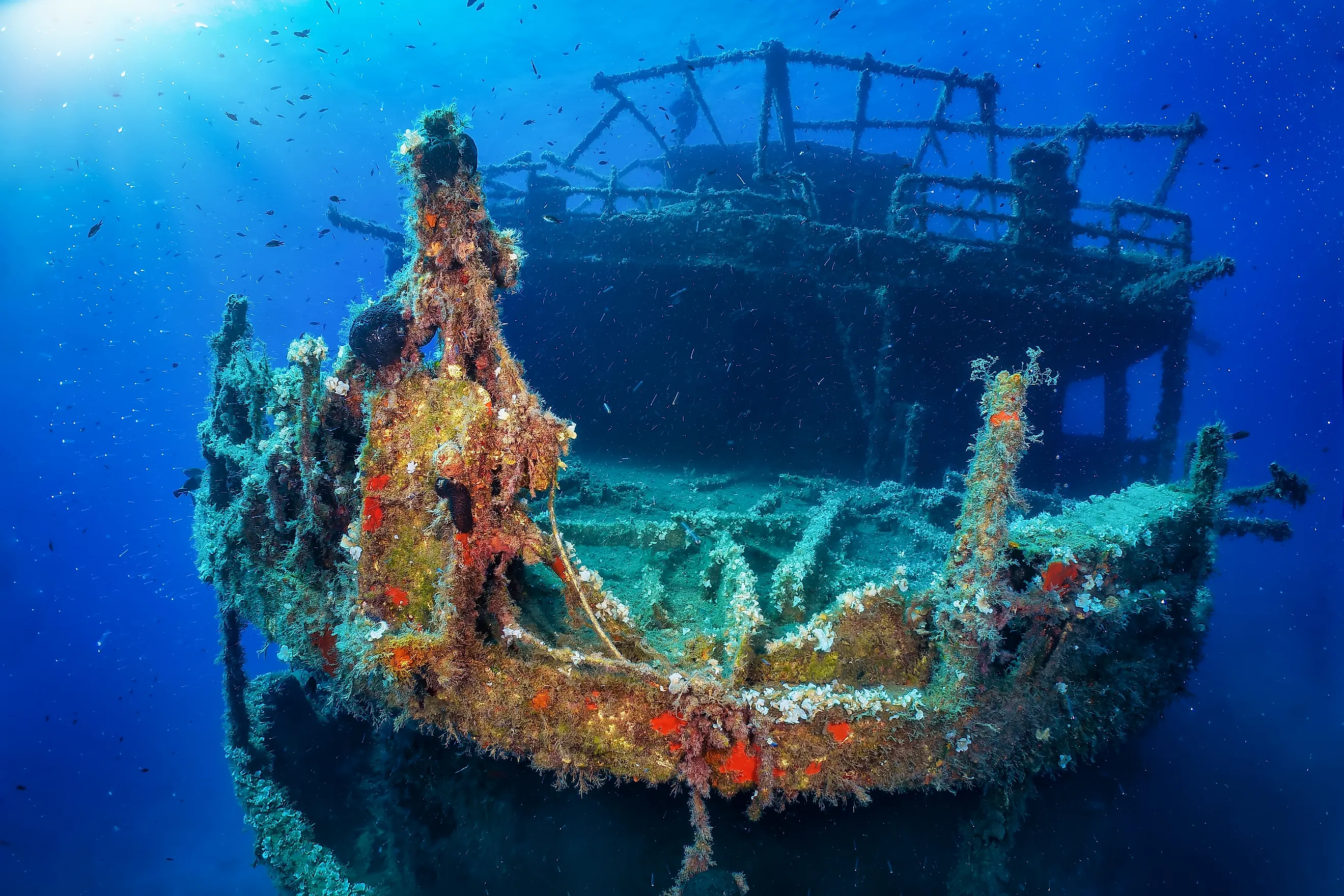
While a wreck falls apart, it also fills up with life. Almost as soon as a ship hits the bottom, fish move in, and corals, sponges, and other creatures begin to colonize the hull, turning a dead vessel into a thriving artificial reef. Some of the best diving sites in the world are old wrecks for exactly this reason. There is a catch. A sunken ship can also be a floating hazard in disguise, since fuel oil and cargo may keep leaking out for decades, which is why many old wartime wrecks are watched carefully as slow-motion pollution risks.
Nothing Truly Disappears

So a ship that vanishes at sea has not really vanished at all. It has been scattered into a debris field, colonized into a reef, dissolved into rust powder, or quietly kept intact in cold dark water, waiting to be found. The ocean is not a trapdoor. It is a very slow recycling system, and given enough time it takes back almost everything we send across it, one rusticle at a time.