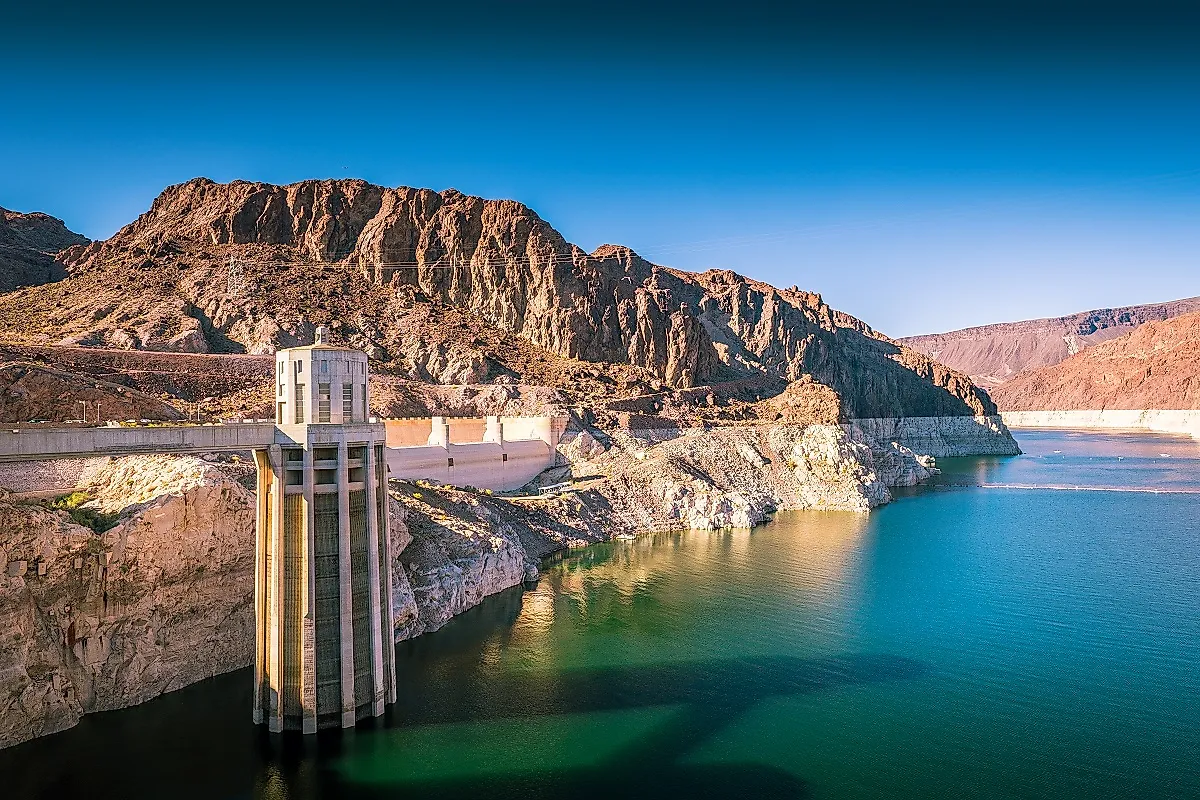
The US Reservoirs Closest To Dead Pool Status
"Dead pool" sounds like the end of the story, but it has a specific meaning. It is the point at which a reservoir drops so low that water can no longer flow out past the dam and continue downstream. The lake is not empty when this happens. There is still plenty of water in it. That water just sits there, stuck below the dam's outlets, unable to reach the cities and farms that depend on it. It is the line water managers spend their careers trying not to cross, and along the Colorado River and the Rio Grande, a few reservoirs are closer to it than most people realize. Here are the ones worth watching, with the numbers as they stood in mid-July 2026.
First, What Dead Pool Actually Means

It helps to keep three different thresholds straight, because they get mixed up constantly. The highest is minimum power pool, the level below which a dam can no longer spin its turbines and generate electricity. Drop further and you reach dead pool, where water can no longer pass through the dam's outlets to flow downstream by gravity. Those two are not the same, and neither one is the same as a reservoir being "empty." A lake can be at two percent of capacity and still be well above its dead pool elevation, because dead pool is about the height of the water relative to the dam's plumbing, not about how much is left. When you see a scary percentage in a headline, that is usually a measure of usable storage, not a countdown to dead pool. Keep that distinction in mind for everything below.
Lake Powell, Arizona and Utah

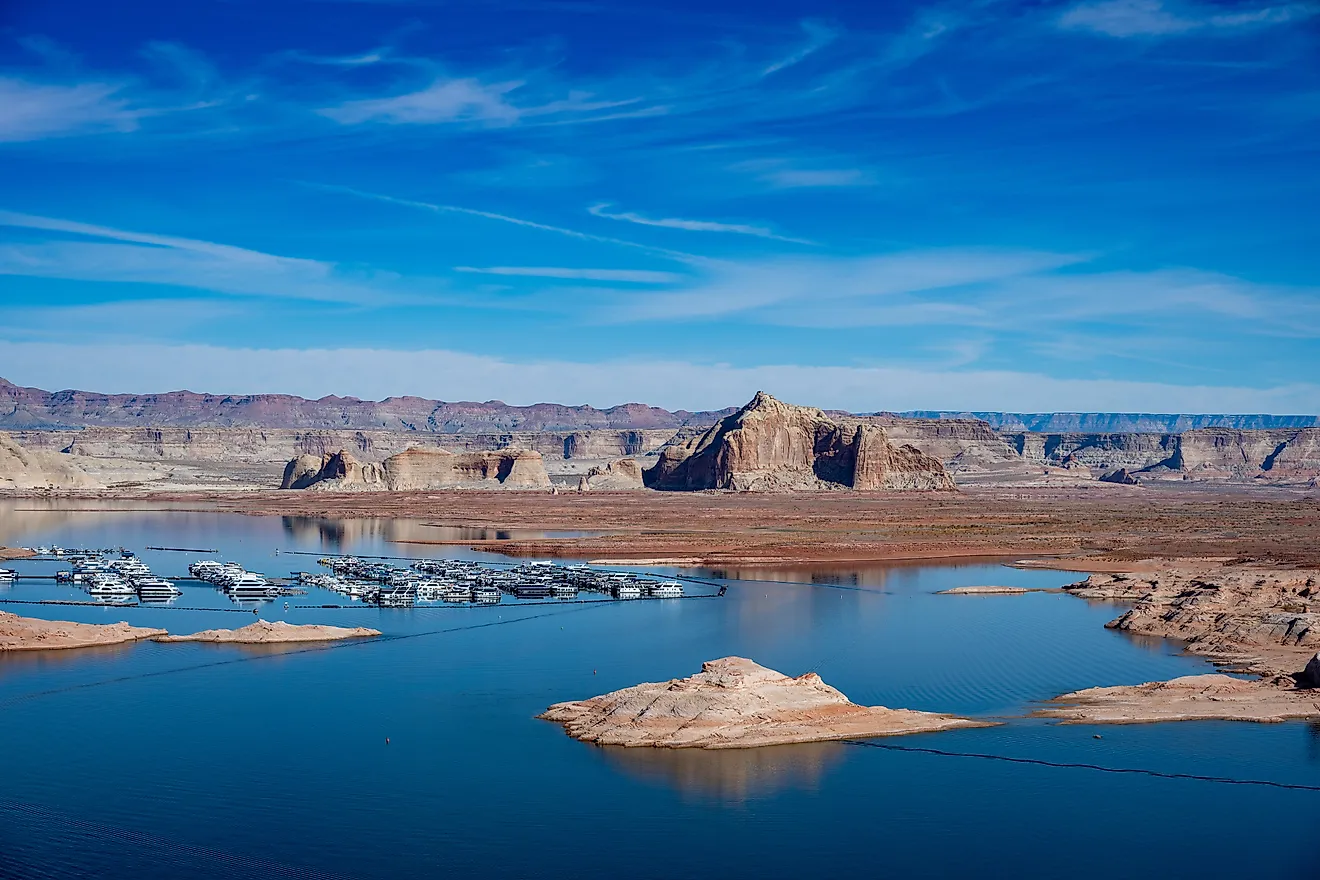
Lake Powell, the second largest reservoir in the country, is the one giving engineers the most immediate trouble. In mid-July 2026 it sat at about 3,524 feet, roughly 27 percent full, against a full pool of 3,700 feet. Dead pool is 3,370 feet, so the lake had around 154 feet of room on paper. The catch is the threshold above it. Minimum power pool at Glen Canyon Dam is 3,490 feet, only about 34 feet below the mid-July level, and the Bureau of Reclamation had warned the lake could fall past that line by August 2026 without help.
Here is why that middle zone matters. Between 3,490 and 3,370 feet, the turbines are shut off and water can only leave through the dam's river outlet works, a set of four bypass pipes. Those pipes were never meant to carry the whole river for months at a time, and inspectors have already found cavitation damage inside them, the erosion caused by high-speed water forming and collapsing air bubbles. Reclamation considers them safe for sustained use only down to about 3,394 feet. In other words, the dam starts having serious problems well before the water reaches true dead pool. To buy time, federal managers arranged extra releases from an upstream reservoir and cut the amount Powell sends downstream, aiming to lift it back toward 3,500 feet by spring 2027.
Lake Mead, Nevada and Arizona

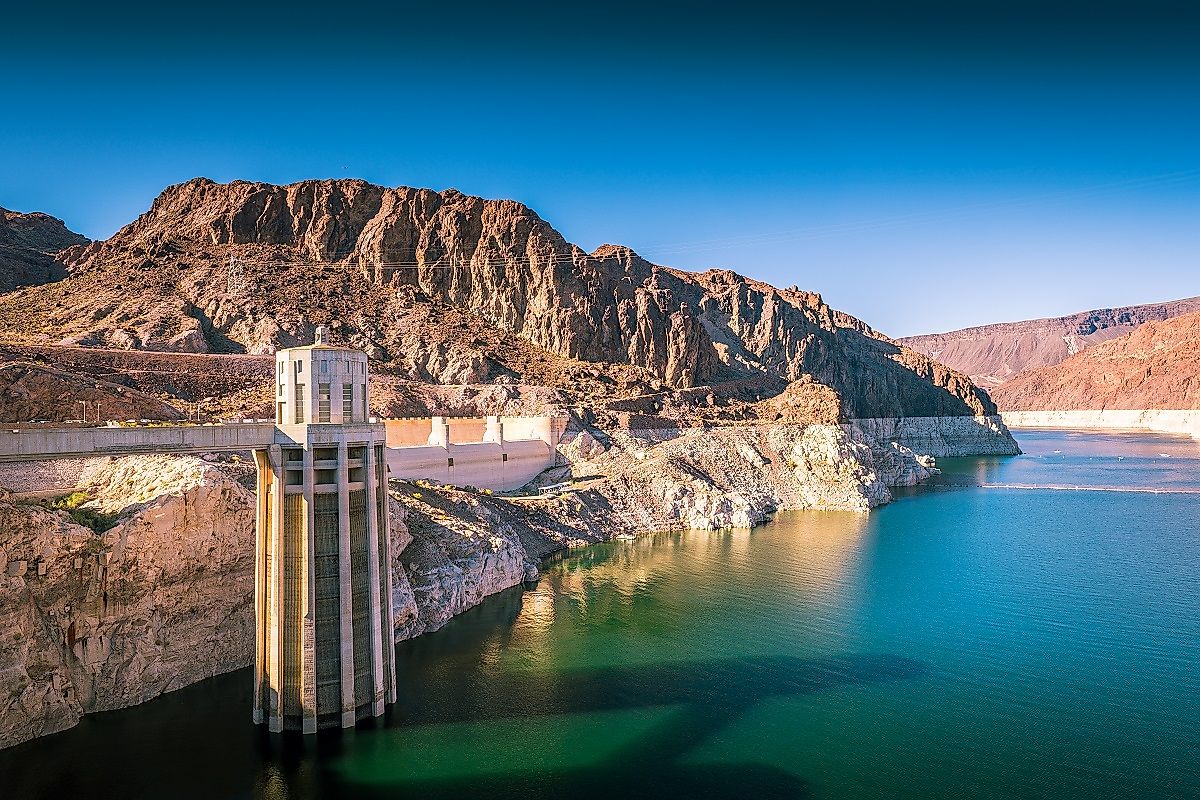
Downstream sits Lake Mead, the largest reservoir in the United States and the one most people picture when they think of this crisis. In mid-July 2026 it measured around 1,042 feet, about 27 percent full and within a couple of feet of the all-time low it set in 2022. Dead pool at Hoover Dam is 895 feet, which left Mead roughly 147 feet of cushion. That sounds comfortable next to Powell, and in a sense it is, but the trend is not. Federal forecasters expected the lake to keep setting record lows through 2026 and into 2027, with worst-case projections near 1,015 feet by the summer of 2027.
The power math is its own problem. After turbine upgrades, Hoover Dam can keep generating down to about 950 feet, so hydropower would fail long before the lake hit dead pool. There is one quirk worth knowing. Southern Nevada built a low intake, sometimes called the third straw, that can pull water at 875 feet, which is below dead pool. If Mead ever dropped that far, Nevada could still draw from it while Arizona and California could not, a strange outcome baked into the plumbing.
Elephant Butte Reservoir, New Mexico

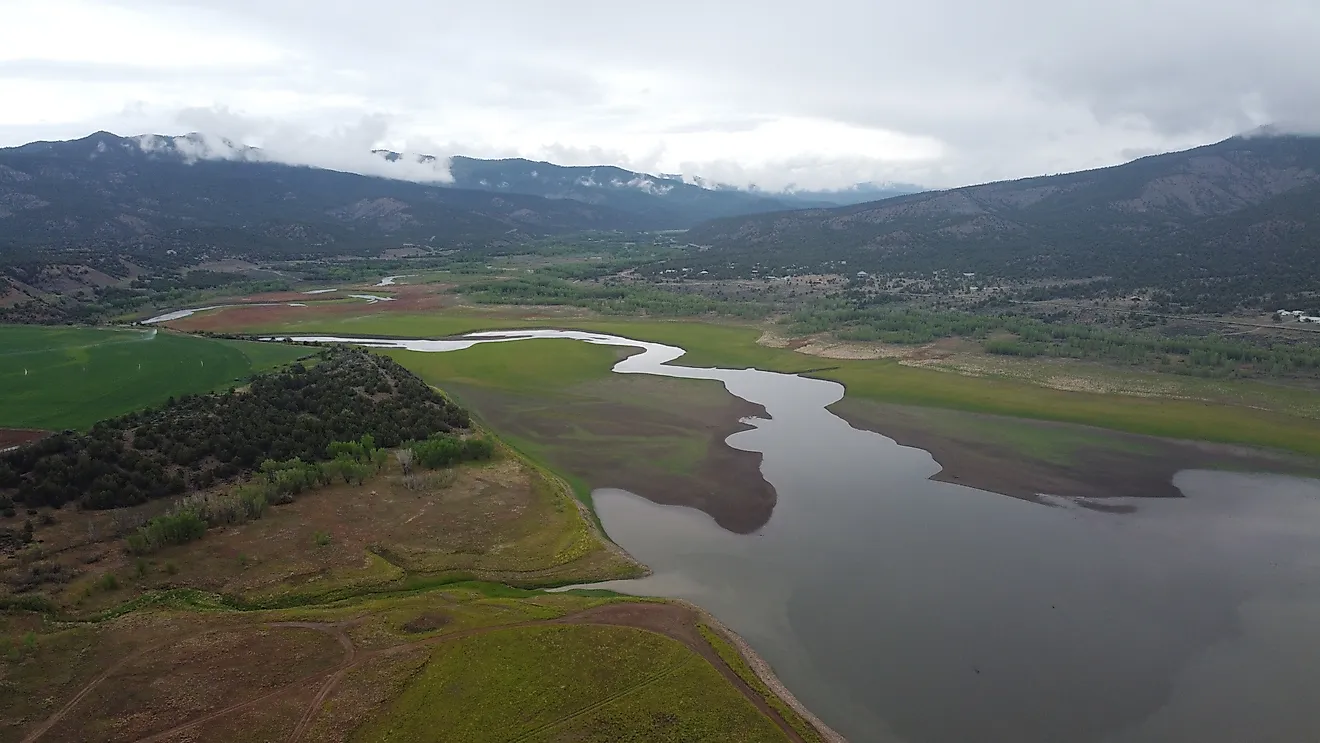
Elephant Butte belongs on this list, but with an honest caveat. It is the largest reservoir in New Mexico, it sits on the Rio Grande, and in mid-July 2026 it held only about two to three percent of its capacity, with managers warning it could bottom out near two percent by late August. That is functionally close to running dry. It is not, however, the same clean case as Powell or Mead, because a reservoir at two percent is nearly out of usable storage rather than sitting just above a dam's dead pool elevation. The end result for the people downstream feels similar. When there is almost nothing left to release, it barely matters whether you call it dead pool or an empty bank account. Elephant Butte irrigates tens of thousands of acres of farmland and supplies part of El Paso, and after three straight dry years, its account is nearly drained.
Blue Mesa Reservoir, Colorado

Blue Mesa is the largest reservoir in Colorado, and it earns a spot here for a different reason. It is the one that keeps getting sacrificed to save Lake Powell. In 2021 and 2022, federal managers drew it down hard to send emergency water downstream, and its boat ramps ended up stranded far from the shoreline. It recovered, but it is sliding again. In mid-July 2026 it was around 32 percent full and down roughly 45 feet from a year earlier, with marinas relocating slips and ramps closing through June and July. It still sat well above its own dead pool, but the pattern is the point. When the big reservoirs get desperate, smaller ones like Blue Mesa pay first.
Why the Risk Clusters in the Southwest

You may have noticed that every reservoir here drains into two rivers in the same corner of the country. That is not a coincidence. The Colorado River system was storing only about a third of its capacity in the spring of 2026, following the lowest snowpack on record, and the river is over-allocated, meaning more water is promised on paper than actually flows most years. Those promises were written in 1922, during a stretch that later proved unusually wet.
It is also worth noting which reservoirs are not on this list. Navajo Reservoir and Flaming Gorge were both more than half full in 2026, which is exactly why they were tapped to prop up Powell. They are the savings accounts the system draws on, not the ones near the bottom. The bigger uncertainty is legal rather than physical. The rules that have governed shortages since 2007 are set to expire at the end of 2026, and the seven basin states have not agreed on what replaces them, which sets up a difficult negotiation over a shrinking supply that more than 40 million people rely on.
The Bottom Line
No major US reservoir is forecast to actually hit dead pool in the immediate term, and it is worth saying that plainly so the numbers above are not mistaken for a prediction. What the figures show instead is how thin the margins have become. Lake Powell is the one to watch, because the trouble starts at its power pool and its outlet works long before the water reaches true dead pool. The rest of the list is a reminder that the same drought is pressing on the whole region at once, and that the line nobody wants to cross is no longer as far away as it used to be.