The Caspian Sea Holds Three Times More Water Than the Great Lakes
Ask which holds more water and it is not close. The Caspian Sea contains roughly 18,761 cubic miles of water, more than three times the combined volume of all five Great Lakes. It is the largest inland body of water on Earth, salty rather than fresh and ringed entirely by land, which is why the same body can be called both a sea and the world's largest lake. The Great Lakes lose the volume contest badly, yet they hold about a fifth of the planet's fresh surface water and supply drinking water to tens of millions of people. The gap comes down to depth, chemistry, and geography.
The Caspian Sea: Sea or Lake?

The Caspian behaves like both, which is why it has confused people for as long as they have named it. Its water is salty and its surface wide enough to vanish over the horizon like an ocean, yet it has no natural outlet. Water arrives mainly from rivers, above all the Volga, and leaves almost entirely through evaporation, which is the definition of a lake. The name is a holdover from ancient coastal peoples who could not see across it and took it for an ocean. The five countries around it, Russia, Kazakhstan, Turkmenistan, Iran, and Azerbaijan, still treat it as a sea in law and in everyday speech.
Scale and salinity
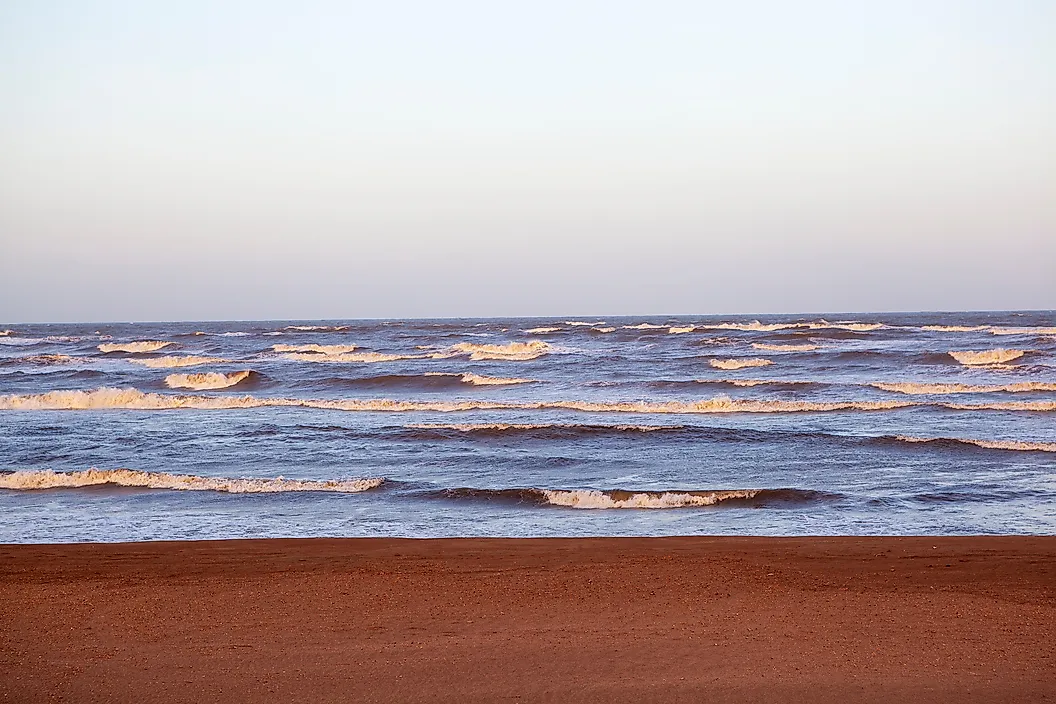
The Caspian runs nearly 750 miles north to south and covers about as much ground as Japan. Its northern end is a shallow shelf only a few yards deep, while the southern basin plunges past 3,300 feet. That range creates distinct zones: freshwater river deltas in the north, and deeper, saltier water in the south, each with its own plants and animals. Even at its saltiest the Caspian is only about a third as salty as the ocean, diluted further where the Volga pours in.
Why it holds so much water
At roughly 18,761 cubic miles, the Caspian holds something like 40 percent of all the water in the world's lakes, well over three times the 5,439 cubic miles in all five Great Lakes combined. Depth is the reason. A wide lake can still be shallow, but the Caspian pairs an enormous surface with those deep southern basins, and depth is where the water hides.
A fragile balance
Being landlocked also makes the Caspian vulnerable. With no outlet, its level depends entirely on river inflow, rainfall, and evaporation. Warm the climate or cut the rivers and the shoreline retreats, which is happening now: the water has pulled back by yards in places, exposing former seabed and threatening ports, fisheries, and wetlands. The same enclosure that makes it a lake ties its future to conditions across the vast territory that drains into it.
The Great Lakes: A Connected Chain

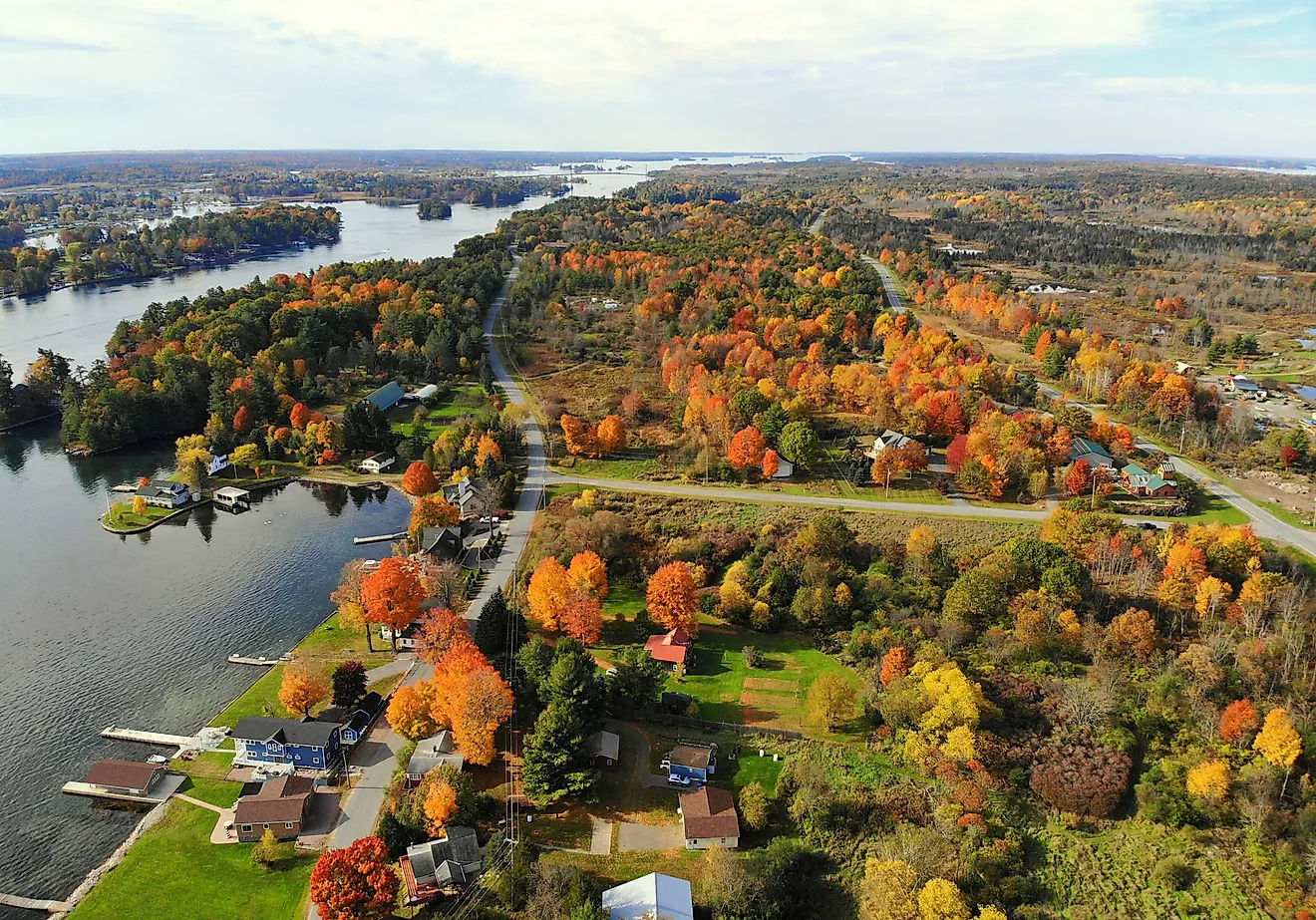
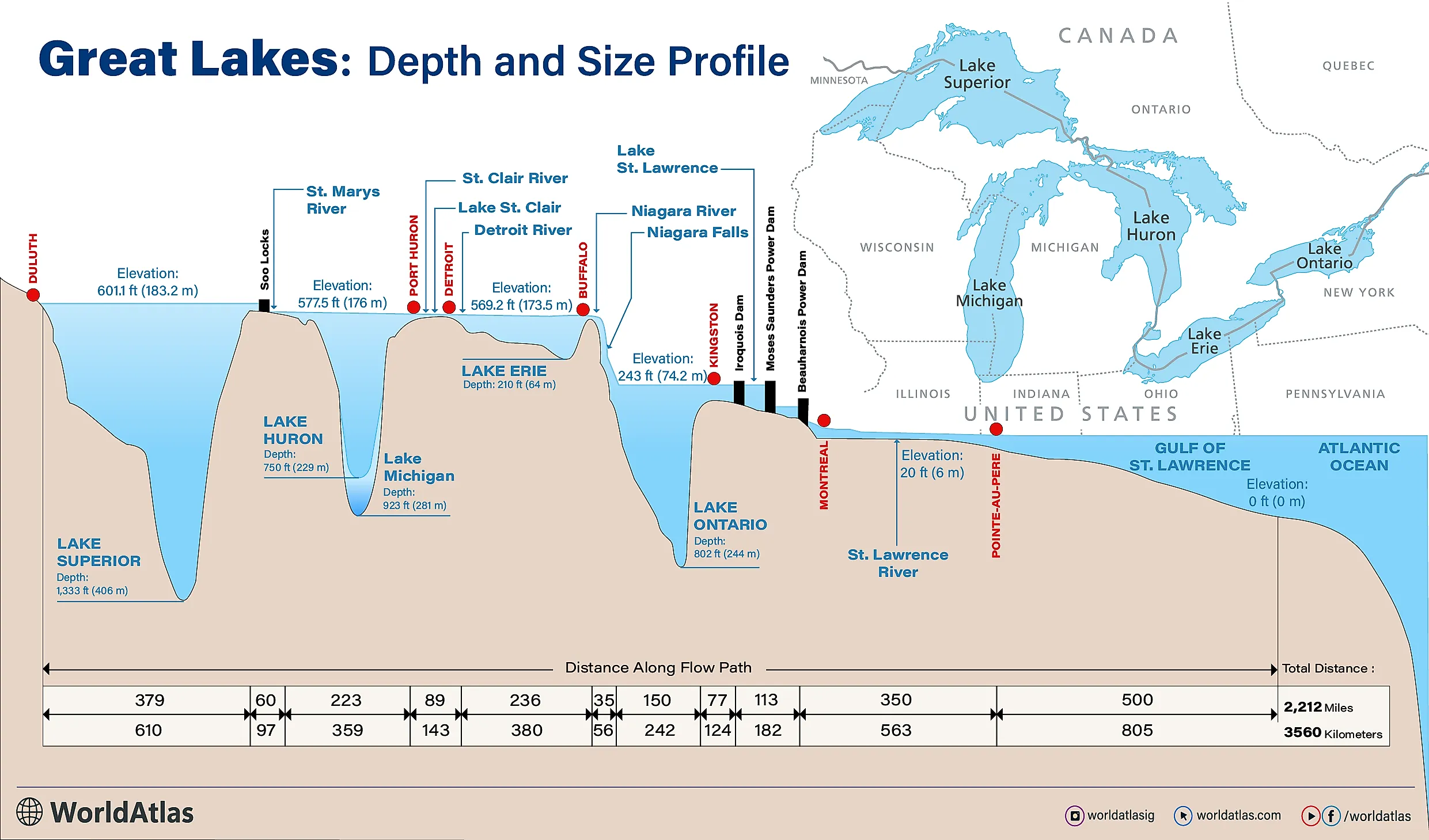
The Great Lakes are five freshwater lakes linked into a single chain along the U.S.-Canada border. Superior, Huron, Erie, and Ontario are shared by both countries; Michigan lies entirely inside the United States. Together they form the largest group of freshwater lakes on Earth by surface area.
The five lakes by volume
- Superior is the largest at about 2,900 cubic miles, more than half the water in the chain, and also the deepest and coldest, big enough to raise ocean-grade storms.
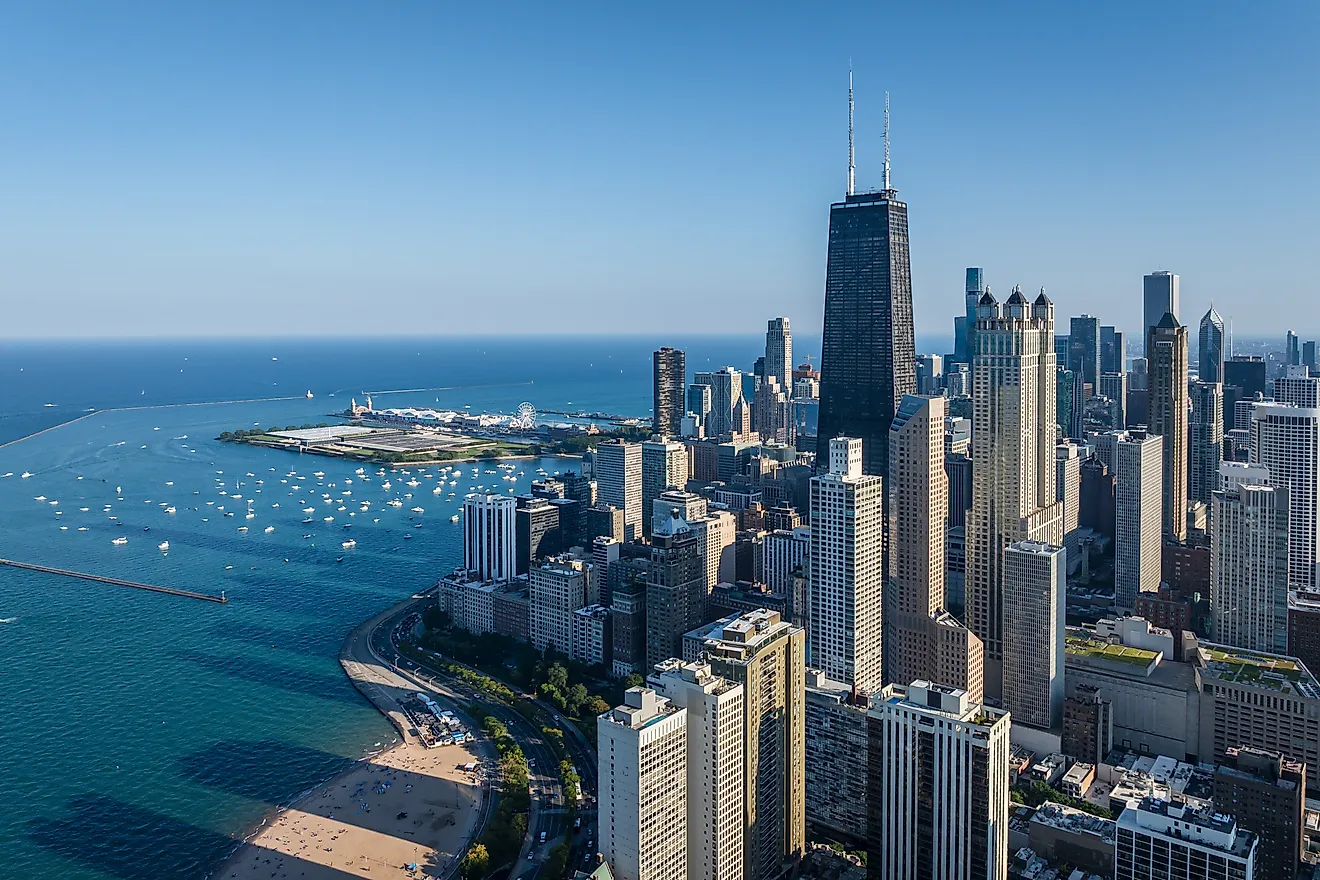
- Michigan holds around 1,180 cubic miles; Chicago grew up on its southwestern shore.
- Huron holds roughly 850 cubic miles and is studded with thousands of islands around Georgian Bay. It shares a water level with Michigan through the Straits of Mackinac, so water moves freely between the two.
- Ontario holds about 393 cubic miles, the smallest surface of the five but deeper than Erie, and drains into the St. Lawrence River toward the Atlantic.
- Erie is the smallest by volume at about 119 cubic miles, and the shallowest, which makes it both a productive fishery and the most exposed to pollution.
An outlet to the ocean
The crucial difference from the Caspian is the drain. Water flows out of Superior into Huron, mixes with Michigan through the Straits of Mackinac, drops into Erie, pours over Niagara Falls into Ontario, and leaves down the St. Lawrence to the sea. That open path turned the lakes into a working shipping network, with canals and locks moving freighters loaded with iron ore, grain, and coal, and it built port cities such as Duluth, Detroit, Cleveland, Toronto, and Buffalo. The lakes also supply drinking water to tens of millions and feed farms, factories, and power plants. Because they straddle a border, protecting them means coordinating two federal governments, many states and provinces, Indigenous nations, and cities at once.
What Each Body of Water Sustains

Volume is only half the story. Each body of water underwrites the life and economy around it, though in very different ways.
The Caspian's fisheries and oil

The Caspian is famous for its sturgeon, whose eggs become caviar and whose fishery has fed coastal communities for centuries. It is also the only home of the Caspian seal, found in no other body of water on Earth. The same basin holds major oil and gas reserves, a source of wealth for the surrounding countries and of spills and habitat loss for the sea. Because five nations share the water, fishing rights, shipping lanes, drilling, and boundaries all overlap, and pollution released on one shore can foul another.
The lakes' wildlife and pollution
The Great Lakes basin supports more than 3,500 kinds of plants and animals, and its wetlands work as fish nurseries, natural filters, and flood buffers. But the water is under pressure: farm fertilizer runoff feeds algae blooms, some toxic enough to threaten wildlife and tap water, with shallow, warm Erie hit hardest. Twentieth-century factories left their own scars, and while cleanup has reversed much of the damage, contaminated sediment lingers and invasive zebra and quagga mussels have rewired the food web.
A shared climate threat
Climate change is the open question for both. The lakes face warmer water, less winter ice, stronger storms, and eroding shore; the Caspian faces a falling water level as evaporation outruns its rivers. In each case the same things are on the line: ports, fisheries, wildlife, tourism, and the water supply itself.
Size Versus Significance
The comparison lands on a simple split. The Caspian wins on sheer volume, with the scale, salt, and open horizon of a sea. The Great Lakes hold far less water, but that water is fresh, drinkable, and wired into the daily life and economy of a continent. One matters for how much there is; the other for what it does. Their future rests less on how much water they hold than on how carefully the people around them manage it.