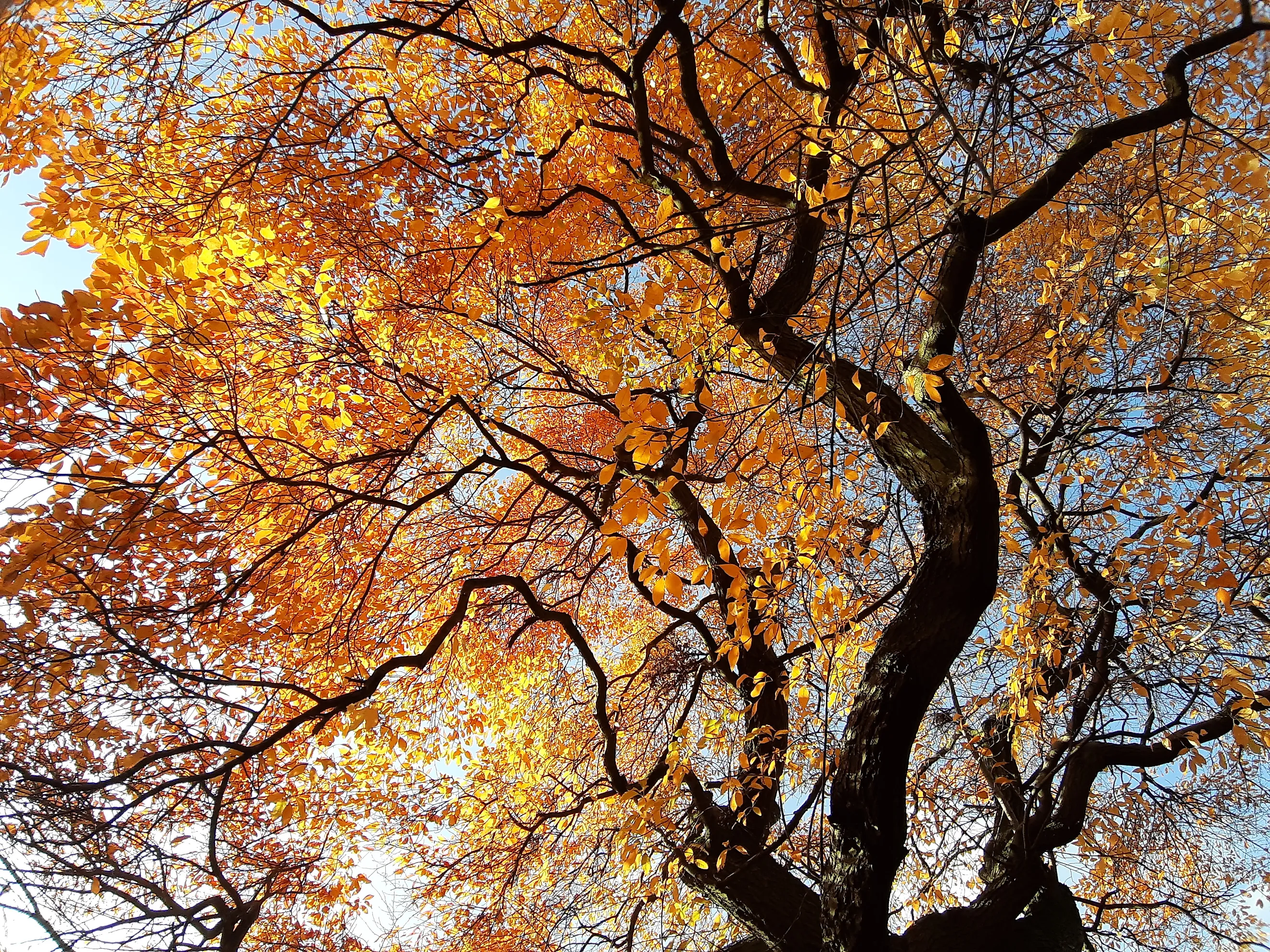
The Trees That Turn Color First Every Fall
Black gum can show scarlet branches in Pennsylvania by late August, when most of the surrounding woodland is still green. The first patch of red can appear weeks before the air gets cooler and the earthy scent of leaves makes it feel like autumn. Across the United States, autumn colors spread across the Appalachian hillsides and the golden aspen groves of the Rocky Mountains. Leaves generally change color earlier farther north and at higher elevations, and later in warmer, southern regions. "Early" means ahead of many neighboring trees, rather than the first across the country. Black gum, quaking aspen, red maple, and the others like them are early changers in their regions, although their timing shifts with local conditions each year.
Why Trees Change Color

As days shorten and temperatures drop, deciduous trees begin preparing for winter. Their leaves produce less chlorophyll, the green pigment that helps them use sunlight to make sugars through photosynthesis. As the chlorophyll breaks down, yellow and orange pigments called carotenoids become visible. These pigments are present through the growing season, hidden beneath the dominant green.
Reds and purples come from anthocyanins, another group of pigments that many trees produce as sugars accumulate in their leaves during autumn. Sunny days and cool nights that stay above freezing encourage vivid color. Different species follow different seasonal schedules, and latitude, elevation, and local weather all influence when their displays begin.
Black Gum

Patches of scarlet on a black gum stand out against a green, late summer woodland. Nyssa sylvatica, sometimes called black tupelo, ranks among the early trees to reveal autumn color, according to Pennsylvania's Department of Conservation and Natural Resources. FOX6's weather team attributes black gum's early color partly to its genetic clock, an internal timer that influences how it responds to changes in daylight, temperature, and water availability.
Its display can include purple, yellow, and orange as well as bright red, sometimes with multiple colors on the same branch. Black gum is native to much of the eastern US, with a range that reaches Maine in the north, Florida in the south, and eastern Texas and Oklahoma in the west. Its glossy, oval leaves have mostly smooth edges.
Quaking Aspen

Yellowing aspens can signal autumn in the high country, sometimes appearing in late summer as harbingers of more color to come. Shorter days cue their autumn transition, and cooler mountain conditions influence its timing. The National Park Service reports that color begins at higher elevations of Colorado's Rocky Mountain National Park in early September and reaches lower elevations by mid-month.
Quaking aspen, Populus tremuloides, turns golden yellow as surrounding conifers remain green. Many groves develop through shoots from a shared root system, and trees belonging to the same clone can change color together, creating broad patches of gold across a mountainside. Quaking aspen grows across much of northern North America as well as the mountains of the West.
Red Maple

Red maple, Acer rubrum, is among the first trees to change color in Ohio's Cuyahoga Valley National Park, where the National Park Service notes crimson foliage beginning around mid-September. FOX6's weather team explains that its genetic makeup contributes to its early fall transition. Despite its name, the red maple can turn orange or yellow as well. Its bright red foliage stands out most in northern forests, against dark evergreen needles and the yellow leaves and white bark of paper birches.
Red maple leaves have three to five pointed lobes with toothed edges and pale undersides. It grows across much of the eastern and central US.
Sassafras

Sassafras albidum brings early autumn color to the edges of forests with leaves that turn yellow, orange, and red. Missouri's Department of Conservation identifies it among the earliest plants to change, with color beginning around mid-September. Appalachian Voices describes its early color as "foliar fruit flagging," a pattern where changing leaves may lead migrating birds to ripened fruit.
Its leaves have a distinctive feature, with oval, mitten-shaped, and three-lobed leaves all growing on the same tree. The mitten shape, with a rounded "thumb" extending to one side, makes sassafras easy to recognize. Sassafras grows across much of the eastern US, from southwestern Maine west into the Midwest and south to central Florida and eastern Texas.
Black Walnut
Black walnut, Juglans nigra, brings yellow to streambanks and woodland edges in early autumn. Missouri's Department of Conservation identifies black walnut as an early fall color tree, with leaves turning yellow in September. Michigan State University Extension notes that black walnut has a short growing season, with leaves emerging later in spring and yellowed leaves falling in late summer or early fall.
Each long, compound leaf consists of smaller, pointed leaflets arranged along a central stalk. As the leaflets fall, they leave branches bare enough to reveal the round walnuts enclosed in green husks. Unusually early yellowing can result from walnut anthracnose as well, a fungal disease that sometimes causes leaf loss in late summer. Black walnut is native to the eastern and central US.
Vine Maple

Vine maple, Acer circinatum, adds red, orange, and yellow to forests in the Pacific Northwest early in autumn. Western Washington University describes its early fall color as a familiar sight along roads in the western Cascades. Writing for Washington's Department of Natural Resources, horticulturist Robert Buzzo describes scarlet vine maple foliage appearing along Cascade passes in late summer.
A small tree or large shrub, it has nearly circular leaves divided into seven to eleven lobes with toothed edges. These broad leaves bring splashes of color beneath taller evergreen trees. Native to the Pacific Northwest, vine maple grows in Washington and Oregon and extends south into northern California.
Sourwood

Sourwood, Oxydendrum arboreum, turns crimson and reddish-purple early in the autumn season. University of Tennessee Extension identifies it as one of the earliest native trees to develop fall leaf color. At Clemson University in South Carolina, sourwood can begin showing fall color as early as late September, according to Clemson forest ecologist Don Hagan. Its long, oval leaves taper to pointed tips and have finely toothed edges. Pale clusters of seed capsules contrast with red foliage, then remain on the branches after the leaves fall.
Sourwood grows mainly in the eastern and southeastern US, from southwestern Pennsylvania and parts of the Ohio Valley south to northern Florida and Louisiana. Often growing beneath taller trees, sourwood adds early red color to the understory.
Tulip Poplar

Tulip poplar, Liriodendron tulipifera, brings yellow and gold to the forest canopy at the beginning of autumn. Virginia's Department of Forestry lists it among the early-changing trees in the state. Its broad leaves have four pointed lobes and a distinctive flattened or notched tip, as though the end has been cut off. Despite its name, tulip poplar belongs to the magnolia family. Its tulip-shaped flowers give the tree its common name.
Native to the eastern US, tulip poplar grows tall enough for its autumn color to be seen high above the forest floor. Timing depends on local conditions, and yellow leaves do not always signal autumn. Hot, dry weather can cause tulip poplars to yellow and shed their leaves prematurely.
Yellow Birch

Yellow birch, Betula alleghaniensis, turns golden yellow as autumn reaches northern woods and high mountain forests. The National Park Service identifies it among the first trees to change at higher elevations of the Great Smoky Mountains, where color can begin around mid-September. Its oval leaves taper to pointed tips and have toothed edges. Shiny, yellowish-bronze bark that peels in thin, curling strips is another way to identify the tree.
Yellow birch grows across the Northeast and the Great Lakes Region of the US, extending south through the Appalachians to northeastern Georgia. Toward the southern end of its range, it becomes less common and grows mainly at higher elevations.
Staghorn Sumac

Staghorn sumac, Rhus typhina, forms patches of scarlet, orange and yellow along roadsides and forest edges. Binghamton University's fall color chart identifies it as an early changer in its New York campus landscape. Missouri's Department of Conservation notes that sumacs typically begin their fall display in mid-September.
The size of a shrub or small tree, sumac has long leaves made up of narrow, pointed leaflets with toothed edges. On female plants, large, upright clusters of fuzzy red fruits form prominent cones. Reddish-brown hairs cover its young branches, resembling the velvet on a deer's antlers and giving the plant its name. Native to eastern North America, staghorn sumac grows across the northeastern US and parts of the Midwest, extending south into the Appalachians.
Autumn's First Colors
Fall color develops at different times across the US. Aspen groves high in the Rockies may turn gold as lower elevations remain green, and black gum can show scarlet branches before nearby trees change. Knowing which species tend to turn early gives a head start on the season's peak. A yellow walnut beside a stream or a red maple beneath evergreen branches can be an early sign that autumn has reached the local neck of the woods.