A Dam Surprise in the North Cascades
Imagine walking through a national park when you stumble upon not one, but three dams. That's what visitors find in Washington's North Cascades National Park Service Complex, where the Diablo, Ross, and Gorge dams sit within Ross Lake National Recreation Area, the stretch of the complex that divides the national park into north and south units.
All three dams were built between the 1930s and 1960s, before the national park was established in 1968. These dams are no small feature either: one was once the tallest dam in the world, and another sparked an international dispute between Seattle and British Columbia.
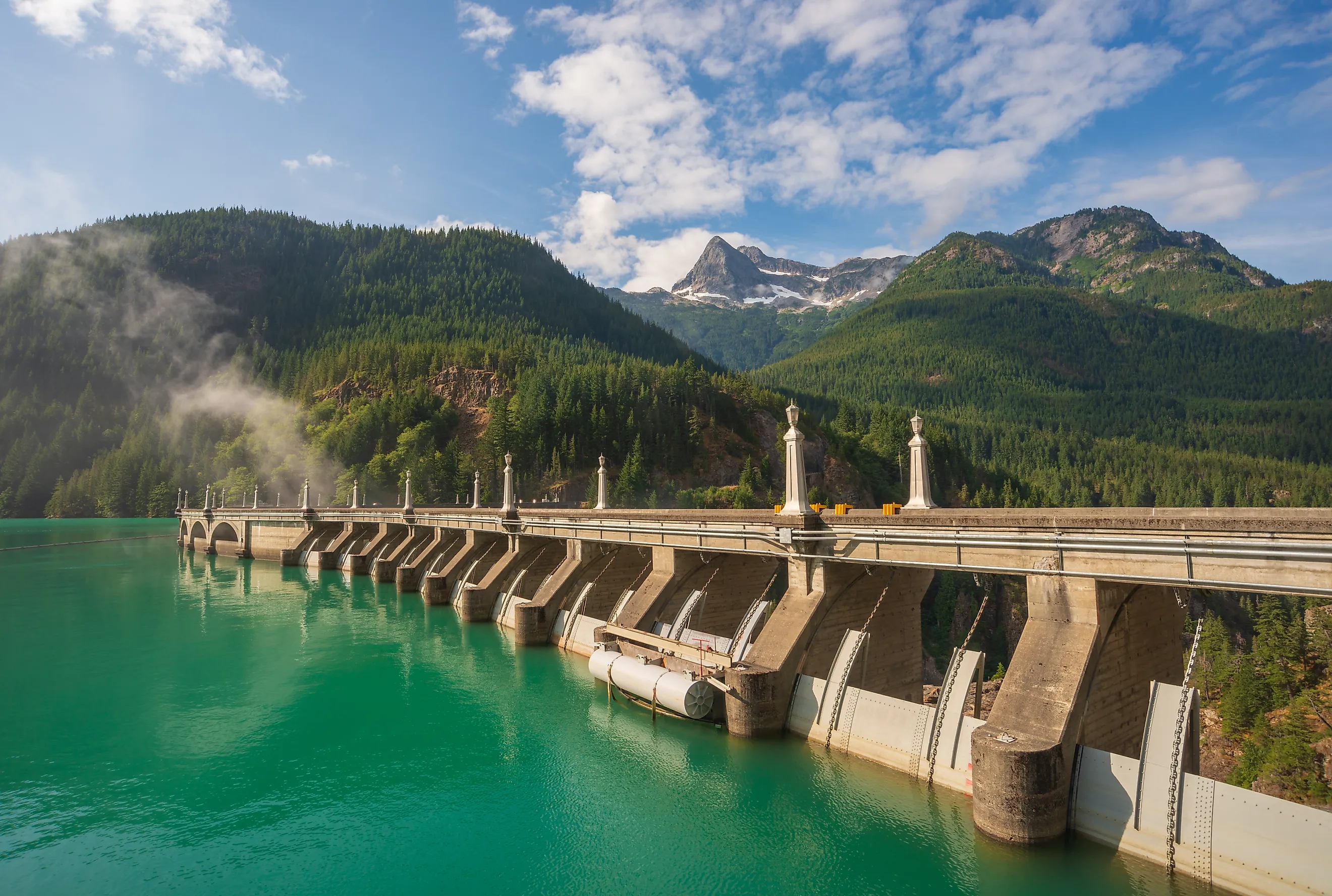
Diablo Dam: Used to be the Tallest Dam Thing Around

At 389 feet tall, Diablo Dam was once the tallest dam in the world. Today, it no longer ranks among even the top 200 tallest dams, and it isn't the highest dam in the complex, but it was a major feat for its time in the 1930s.
This dam's primary purpose was to take advantage of the Skagit River for hydroelectric power. Founded in 1910, the Seattle City Light, a publicly owned, not-for-profit electric utility department, aimed to find a way to provide cheap electrical power to the city. It was to follow up on existing work, as hydroelectric power on the Cedar River couldn't keep up with demand.
In 1924, then-President Calvin Coolidge formally started the Skagit River Hydroelectric Project by starting its first generators. The initial phase of the project cost $13 million to enable the construction of dams on the Skagit River to power the city. Diablo Dam was built from 1927 to 1930, but even after its construction, it produced no power for six years, due to political maneuvering between Superintendent James Delmage Ross of Seattle City Light, mayors, and city officials.
Ross Dam: So Tall It Flooded Canada

Ross Dam would end up dwarfing Diablo Dam, although it would be constructed over several stages, and was actually never fully completed.
Construction began in 1937, a year after electrical power was added the Diablo Dam. Initially called the Ruby Dam project, its name was changed to Ross Dam in honor of Superintendent Ross, who passed away in 1939.
By 1940, the dam had reached 305 feet tall, but its height was further increased to 540 feet by 1949. The dam redirected water from the Skagit River into a reservoir known as Ross Lake. However, this lake was so close to the border with Canada that it flooded into British Columbia, damaging 5,475 acres of land in 1954.
This flooding caused tensions with Canada, and Seattle City Light had to pay $250,000 for the damages up front and $5,000 a year. In addition, the department had to abandon plans to build the dam an additional 125 feet because of objections from British Columbia.
Interestingly, Seattle City Light had negotiated an agreement with British Columbia in 1942 to raise the dam's height, which would have flooded more than 5,000 acres of land. After lengthy negotiations and heavy opposition from conservationists, they instead created the "paper dam" solution and created the 1984 Skagit River Treaty. Currently, the treaty says the Seattle City Light will not raise the dam's height until 2065, in exchange for power prices at the price it would have been if the dam had been made taller.
The Last Dam: Gorge-ous Engineering

The Gorge Dam, located on the upper Skagit River, was built to replace an older wooden dam that had been constructed on Gorge Creek, back in 1921.
Seattle City Light replaced this wooden structure with a much more impressive concrete gravity arch dam. The dam diverts water from the Skagit River into a tunnel, which in turn flows into a powerhouse located two miles away. Completed in 1961, it is 300 feet tall, making it the smallest of the three dams in the Ross Lake National Recreation Area within the North Cascades National Park Service Complex.
The dam created Gorge Lake, which flooded existing railroad tracks. In response, City Light had to pull up the railroad tracks and put in a road.
Dam Good Views

The Seattle City Light department originally wanted to construct a dam further down at Copper Creek in the 1970s, but this project was stopped due to concerns of disturbing bald eagles' winter habitat, along with concerns over earthquakes. The dam would have been an earth fill, which, in the event of an earthquake, could devastate communities in the area.
Today, the dams still provide hydroelectric power and are accessible from the Ross Lake National Recreation Area.
Hikers can access the top of Ross Dam by hiking for two miles from the North Cascades Highway, whereas the Diablo Dam can be viewed not far from the North Cascades Environmental Learning Center and Diablo Lake.
There is a Gorge Dam Viewpoint at Milepost 123.4 on the North Cascades Highway. Hikers can also see water flow down 242 feet into Gorge Lake from Gorge Creek Falls.
Controversy over the Dams
These dams have not been without controversy, as they are located in a region sacred to the Upper Skagit people. To them, this area is known as the Valley of the Spirits, and they had grown accustomed to the sound of the water and fishing for bull trout, chinook salmon, and steelhead.
In 2021, the Upper Skagit Tribe asked Seattle to remove the Gorge Dam, as they claimed that the dewatering of three miles of the Skagit River in the Valley of Spirits has caused a decline in populations of fish and led to an unnatural quiet in lands where the river used to flow.
Other tribes echoed their support for a free-flowing Skagit River, such as the Swinomish Tribe, but stopped short of calling for the removal of the Gorge Dam.
Leaving the Dam Era Behind
New dams inside North Cascades National Park are off the table. Since the Jones-Esch Act of 1921, federal regulators are banned from licensing dams in national parks without Congress approval. The Skagit River has its own protection. In 1978, Congress added part of the river to the National Wild and Scenic Rivers System, which ended the plans for the Copper Creek dam.
The three dams on the Skagit River were built prior to the establishment of North Cascades National Park in 1968. They stand as historic monuments and active hydroelectric engineering marvels.
Yet, these dams even today are still the subject of debate, with some Native American groups calling for their removal, and an existing treaty with Canada preventing them from being built taller. When taking advantage of the power of water, there are always going to be other considerations at play, such as who lives by this water and who is impacted when rivers are rerouted and lakes flood the land.