The National Forests With The Most Coyotes
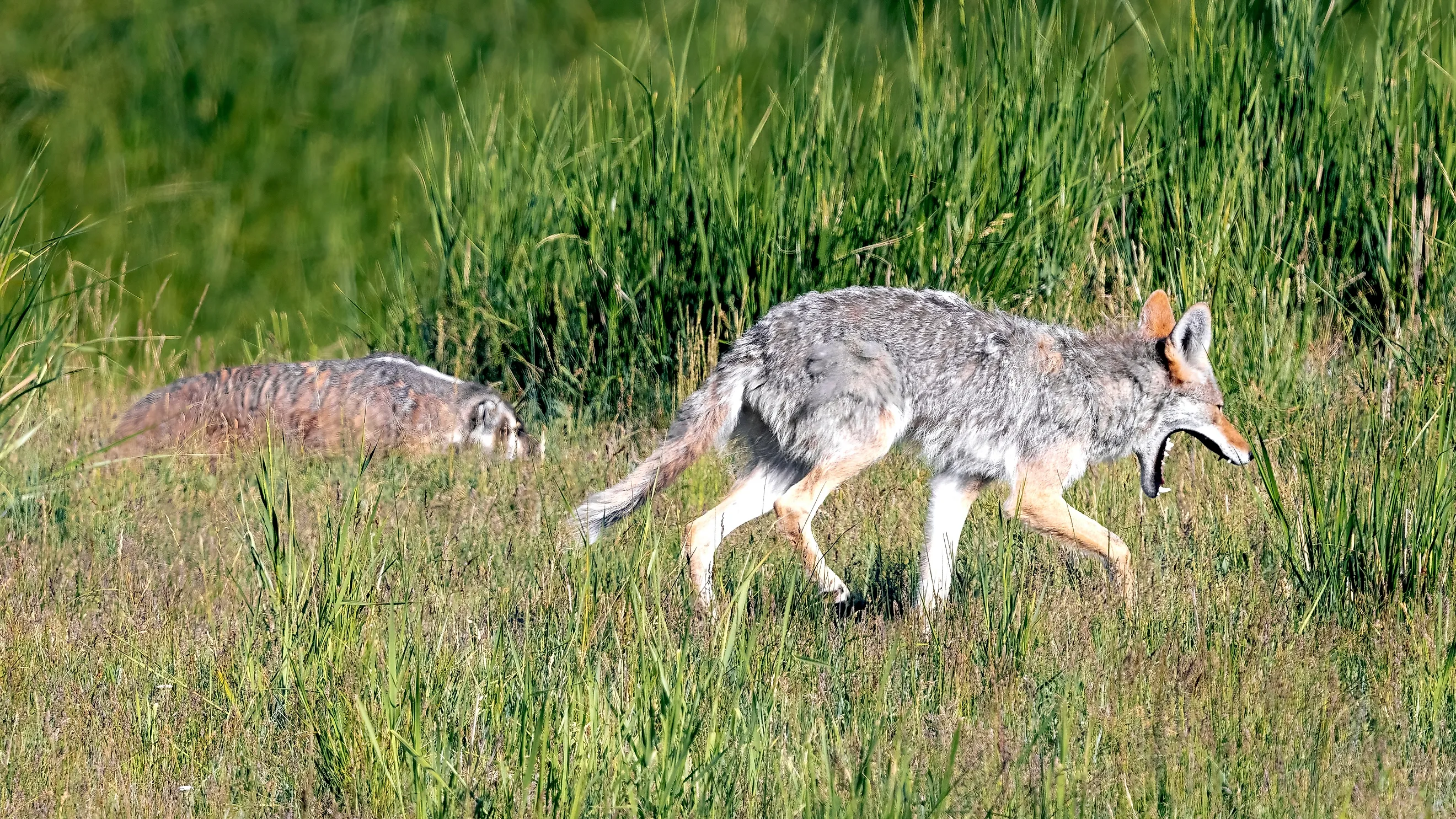
To most Americans, the coyote is a cartoon: forever chasing a roadrunner, forever undone by another faulty gadget from Acme. The real animal is far more formidable. A close relative of wolves, dogs, and foxes, the coyote (Canis latrans) has spread across nearly all of North and Central America, thriving in city suburbs as readily as in remote backcountry, which is why the IUCN lists it as a species of "Least Concern."
Coyotes roam America's National Forests too, though not in equal numbers. Because the species isn't threatened, no agency formally tracks it, so sightings are the only real measure. These four forests offer some of the best odds of spotting one in the wild.
Allegheny National Forest

Located on Pennsylvania's Allegheny Plateau, and spanning more than 500,000 acres, Allegheny National Forest is the only National Forest in Pennsylvania. There are plenty of opportunities in Allegheny National Forest for birdwatching, but the wildlife in the forest includes mammal species like black bears and North American river otters, as well as a very particular type of coyote.
The Allegheny National Forest coyotes are specifically eastern coyotes. These animals, which are notably larger than the coyotes found in the western United States, trace their origins to hybridization between coyotes and wolves in the Great Lakes region, and aren't "true" coyotes but hybrids that carry some wolf DNA. They spread into Pennsylvania during the mid-20th century. The first eastern coyote identified in the state was recorded in Tioga County in 1940, a larger influx arrived from neighboring New York in the late 1960s, and the animal occupied the entire state by 1990. They've even been sighted in residential neighborhoods in and around Pittsburgh, where residents are advised to keep plenty of distance, and guard any small pets.
Within Allegheny National Forest itself, coyotes can be not just seen, but heard, especially at specific times of day. Coyotes are most active at dusk, dawn, and during the evening, so try an early start or a late stroll for the best chance of seeing them. However, visitors to the forest have reported (and filmed) coyote sightings during the daylight hours as well, so coyote-curious visitors should always keep their eyes open.
Prescott National Forest

Spanning 1.25 million acres, including eight wilderness areas, Prescott National Forest in Arizona is full of high-country and desert wildlife. Those wandering the forest's hundreds of miles of hiking trails have the potential to encounter elk, bobcats, and Northern flicker woodpeckers, as well as the coyotes that roam the forest's expanse.
These are "true" coyotes, rather than their larger eastern counterparts. Coyote sightings are relatively common at Prescott National Forest, due in part to how many live within the forest's boundaries. Hikers exploring the forest's backcountry, including wilderness areas such as Juniper Mesa, have a chance of seeing coyotes. However, exercise extreme caution on the trails at dawn or dusk, as the area is home not only to coyotes but also to other large predators including black bears and mountain lions.
Shawnee National Forest

Located in southern Illinois, Shawnee National Forest lies between the Ohio and Mississippi Rivers. This National Forest is highly popular among visitors for its scenic hiking trails, fishing and hunting opportunities, and varied camping sites for both tents and RVs. The wildlife in the forest is highly diverse, as the forest's nearly 300,000 acres are stretched across five different physiographic areas, as well as sitting on the edge of a glacial area. That means wildlife watchers can potentially see deer, foxes, bald eagles, and water snakes, and of course coyotes.
Regarding the coyotes, the Shawnee National Forest population is very healthy, and they are among the largest predators within the forest's boundaries. Visitors may hear coyotes even if they don't see them, and it is possible that rumors of "Bigfoot" living in Shawnee National Forest stem from people being startled by the howling of coyotes. As always, do not approach any coyotes; the best time to see them is around dusk, when they grow active across the forest's quieter hollows and open ridgetops.
Tonto National Forest

Another Arizona national forest, Tonto National Forest spans a whopping 2.9 million acres of desert, forest, and rivers. Such a vast and varied national forest is naturally full of wildlife, including iconic southwestern animals like javelinas, along with black bears, mule deer, and mountain lions. These animals, and the famous saguaro cactus, are beloved parts of the Tonto National Forest, as is the forest's coyote population.
Coyotes are common enough in the Tonto National Forest that a dusk visit is often advised for anyone in Arizona hoping to see a coyote in the wild. The coyotes hunt prey like cottontail rabbits, and have even been filmed on the hunt by visitors to the forest. At the forest's Larry Forbis Group Site, visitors have the potential to see both coyotes and roadrunners.
Sharing The Forest With Coyotes
For anyone planning to visit a national forest known for an abundant coyote population, a sighting is no cause for alarm. While coyotes are predators, they rarely pose a threat to humans and are generally quite timid around people. Keep a safe distance, as they are wild animals, and guard small pets as you would near any coyote range. Beyond that, a wild coyote is one of the more rewarding sights these forests have to offer.