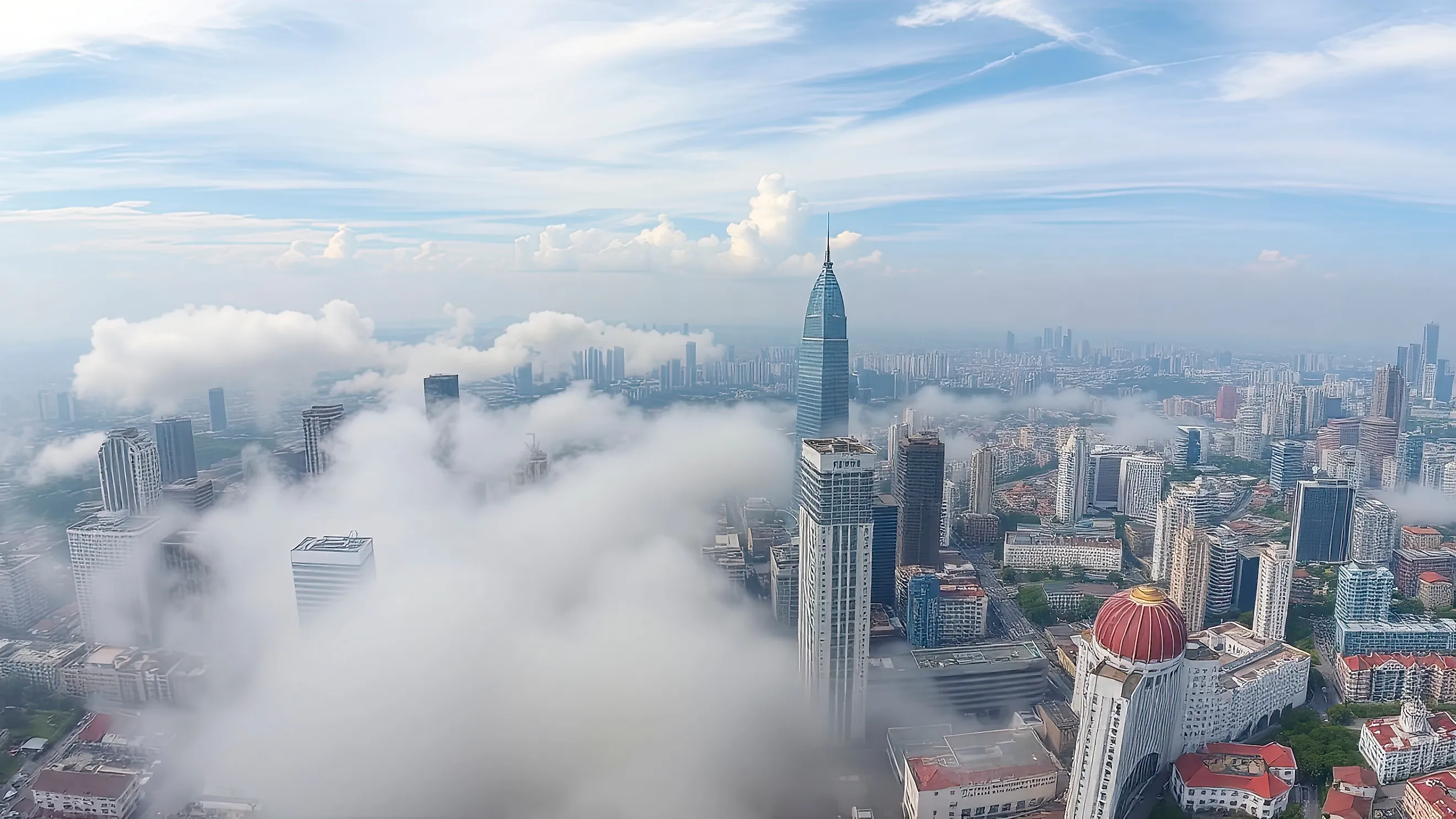
The Cloudiest Cities in the World
Cities around the world experience vastly different levels of sunshine depending on geography, elevation, and regional climate systems. The cloudiest cities in the world are typically defined by their extremely low annual sunshine totals, measured through long-term meteorological records. This article ranks the world’s cloudiest cities based on average annual sunshine hours, a widely used metric for assessing cloud cover and solar exposure.
From the cloudiest city in the world, Totoró in Colombia, which receives less than 650 hours of sunlight a year, to others such as Tórshavn, Chongqing, São Joaquim, Dikson, Malabo, Lima, Prince Rupert, Reykjavík, and Bogotá, these locations highlight how atmospheric circulation, topography, and latitude can dramatically limit direct sunlight, even in major population centers.
The Cloudiest Cities In The World
| Rank | City | Region | Average Annual Sunshine (Hours) |
|---|---|---|---|
| 1 | Totoró | South America | 637 |
| 2 | Tórshavn | Europe (North Atlantic) | 840 |
| 3 | Chongqing | East Asia | 1,054 |
| 4 | São Joaquim | South America | 1,065 |
| 5 | Dikson | Arctic Russia | 1,164 |
| 6 | Malabo | Central Africa | 1,176 |
| 7 | Lima | South America | 1,230 |
| 8 | Prince Rupert | North America | 1,242 |
| 9 | Reykjavík | Northern Europe | 1,300 |
| 10 | Bogotá | South America | 1,328 |
1. Totoró, Colombia (637 Hours)

Totoro in Colombia is by far the cloudiest city on the planet and the least sunny town in the world. This small community in the Cauca Department receives just 637 hours of sunshine per year, which is less than a month of sunny days across an entire year. While it is the cloudiest in the world, many people overlook this town due to its remote location and limited long-term climate monitoring.
However, the conditions speak for themselves. Totoro experiences over 210 precipitation days annually, frequent fog, and near-constant cloud cover, all shaped by its subtropical highland climate and elevation in the Andes. Sitting at over 1,500 meters above sea level, moist air is constantly lifted and cooled here, triggering persistent cloud formation and rainfall. As a result, even daytime skies are often dull and grey, with brief sunlight appearing only in short breaks between thick cloud layers.
2. Tórshavn, Faroe Islands (840 Hours)
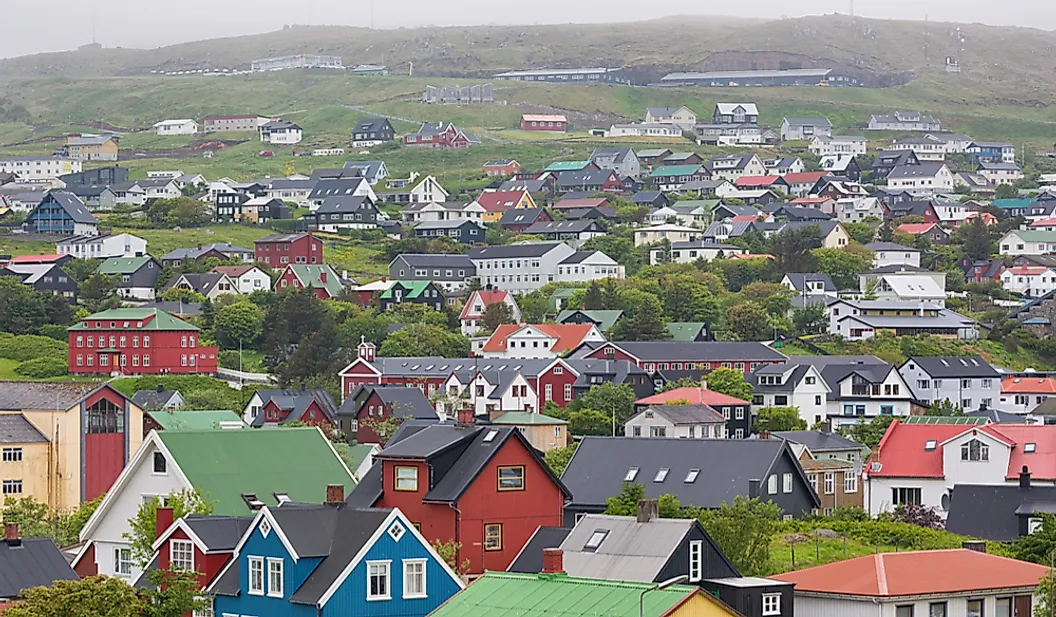
Torshavn is the largest city and the capital of the Faroe Islands, located in the North Atlantic Ocean. This island city features a subpolar oceanic climate (Cfc) and is directly influenced by the Icelandic Low, a centre of low atmospheric pressure in the region. These winds often bring stormy weather and clouds to the Faroe Islands, as Torshavn is one of the cloudiest areas in the world. According to data from 2020-21, the city receives only 840 hours of sunlight per year, which is equivalent to just 2.4 hours per day.
Along with the lack of sunlight, the Icelandic Low also leads to cooler summer temperatures, with daily highs in the warmest time rarely exceeding 13 °C (55 °F). Additionally, persistent marine fog and frequent low cloud ceilings are common throughout the year, particularly during the autumn and winter months. The surrounding hills further trap moisture, preventing cloud systems from dissipating quickly and prolonging periods of overcast conditions. However, even with its cloud cover, the city remains a tourist hub with over 14,000 residents and notable landmarks, such as Tinganes, the historic center of town.
3. Chongqing, China (1,054 Hours)

Chongqing is one of China’s largest municipalities. It is widely known as the country’s cloudiest major city. The city is situated within the Sichuan Basin in southwestern China, at the confluence of the Yangtze and Jialing rivers. This is a low-lying region surrounded by mountains that traps moisture and air pollution. To this end, Chongqing receives an average of 1,050 to 1,100 hours of sunshine per year, which is significantly below the national average and far lower than most cities at similar latitudes.
The city’s humid subtropical climate is characterized by frequent cloud cover, persistent haze, and extended periods of overcast skies, particularly from autumn to spring. Fog is especially common, earning Chongqing its long-standing nickname, the “Fog Capital of China.” High humidity levels, often exceeding 80 percent, combined with weak air circulation inside the basin, prevent clouds from dispersing efficiently. Despite its gloomy skies, Chongqing is a major economic and transportation hub with a population of over 32 million. Its dramatic river landscapes, hillside architecture, and famous hot pot culture continue to attract visitors year-round, even under near-constant cloud cover.
4. São Joaquim, Brazil (1,065 Hours)

São Joaquim is one of the cloudiest and least sunny cities in Brazil, despite being located in a country better known for sunshine. The city sits in the Serra Catarinense highlands of southern Brazil at an elevation of about 1,360 meters (4,460 ft), which plays a significant role in its persistent cloud cover. São Joaquim receives roughly 1,065 hours of sunshine per year, far below the Brazilian average and among the lowest in South America.
Its subtropical highland climate produces frequent fog, low cloud ceilings, and regular rainfall throughout the year. Cold air masses moving north from the Southern Ocean often stall against the plateau, while moist Atlantic air is forced upward, leading to constant cloud formation. Winter months are especially grey and damp, with São Joaquim also being one of the few Brazilian cities to regularly record frost and occasional snowfall. Cloud cover is further reinforced by weak winds and temperature inversions, which prevent clouds from clearing quickly.
5. Dikson, Russia (1,164 Hours)

Dikson is a Russian town considered one of the world’s northernmost settlements, with a population of around 300 residents. Resting along the Arctic coast at the mouth of the Yenisei Gulf, this town’s location is so far north that it does not receive any civil twilight (the period after sunset or before sunrise) for most of December. In contrast, it experiences 24 hours of civil twilight from mid-April to the end of August, though cloud cover remains persistent for much of the year. In total, Dikson receives about 1,164 hours of sunshine annually, which is just over 48 days of sunlight.
In addition to its limited sunshine, Dikson’s extreme latitude contributes to its harsh tundra climate. Summer temperatures typically remain below 8.6 °C (47.5 °F), while winter lows can plunge to around −48.1 °C (−54.6 °F). Thanks to its location, Dikson plays a strategic role as a weather monitoring and Arctic logistics point, with a long-running meteorological station that supports navigation along the Northern Sea Route. The town also has a small port that has historically been used to resupply Arctic expeditions and remote settlements along Russia’s northern coast.
6. Malabo, Equatorial Guinea (1,176 Hours)
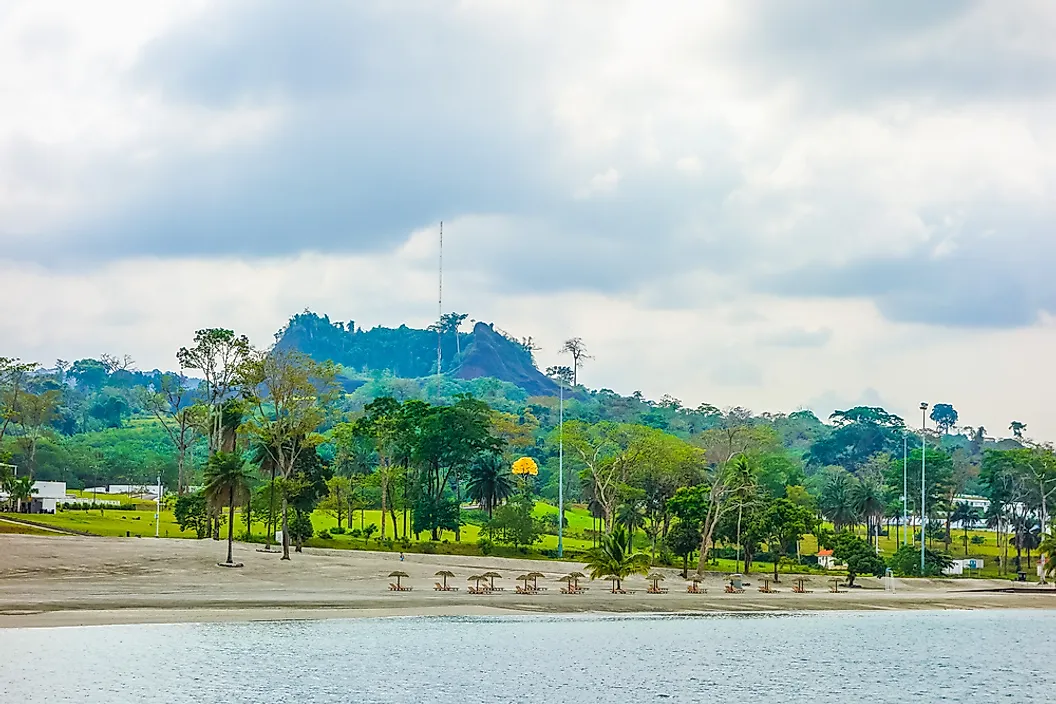
Malabo, located in Equatorial Guinea, is the only city on this list on the African continent. Once the capital of the nation and the region’s oldest, it also holds the title of the cloudiest in the region. As of 2024, the city received 1,176 hours of sunshine throughout the year, with some estimates indicating far lower sunshine in 2025. This is far below the regional average, making it the cloudiest in Africa. Along with the cloud cover, Malabo is also one of the wettest capitals in the world, seeing an average of 1,850 millimetres or 73 inches of rain per year. The city's unique climate is attributed to its equatorial location, which fosters heavy rainfall and persistent cloud cover.
Although the conditions may not be ideal, this bustling hub is home to nearly 300,000 people and is always full of activity. The economy is mostly supported by fishing and trade, although tourism has increased immensely over the past few years. The region also boasts a rich heritage, with dozens of historic buildings, including the Cathedral of Santa Isabel.
7. Lima, Peru (1,230 Hours)

Lima is one of the cloudiest large cities in the world and the least sunny capital in South America. The city is situated along Peru’s Pacific coastline and receives approximately 1,230 hours of sunshine per year, despite its proximity to the tropics. This low amount of sunlight is due to the cold Humboldt Current, which cools the air above the ocean and creates a strong temperature inversion over the coast. As a result, clouds form easily but rarely rise high enough to produce rainfall.
Lima’s desert climate is characterized by persistent low cloud cover, mist, and fog, locally referred to as garúa. These conditions prevail for much of the year, particularly from May to November, when skies often remain overcast for weeks at a time. Rainfall is minimal, but thick marine cloud layers frequently block direct sunlight. Even during the sunnier summer months, morning cloud cover is a common occurrence. Despite this, Lima is home to more than ten million people and remains Peru’s economic, political, and cultural center.
8. Prince Rupert, Canada (1,242 Hours)

Prince Rupert is a port city in the province of British Columbia in western Canada. It is the cloudiest city in North America, receiving around 1,240 hours of sunshine per year. Its position along the Pacific storm track places it directly in the path of frequent low-pressure systems, bringing persistent cloud cover and heavy precipitation throughout much of the year. The lack of sunlight is also a tourist “attraction,” and the city often mentions its “100 days of sunshine.” Surprisingly, British Columbia is also home to Canada’s sunniest city, Victoria, which boasts 2,109 hours of bright sunshine annually and over 305 sunny days.
Along with being the cloudiest, Prince Rupert is nicknamed the “City of Rainbows” as it is Canada’s wettest. The area averages over 2,500 millimeters (98 inches) of precipitation annually, one of the highest totals in Canada. Cloud cover is common year-round, with especially gloomy conditions during autumn and winter.
9. Reykjavík, Iceland (1,300 Hours)

The capital and largest city of Iceland, Reykjavík, is another one of the world’s northernmost settlements, similar to Dikson in Russia. To this end, it faces many of the same conditions, including a cold subpolar oceanic climate, strong winds, and a lack of sunlight. In fact, Reykjavík receives around 1,300 hours of sunshine per year. Most of its yearly sunlight occurs during summer, as the region experiences a “midnight sun” with some light during the night as well.
The lack of sunlight is caused by the city’s northern location, which puts it at a more extreme angle along the Earth’s tilt. Subsequently, the city leans away from the sun during winter, resulting in daylight lasting around four hours per day. Persistent low-pressure systems over the North Atlantic also contribute to frequent cloud cover, with overcast skies common throughout much of the year.
10. Bogotá, Colombia (1,328 Hours)

Bogotá sits high on the Bogotá Plateau in the eastern Andes at an elevation of approximately 2,640 meters (8,660 feet), a factor that significantly influences its cloud-heavy climate. The city receives roughly 1,328 hours of sunshine per year, placing it among the cloudiest major cities in the world. Its equatorial latitude means day length remains fairly constant year-round, but thick cloud layers frequently block direct sunlight.
Cool temperatures, high humidity, and regular convective cloud formation drive Bogotá’s subtropical highland climate. Moist air rises over the Andes, cools rapidly at elevation, and condenses into persistent cloud cover. Afternoon cloud buildup is common, especially during the two rainy seasons from March to May and September to November. While rainfall is moderate rather than extreme, the skies often remain overcast for extended periods, limiting solar exposure. Even so, Bogotá is a major cultural, political, and economic center with a population exceeding eight million, operating year-round under muted skies rather than bright sunshine.
The World’s Cloudiest Cities
These ten cities are among the cloudiest places on Earth, each shaped by a specific combination of geography, elevation, and atmospheric patterns. Some areas receive less than 1,000 hours of sunshine annually, while others experience frequent cloud cover, despite being large and economically important population centers. From high-altitude Andean cities to coastal locations influenced by cold ocean currents and northern settlements facing persistent low-pressure systems, these destinations show how different climate conditions can limit direct sunlight throughout the year.