African Elephant
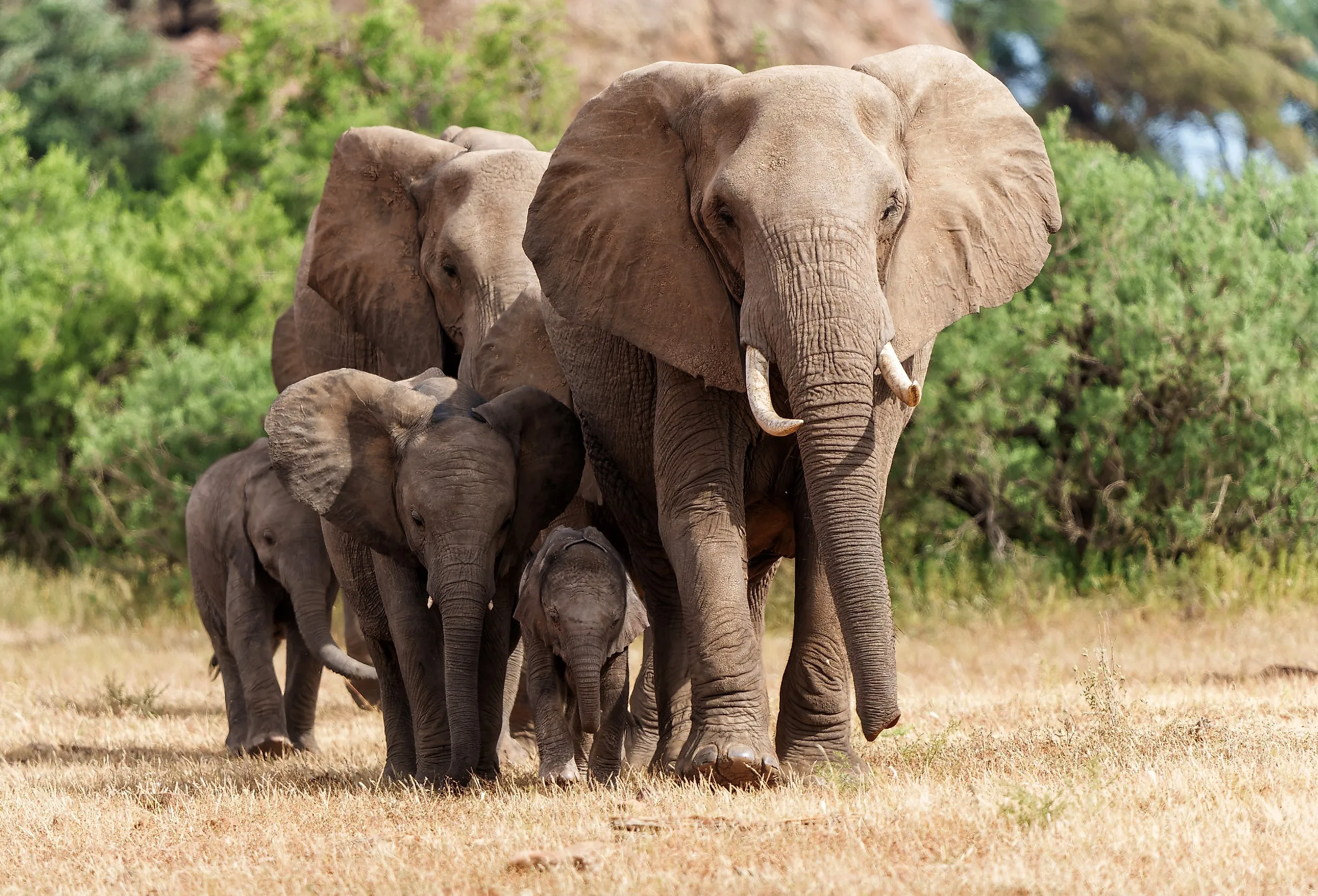
African Elephants are the largest land mammals on Earth, and also one of the most easily recognizable animals. Although they are larger than their cousins, the Asian Elephant, the African Elephant are the gentle giants of nature. Whether you have seen them in zoos, in documentaries on television, or are lucky enough to see them in the wild while on safari, the African Elephant is bound to leave you awestruck. These animals live social lives across their native range in sub-Saharan Africa, both benefiting and living peacefully alongside other animals with whom they share their habitat.
Physical Description

African Elephants have several distinctive features that make them easily recognizable: their trunks, which are a combination of their upper lip and elongated nose; upper incisor teeth, which develop into tusks and continue to grow throughout their lives; and their large ears, which somewhat resemble the continent of Africa.
African Elephants use their trunks for smelling, breathing, trumpeting, and drinking. Additionally, unlike Asian Elephants, African Elephants have two finger-like features on the end of their trunks, which they can use to grab small items.
While both male and Female African Elephants develop tusks, males do get larger. Adult male African Elephants can reach four meters in height and weigh up to seven tons, whereas adult females weigh around three and a half tons. Adult African Elephants will average between 19 and 24 feet in length.
Taxonomic Classification

There are two different species of African Elephant: the African Bush Elephant (Loxodonta africana) and the African Forest Elephant (Loxodonta cyclotis). African Bush Elephants are the larger of the two species, with their tusks curving outward. African Forest Elephants, on the other hand, are smaller, with darker skin and straighter tusks that point downwards. There are also key differences between the size and shape of the skulls and skeletons of the two species.
Range and Habitat

The range of African Elephants extends through 37 different countries, with around 70% of the population living in Southern Africa, 20% in East Africa, 6% in Central Africa, and 3% in West Africa. African Elephants require lots of land to roam, find food and water, and reproduce. They can occupy areas of more than 30,000 square kilometers.
African Bush Elephants roam the plains of sub-Saharan Africa and the Sahel Desert in Mali. African Forest Elephants inhabit the forests of Central and West Africa, as well as the Congo Basin. Due to the smaller size of the African Forest Elephant, it has adapted better to living conditions in rainforests.
Food
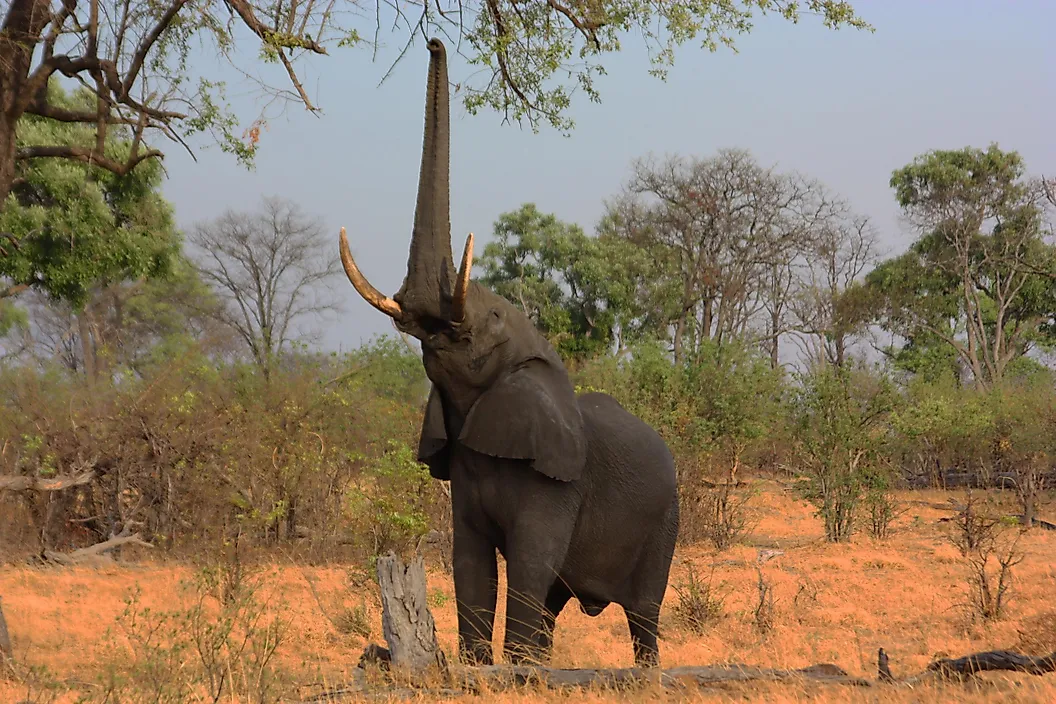
African Elephants are herbivores whose diet consists of all types of vegetation, including grasses, leaves, shrubs, fruits, and roots. However, their diet will change with the seasons. During drier seasons, they will eat the woody parts of trees such as twigs, branches, and bark. Due to their size, they require a large intake of food, which can range anywhere between 4 to 7% of their total body weight, which can result in them producing up to 150 kilograms of dung per day. In fact, Elephants prioritize their search for food over their sleep, often opting to travel great distances in search of a suitable supply of food to sustain their body weight.
Behavior

African Elephants are social animals that live in herds; however, this is usually matriarchal. Groups mostly consist of females, with the matriarch being the oldest and largest female. The herd is usually composed of the matriarch’s offspring. It is her role to ensure the safety and survival of the herd. This can include leading the herd to sources of food and water outside their typical range or teaching them how to protect themselves from danger.
The size and thick skin of African Elephants do not make them an easy target for predators. Young African Elephants may be susceptible to predators such as Leopards and Lions. As a result, adult African Elephants will form a protective circle around the calves.

Female African Elephants usually remain in their natal family herds for life. The matriarch of the group looks over the other females, referred to as cows, and their young.
Male elephants will remain in the herd until they reach maturity, which is usually between the ages of 10 and 19 years old. Adult males generally travel alone, or they may form smaller, more loosely associated groups. Males will use their larger tusks to battle one another for dominance or the right to mate.
Reproduction

Female African Elephants generally reach sexual maturity around 10 to 12 years of age, with many having their first calf in their mid-teens. Throughout the duration of their lives, they can potentially birth up to 12 calves. African Elephants have a longer pregnancy period than any other mammal, lasting 22 months. Cows can birth one calf every two to four years until they end their reproductive period between the ages of 45 and 50 years old. African Elephants can live for many years after their last calf is born, and older females often play vital leadership and knowledge-sharing roles in their family groups, even as their fertility declines.
Female African Elephants often prefer to mate with older bulls in musth, a recurring period of heightened testosterone, aggression, and sexual activity that typically begins in males in their 20s and is most pronounced in their 30s and 40s.
At birth, Elephant calves already weigh 300 pounds and stand close to three feet tall. Although they cannot see very well when they are first born, they recognize their mothers by touch, scent, and sound. Calves stay close to their mothers for the first few months for food, warmth, and support. Calves will drink as much as three gallons of milk per day, and typically continue nursing for two to four years, sometimes up to five or six years.
Importance to the World

African Elephants are keystone species, sometimes referred to as “ecosystem engineers” because of the many ways they shape their habitat. During dry seasons, they use their tusks to dig up riverbeds which in turn creates a watering hole for many animals to access water; their dung is full of seeds which spreads plants across the environment; when they feed on trees and shrubs in forests it clears a path for other animals; and, in savannahs, they uproot trees and eat saplings which keeps the plains open for animals such as Zebras.
Furthermore, as the status of one of Africa’s “big five” wildlife species, Elephants have become popular sightings for tourists, which has boosted local economies through income generated by tourism.
Threats

Unfortunately, African Elephants face multiple threats: the illegal wildlife trade, conflict with people, and threats from climate change. As their tusks are made from ivory, Elephants have fallen victim to poaching. In the last decade, close to 17,000 Elephants were killed each year for their ivory, which averages out at 47 Elephants per day.

Since Elephants eat so much, they regularly come into conflict with people. Elephants have the capacity to destroy an entire season of crops in a single night, sometimes even damaging buildings or injuring people. Consequently, Elephants are sometimes killed in an effort to protect both lives and livelihoods. Fortunately, there are conservation programs working with farmers to help protect their fields and crops, or compensate them when Elephants find their way in.
Finally, the change in climate is having a devastating effect on African Elephants. African Elephants require around 250 liters of water a day, but as temperatures rise and periods of drought last longer, resources therefore become scarcer, which directly affects Elephants as they experience harsher periods of little to no rain.
Declining Species
Today, it is estimated that only around 415,000 African Elephants remain in the wild. The African Bush Elephant has declined by at least 60% in the last 50 years, while the African Forest Elephant has fallen by over 86% in the last 31 years. Since African Elephants are protected to varying degrees in the countries of their geographical range, the decision to recognize them as two separate species has been an important step in their conservation, as it highlights the challenges that each individual species faces.