6 Iconic Animals That Live Only In Alaska
Described as one of the last great wilderness regions on Earth, Alaska is home to many captivating and unique animals. With its dramatic landscapes supporting diverse populations of wildlife, the area contains subspecies and species that are found nowhere else in the world. With over 33,900 miles of shoreline, the gigantic Bering Glacier, and significant permafrost, Alaska has some of the most remarkable animals on the planet. From flying squirrels that allow forests to thrive, bears that are not what they appear to be, to isolated underwater creatures and giant hares, Alaska features some iconic animals that only exist in the state’s untamed and unique environments.
Alaskan Hare

The Alaskan hare, also known as the Tundra hare, is a species of mammal found in the open Tundra of western Alaska and the Alaska Peninsula. They are one of the largest species of hares, typically weighing between 6.4 to 15.9 pounds. Both adult males and females are between 50 and 70cm in length, with an additional 8cm tail. Their hind feet are around 20cm in length, which is believed to let them move easily in the snow. They also use their large feet as a defence against predators. These herbivores are solitary for a large portion of the year, with mating season being an exception, when they can produce up to 8 young per litter. The Alaskan hare has fairly short ears, smaller than those of other hares, that are thought to be an evolutionary adaptation for preventing heat loss. They also change color, where in the winter they grow a white fur coat with ears that are black-tipped, and in the summer, they have a brown coat with white underneath. The Alaskan hare nests in open sites rather than living in burrows, and is often found in brushy or rocky areas offering protection and camouflage.
Kodiak Bear

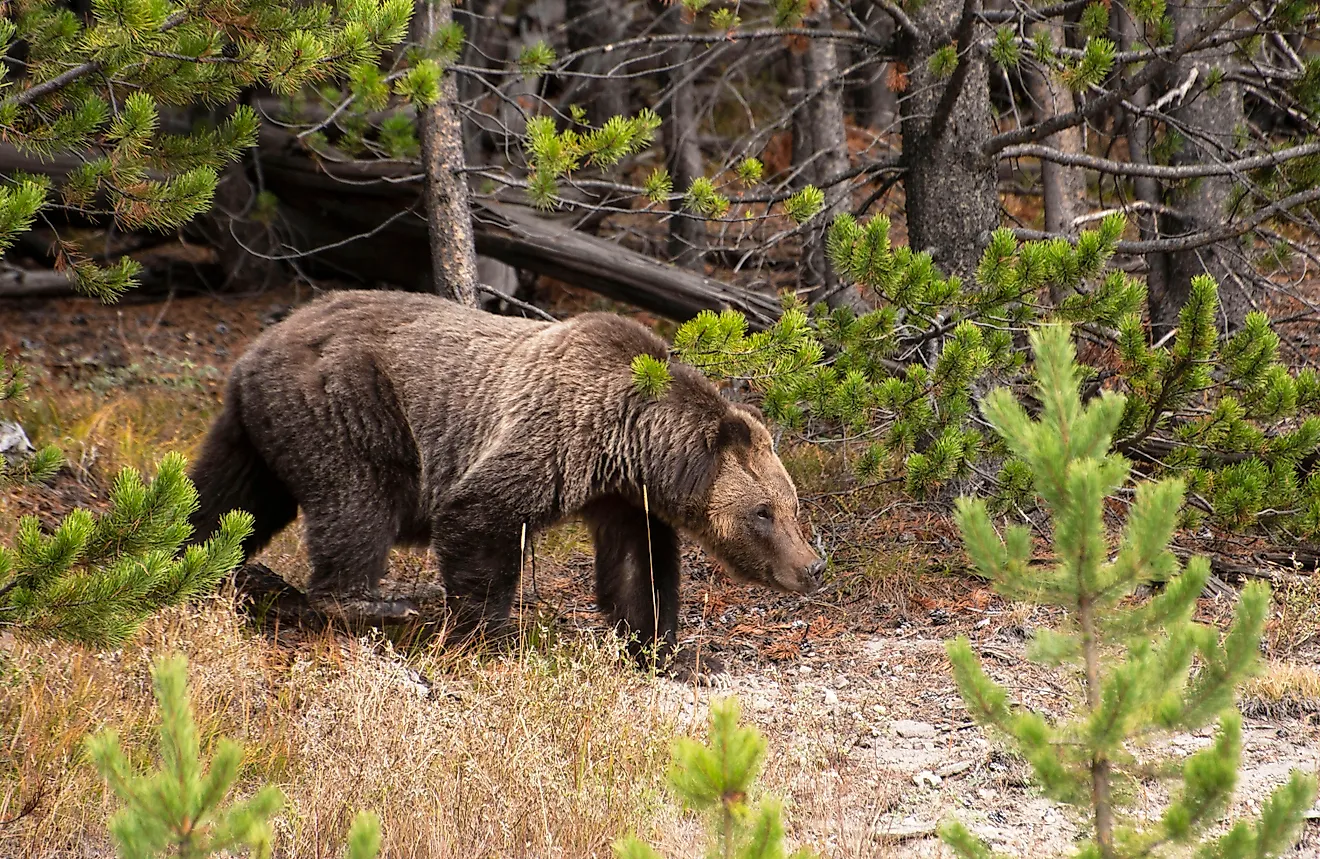
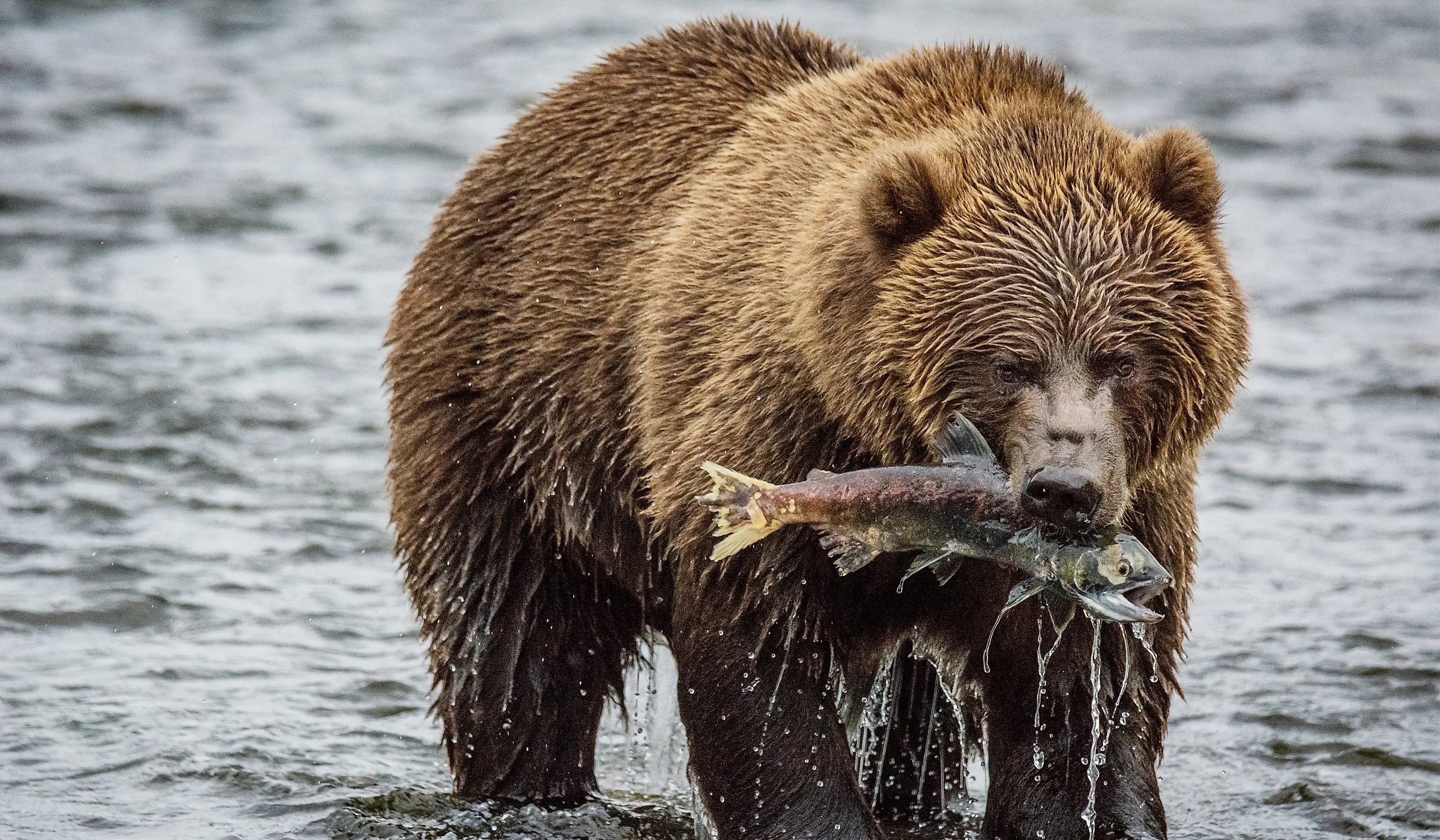
The Kodiak bear goes by many names, such as the Kodiak brown bear and sometimes the Alaskan brown bear. Inhibiting the southwest Alaskan islands of the Kodiak Archipelago, the Kodiak bear has remained isolated from other bears for around 12,000 years. While bears are commonly known to be meat eaters (carnivores), they in fact are actually omnivores, as they eat a variety of foods. The Kodiak bear is no different and spends most of its time eating berries, plants, and grass rather than meat; however, fish are also important to their diet. What makes this bear so intriguing is its size, as it is one of the largest bears alive today, second only to the Polar bear. This recognized subspecies of brown bear is physically and physiologically similar to other brown bears, but it is approximately 1.5 to 2 times larger. At peak times, males can weigh up to 1,500 pounds and can reach heights of over ten feet tall when standing on their hind legs. Compared to males, females are generally lighter by up to 30% and smaller by up to 20%.
Kodiak River Otter

A subspecies of the North American river otter, the Kodiak River otter is only found in Alaska, on the Kodiak Archipelago. Related to badgers and weasels, these cute and cuddly-looking animals are one of nature's playful creatures, known for their intelligence and strong bonds with one another. As social creatures, they are often found in groups and gather together during the colder months, enabling them to survive frigid temperatures. Distinguishable by its slightly smaller size, adults usually weigh anywhere between 15 and 35 pounds and have a length of 40 to 60 inches. Similar to other otters, they have short limbs, muscular bodies with webbed feet, and a long-tapered tail used for swimming. They also have black/dark brown fur that is both dense and resistant to water, making it easier for them to survive cold temperatures. Spending almost half of their time asleep, these opportunistic feeders hunt both on land and in fresh salt water. These semi-aquatic animals have a propensity to live in coastal, freshwater habitats, and can often be found living in dens located along shorelines. The Kodiak River otter can live anywhere from 8 to 13 years in the wild.
ABC Islands Bear

Another unique bear on this list is the ABC Islands bear, a subspecies of brown bear that is found in southeast Alaska on Admiralty, Baranof, and Chichagof Islands, commonly known as the ABC Islands, part of the Alexander Archipelago. Specifically, they live in the Tongass National Forest, relying on the plants and animals found in this forest, including small mammals, carrion, berries, fish, and roots. What makes this bear truly special is its genetic makeup. While it is similar in appearance and behavior to the typical brown bear, research has found that it has mitochondrial DNA that makes it closer to polar bears. The ABC Islands bear closely resemble the Alaska Peninsula brown bear, with a humped back, large size, and thick fur that can range in color from blonde to brown to black. Adult males weigh on average between 195 and 390 kilograms (430-860 pounds), while females range between 95 and 205 kilograms (210-450 pounds). At the shoulder, their height can range on average from 35 to 43 inches standing. Although bears are viewed as solitary animals, they can come together around salmon streams, where there is an abundance of food.
Pribilof Island Shrew

The small, short-tailed species of shrew, the Pribilof Island shrew, is confined to Alaska’s Pribilof Islands, located in the Bering Sea. This small mammal is isolated from the mainland and has adapted in order to live in cold temperatures. While not much is known about this species, it continues to attract attention for its adorable features, such as its small size and its long, slender, pointed snout. They use their long snouts to sniff out food under leaves and in the soil. They generally hunt and eat insects and small invertebrates, including worms, spiders, and other soil-dwelling insects. These active animals have a fast metabolism, making them need to consume a lot of food to survive. The Pribilof Island shrew was once believed to be related to the Arctic shrew because of its distinct tri-colored coat, but was later found to be distinct due to genetics and physical traits. Adults can measure anywhere between 9.3 and 9.7 cm in length, with hind feet measuring approximately 1.2 to 1.3 cm long, and a smaller-than-normal tail length of between 3.3 and 4.3 cm.
Cook Inlet Beluga Whale

The Cook Inlet beluga whale is a beautiful, genetically distinct population of white whales that, throughout the year, primarily live in the upper Cook Inlet of Alaska, near Anchorage. During the summer, they are found near river mouths such as Chickaloon Bay, Knik Arm, Turnagain Arm, and the Susitna River, while in winter, they move to deeper, lower waters. Similar to other marine mammals, they are known for their complex vocalizations and high intelligence. The Cook Inlet beluga whale uses echolocation, a biological sonar that allows them to see with sound, to navigate the murky waters.

These opportunistic feeders eat all types of fish and invertebrates available in the area, such as squid, crab, herring, salmon, flatfish, and cod. They are white in color and geographically isolated from other populations of belugas. Growing up to 15 feet in length, these whales lack a dorsal fin, which allows them to swim under the ice. Identified as endangered, with some estimations of less than 340 being left, they face a number of potential threats such as pollution, gas and oil development, degradation of habitat, and noise, among others.
Beautiful Adaptations
The wildlife of Alaska cannot be separated from the isolated environment, harsh climate, and rough landscapes that have led to the evolution of species that are suited to live in such extremes. It is the six species discussed above that demonstrate the adaptation and resilience that the animals of Alaska have, making them uniquely beautiful. From gigantic glaciers and the frozen tundra to coastal rainforests and the taiga forests, each of the habitats present in Alaska is instrumental in shaping the animals that not only survive, but thrive there.