10 Iconic Animals That Live Only In South America
There are several things you will find only in South America. The Amazon Rainforest, with its pink dolphins that create a floating forest ecosystem, is unique to this continent. So is the Atacama Desert, the Galapagos Islands, and the Christ the Redeemer statue in Rio. In between these places, several iconic animals roam. Some of them are endemic to South America, including cotton-top tamarin, anacondas, and Andean condors. The Argentine Pampas, the western desert areas, the Andes Mountains, and the jungles throughout the continent provide homes for these animals. If you visit specific countries in South America, you might be lucky enough to spot one of the following creatures.
Pygmy Marmoset

The cute pygmy marmoset is the world's smallest monkey. They weigh only up to around 150 grams and grow up to 15 cm long. At the same time, they are also primates, but not the smallest primates in the world (the mouse lemur is the tiniest primate). Pygmy marmosets live in groups of two to nine individuals and inhabit the rainforests of South America across Peru, Bolivia, Brazil, Ecuador, and Colombia. They have adapted to the fascinating ability to rotate their heads 180 degrees and can jump around 5 meters between tree branches.
Strangely enough, almost all pygmy marmosets are twins and are the size of a finger when born (hence the nickname finger monkeys). Unfortunately, many of the young ones and adults die because they fall from tall trees. These marmosets do not have opposable thumbs to help them cling on. Their populations are also threatened by the pet trade, which disrupts their families and often leads to death. Both the Northern Pygmy Marmoset and the Eastern Pygmy Marmoset are listed as vulnerable on the IUCN Red List, and their numbers are declining.
Maned Wolf

The stunning maned wolf has gained something of an unfair reputation over the years. Some believe that hearing the animal’s unique bark or crossing paths with it at night means catastrophe is at hand. The reason for this belief seems to be the wolf’s fox-like appearance and pungent scent. The reality behind the maned wolf’s existence is far more fascinating, however. For one, they are not really wolves, or foxes for that matter. They are the only members of the genus Chrysocyon, which means they are canines. Maned wolves inhabit the savannah, grassland, and forests of Argentina, Brazil, Peru, Paraguay, and Bolivia. They are sentient beings that communicate, care for their young, and mate for life. Unfortunately, maned wolves are listed as ‘near threatened’ on the IUCN Red List and will likely become an endangered species due to hunting, killing due to cultural beliefs, and habitat loss.
Amazon River Dolphin

The beautiful Amazon pink river dolphin is at the center of another peculiar South American legend. Legend claims that these dolphins are mythical creatures that transform into handsome men at nightfall. These dolphin-men are said to hypnotize and seduce young women to steal their hearts and souls. In real life, pink river dolphins are endangered freshwater dolphins that inhabit the Amazon and Orinoco river basins. They are born gray and turn pink as they age. Male pink dolphins’ coloring is stronger than that of females, and when these dolphins become excited, they turn bright pink. Pink dolphins are elusive, but will often poke their heads out of the water if humans are nearby. Tourists can see them across several South American countries, including Guyana, Peru, Venezuela, Bolivia, Ecuador, Colombia, and Brazil.
Pampas Cat

You would be forgiven for trying to pet a Pampas cat, a cute creature that is not much bigger than a house cat. However, Pampas cats have no interest in living or interacting with humans. Based on the few studies done on these animals, they are not tameable, even in captivity. Researchers do not know exactly how many Pampas cats there are, but they have been listed as ‘near threatened’ on the IUCN Red List. Pampas cats inhabit the wild regions of Ecuador, Peru, Paraguay, Argentina, Uruguay, Chile, and Bolivia. It is not easy to spot one, however, as they are notoriously shy. They are also solitary creatures who defend themselves against predators. They raise the long hairs on their backs to scare off predators or climb into a nearby tree when they feel endangered.
Andean Condor

South America is home to some incredible bird species, including the imposing Andean condor. This massive bird belongs to the vulture family Cathartidae and is the only existing member of the Vultur genus. Andean condors are the largest flying birds and raptors on Earth, but for all that, they struggle to stay in flight because they are so heavy. As such, they prefer windy regions where they can soar up to 5,500 meters in the air. The Incas believed the condor was sacred and symbolized heaven. It is also Chile’s national bird and a strong symbol of power and liberty in Patagonia. Andean condors are found along the Andes Mountains from Venezuela to Tierra del Fuego, as well as in coastal deserts, where they hunt for food. Some condors live very long, with the oldest reaching 80 years.
Cotton-Top Tamarin

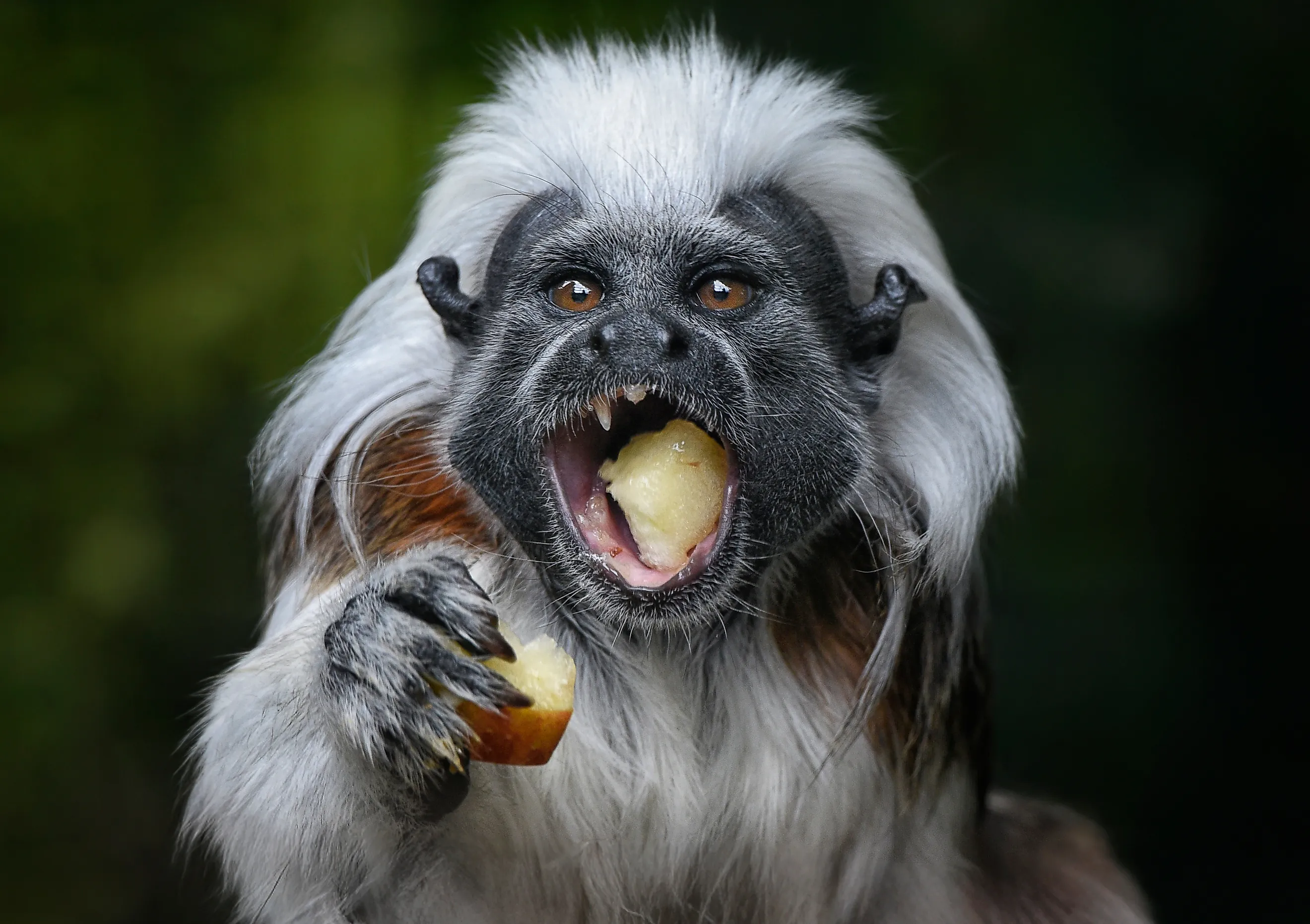
The cotton-top tamarin is a particularly cute mammal that resembles a young Einstein with its 'mane' of white hair sticking out around its head. Cotton-top tamarins are primates and one of three species of tamarins that inhabit the Amazon. They inhabit only the forested area of the northwestern region of Colombia and use the middle layer of the tree canopy to hunt for insects and fruits. They can also jump nearly five meters between branches. Like the pygmy marmoset, these tamarins also live in families that number two to nine individuals. But unlike marmosets, cotton-top tamarin babies are very heavy when they are born. Some of them weigh around 20% of their mother's weight. Unfortunately, like so many other beautiful mammals, the cotton-top tamarin is critically endangered, and there are only about 6,000 individuals left in the wild. Their forest habitat is rapidly being destroyed because of cattle ranching and agriculture. They are also being hunted and captured for the illegal pet trade.
Galapagos Giant Tortoise

There are few earthly creatures as fascinating as the Galapagos giant tortoise. The oldest giant tortoise lived to be 175 years old, and most of them average more than a hundred years. Galapagos tortoises are also the largest of their kind in the world, and their native islands were named after them by Spanish sailors in 1535. Three of the fourteen subspecies that inhabit the Galapagos have become extinct, and most of the remaining subspecies are listed as endangered or critically endangered. They were hunted for meat, captured, and eaten for over two centuries. Today, their numbers have dwindled to around 19,000 from 250,000. One of the most incredible facts about these giant reptiles is that they can go a year without food or water because of their incredibly slow metabolism and the fact that they store huge amounts of water in their bladders. They also sleep throughout the night, never hibernate, and do not swim.
Marine Iguana

The Galapagos is also home to the world's only seafaring lizards, marine iguanas. This iguana resembles Godzilla, albeit at a far smaller scale. They can dive up to 9 meters to find and eat marine algae. Their tails help them move through the water, and their claws let them hold onto rocks while their teeth scrape algae off the rocks. When they are not actively looking for food, they sit in the sun on the lava rocks. The sunlight they absorb through their scales raises their body temperature, giving them the energy they need. While bathing in sunlight, they often sneeze to expel the saltwater they have ingested. When they sneeze, salt is expelled by glands near the nostrils. Male iguanas also turn into a range of vibrant shades to attract mates, making them look even more like the mini-dinosaurs they are. Marine iguanas have existed for millions of years, but like many other South American animals, they are vulnerable to extinction.
Spectacled Bear

The spectacled bear is the only living species of bear that is native to the South American continent. These bears are named for the white or yellow rings around their eyes, which make them look as if they are wearing glasses. Spectacled bears, or Andean bears, are very shy and make their habitat the cloud forests on the slopes of the Andes. They can climb as high as 14,000 feet before coming down to search for food. They are also as patient as they are shy, with some sitting in trees for several days, waiting for fruit to ripen enough to eat. Spectacled bears eat both vegetation and meat, and have been known to hunt small cows. Sadly, their numbers are dwindling because of farmers killing them and poachers hunting them. Their habitat is also consistently being destroyed.
Green Anaconda

Fear things strike utter and complete fear into the hearts of humans as the green anaconda. This dangerous-looking, massive snake can weigh more than 500 pounds and reach nearly 30 feet in length. It is the heaviest snake in the world, and it kills its prey by coiling around it and applying pressure, essentially strangling it. Green anacondas are recognizable in nature with their olive coloring, black spots, and black and yellow scales. They live in streams, marshes, and swamps in the rainforests of the Amazon and Orinoco basins.
While they are not as stealthy on land, they can hold their breath for up to 10 minutes underwater. They also submerge themselves while looking out for prey. Their prey includes pigs, deer, turtles, and sometimes jaguars. Green anacondas swallow their prey whole, regardless of size, which means they can go weeks or even months without eating again. Ironically, however, humans are the biggest threat to anacondas. Humans destroy their habitats and hunt these snakes to use their skin. While green anacondas are not listed as endangered, this might change in the future as human activities continue to threaten these snakes.
South America’s Iconic Animals Are Worth Protecting
South America’s diverse landscape is home to some of the most unique animals on the planet. These amazing creatures are basically shaped by the land they live in, but the land is being destroyed from underneath their paws, claws, and talons. Deforestation, hunting, human expansion, and poaching continue to threaten these animals. Should they disappear completely, entire ecosystems will suffer. Therefore, it is crucial to educate whenever and wherever possible. When humans care about the survival of South America’s animals, future generations will still be able to experience them in the wild. If not, they will only continue to exist as photos on the Internet and in the pages of nature books.