10 Iconic Animals That Live Only In Peru
Think of Peru and you probably think of some of its postcard-worthy claims to fame: Machu Picchu, llamas, the towering peaks of the Andes Mountains. What you may not think of is biodiversity. Peru is an ecologically fascinating place where you’ll find just about every biome you could name. And with those biomes comes a range of creatures that you won't see anywhere else. Peru’s mountains, deserts, forests, and lakes are home to animals you may have never seen or heard of before now. Here are ten of the most surprising, unique, and all-around fascinating species endemic to Peru.
Northern Viscacha

You may never have heard of this endemic rodent if you haven’t traveled to Peru, but within the country, it’s a household name. It’s not hard to see why: viscachas are charming rabbit-like critters that haunt barren, rocky stretches of the Andes Mountains, and though they’re genetically dissimilar to rabbits, they have all the same fluffy, big-eared charm. But one way to be sure you’re looking at a viscacha, not a rabbit, is that long, furry tail. The fact that this Peruvian mammal prefers rocky, steep habitats is a charming counterpoint to its adorable appearance.
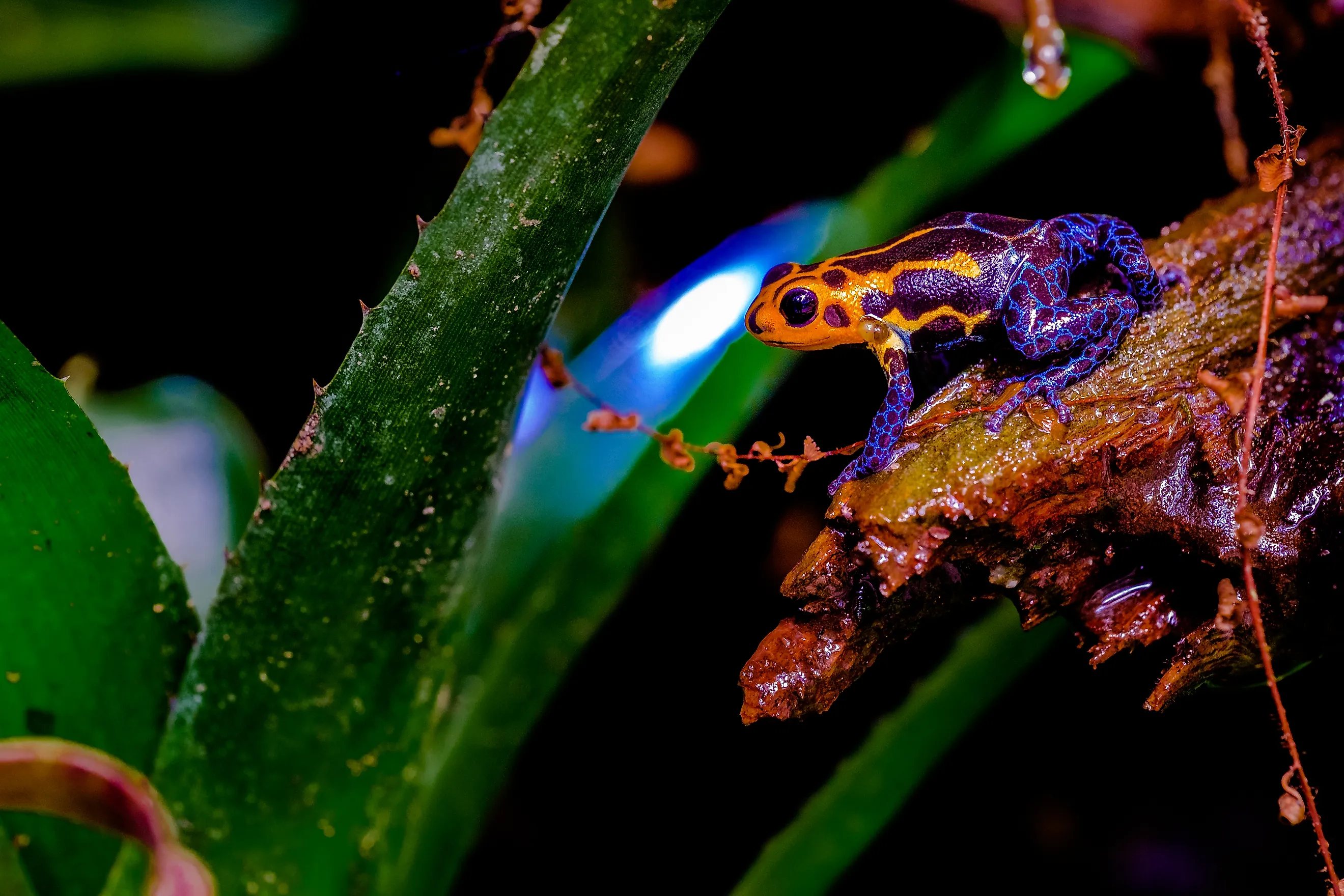
Mimic Poison Frog

Peru is home to dozens of endemic frog species, many of them the small, colorful poison dart frogs we tend to associate with the South American rainforest. One of the best-known, albeit not by name, is actually one of the least-poisonous of all. The diminutive Mimic Poison Frog, found only in Peru, can mimic the coloration of other species of more poisonous frogs to deter predators. Which coloration you see depends on the region of Peru, since they mimic whichever is most common in their area. They may be black and green or blue and orange, depending on the area, but are always about the size of an adult’s thumbnail.
Peruvian Night Monkey

Of several species of monkey endemic to Peru, this one has to be one of the most eye-catching - and probably also the eeriest. These small, tawny nocturnal monkeys are recognizable by their huge, almost human-like eyes, which give them great night vision and, okay, just a little bit of creep factor. (Staring into your soul much?) They spend most of their lives in the dense canopies of the Andean forests, and, unusually for primates, they’re monogamous and form strong bonds with their mates, offspring, and other monkeys in their social groups. So really, these highly social monkeys are creepy only in appearance.
Andes Smooth Frog

This species is also known as the Lake Junin Giant Frog, which should tell you just about everything you need to know about its size. You’ll only find it in lakes between 4,000 and 4,600 meters of elevation in the Peruvian Andes, where it spends its entire life cycle underwater. Especially large individuals can be over two feet long with legs extended. Unfortunately, the Andes smooth frog faces a wide range of ecological threats, from capture for food to mining pollution, and is now considered endangered.
Yellow-Tailed Woolly Monkey

Another of Peru’s endemic primate species, but one that couldn’t be more different from the last we discussed: this is a hefty yet graceful monkey native to the Peruvian Amazon. A little under two feet long from head to tail, they’re dark brown in color with notably long tails to be used for balance in the treetops where they make their home. The yellow-tailed woolly monkey is herbivorous, and its food sources vary seasonally. It is known to eat virtually any part of the plants around it and rarely needs to come to the forest floor to find food.
Golden-Backed Mountain Tanager

Birds make up a huge percentage of Peru’s endemic species, and this brightly-colored passerine (perching songbird) is one of the most eye-catching. That said, even the most dedicated birder is unlikely to spot it: the golden-backed mountain tanager only inhabits the highest-elevation wet forests of the Andes, a habitat so remote that almost no one ever makes it there to see them. Those who do will know the bird on sight, though. A black body, a vest-like band of yellow around the torso, and a shock of electric blue feathers like a mohawk atop the bird’s head make this diminutive forest-dweller far easier to identify than it is to spot.
Barnett’s Lancehead

Worried about snakes in Peru? That’s pretty reasonable. Take this venomous snake for an example. The Barnett’s Lancehead is a thick, sturdy snake that can get close to four feet long (females are smaller), and its diamond pattern might call to mind several species of rattlesnake for North American readers. And like many rattlesnakes, you’ll find it mostly in arid habitats; in this case, dry coastal scrub along Peru’s Pacific coast. They’re also called Barnett’s pit vipers, referring to two heat-sensing pits located between the eyes and the nostrils.
White-Tufted Sunbeam

If you’re into hummingbirds, Peru is the place to be; Peru is a global hotspot for hummingbird diversity, with more than 120 species cited in Peru, including some that are not found anywhere else on Earth. One of those endemic hummingbirds is the white-tufted sunbeam, a high-elevation species native to the upper reaches of the Peruvian Andes. They’re not the most colorful species - the bulk of their plumage is dark brown, and their iridescent purple backs and golden tails might be hard to spot from a distance. But you’ll know them by the white patch on their throats from which they get their (fabulous, if we may add) name.
Junin Slender Opossum

There’s endemic, and then there’s the Junin slender opossum: its range is so restricted that it is only known to inhabit a single valley in the Peruvian Andes. Physically, the species seems to resemble a rat more than the opossums we’re familiar with in North America. Instead of the shaggy look that’s made opossums such a beloved part of online meme culture in recent years, they’re small, smooth-coated, and perhaps appear a little bit anxious. (It’s the eyes.) Like most opossums, they have prehensile tails, which means they can grip things, which is an adaptation perfect for the montane forests they inhabit.
Yellow-Faced Parrotlet

What better way to round out our list than with another of Peru’s most visually stunning endemic bird species? If you’ve come to the tropical forests of South America in search of colorful birds to photograph, this one is not to be missed. When perched, the yellow-faced parrotlet appears uniformly lime-green, but when it takes flight, you’ll catch a glimpse of the royal blue vents beneath its wings and will likely agree that the contrast is spectacular. You’ll only find it in the arid Marañon Valley of northern Peru, where it subsists mostly on cacti.
Whatever you imagine when Peru comes to mind, it probably wasn’t any of these ten often-surprising endemic species. But that’s a hint at one of the things that makes Peru so special. As one of the most biodiverse countries on earth, it’s full of those kinds of surprises, and there are likely countless more waiting to be discovered in its hardest-to-reach habitats. There’s no better place to go hunting for extraordinary wildlife, and these ten species are just scratching the surface.