Camel Spider
For many people, the camel spider is the stuff of nightmares, a creature straight out of a horror movie. However, while its appearance is certainly intimidating, the camel spider is also a greatly misunderstood animal, thanks mostly to myths that grew up during the Iraq war in 2003. Images swept the Internet showing camel spiders the size of children, while stories abounded of them chasing and devouring humans and other mammals, all of which are untrue. Despite this, the camel spider remains a fascinating animal worthy of closer study, although much about them remains a mystery.
Characteristics

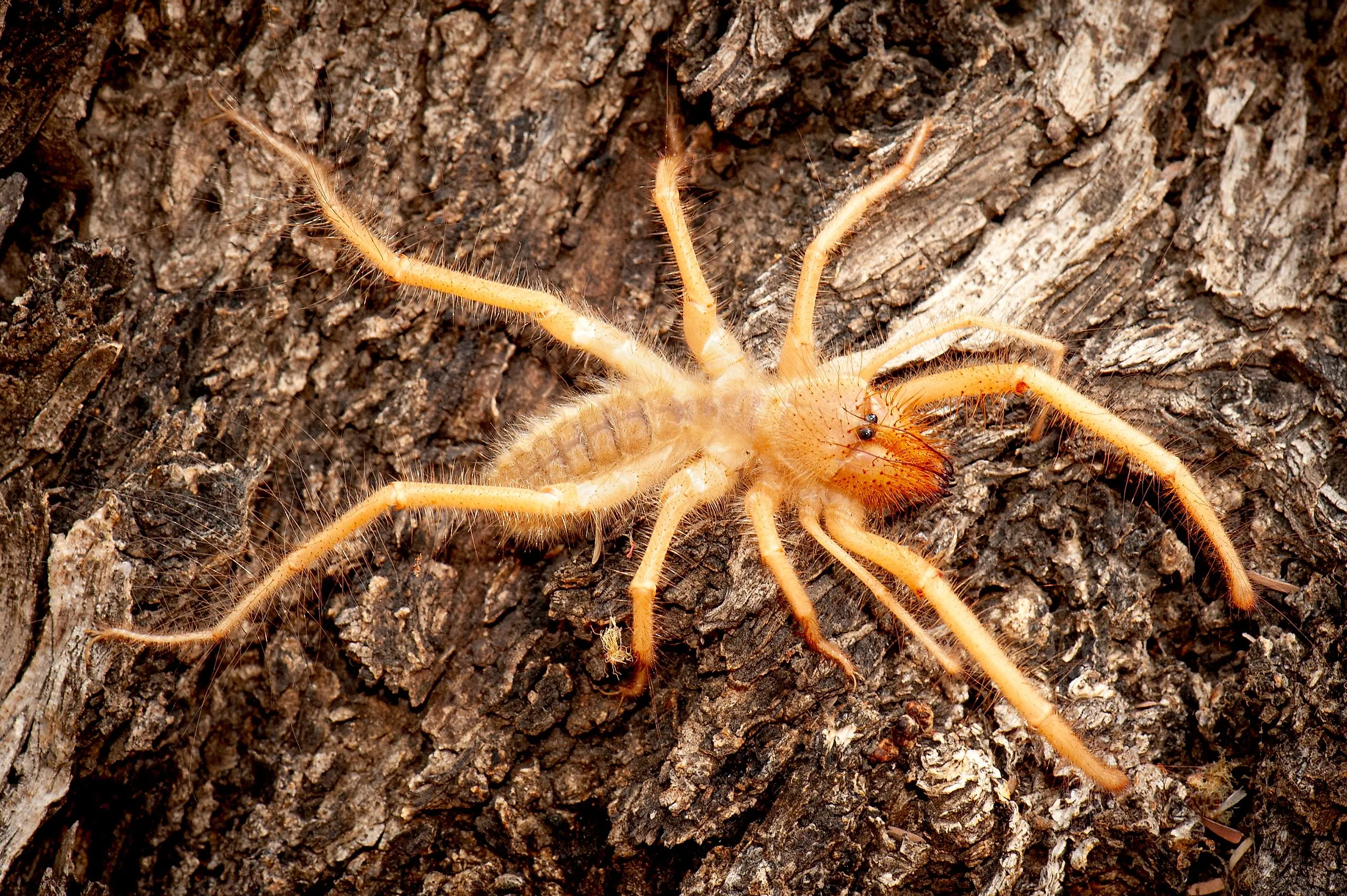
The camel spider, part of the arachnid order Solifugidae, is not actually a true spider despite its name. It occupies a position between spiders and scorpions. With over 1,000 known species, they are called various names like wind scorpions and sun spiders, and vary in size from a few millimeters to 16 cm for the largest. Most species remain largely unstudied because they do not thrive in laboratories and are hard to observe in nature. These spiders are usually tan or dark brown, serving as camouflage against predators in desert habitats. Their bodies are covered in fine hairs that insulate them from intense heat. The name "camel spider" derives from their desert habitat and camel-like color, while "solifugae" is Latin for “those who flee from the sun,” highlighting their aversion to direct sunlight.
Habitat And Behavior

Camel spiders are found on all continents except Antarctica and Australia, favoring desert terrain, but also occur widely in semidesert and scrub in the southwestern United States, the Middle East, Mexico, South Africa, and elsewhere. Three species are even found in Canada, tolerating the cooler temperatures of British Columbia and Alberta.
They are nocturnal creatures, avoiding hunting during the day because of their aversion to excessive heat. Instead, they hide under rocks or in underground burrows, as accomplished diggers. While many stories about the camel spider’s diet are exaggerated, they are voracious animals, generally feeding on termites and beetles, but they are also known to hunt rodents, snakes, lizards, and birds. However, they avoid prey items larger than themselves.
They locate prey using the pedipalps on their head, sensory organs similar to an insect’s antennae. These are also used to aid in movement, feeding, and fighting and are equipped with suction tips for grabbing prey. Once a prey animal has been caught, it is then sliced up by the camel spider’s prominent chelicerae, or jaws. These are incredibly powerful, capable of cutting through small bones or skin and shearing feathers. The prey is then liquefied and ingested through the pharynx. Again, contrary to popular belief, camel spiders do not attack humans unless provoked, but it is best to avoid them. While they are not venomous, their bite is excruciating, potentially causing swelling and even bleeding. However, a camel spider bite may prove fatal to smaller animals such as dogs or cats.

Some predators, like certain bat species, toads, and scorpions, may include camel spiders in their diet, but due to the challenges of studying them in their natural environment, this remains speculative. Camel spiders are extremely fast, reaching speeds of up to ten miles per hour—about half the speed of the fastest human sprinters—though such speed is probably rare. They are generally solitary except during mating season, which occurs once a year, a behavior known as univoltinism. Before mating, females typically consume large amounts of food because they do not eat once their eggs are laid. The female then digs a burrow and lays between fifty and two hundred eggs. The young go through several developmental stages before becoming adults.
Threats And Conservation Status
Given that little is known about many species of camel spiders, assessing their populations and conservation status is not easy. As such, it is generally seen that camel spiders are not at any great risk overall. However, in Abu Dhabi, one species, Galeodes arabs, known locally as Yamel Al Aqrab, is considered endangered, mainly due to habitat loss. Here, they are safeguarded under federal law, making it illegal to collect them, while efforts are underway to create protected areas to conserve habitat and prevent disturbance. The Environment Agency of Abu Dhabi is responsible for monitoring the species, both inside and outside of protected areas.